


- Description
Product Overview
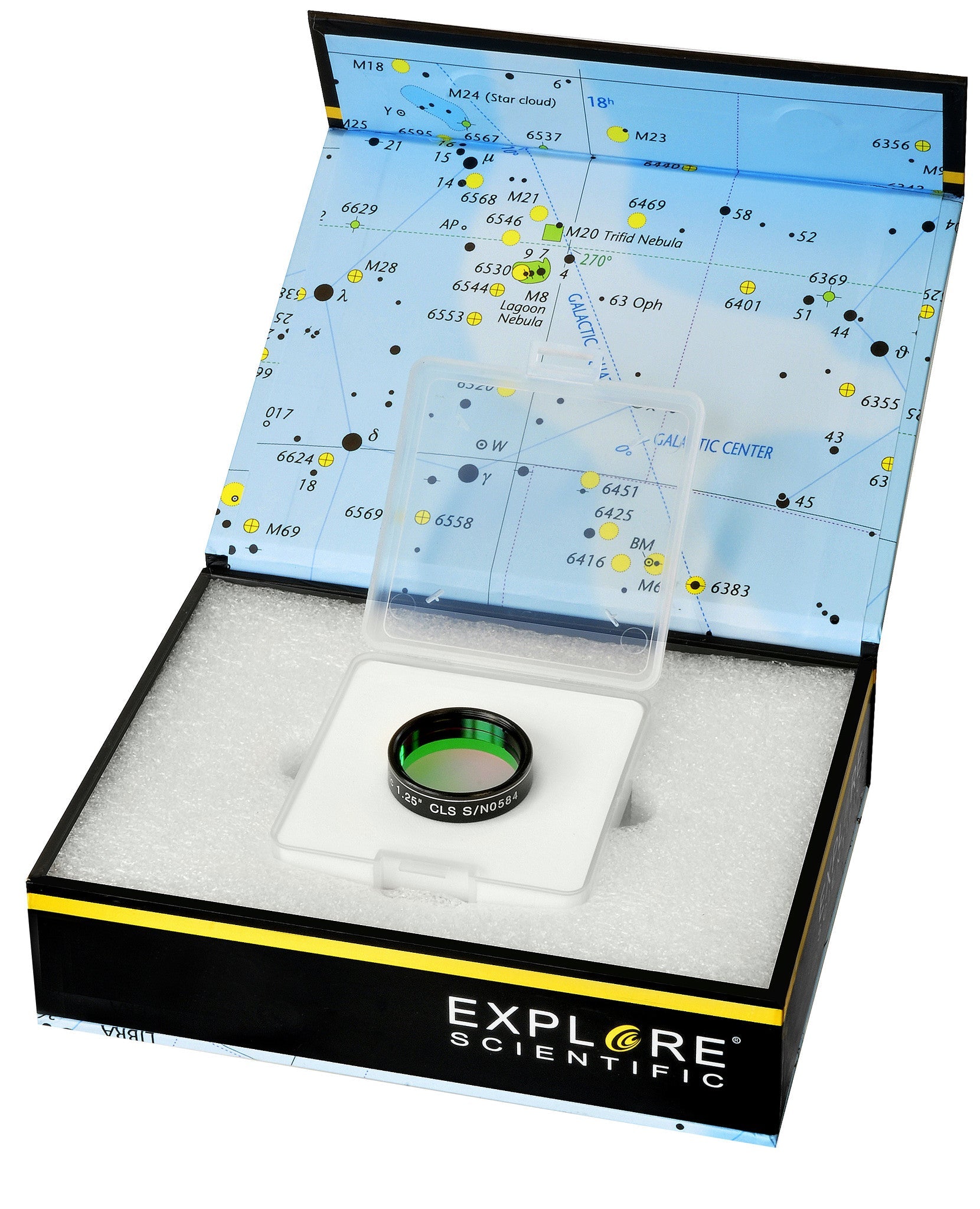
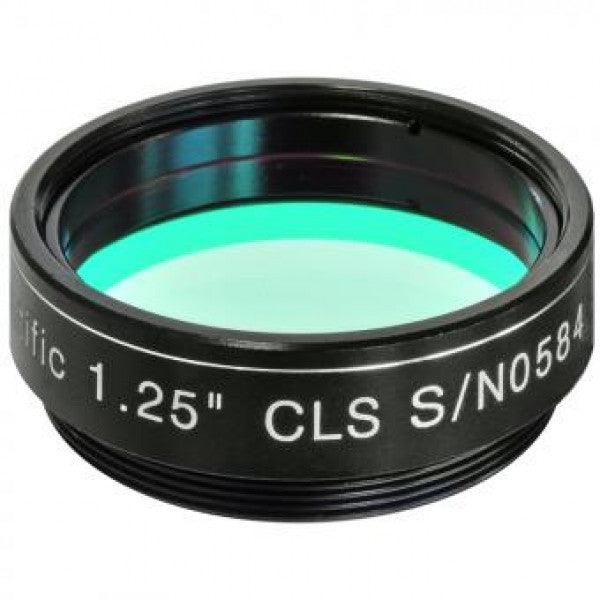
The Explore Scientific CLS Nebula Filter is a 1.25-inch light pollution reduction filter intended for general deep sky observing from skies that are not truly dark. Explore Scientific describes it as a general-purpose light-pollution reduction filter for a broad range of deep sky objects, and publishes a wavelength range of 436nm to 536nm with peak transmission at 488nm and a transmission rate of 98.3 per cent. That passband sits directly over the blue-green region where the strongest visual emission lines of nebulae live, so the light you want arrives with very little loss while a good deal of the sky glow around it is held back. It is item 310225 and threads into the barrel of any standard 1.25-inch eyepiece.
Who It's For
This filter is for the observer whose sky is the limiting factor rather than the telescope. If you are working from a driveway in a town or a suburb, the problem is rarely resolution or aperture; it is that the background of the field is grey instead of black, and faint extended objects simply do not have enough contrast against it to register. A CLS filter attacks that directly. Rather than making the object brighter, it darkens the field around it, and the object separates from the background because the ratio between the two has changed.
It is also the sensible first filter for someone who is not ready to commit to a narrowband set. A dedicated O-III or H-beta filter is a far more aggressive tool and will show you a small number of targets spectacularly while making most of the sky unusable. The CLS is deliberately broader. You can leave it in the eyepiece and star hop, work through an evening of Messier objects, and keep enough field stars visible to know where you are.
Key Features & Design
- Published wavelength range of 436nm to 536nm, covering the blue-green band where the brightest visual nebula emission occurs
- Peak transmission at 488nm, close to the O-III doublet that carries most of the visible signal in planetary and emission nebulae
- Published transmission rate of 98.3 per cent at peak, so very little of the wanted light is given up to the coating
- Standard 1.25-inch filter thread, compatible with the great majority of 1.25-inch eyepieces and diagonals
- Threaded cell that stacks with other standard 1.25-inch filters if you want to combine effects
- Broadband rather than line-specific behaviour, so field stars remain visible and star hopping stays practical
- Works with any focal ratio and requires no power, batteries or adapters
Filter Design
A light pollution reduction filter is an interference filter, not a piece of tinted glass. Alternating thin layers of material with different refractive indices are deposited on the substrate, and their thicknesses are chosen so that reflections within the stack cancel at some wavelengths and reinforce at others. The result is a transmission curve that can be shaped, in this case to pass the 436nm to 536nm region efficiently and to reject a good deal of what falls outside it. The wavelengths that mercury and older sodium street lighting throw into the sky sit largely outside that window, while the emission lines that make nebulae visible sit inside it. Because the filter subtracts rather than adds, the whole field including the target does get dimmer in absolute terms; what improves is contrast, and contrast is what the eye actually uses to detect faint extended detail. It is worth understanding that this is a physical wavelength selection, which is also why the filter cannot help with light that arrives at the same wavelengths as your target.
Recommended Uses
- Visual observing of emission and planetary nebulae from suburban or town skies
- General deep sky sweeping where you want a darker background without losing field stars
- Outreach and public nights under compromised lighting, where the improvement is easy for a newcomer to see
- A first light pollution filter for an observer who is not yet ready for narrowband
- Reducing the visual impact of moonlight-brightened sky on brighter nebulae
Compatibility and Accessory Notes
The filter uses the standard 1.25-inch filter thread found on the barrel of most 1.25-inch eyepieces, and it can equally be threaded into many 1.25-inch star diagonals and camera nosepieces. A small number of eyepieces have unusually deep or recessed barrels and can be awkward to thread by hand, and a very small number of older or specialised barrels are not threaded at all. If you are unsure whether it will thread into a particular eyepiece, contact our team in Bolton with the model and we will confirm it before you order. If you also observe with 2-inch eyepieces, note that this filter will not fit them and a 2-inch version is a separate item.
Good to Know Before You Order
Explore Scientific publishes no shipping weight for this item, so we are confirming it on our own scales before the listing goes live. That is why it is currently unpublished. Contact us and we will give you a shipping figure for your address. Beyond that, set expectations honestly on performance. A CLS filter gives its best results on emission and planetary nebulae. Galaxies, globular clusters and open clusters shine by broadband starlight, and any filter that removes part of the spectrum removes part of their light too, so the gain on those targets ranges from slight to none. The filter also cannot do anything about modern broad-spectrum white LED street lighting, which puts energy right across the visible band including inside the passband. Nothing is included beyond the filter itself in its case; eyepieces, diagonals and adapters are separate.
Frequently Asked Questions
Will this make faint objects brighter? No, and no filter can. It removes unwanted light, so the whole view including the target gets slightly dimmer. What increases is the contrast between the object and the sky background, and that is what determines whether you can see faint detail at all.
Can I use it for astrophotography? You can thread it into a 1.25-inch camera nosepiece and it will help under light pollution, though it is designed and specified as a visual filter. Imagers working seriously under light pollution usually move to narrowband filters matched to their sensor and optical train.
Does it work on galaxies? Only marginally. Galaxy light is broadband continuum, so it is attenuated along with the sky glow. The honest answer is that this filter earns its place on nebulae.
Will it fit my 2-inch eyepieces? No. This is the 1.25-inch version and threads only into 1.25-inch barrels. Ask us about the 2-inch size if that is what your eyepieces use.
Bottom Line
If your observing site is bright and your nebula views are washed out, a broadband light pollution filter is the least expensive change that will visibly help. The CLS is an easy filter to live with because it is gentle enough to leave in place all evening. Contact our team in Bolton if you would like help deciding between this and a narrowband filter for your sky and your telescope.
You may also like
Recently viewed
Recent Blog Posts
View all
Your Guide Graph Is Lying to You
Read More
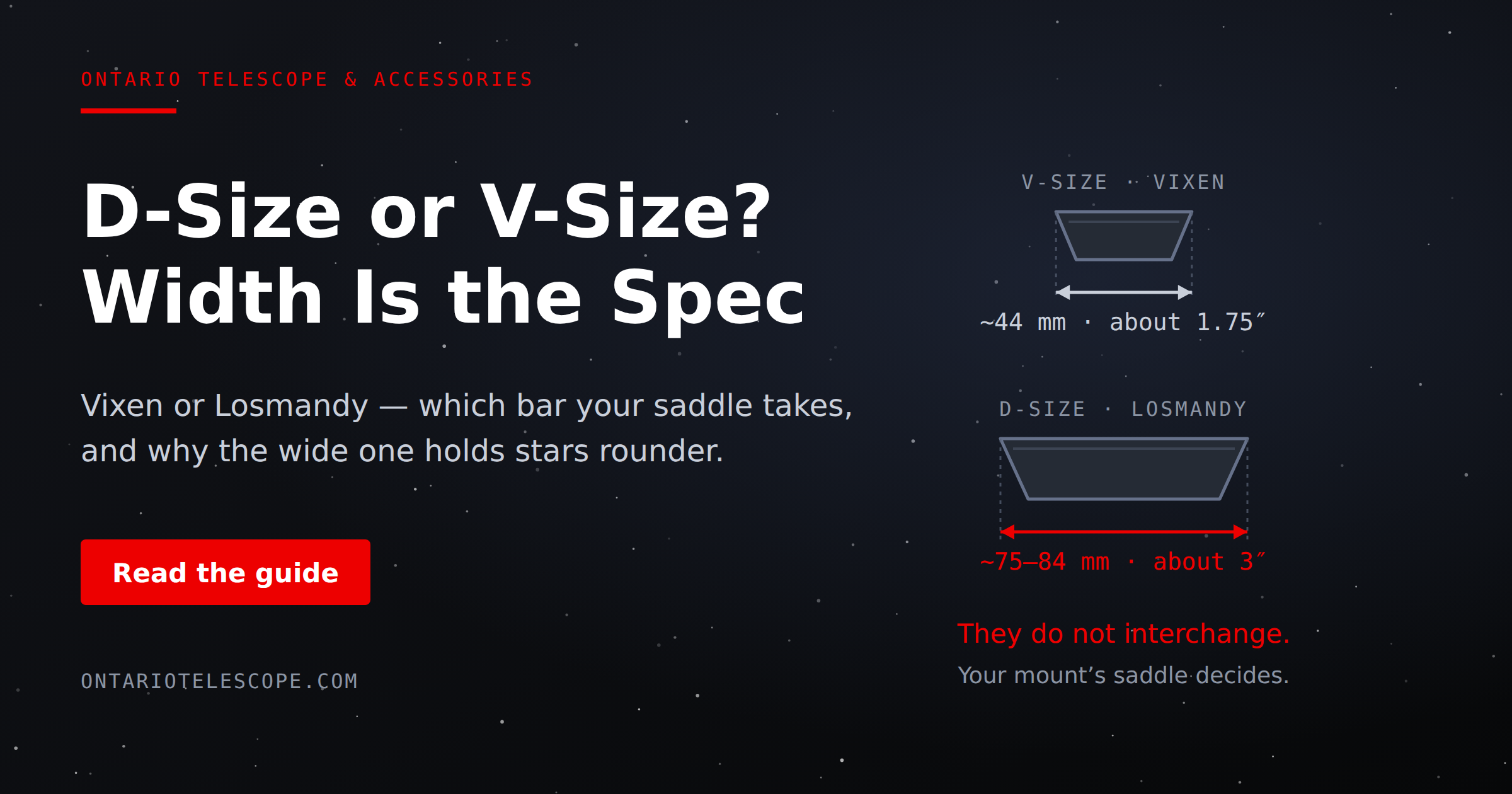
D-Size vs V-Size: A Complete Guide to Telescope Dovetail Systems
Read More
What Is Back Focus in Astrophotography? Telescope Reducers, Flatteners, and Spacing Explained
Read More