
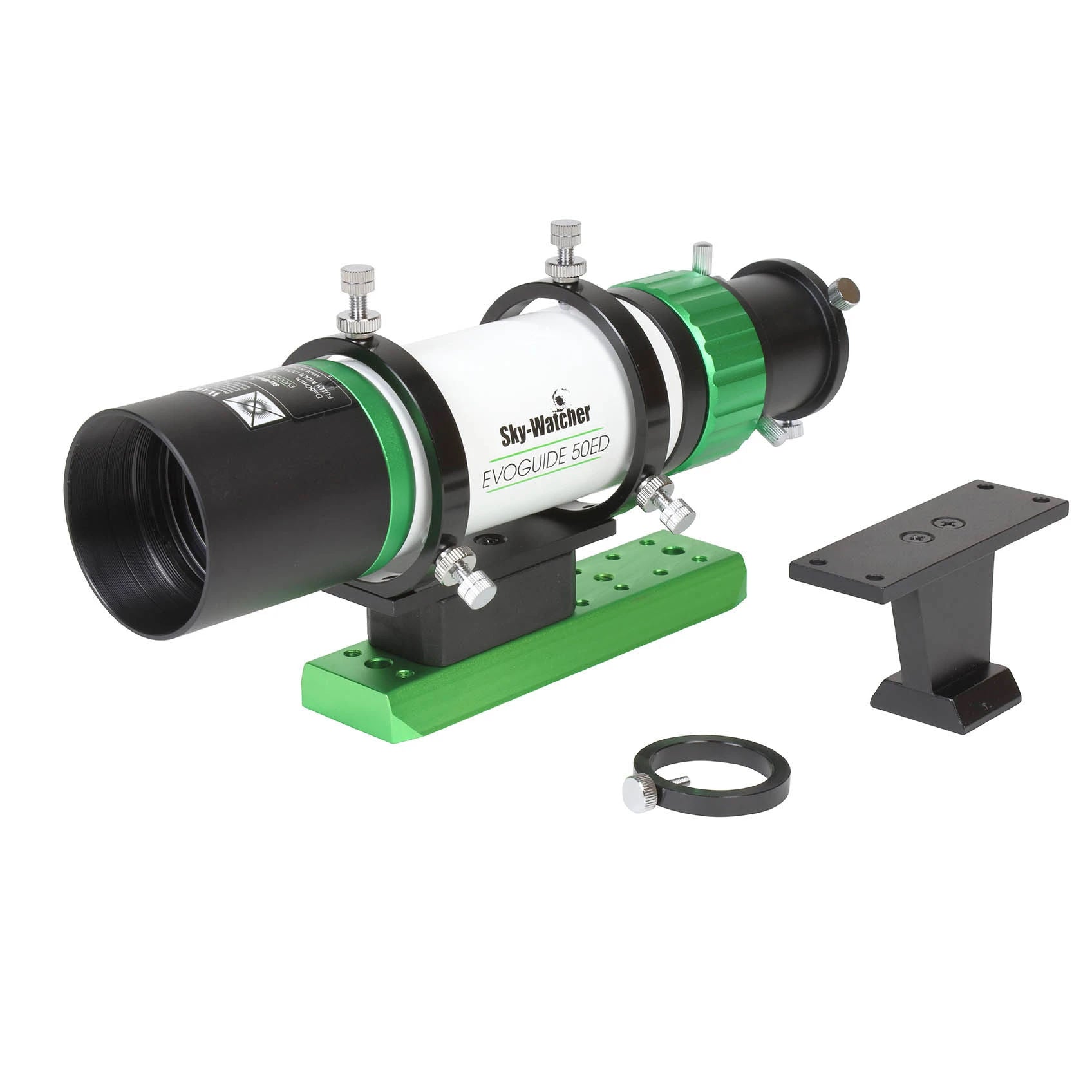
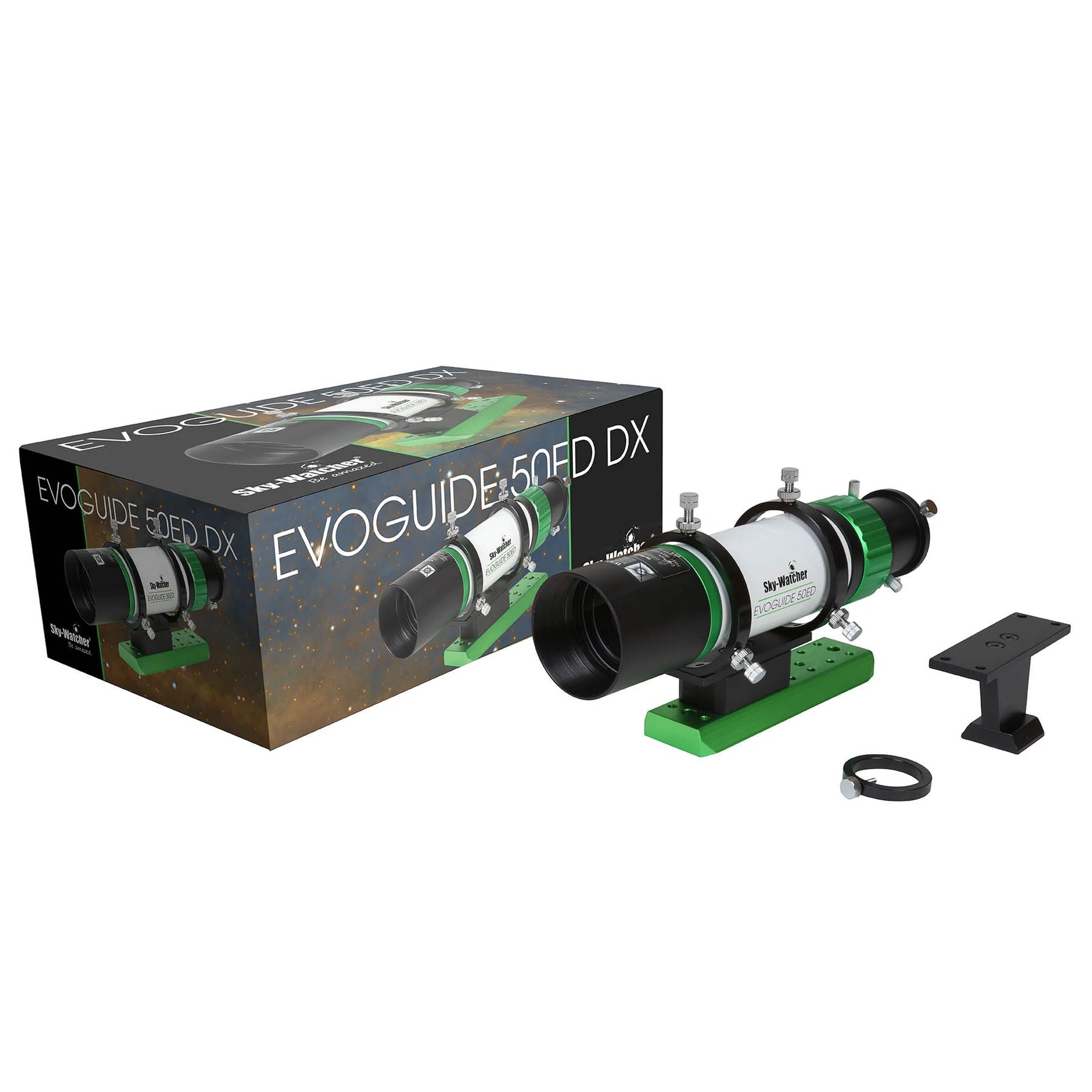
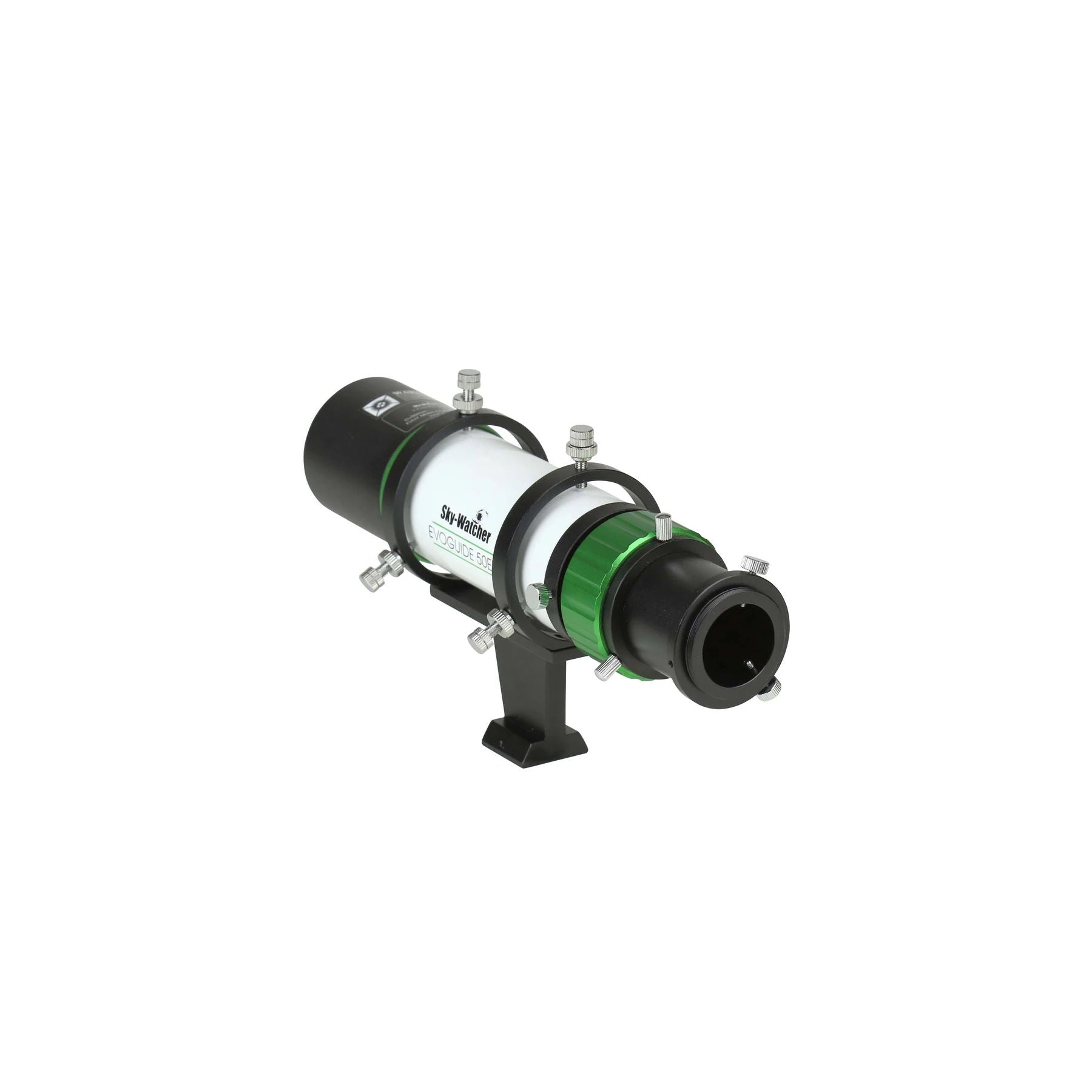
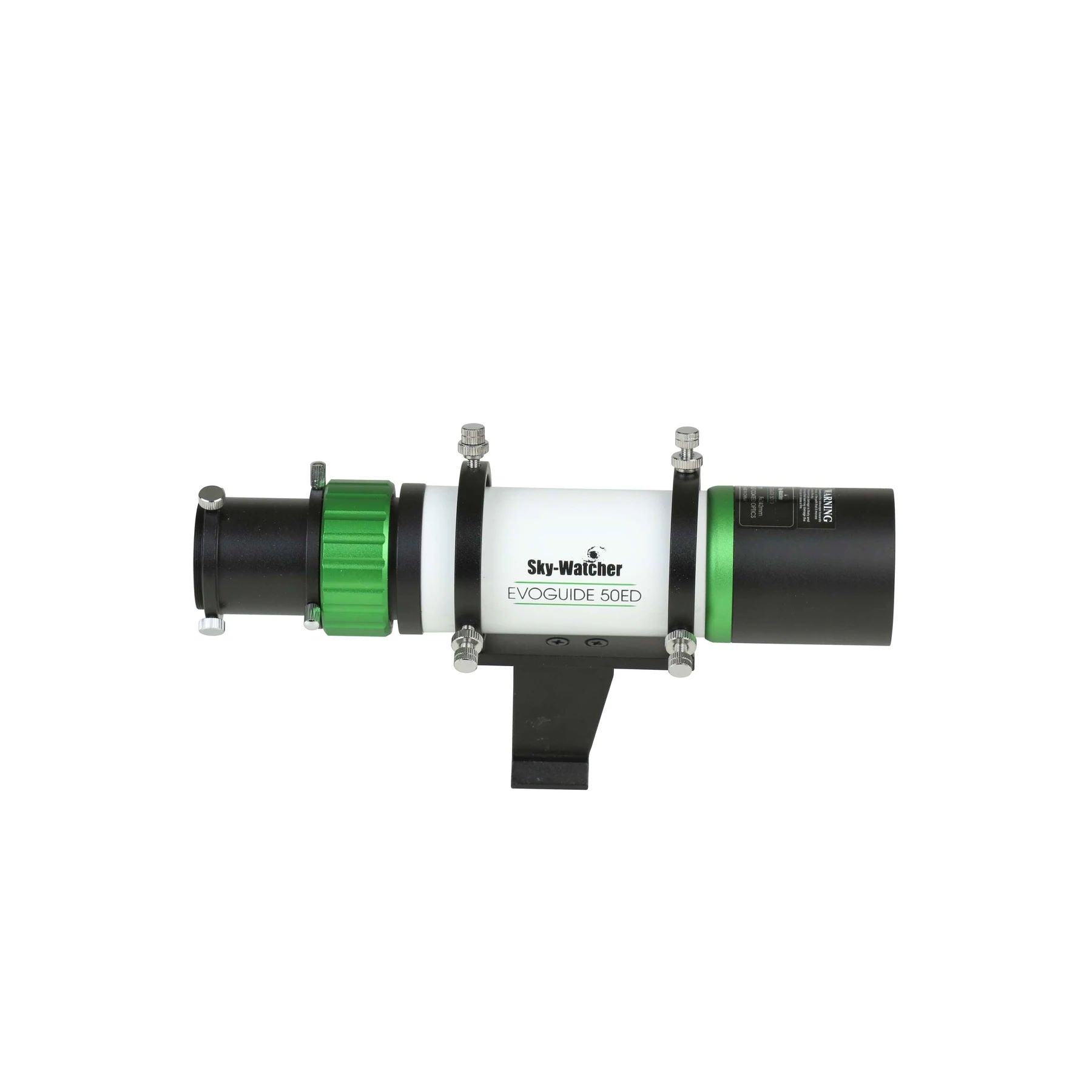
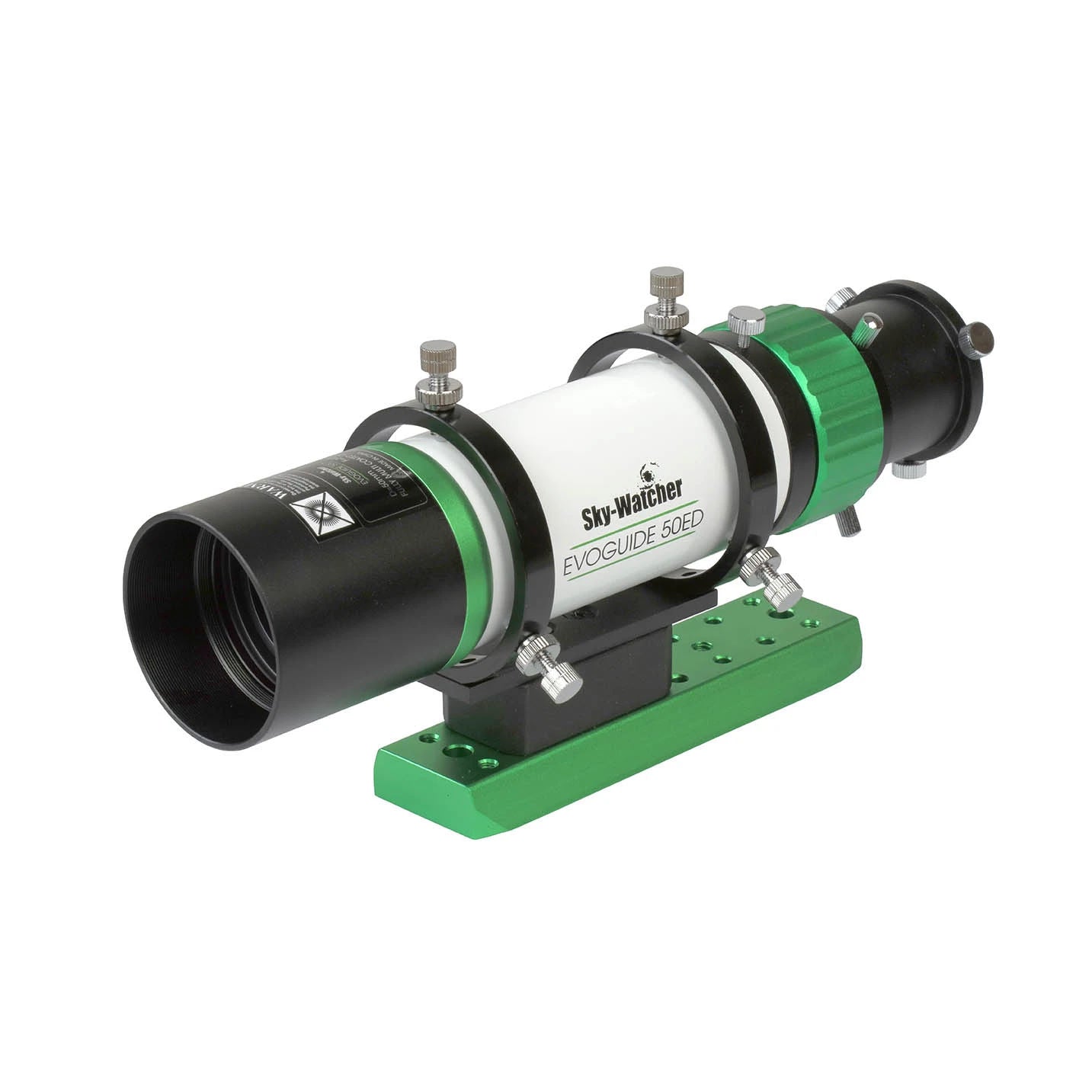


- Description
- 50mm Apochromatic refractor with matched lens assembly with one ED element
- 242 mm focal length (f/4.8)
- 1.25” Helical focuser
- Finder stalk
- Vixen-style mounting plate
- Prime focus ring
The EvoGuide 50DX APO Guide Scope Astrograph takes Sky-Watcher's doublet design and packages it in a lightweight guide scope. These doublet refractors deliver dramatic, coal-black skies and faithful, contrast-rich views of planetary and deep-space phenomenon that are second to none. Mounting to your guide camera is a breeze with convenient M42 rings on the back of the scope, and a beefy single-speed focus ring helps you nail focus. Although initially designed for guide cameras, the EvoGuide 50DX APO Guide Scope Astrograph can be used to shoot fast, low focal length astrophotography when used in conjunction with a focal reducer (not included), producing stunning wide-field images.
This package includes the EvoGuide 50 optical tube, tube rings, a finder stalk, and a Vixen-style mounting plate.
You may also like
Recently viewed
Recent Blog Posts
View all
Your Guide Graph Is Lying to You
Read More

D-Size vs V-Size: A Complete Guide to Telescope Dovetail Systems
Read More

What Is Back Focus in Astrophotography? Telescope Reducers, Flatteners, and Spacing Explained
Read More