
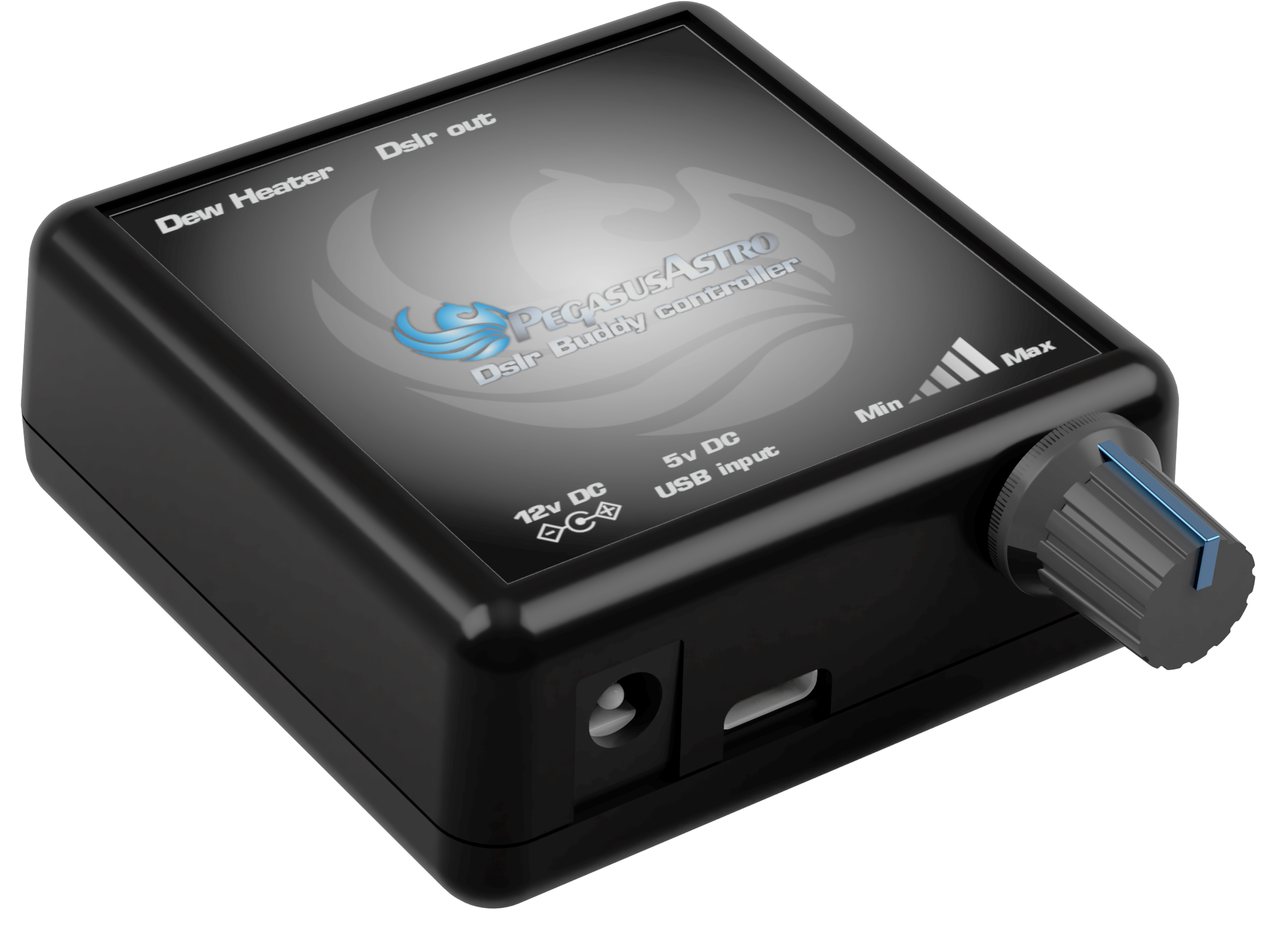

- Description
This small, lightweight device is designed for photographers with the plan to provide a constant power supply to a DSLR or mirrorless camera.
It also can power up a dew heater by varying the duty cycle of the DC voltage (PWM control). It is definitely a perfect buddy for your DSLR in the mountains and in any astro-photographic field.
With this dummy battery and the built-in Dew Heater Output, nothing can stop your camera from working for the whole night long! A unique product for time-lapses and astrophotography (deep sky, star trails, etc).
Constant power to your DSLR camera
Plug the dummy battery to your DSLR and forget to replace the battery every time it drains of power.
Connect a 5- 15V power supply to the DSLR buddy and power on your camera with stable and constant voltage for the whole night long!
Either use the DC socket or the USB-C socket. Use your Power Bank to step up the voltage (to 8Volts) for your camera.
Built in Single Channel RCA Dew Heater Output
DSL Buddy has a built-in Pulse Width Modulation duty cycle control output for Dew Heater or Flatbox.
The device provides more than 5A of current to your dew heater strip. Get rid of the moisture on your camera lens which will definitely ruin your night!
In the Box

You may also like
Recently viewed
Recent Blog Posts
View all
Your Guide Graph Is Lying to You
Read More

D-Size vs V-Size: A Complete Guide to Telescope Dovetail Systems
Read More
What Is Back Focus in Astrophotography? Telescope Reducers, Flatteners, and Spacing Explained
Read More