

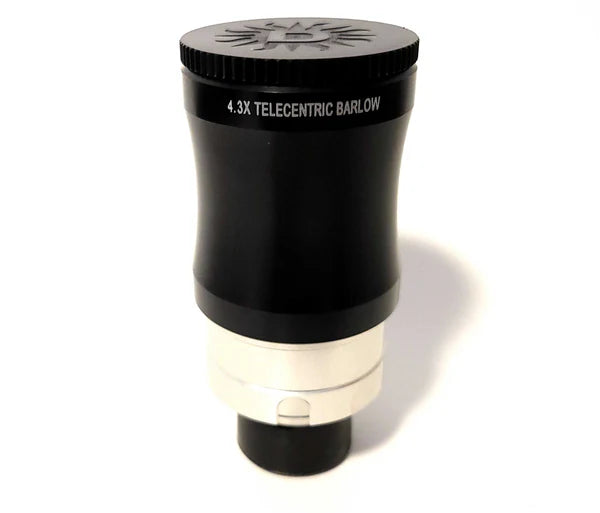


- Description
This brand new QUARK optimized accessory is designed to fit our classic Combo Quark Hydrogen Alpha Filter. The 4.3X barlow is one of two options for our new truly telecentric, fully baffled, custom engineered and Quark optimized barlows that enhance the performance of the filter. Use the 4.3X telecentric barlow by unscrewing the silver snout from the Combo Quark and screwing on the barlow.
For refractors from F/5 to F/9 you have a choice of the 2.8X or 4.3X telecentric barlows. The 4.3X barlow will show full disk with approximately 480mm focal lengths or shorter. The filter performs better with a narrower bandpass with the 4.3X barlow, prioritizing surface contrast at the expense of a dimmer image as compared to the 2.8X barlow. We encourage experimentation to determine which setup best meets your goals.
You may also like
Recently viewed
Recent Blog Posts
View all
Your Guide Graph Is Lying to You
Read More
D-Size vs V-Size: A Complete Guide to Telescope Dovetail Systems
Read More
What Is Back Focus in Astrophotography? Telescope Reducers, Flatteners, and Spacing Explained
Read More