


- Description
- Specifications

Product Overview
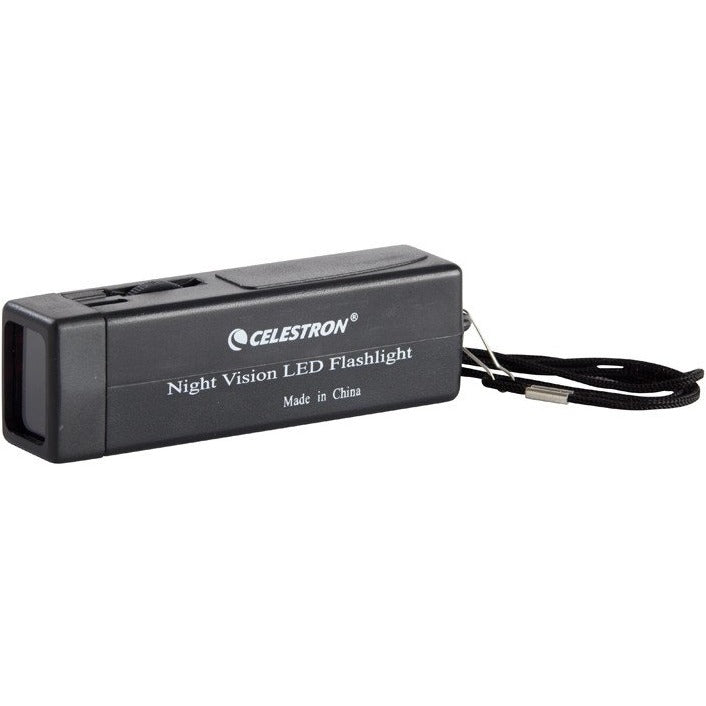
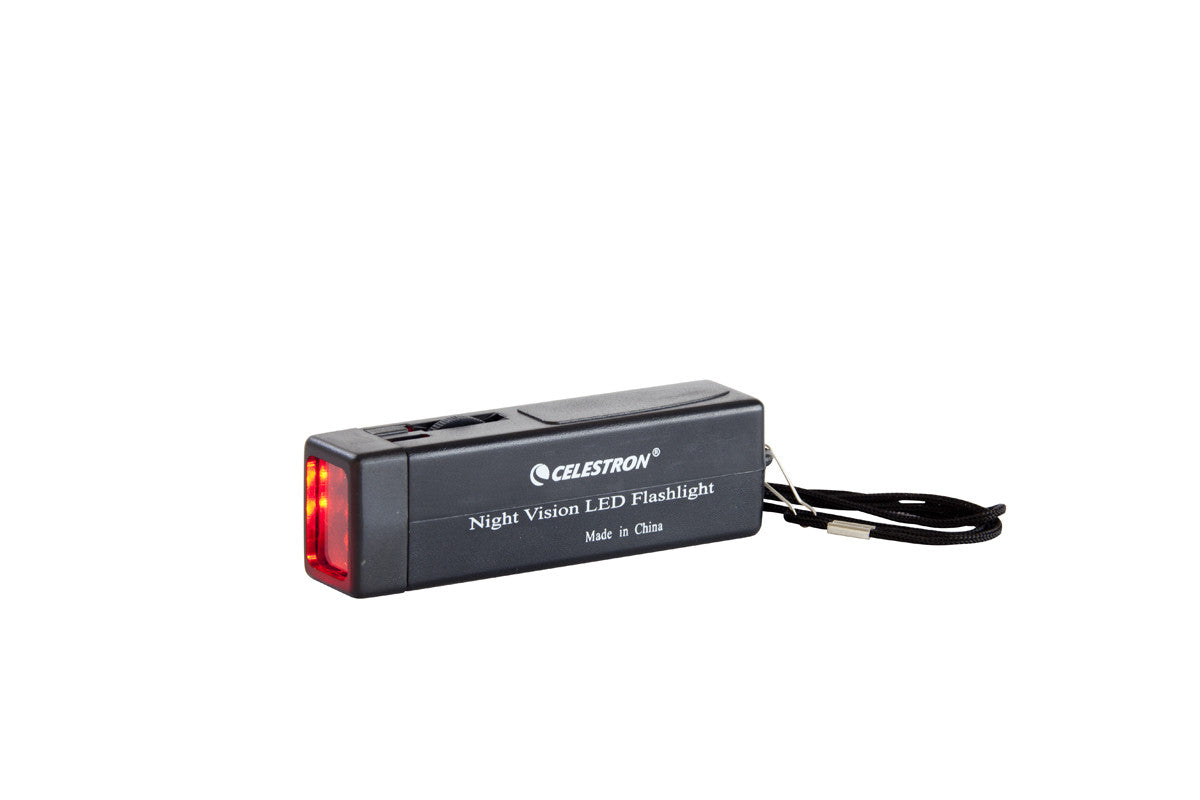
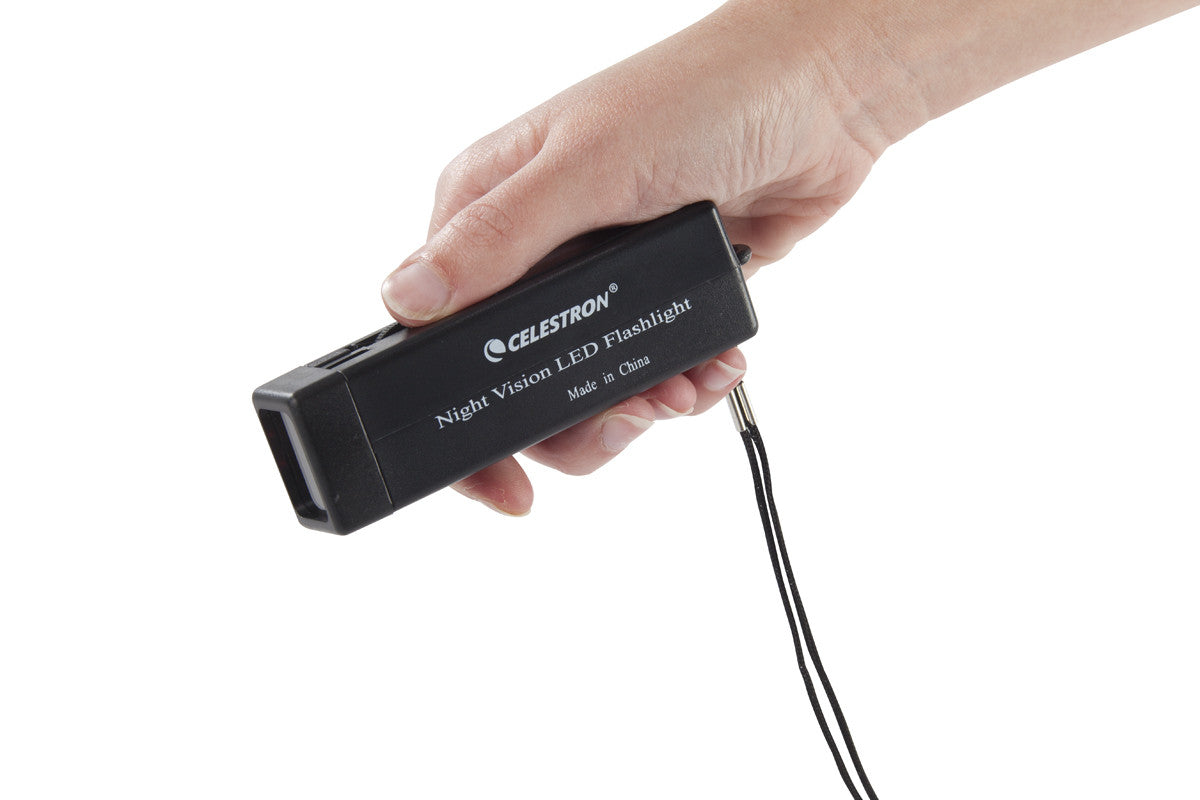
The Celestron Night Vision Flashlight (model 93588) is a red-only astronomy flashlight built to keep your eyes dark-adapted at the telescope. Two red LEDs give even illumination, a thumbwheel sets the brightness from a faint glow up to full output, and the square body stays put on a table or observing chair instead of rolling off. It comes with a neck lanyard and runs on a single 9V battery, which is included.
Red light matters because your eyes take 20 to 30 minutes to fully dark-adapt, and a moment of white light undoes it by constricting your pupils. A dimmable red source lets you read a star chart, find the right eyepiece in your case, or check a setting on your mount without losing the faint detail you waited for. At a club night or star party it also keeps your light from spoiling the view for the people around you.
Who It's For
This is a good match if you observe visually and work from printed charts, an atlas or a notebook, if you image and need to see cables, focusers and laptop keys during a session, or if you attend star parties and outreach events where red light is expected. It suits backyard observing, dark-site trips and observatory use alike.
Key Features & Design
- Two red LEDs: spread the light evenly across a chart or eyepiece case rather than throwing a single hot spot.
- Thumbwheel dimmer: brightness is continuously variable, so you can run it as low as the task allows and protect your night vision further.
- Square body: the flat sides keep it from rolling off a table, tray or mount head in the dark.
- Neck lanyard: keeps the light at hand and off the ground between uses.
- 9V battery power: a common, easy-to-find battery, with the first one included in the box.

Recommended Uses
- Reading star charts and atlases at the eyepiece without resetting your dark adaptation.
- Finding eyepieces, filters and adapters in a case or on an accessory tray.
- Setting up and packing away a telescope, mount and power cables after dark.
- Logging observations and sketching at the telescope.
- Star parties and outreach nights, where white lights are not welcome on the field.
Compatibility and Accessory Notes
The flashlight is a standalone handheld light and works alongside any telescope, mount or camera setup. It takes a standard 9V battery. If you would rather keep both hands free while you work at the mount, Celestron also makes the Night Vision Red Headlamp, and the rest of our red astronomy lights are in the Flash Lights collection.
What's in the Box
- Celestron Night Vision Flashlight (93588)
- Neck lanyard
- 9V battery

Good to Know Before You Order
- Red light only: it has no white mode, which is what makes it suitable for observing. For general camp or car use, a white light is a separate item.
- Handheld design: it is carried or set down rather than worn. The Celestron Night Vision Red Headlamp covers hands-free use.
- Battery type: it runs on a 9V battery, not on rechargeable USB power. One battery is included, and spares are widely available.
Frequently Asked Questions
Is it difficult to set up?
No. The 9V battery is included, and once it is fitted the light is ready to use. The thumbwheel turns it on and sets the brightness.
Why use red light instead of white for astronomy?
Your eyes take a long time to fully dark-adapt, and white light constricts your pupils and resets that process. Red light at a low level lets you see what you are doing while keeping most of your night vision intact.
How bright can it get?
Brightness is continuously variable with the thumbwheel. Running it as dim as the task allows gives the best protection for your night vision.
Will it roll off my observing table?
No. The square body sits flat on a table, tray or chair.
Is it suitable for star parties?
Yes. A dimmable red light is the standard at organized observing events, and the low settings are gentle on other observers' dark adaptation.
What is the difference between this and the Celestron Night Vision Red Headlamp?
This flashlight is handheld, has a thumbwheel dimmer and runs on a 9V battery. The headlamp is worn on the head for hands-free work, runs on AAA batteries, and has fixed brightness levels plus blink and SOS modes.
Bottom Line
In short: a dimmable dual-LED red flashlight from Celestron, with a non-rolling square body, a neck lanyard and an included 9V battery. It covers chart reading, eyepiece changes and setup at the telescope while keeping your eyes dark-adapted.
| Model | Celestron 93588 |
|---|---|
| Light source | 2 red LEDs |
| Brightness control | Variable, by thumbwheel |
| Power | 9V battery (included) |
| Body | Square profile, will not roll |
| Included | Flashlight, neck lanyard, 9V battery |
| Shipping weight | 1 lb |
| Shipping box | 6 × 4 × 4 in |
| UPC | 050234935883 |
You may also like
Recently viewed
Recent Blog Posts
View all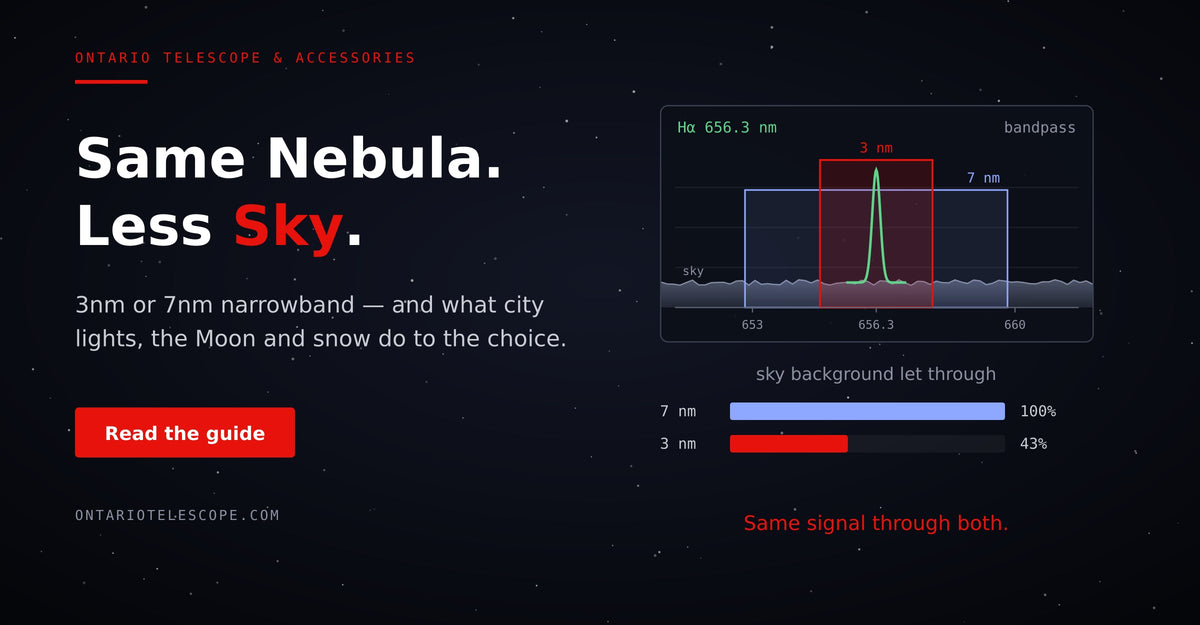
3nm vs 7nm Narrowband Filters: Which One Do You Actually Need?
Read More
Your Guide Graph Is Lying to You
Read More
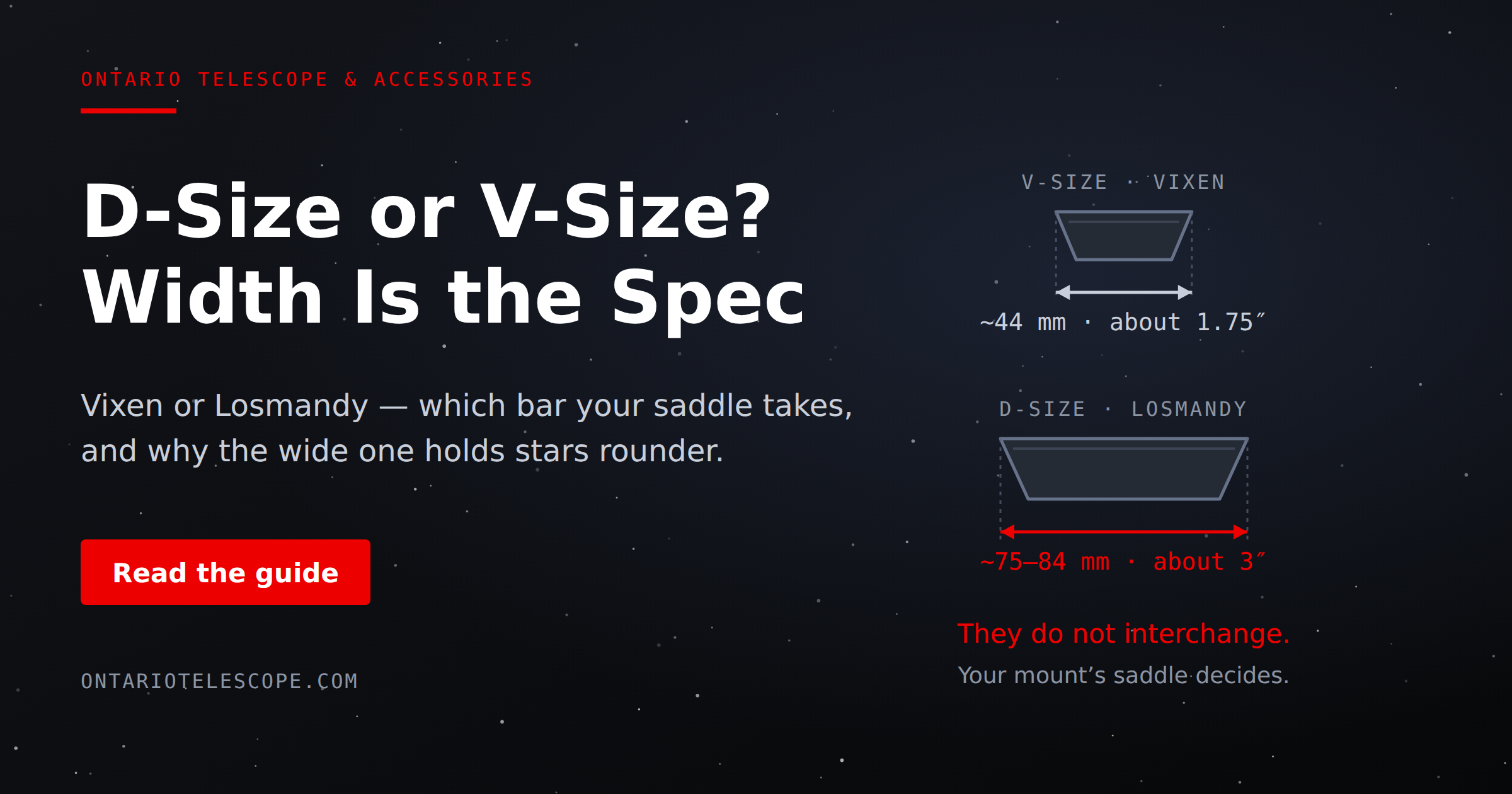
D-Size vs V-Size: A Complete Guide to Telescope Dovetail Systems
Read More