
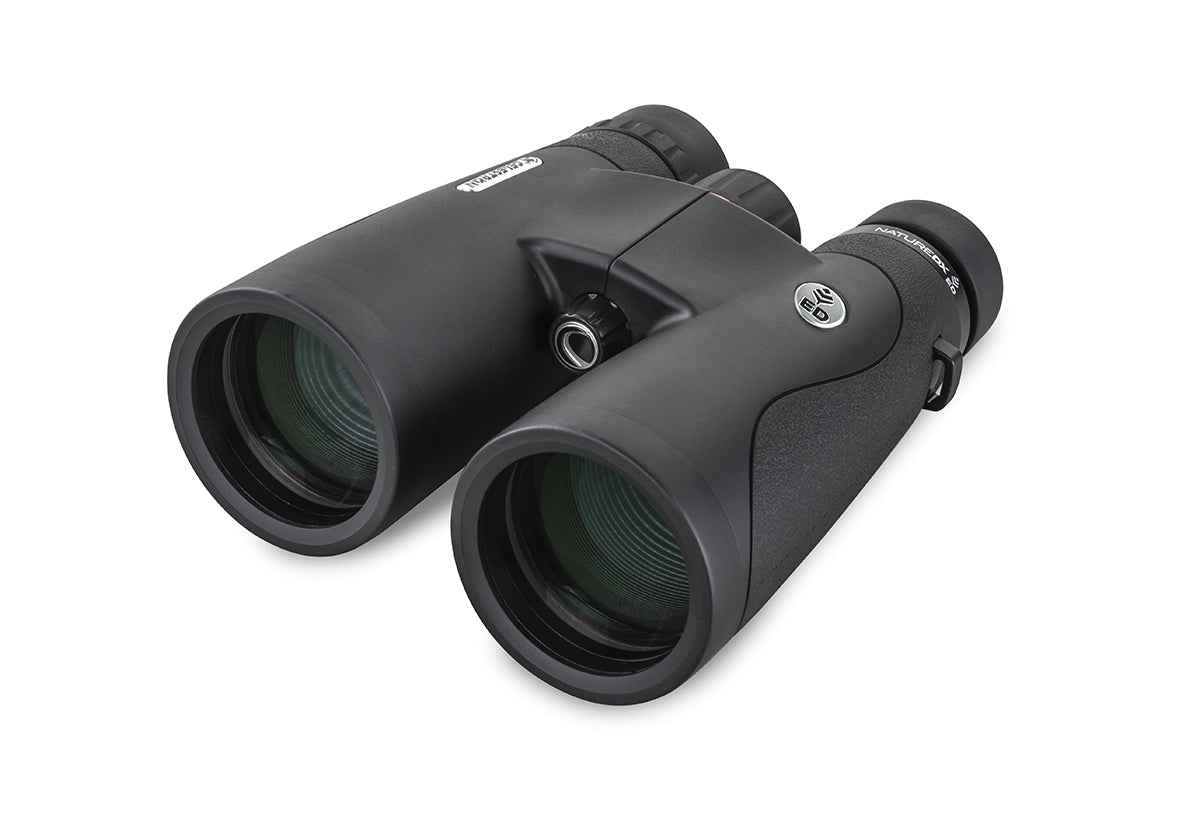
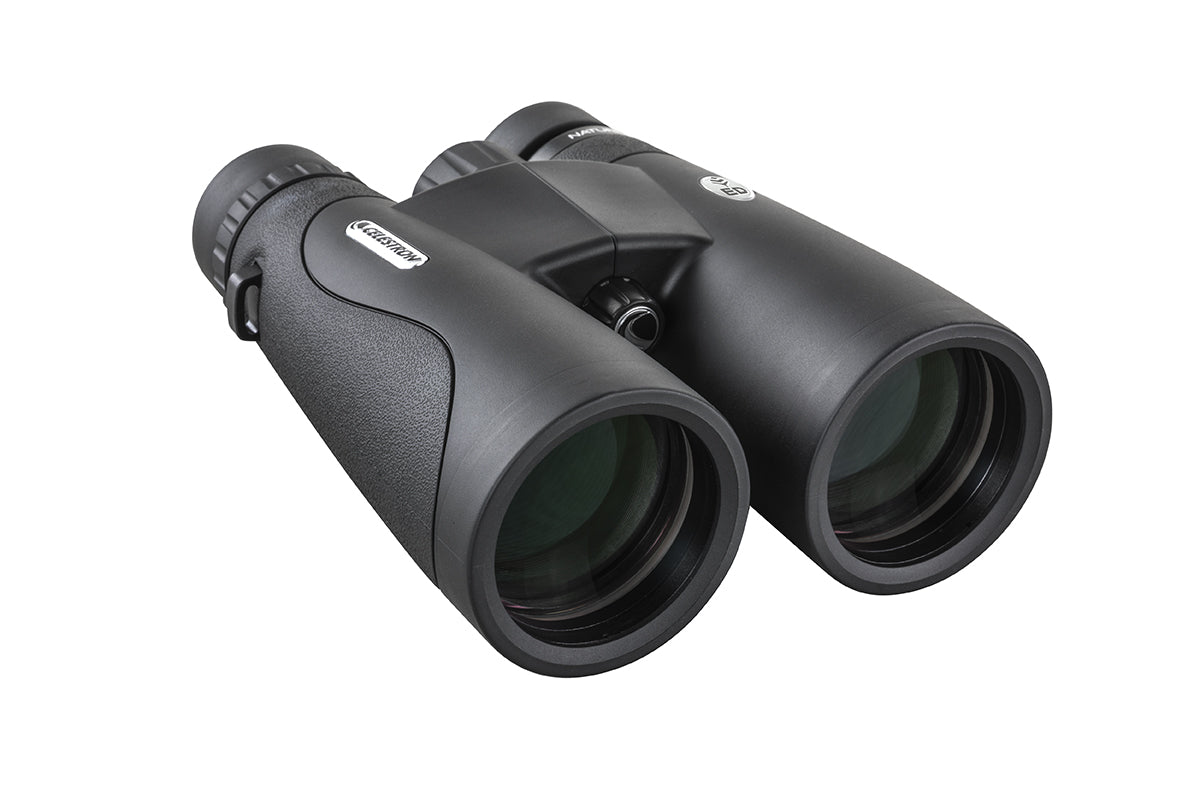
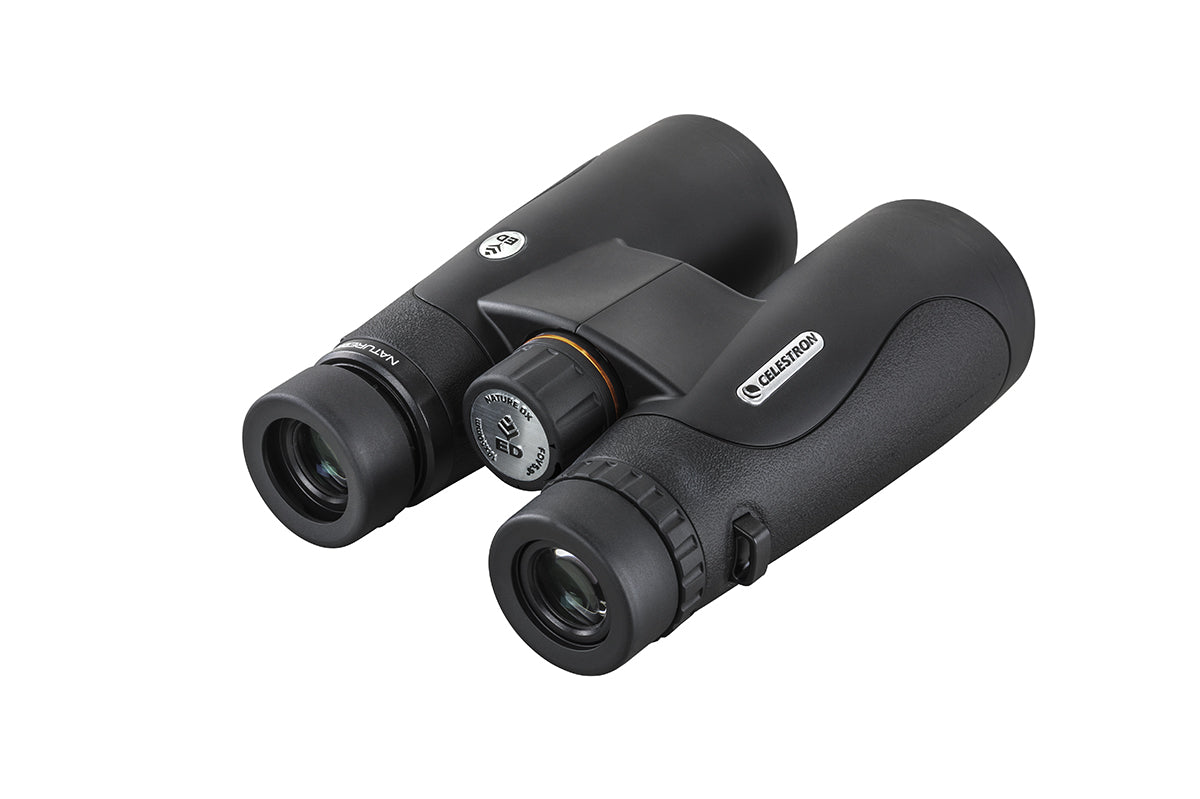


- Description
Product overview
The Celestron Nature DX ED 10x50mm Roof Binoculars are premium large-aperture binoculars for astronomy, nature viewing, and low-light observation. ED glass helps reduce chromatic aberration for cleaner, sharper views.
Who Is This Product Best For?
Best for stargazers and outdoor observers who want brighter 50mm binoculars with improved colour correction.
Why Choose This Product?
- 10x magnification is versatile and easier to hand-hold than higher-power astronomy binoculars.
- 50mm objectives gather more light for night-sky and twilight use.
- ED optics improve contrast and reduce colour fringing.
Recommended Uses
- Stargazing
- Lunar viewing
- Wildlife viewing
- Low-light nature observation
Compatibility and Accessory Notes
A tripod adapter can be useful for longer astronomy sessions.
Important Limitations
Not a substitute for a telescope on planets or small deep-sky targets.
Frequently Asked Questions
Is this good for beginners?
Yes. It is a strong premium beginner-to-intermediate astronomy binocular.
Does it need a tripod?
It can be handheld, but a tripod improves steadiness.
Our Recommendation
Ontario Telescope recommends this model for customers who want a higher-quality 10x50 binocular for astronomy and nature use.
You may also like
Recently viewed
Recent Blog Posts
View all
Your Guide Graph Is Lying to You
You drove ninety minutes to dark sky, PHD2 held 0.4 arcseconds all night, and half your subs still have eggs for stars. Here are the three things your
Read More
Read More

D-Size vs V-Size: A Complete Guide to Telescope Dovetail Systems
What's the difference between D-size and V-size telescope dovetails? Here's everything you need to know.
Read More
Read More

What Is Back Focus in Astrophotography? Telescope Reducers, Flatteners, and Spacing Explained
What Is Back Focus in Astrophotography? Telescope Reducers, Flatteners, and Spacing Explained
Back focus is one of those astrophotography terms that c
Read More
Read More