
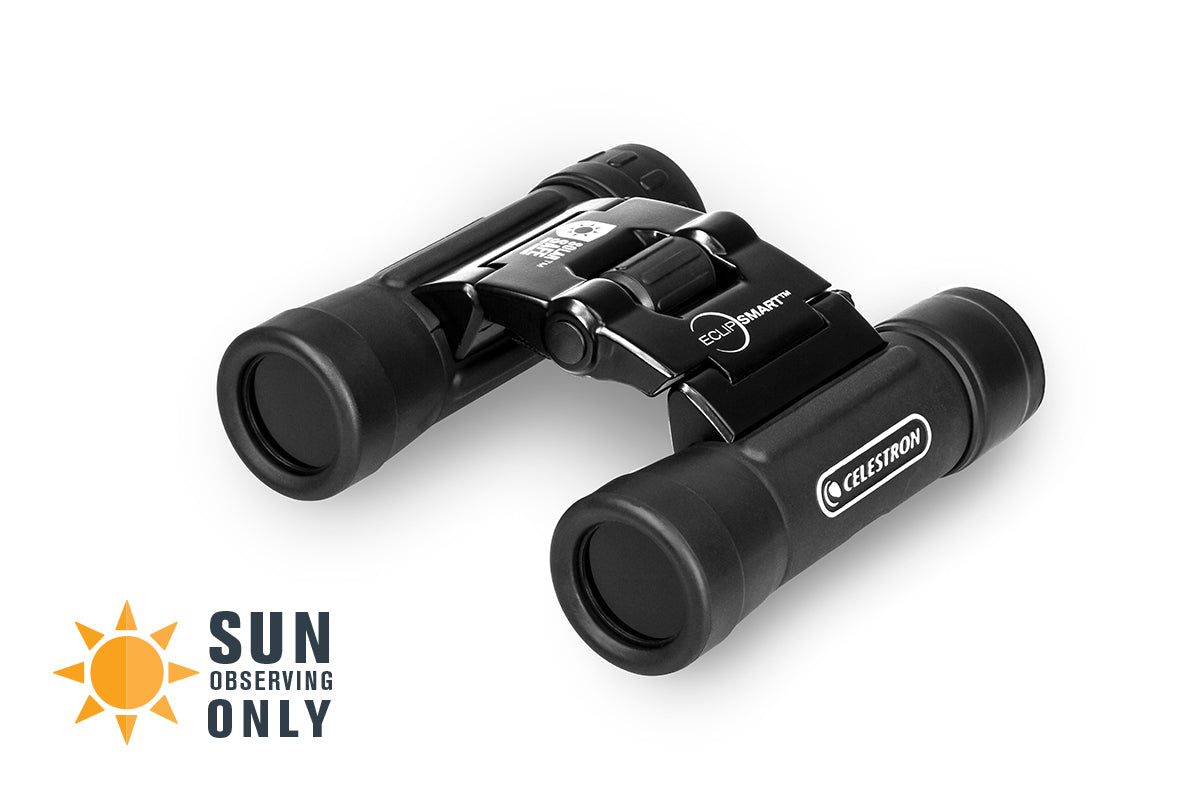
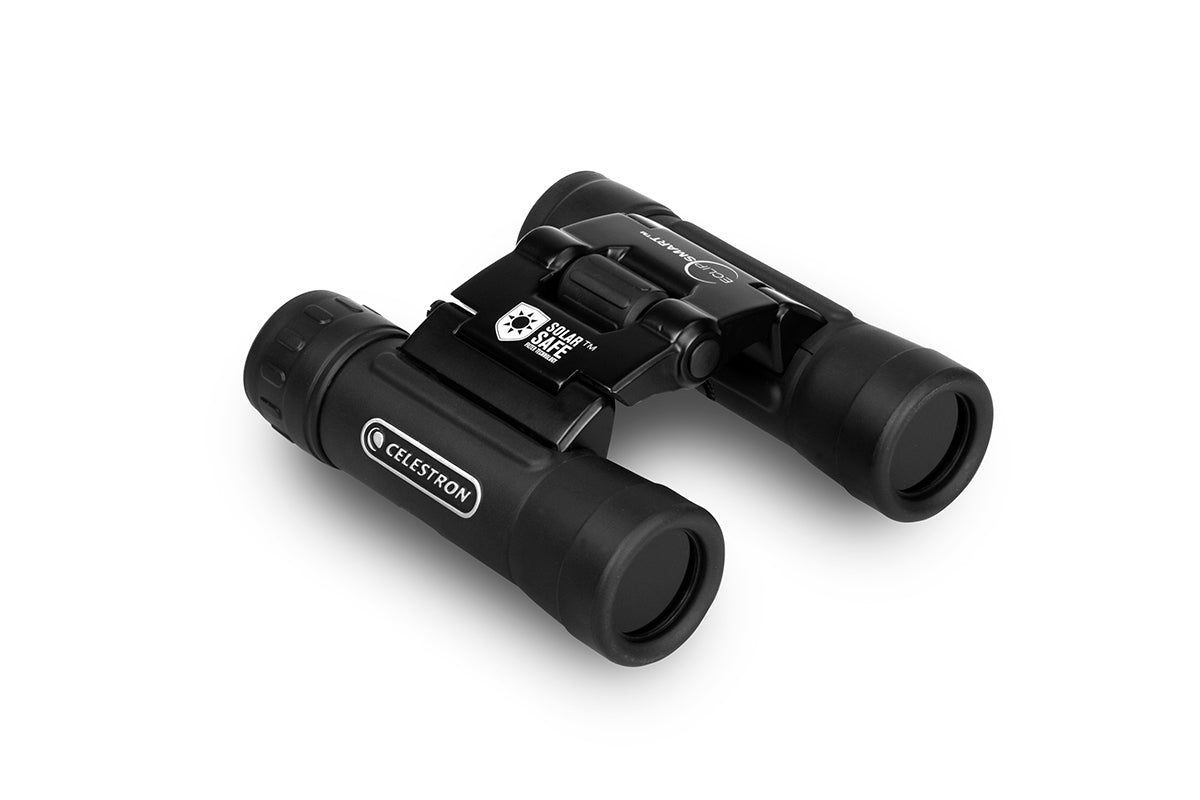
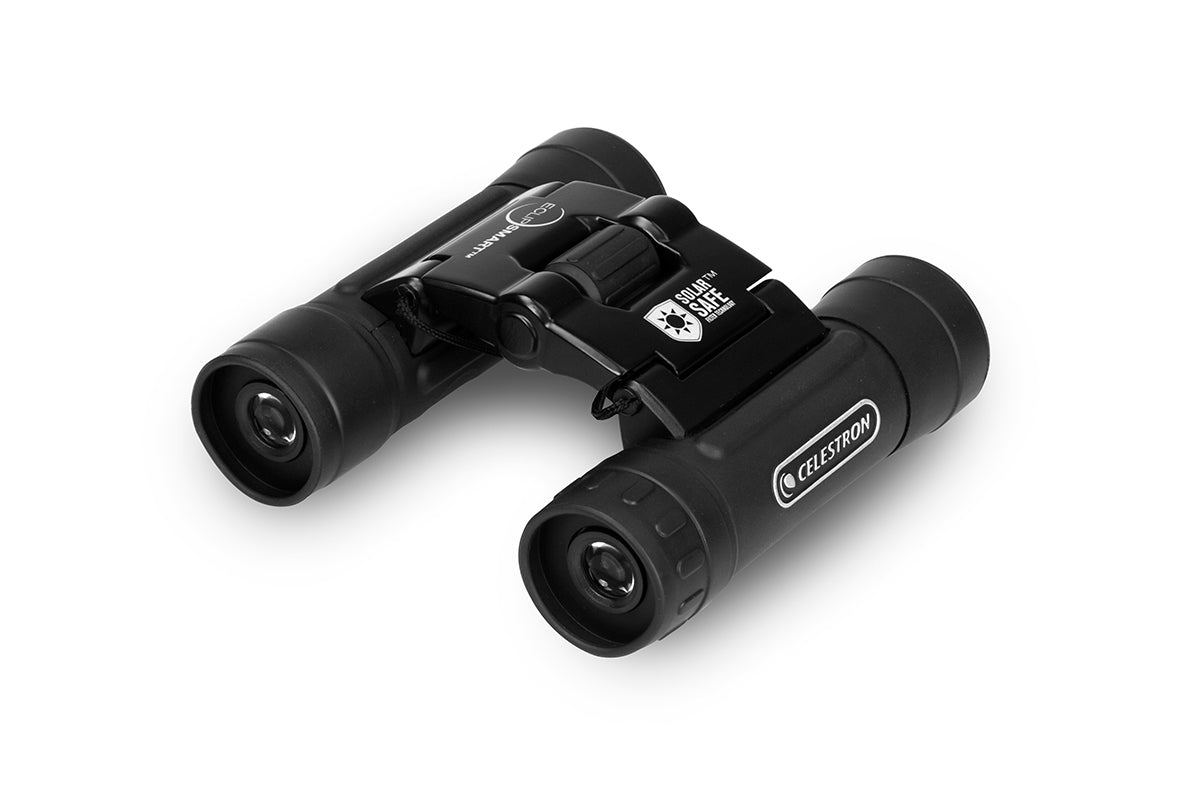


- Description
Product overview
The Celestron EclipSmart 10x25mm Solar Binoculars are compact dedicated solar binoculars for safely viewing eclipses, sunspots, and daytime solar events when used as directed. The built-in solar filtering makes them a purpose-built solar viewing accessory.
Who Is This Product Best For?
Best for eclipse viewers, outreach events, travellers, and beginners who want a compact dedicated solar binocular.
Why Choose This Product?
- Dedicated solar-viewing binocular design.
- Compact 10x25 format is easy to carry.
- Useful for eclipses and daytime solar observing.
Recommended Uses
- Solar eclipse viewing
- Sunspot observation
- Public outreach and travel
Compatibility and Accessory Notes
Use only as instructed and inspect the solar filters before each use. These binoculars are dedicated solar instruments.
Important Limitations
Not for nighttime astronomy. Never use damaged solar filters and never attempt to modify the filtering system.
Frequently Asked Questions
Is this good for beginners?
Yes, for safe solar viewing when used exactly as directed.
What is it best used for?
Solar eclipses and daytime Sun viewing.
Can I use it at night?
No. It is a dedicated solar-viewing binocular.
Our Recommendation
Ontario Telescope recommends this compact model for customers who want a portable dedicated solar binocular for eclipse events and travel.
You may also like
Recently viewed
Recent Blog Posts
View all
Your Guide Graph Is Lying to You
Read More

D-Size vs V-Size: A Complete Guide to Telescope Dovetail Systems
Read More

What Is Back Focus in Astrophotography? Telescope Reducers, Flatteners, and Spacing Explained
Read More