
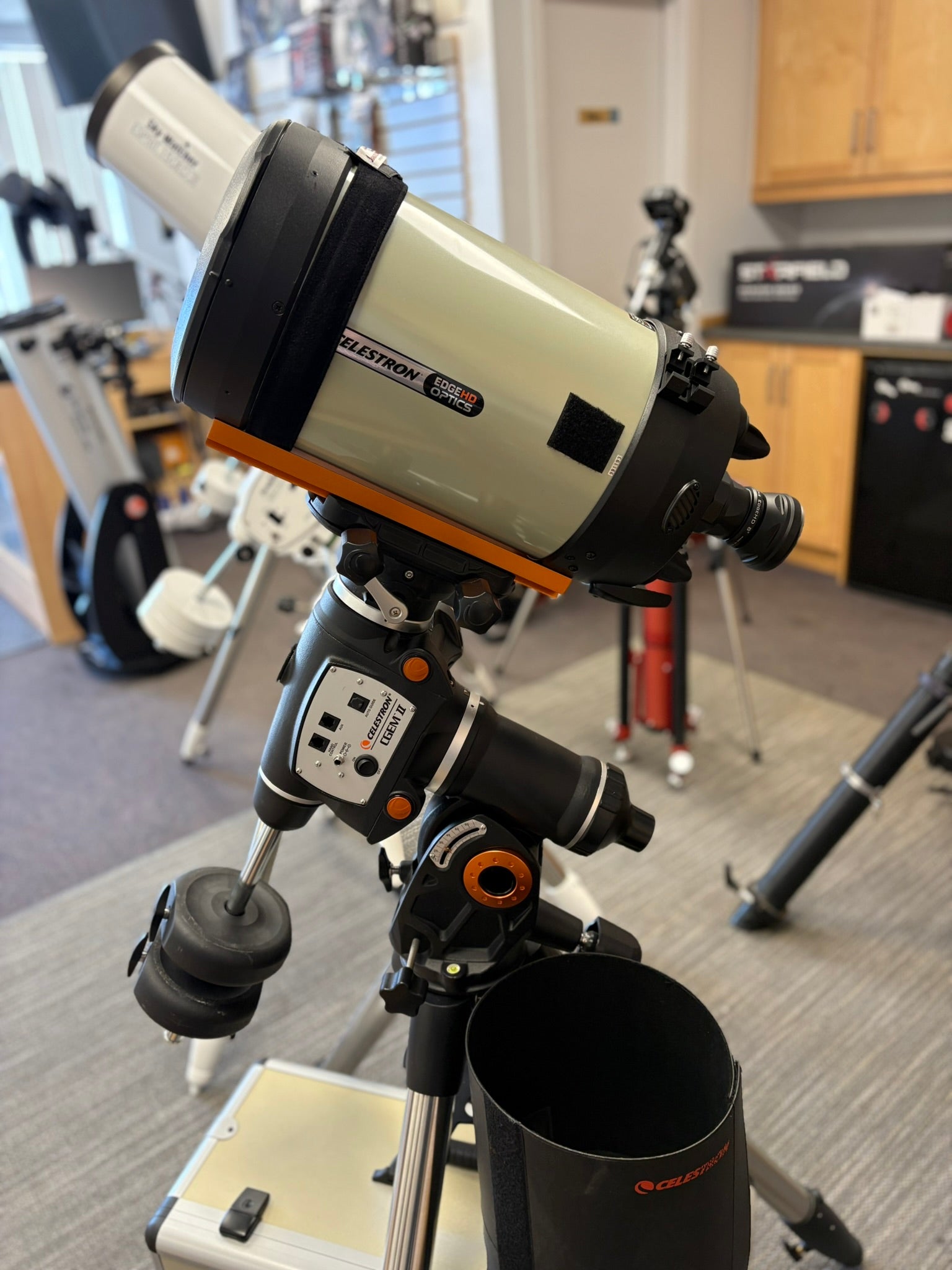
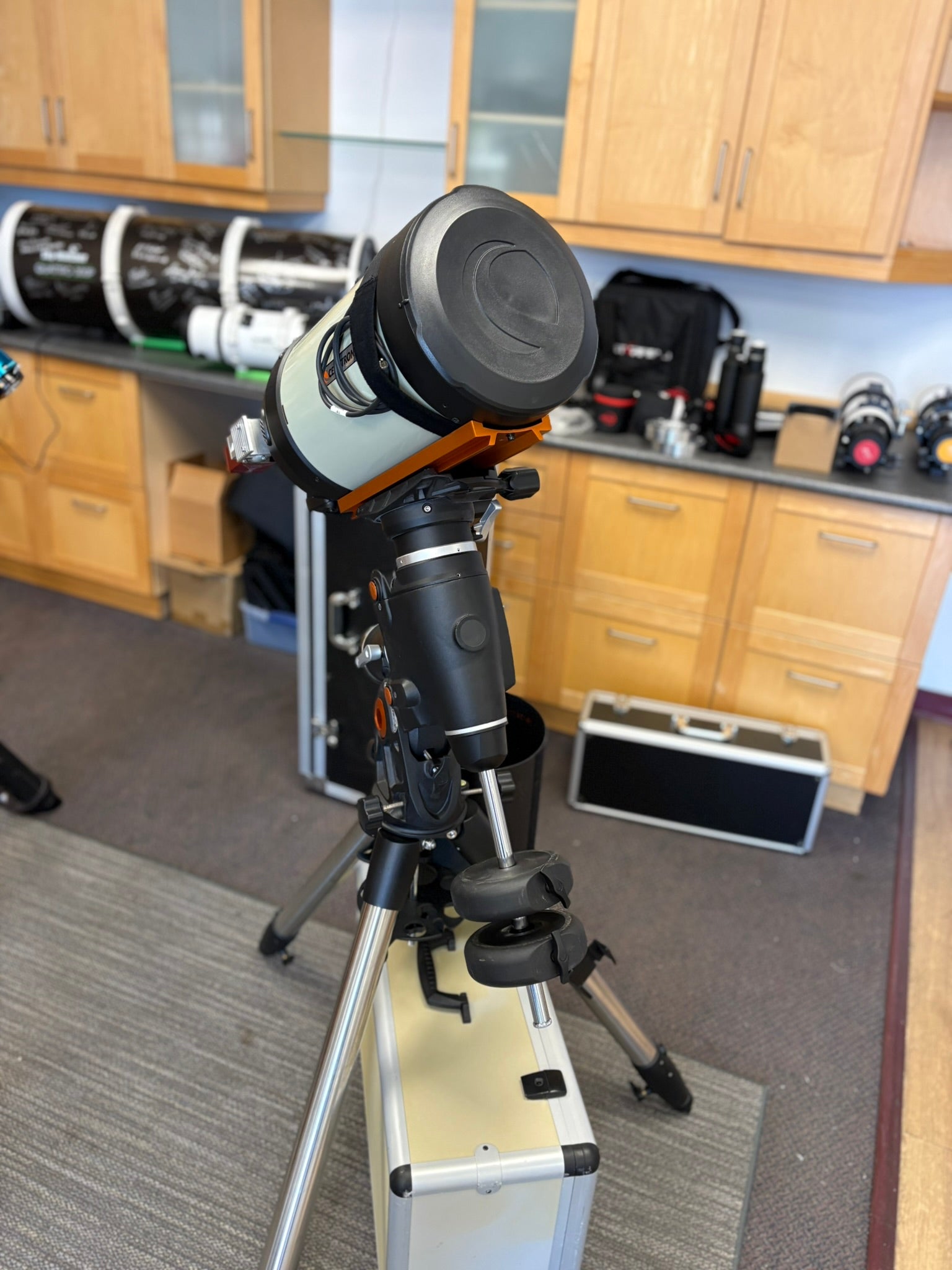
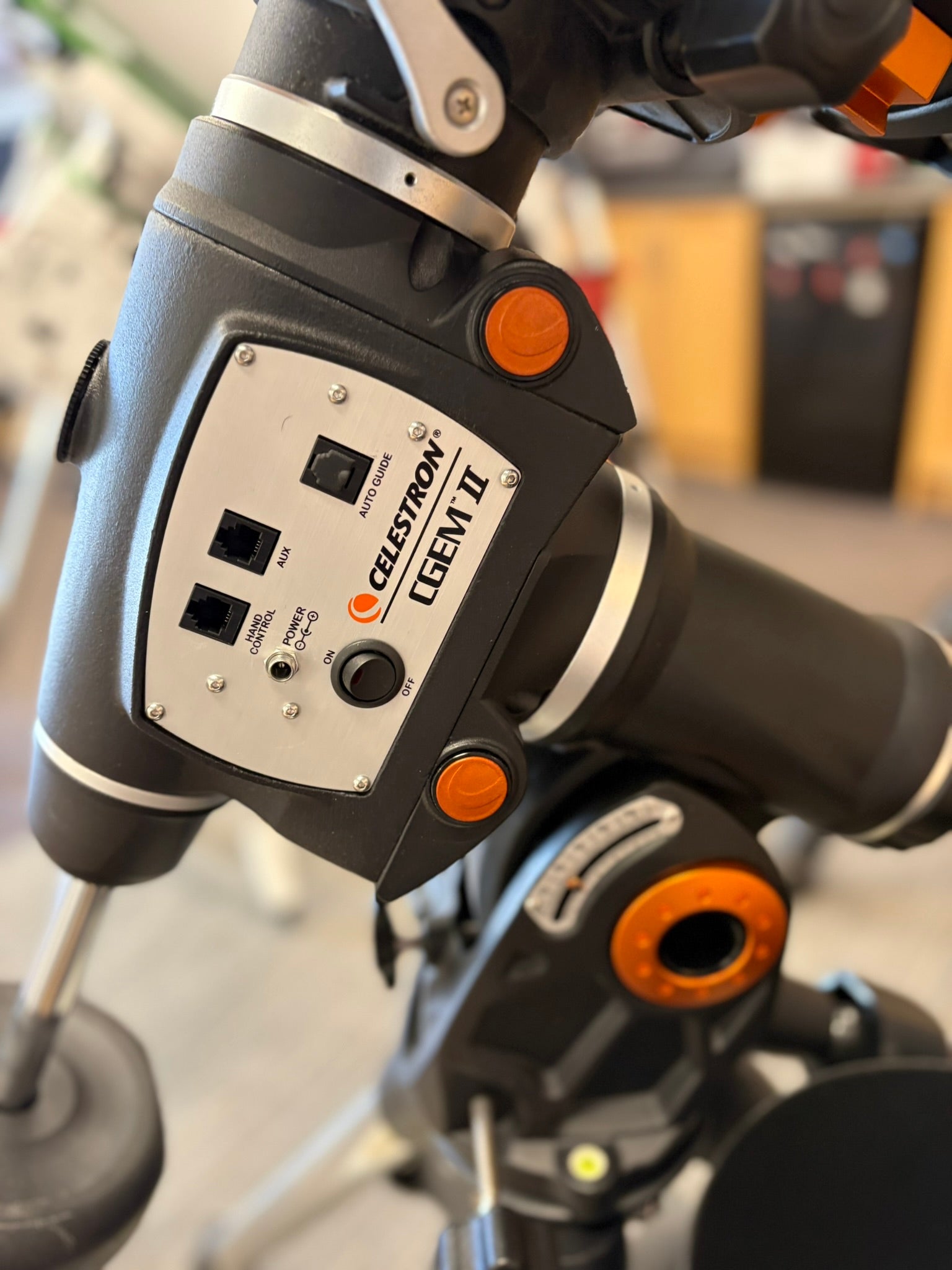


- Description
Used – Excellent Condition. A Celestron CGEM II computerized German equatorial mount with tripod, in excellent condition and fully tested. A capable, imaging-ready mount that's a great match for SCTs and refractors alike.
What's Included
- Celestron CGEM II German equatorial mount head
- Heavy-duty tripod
- NexStar+ hand controller
- Counterweight(s)
- OTA Show is not included in this package but can be purchased.
About the CGEM II
The Celestron CGEM II is a computerized German equatorial mount rated for roughly a 40 lb (18 kg) payload, with an ergonomic design, All-Star Polar Alignment, and the NexStar+ hand controller with a 40,000+ object database. It's a popular choice for both visual observing and astrophotography with instruments up to 9.25"–11" SCTs, and pairs especially well with an 8" EdgeHD.
Final Sale
This item is sold as a Final Sale. All used equipment sales are final. Please review our Used Equipment Sale Policy before purchasing.
You may also like
Recently viewed
Recent Blog Posts
View all
Your Guide Graph Is Lying to You
You drove ninety minutes to dark sky, PHD2 held 0.4 arcseconds all night, and half your subs still have eggs for stars. Here are the three things your
Read More
Read More

D-Size vs V-Size: A Complete Guide to Telescope Dovetail Systems
What's the difference between D-size and V-size telescope dovetails? Here's everything you need to know.
Read More
Read More

What Is Back Focus in Astrophotography? Telescope Reducers, Flatteners, and Spacing Explained
What Is Back Focus in Astrophotography? Telescope Reducers, Flatteners, and Spacing Explained
Back focus is one of those astrophotography terms that c
Read More
Read More