




- Description
- Specifications
Product Overview
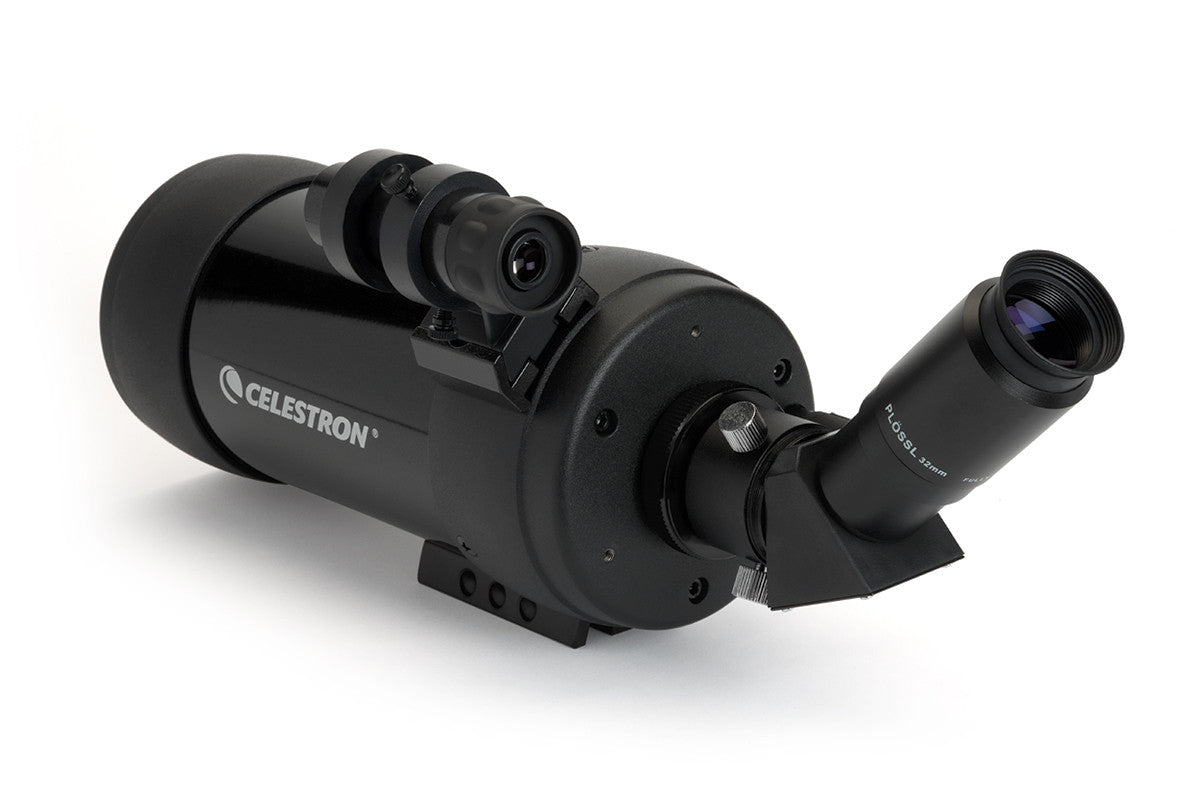
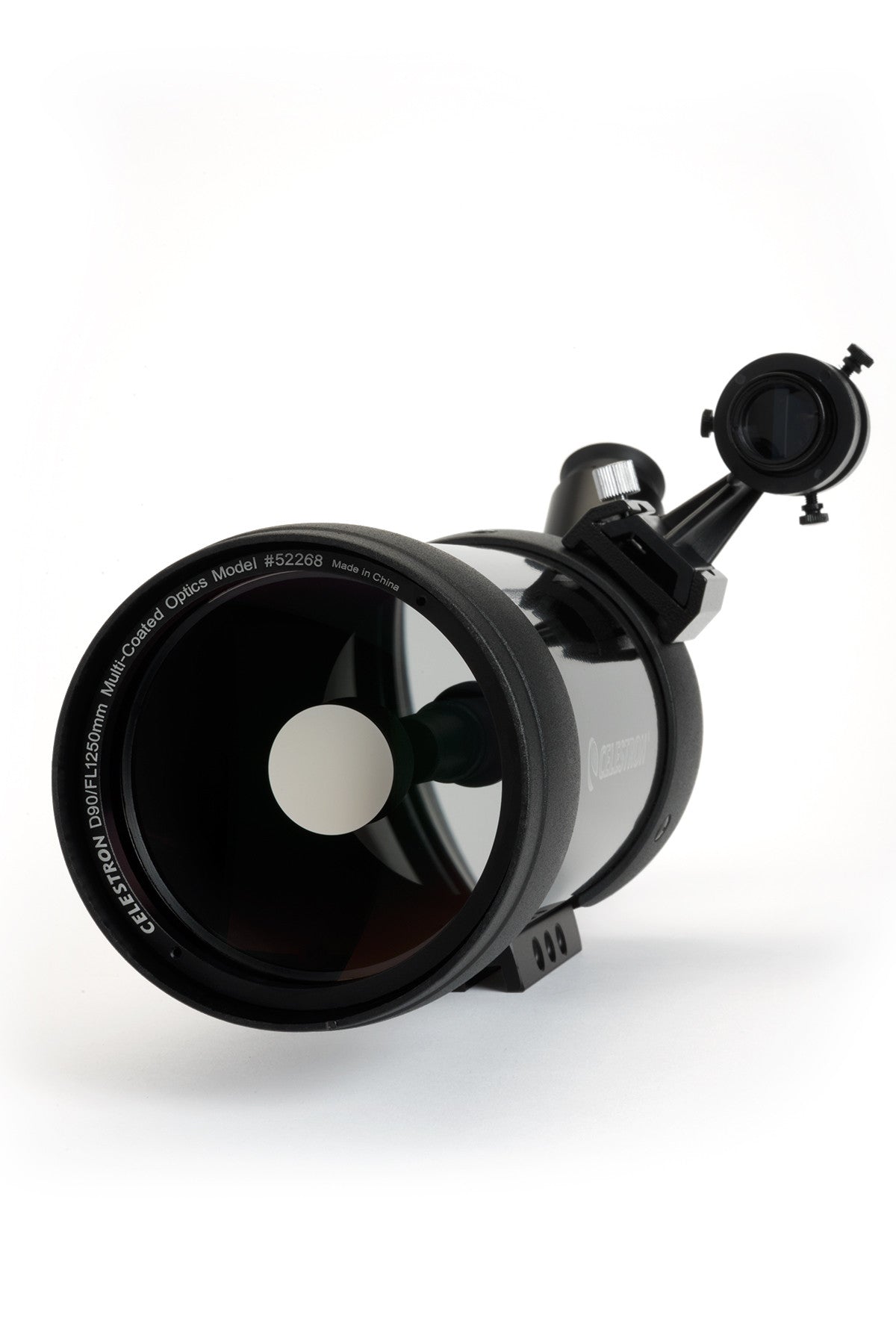
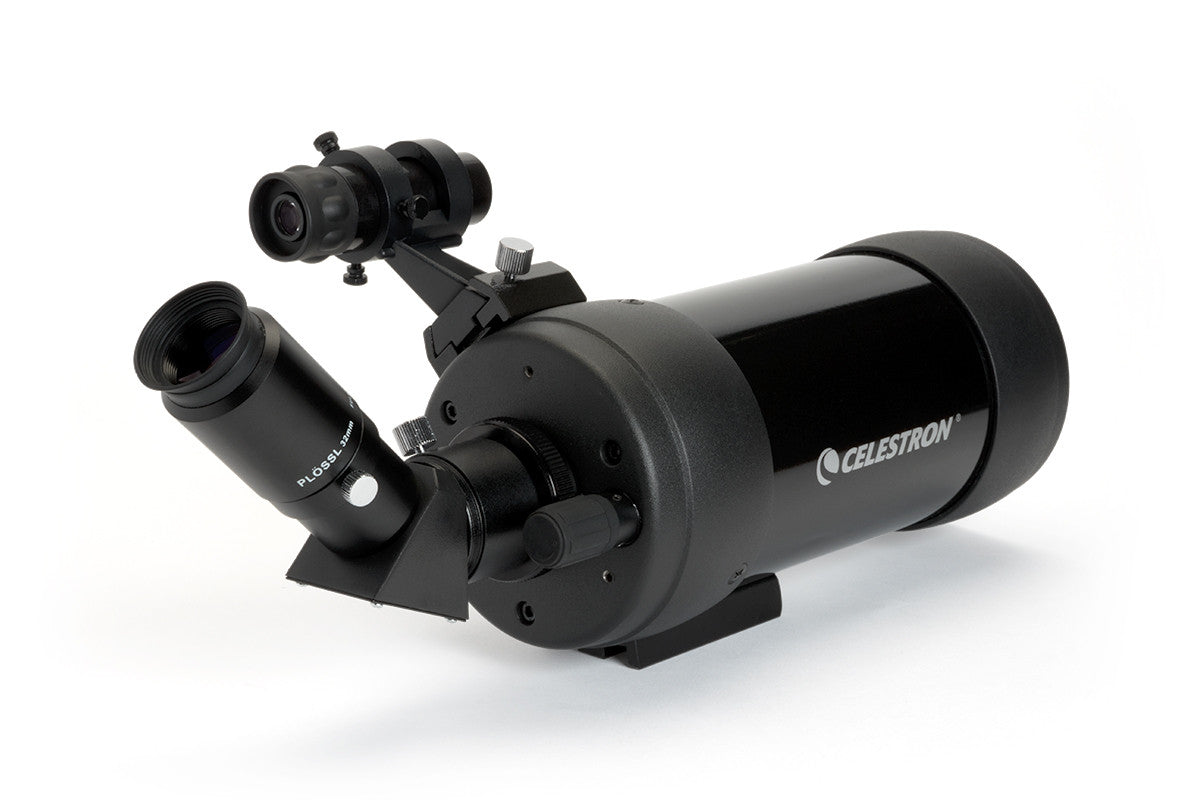
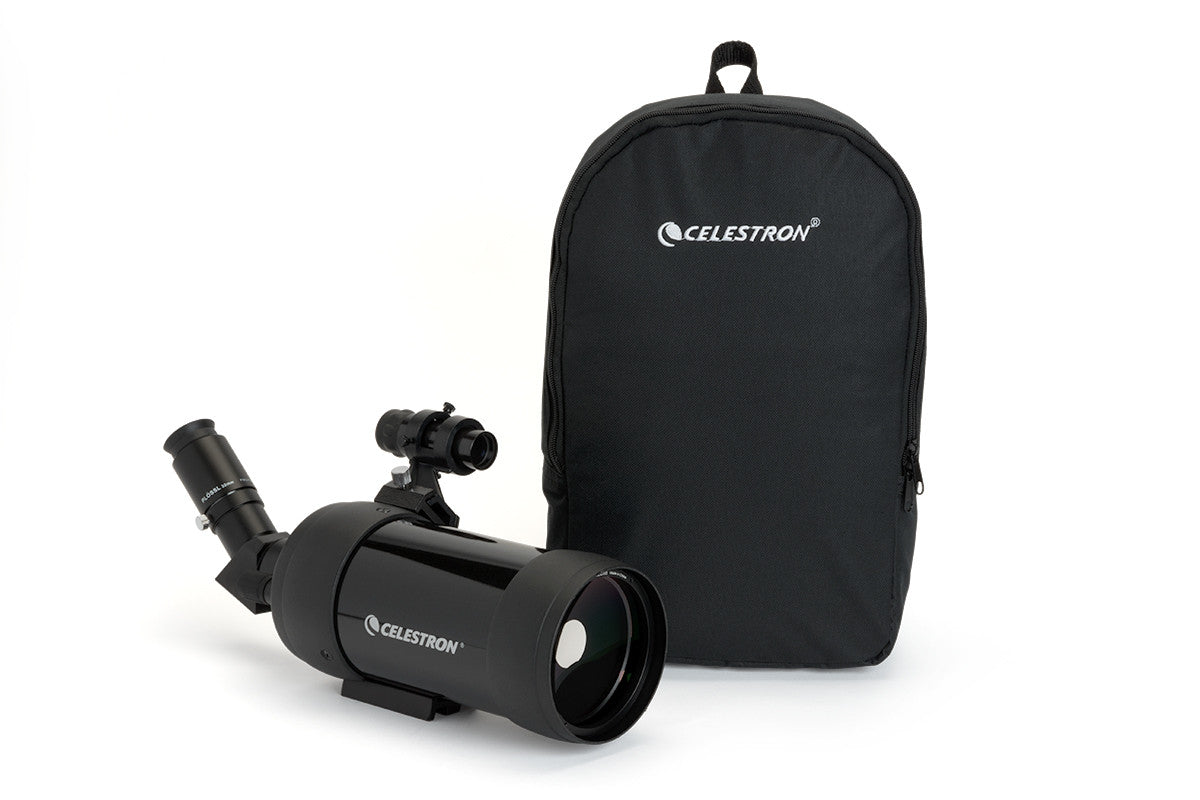
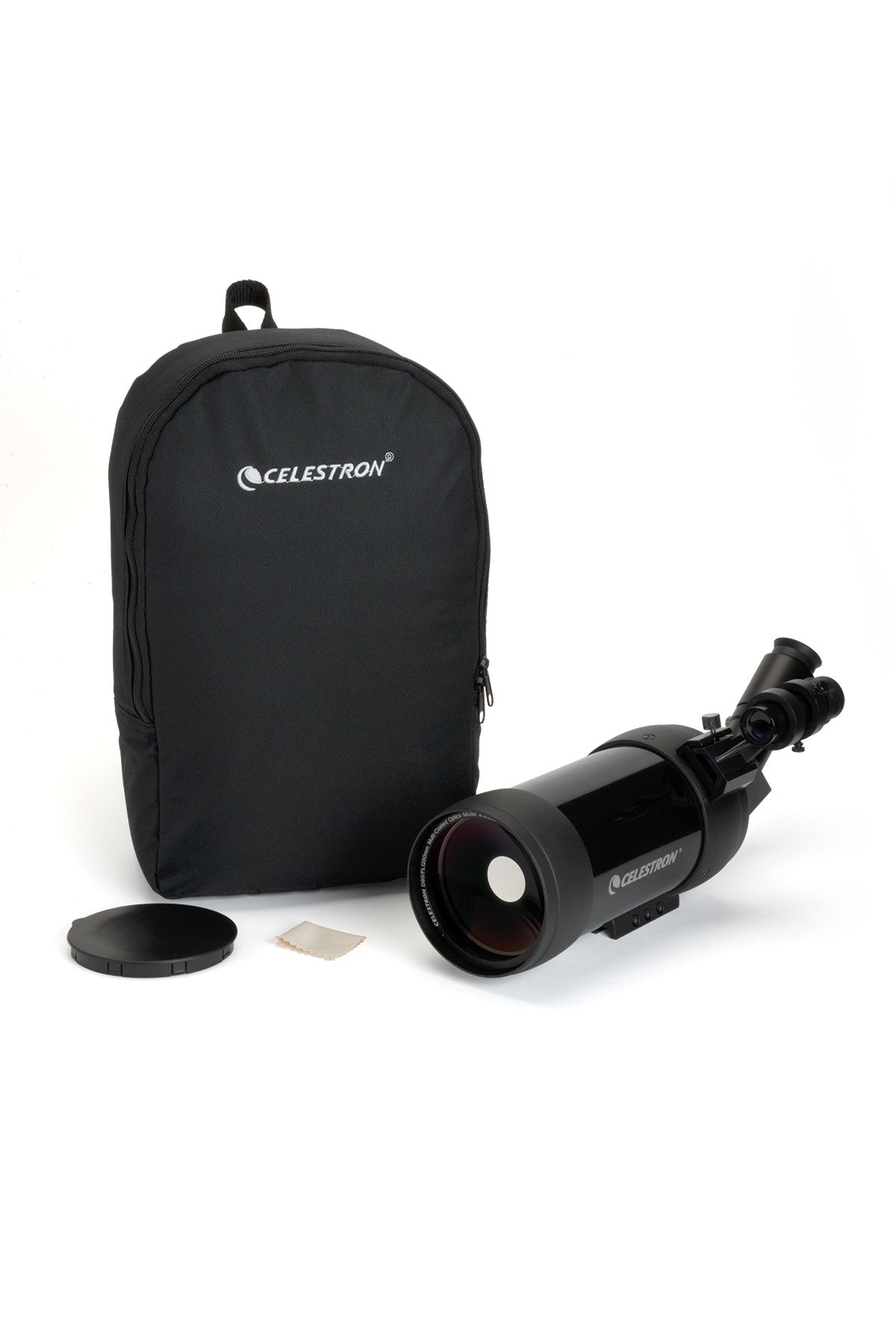
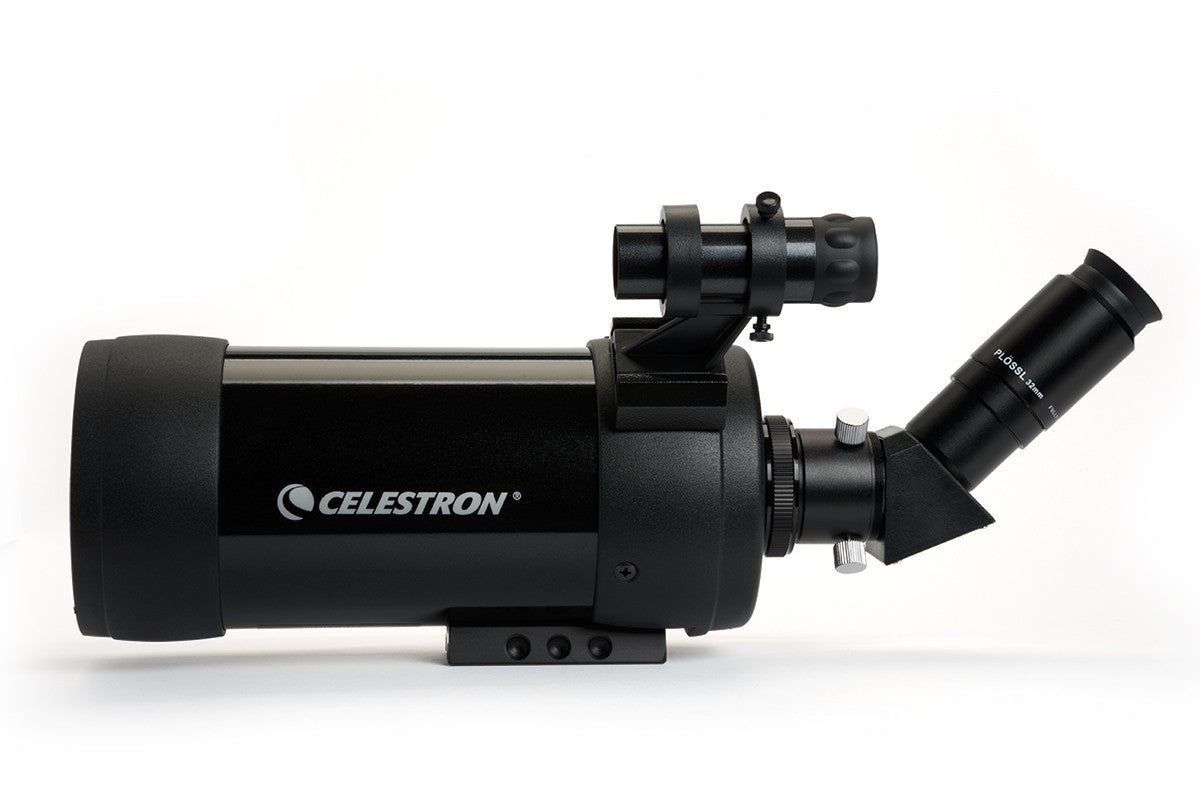
The Celestron C90 MAK is a 90 mm (3.54") Maksutov-Cassegrain spotting scope. The catadioptric design folds a 1250 mm (49") focal length into a compact body — Celestron lists the assembled scope at 400 mm on its longest dimension with the eyepiece fitted, weighing 74 oz (2,100 g). It arrives as a complete kit: a 32 mm Plössl eyepiece giving 39x, a 45° erect-image diagonal, an 8x21 erect-image finderscope, objective and eyepiece caps, and a black heavy woven nylon backpack case.
The erect-image diagonal and finderscope make it a daytime instrument first, with correctly oriented views for wildlife and landscape work. After dark the 1250 mm focal length and a limiting stellar magnitude Celestron rates at 12.27 under ideal skies give it real capability on the Moon, the planets, and brighter double stars.
Who It's For
This is a good match if you:
- Watch wildlife or scenery in daylight: 39x with the supplied eyepiece, a 1.3° field covering 68 ft at 1000 yds (20.7 m at 1000 m), and a 15 ft (4.6 m) close focus for nearer subjects.
- Want one instrument for both day and night: the same scope serves terrestrial viewing and lunar and planetary observing, with limiting stellar magnitudes of 12.27 ideal, 11.27 moderate and 10.27 poor.
- Travel, or want a grab-and-go setup: at 2,100 g and supplied with a backpack case, it packs alongside a photo tripod rather than needing transport of its own.
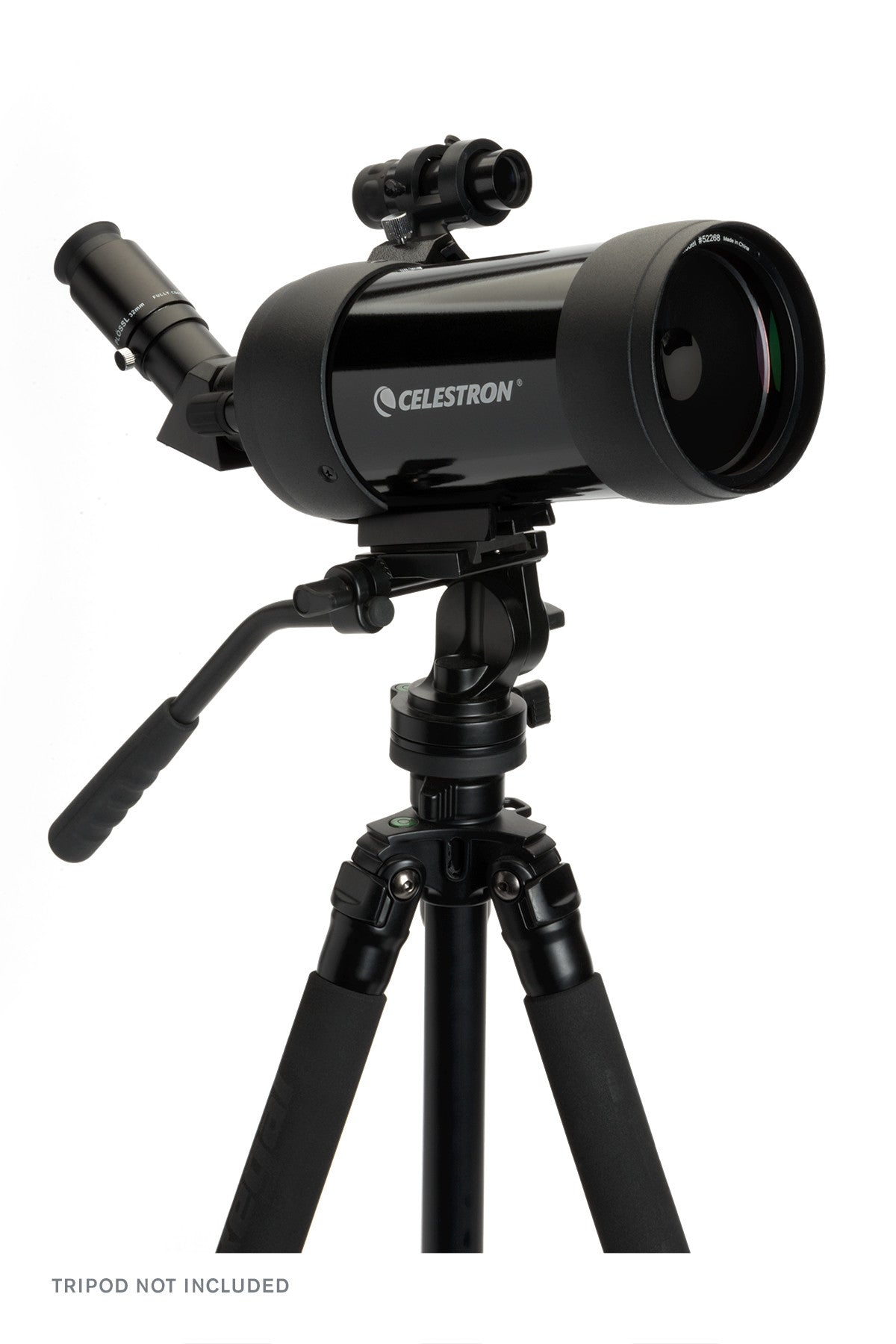
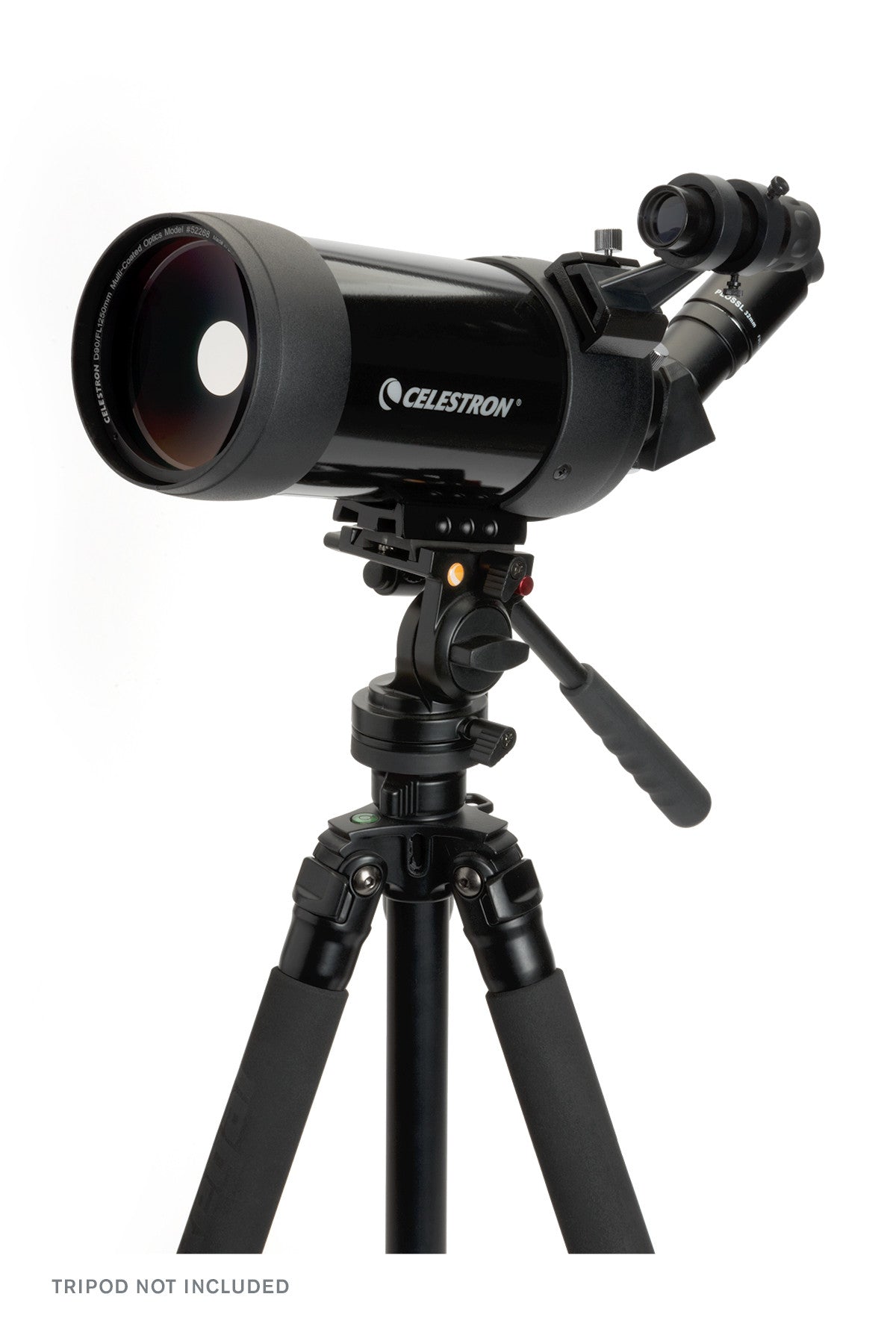
- Already own a mount or tripod head: two 1/4-20 mounting bolt holes take a standard photo or video head, and the 80 mm (3.15") CG-5 dovetail rail drops it onto a CG-5 style saddle.
Key Features & Design
- 90 mm (3.54") Maksutov-Cassegrain optics: a catadioptric design using both a front corrector lens and mirrors, which is what allows a long focal length in a short body.
- 1250 mm (49") focal length: the figure behind the 39x delivered by the supplied 32 mm eyepiece.
- Multi-coated optics: Celestron lists the lens coatings as multi-coated.
- BaK4 prism glass: Celestron specifies BaK4 for the prism glass; the supplied 45° erect-image diagonal is what puts the image the right way up for daytime use.
- Supplied eyepiece: a 32 mm Plössl giving 39x over a 1.3° field, a 2.3 mm exit pupil and 20 mm of eye relief.
- 8x21 erect-image finderscope: for placing a target in the main field before you look through it.
- Mounting: two 1/4-20 mounting bolt holes and an 80 mm (3.15") long CG-5 dovetail rail.
- Water resistant: Celestron rates the body water resistant. It is not nitrogen filled.
- Case included: a black heavy woven nylon backpack.
- Limited Lifetime Warranty from Celestron.
Optical Design
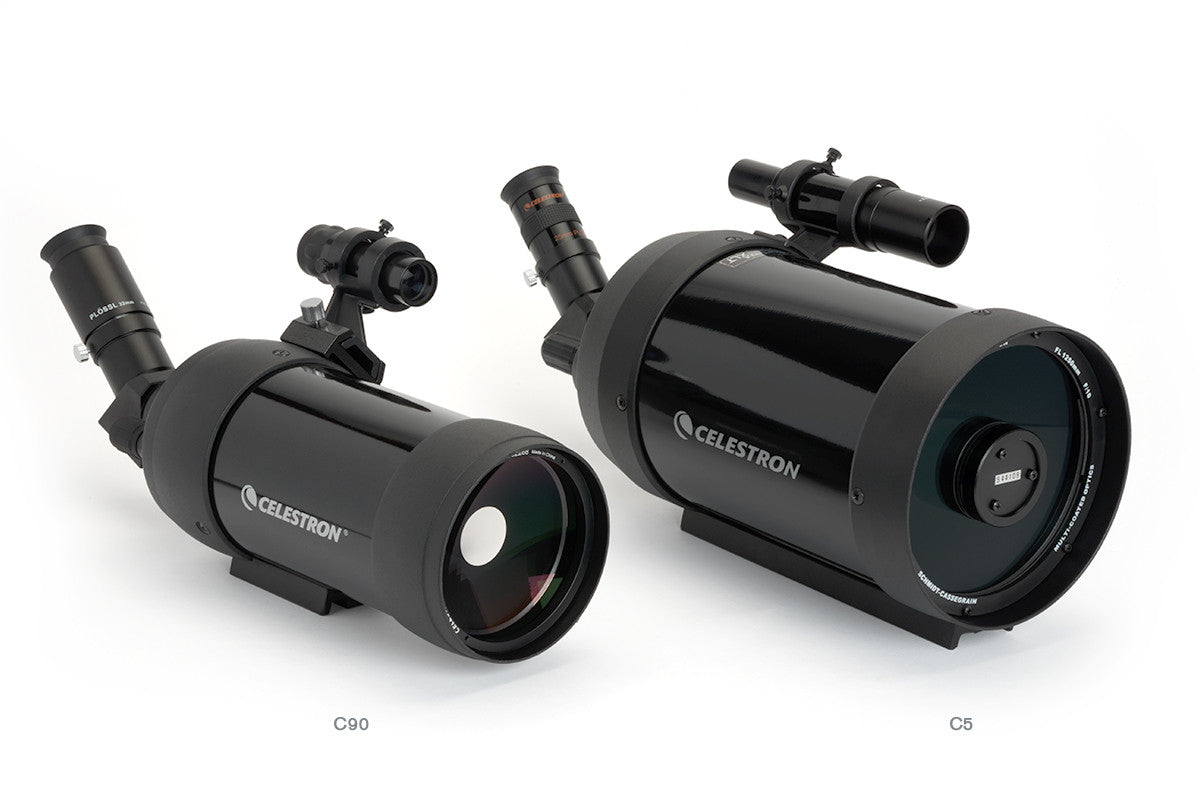
A Maksutov-Cassegrain is a catadioptric telescope — it uses a lens and mirrors together. Light passes through a curved meniscus corrector at the front, reflects from the primary mirror at the rear, folds forward and then back down the tube before exiting through the rear cell. Folding the path is what fits 1250 mm of focal length into an assembly Celestron measures at 400 mm on its longest dimension with the eyepiece fitted.
Long focal length at a modest 90 mm aperture gives this design its character: high magnification per eyepiece and a tightly defined image on small, bright subjects. The supplied 32 mm eyepiece already yields 39x. The trade is field width — 1.3° is a spotting-scope field rather than a sweeping one. Celestron's low-light figures for the scope with that eyepiece are a 2.3 mm exit pupil, a relative brightness of 5.3 and a twilight factor of 59.2.
Recommended Uses
- Birding and wildlife observation: 39x with an erect, correctly oriented image and a 15 ft (4.6 m) close focus.
- Landscape and long-distance viewing: a 68 ft field at 1000 yds (20.7 m at 1000 m) with the supplied eyepiece.
- Lunar and planetary observing: the 1250 mm focal length suits small, bright targets at higher powers.
- Double stars and brighter deep-sky objects: limiting stellar magnitude 12.27 ideal, 11.27 moderate, 10.27 poor.
- Prime-focus photography: Celestron lists the C90 MAK as camera adaptable through its rear cell threads.
- Travel and portable observing: 2,100 g in a supplied backpack case.
Compatibility and Accessory Notes
- Tripods and heads: two 1/4-20 mounting bolt holes accept a standard photo tripod head or video head. A tripod is not included.
- Equatorial mounting: the 80 mm (3.15") long CG-5 dovetail rail fits a CG-5 style saddle, so the scope can ride on an equatorial mount as well as a tripod head.
- Camera connection: Celestron states that the T-Adapter, NexStar 4SE (#93635) attaches an SLR or DSLR to the rear cell threads of a NexStar 4SE or C90 spotting scope for prime-focus photography. A camera-specific T-ring goes between the adapter and the body — Celestron specifies #93402 for Nikon and #93419 for Canon EOS.
- Eyepieces: the scope ships with the 32 mm Plössl and the 45° erect-image diagonal. Celestron does not publish an eyepiece barrel diameter in the C90 MAK specifications, so if you are planning to add eyepieces, send us the list and we will confirm the fit before you order.
Good to Know Before You Order
- One eyepiece is supplied. The 32 mm Plössl gives a single magnification of 39x. Adding eyepieces changes the power, and we can confirm which ones fit before you order.
- Water resistant, not nitrogen purged. Celestron rates the body water resistant and lists nitrogen filling as "No", so it is not sealed against internal fogging the way a nitrogen-filled scope is.
- Close focus is 15 ft (4.6 m) with the included eyepiece, which sets how near a subject can be and still come to focus.
- No tripod or mount is included. The 1/4-20 holes and the CG-5 rail cover both photo-tripod and equatorial mounting, and we can point you to a head or mount that suits how you plan to use it.
- Camera use takes two parts. Prime-focus photography needs the T-adapter and a camera-specific T-ring; neither is included, and both are linked above.
Frequently Asked Questions
Is it difficult to set up?
No. The diagonal and eyepiece slot in, the finderscope mounts to the tube, and the scope goes onto a tripod head through either of the two 1/4-20 holes. There is nothing to assemble beyond that.
What magnification does it give?
39x with the supplied 32 mm Plössl, over a 1.3° field — 68 ft at 1000 yds (20.7 m at 1000 m). Other eyepieces change the power; ask us and we will confirm which ones will fit.
Can I use it for astronomy as well as daytime viewing?
Yes. Celestron rates the limiting stellar magnitude at 12.27 under ideal skies, 11.27 in moderate conditions and 10.27 in poor ones. The 1250 mm focal length suits the Moon, the planets and double stars, while the 1.3° field with the supplied eyepiece is narrow for large deep-sky objects.
Can I attach a camera?
Yes — Celestron lists the C90 MAK as camera adaptable. Prime-focus photography uses the T-Adapter, NexStar 4SE (#93635) on the rear cell threads, plus the T-ring for your camera body. Both are linked in the compatibility notes above.
What is the focal ratio?
Celestron does not publish an f-number for the C90 MAK in its specifications. If you need it for a particular calculation, get in touch and we will work from the figures Celestron does publish.
Does it come with a case?
Yes — a black heavy woven nylon backpack case, along with the objective lens cover and eyepiece lens cap.
How does it differ from a refractor spotting scope?
The folded Maksutov-Cassegrain light path fits 1250 mm of focal length into a far shorter body than a refractor of the same focal length would need, which is what produces 39x from a 32 mm eyepiece. The trade is a narrower field than a short-focal-length refractor spotter of similar aperture.
When is it not the right choice?
If your interest is wide-field sweeping — large star fields, or following fast-moving birds across a broad field — the 1.3° field with the supplied eyepiece is narrow for that, and a shorter-focal-length spotting scope or a good pair of binoculars covers more ground at once.
Bottom Line
In short: a 90 mm Maksutov-Cassegrain that folds 1250 mm of focal length into a backpack-sized body, supplied complete with a 32 mm Plössl for 39x, an erect-image diagonal and finderscope, and a nylon case. Add a tripod head or a CG-5 saddle and it works in daylight and after dark; add the T-adapter and a T-ring and it takes a camera at prime focus.
| Optical design | Maksutov-Cassegrain |
|---|---|
| Objective lens diameter | 90 mm (3.54") |
| Focal length | 1250 mm (49") |
| Magnification | 39x (with included eyepiece) |
| Eyepiece | 32 mm Plössl (1.26") |
| Angular field of view | 1.3° with included eyepiece |
| Linear field of view | 68 ft at 1000 yds (20.7 m at 1000 m) with included eyepiece |
| Exit pupil | 2.3 mm (0.1") with included eyepiece |
| Eye relief | 20 mm (.78") with included eyepiece |
| Close focus | 15 ft (4.6 m) with included eyepiece |
| Twilight factor | 59.2 with included eyepiece |
| Relative brightness | 5.3 with included eyepiece |
| Limiting stellar magnitude | Ideal: 12.27 · Moderate: 11.27 · Poor: 10.27 |
| Lens coatings | Multi-Coated |
| Prism glass type | BaK4 |
| Environmental protection | Water Resistant |
| Nitrogen filled | No |
| Tripod adaptable | Yes — two 1/4-20 mounting bolt holes and an 80 mm (3.15") long CG-5 dovetail rail |
| Camera adaptable | Yes |
| Dimensions | 400 mm x 260 mm x 260 mm (15.7" x 10.2" x 10.2") with included eyepiece |
| Weight | 74 oz (2,100 g) |
| Carrying case | Black heavy woven nylon backpack |
| Included accessories | 32 mm Plössl eyepiece · 45° erect image diagonal · 8x21 erect image finderscope · objective lens cover · eyepiece lens cap · backpack case |
| Warranty | Limited Lifetime Warranty |
You may also like
Recently viewed
Recent Blog Posts
View all
Your Guide Graph Is Lying to You
Read More

D-Size vs V-Size: A Complete Guide to Telescope Dovetail Systems
Read More

What Is Back Focus in Astrophotography? Telescope Reducers, Flatteners, and Spacing Explained
Read More