


- Description
- Specifications
Product Overview
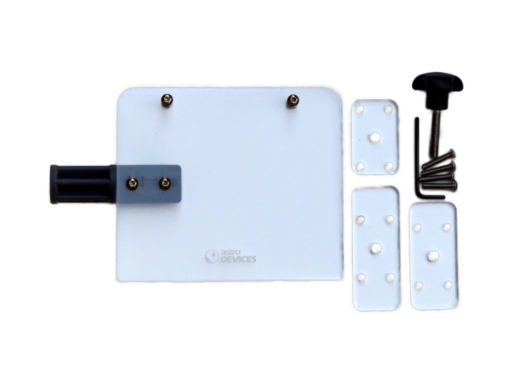
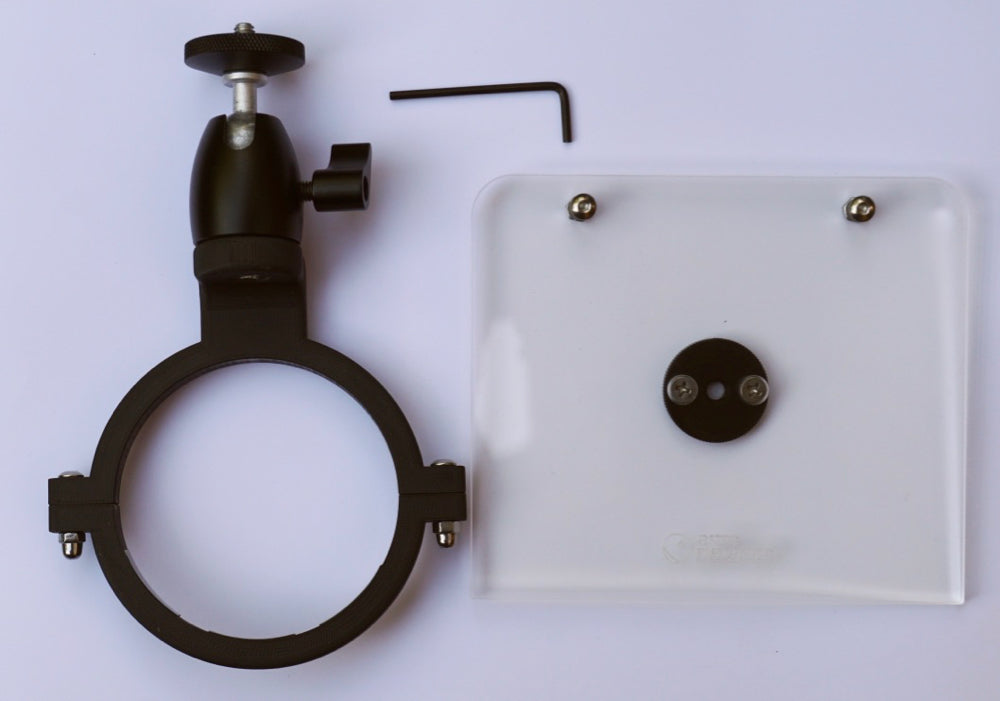
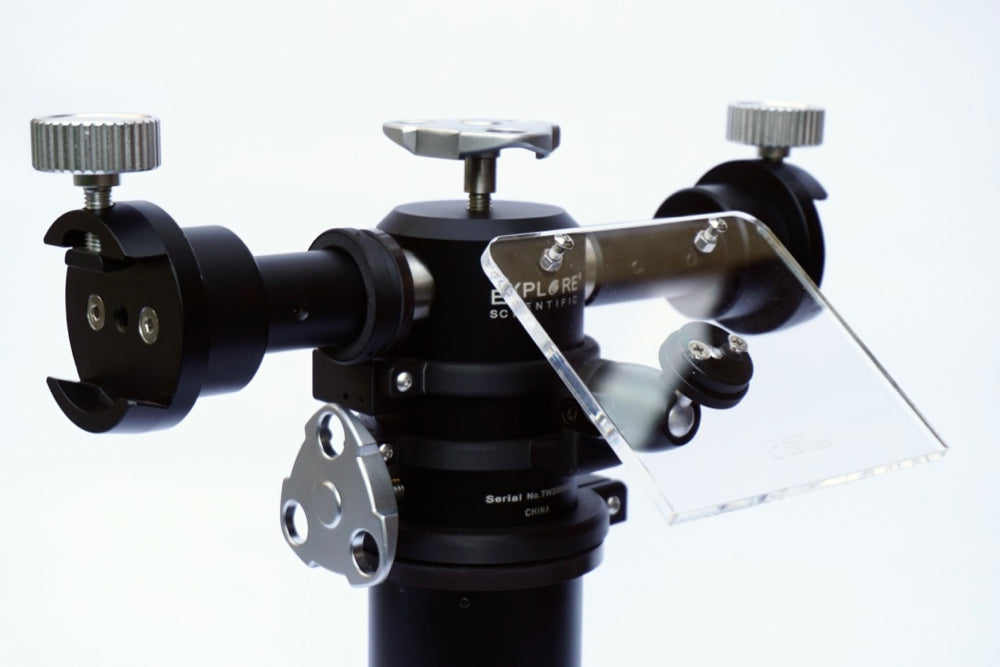
The Astro Devices Nexus DSC Shelf gives your Nexus DSC or Nexus DSC Pro a dedicated home on the Explore Scientific Twilight-II mount. Cut from clear acrylic, it keeps your digital setting circles computer attached to the mount and within easy reach while you observe, so the unit no longer dangles from a cable or gets set down on the ground. The shelf arrives with a clamp and a ball-head mount, giving you an adjustable platform that positions the display where you can read it comfortably.
Who It's For
This shelf is made for Explore Scientific Twilight-II owners who run a Nexus DSC or Nexus DSC Pro. It fits those two units specifically and no other digital setting circles computers. If you already navigate with a Nexus DSC on a Twilight-II, this is the mounting solution designed around that exact pairing.
Key Features & Design
- Clear acrylic shelf: A lightweight, transparent platform that holds the Nexus DSC or Nexus DSC Pro securely.
- Clamp included: Attaches the assembly to the Explore Scientific Twilight-II mount.
- Ball-head mount included: Lets you angle and orient the shelf so the display faces you at a comfortable reading position.
- Purpose-built fit: Sized around the Nexus DSC and Nexus DSC Pro form factor for a stable hold.
- Light footprint: The shelf weighs 300 g, adding minimal load to the mount.
Recommended Uses
Use the shelf during any visual observing session where your Nexus DSC guides you between targets. Keeping the unit fixed to the mount means the display stays where you left it as you move around the eyepiece, and the ball head lets you tilt it toward you whether you are seated or standing. It suits star parties, backyard sessions, and travel setups where you want the navigation computer secured rather than loose.
Compatibility and Accessory Notes
This shelf is compatible only with the Nexus DSC and the Nexus DSC Pro; it does not fit any other digital setting circles units. It is designed to mount on the Explore Scientific Twilight-II mount. The Nexus DSC unit and the pictured mount are sold separately. Each shelf ships with one shelf, one clamp, and one ball-head mount.
Good to Know Before You Order
- Unit fit: The shelf holds the Nexus DSC and Nexus DSC Pro only. Other brands or models of setting circles are not supported.
- Mount fit: It is built for the Explore Scientific Twilight-II. Other mounts are outside its design.
- Sold separately: The kit is the shelf, clamp, and ball-head mount. The Nexus DSC and the mount are not included.
- Material: The clear acrylic keeps weight down at 300 g while providing a solid platform.
Frequently Asked Questions
Is it difficult to set up?
No. The clamp secures the shelf to the Twilight-II mount and the ball-head mount lets you adjust the angle by hand, so the assembly goes together with no tools and only a few minutes of setup.
Which units does it fit?
The Nexus DSC and the Nexus DSC Pro only. It is not compatible with other digital setting circles computers.
Does it come with the Nexus DSC or the mount?
No. You receive the shelf, a clamp, and a ball-head mount. The Nexus DSC unit and the Twilight-II mount are purchased separately.
Can I adjust the viewing angle?
Yes. The included ball-head mount lets you tilt and rotate the shelf so the display faces you at a comfortable reading position.
Bottom Line
The Astro Devices Nexus DSC Shelf pairs a clear acrylic platform with a clamp and ball-head mount to keep your Nexus DSC or Nexus DSC Pro attached to the Explore Scientific Twilight-II. At 300 g it adds almost nothing to your setup while keeping the display exactly where you want it throughout the night.
| Compatible units | Nexus DSC, Nexus DSC Pro (only) |
|---|---|
| Compatible mount | Explore Scientific Twilight-II |
| Material | Clear acrylic |
| In the box | 1 x shelf, 1 x clamp, 1 x ball-head mount |
| Weight | 300 g |
| SKU | ACC039 |
You may also like
Recently viewed
Recent Blog Posts
View all
Your Guide Graph Is Lying to You
Read More

D-Size vs V-Size: A Complete Guide to Telescope Dovetail Systems
Read More

What Is Back Focus in Astrophotography? Telescope Reducers, Flatteners, and Spacing Explained
Read More