


- Description
- Specifications
Product Overview
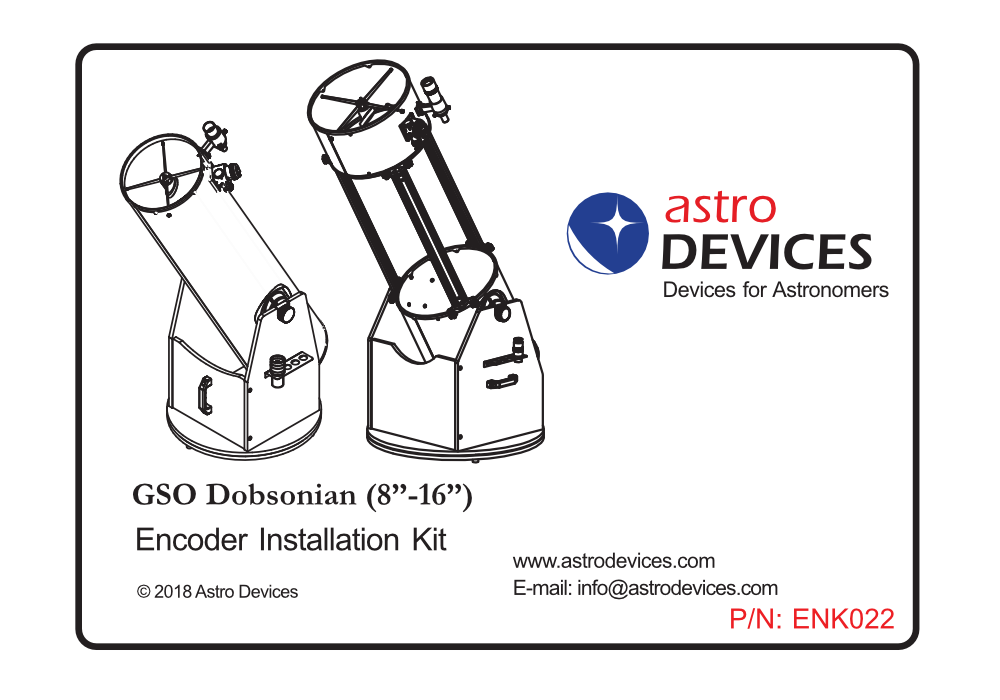
The Astro Devices GSO/Orion Dobsonian Encoder Kit adds the hardware that lets a digital setting circle (DSC) read the position of your telescope. Digital setting circles need encoders on each axis to work, and without them a DSC has no way of interfacing with your scope. The encoders attach to your telescope's altitude and azimuth axes and send position signals to the DSC, so it can tell exactly where the tube is pointed. This kit is built specifically for Dobsonian telescopes made by GSO and Orion, matching their bearing layout so the encoders sit in the right place.
Who It's For
This kit fits Dobsonian telescopes manufactured by GSO, sold under the Apertura, Bintel, Bresser, Omegon, and Zhumell brands, as well as Orion Skyline Dobsonians. It is the companion hardware for anyone adding an Astro Devices Nexus DSC or another compatible digital setting circle to one of these mounts.
Key Features & Design
- Two-axis encoder set: Includes an altitude encoder and an azimuth encoder, covering both movements a Dobsonian makes.
- High-count altitude encoder: The altitude encoder resolves 716,000 steps for precise vertical positioning.
- Choice of azimuth resolution: Standard resolution provides 20,480 steps; High resolution provides 311,296 steps for finer positional accuracy.
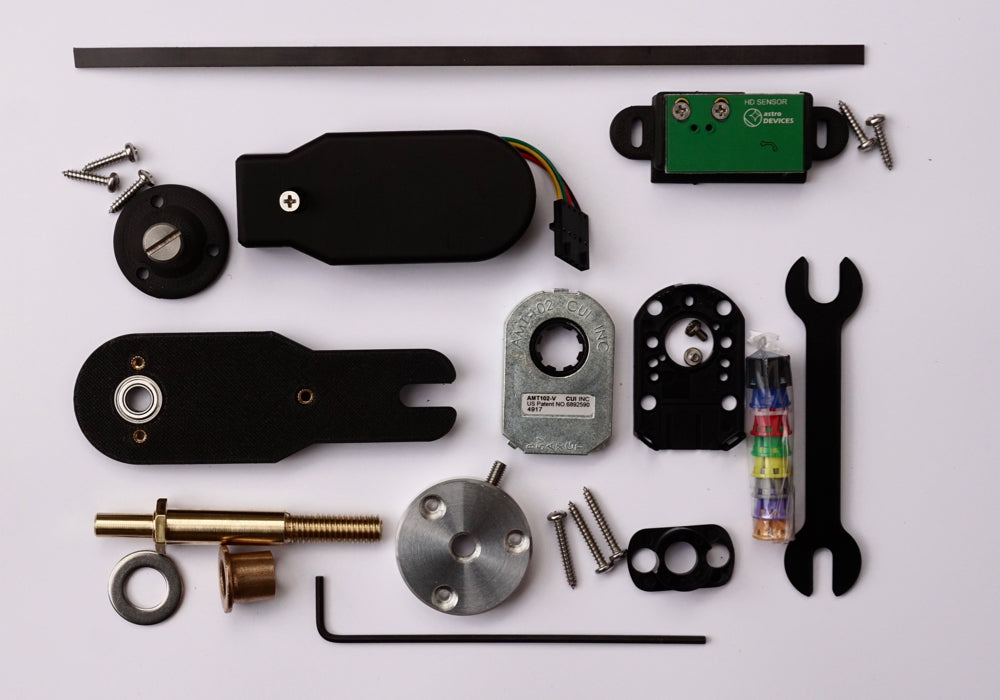
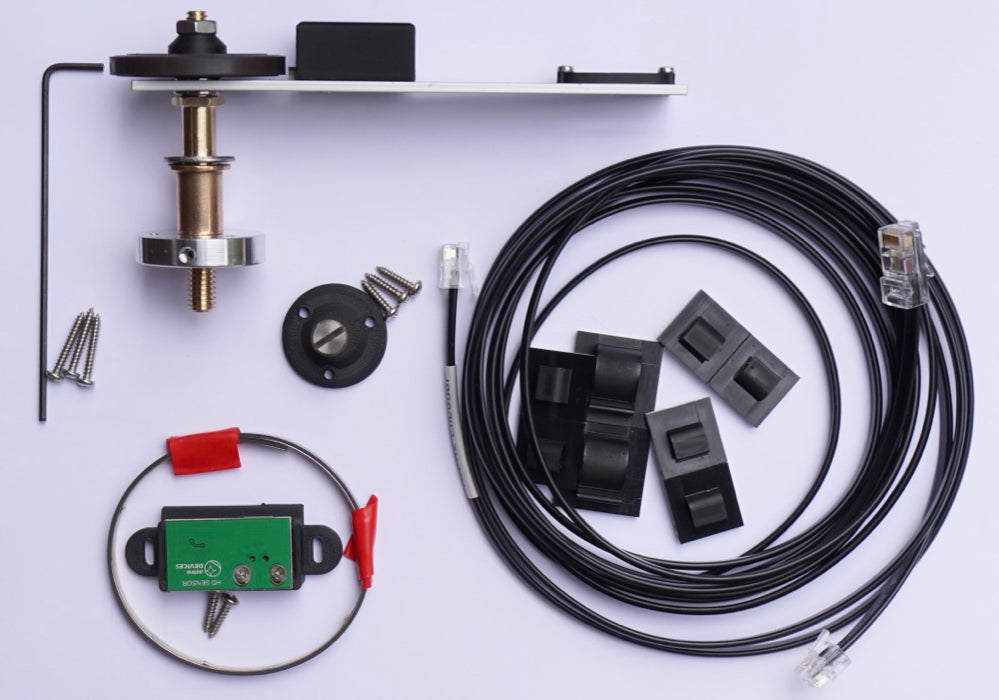
- Complete installation set: Ships with an installation hardware set, an encoder cable, and an installation instruction booklet.
- Model-specific fit: Designed around the GSO and Orion Dobsonian bearing design rather than a universal bracket.
Design and Electronics
The two encoders differ by axis. The altitude encoder is fixed at 716,000 steps, while the azimuth encoder is offered in two resolutions so the kit can match your DSC and your accuracy needs. The 20,480-step azimuth option suits standard push-to navigation, and the 311,296-step option gives much finer resolution for tighter pointing. Both encoders connect to the DSC through the supplied encoder cable.
Recommended Uses
This kit converts a manual GSO or Orion Dobsonian into a push-to instrument. Once installed and paired with a digital setting circle, the encoders let the DSC guide you to catalogued objects and show where the scope is pointed in real time, which helps with star-hopping efficiency, public outreach nights, and locating faint targets quickly.
Compatibility and Accessory Notes
The kit is matched to GSO-built Dobsonians (Apertura, Bintel, Bresser, Omegon, Zhumell) and Orion Skyline Dobsonians. It supplies the encoders, mounting hardware, and cable, but not the digital setting circle itself, which pairs with an Astro Devices Nexus DSC or another compatible unit. The azimuth resolution, Standard or High, is chosen to suit the DSC you plan to use.
Good to Know Before You Order
- Encoders only: This is the encoder installation kit; the digital setting circle is a separate purchase.
- Two resolution variants: Standard uses a 20,480-step azimuth encoder; High uses a 311,296-step encoder. The altitude encoder is 716,000 steps on both.
- Installation guide included: An installation instruction booklet is in the box, and Astro Devices also publishes a downloadable installation PDF.
- Shipping weight: The kit weighs 500 g.
Frequently Asked Questions
Which telescopes does this kit fit?
It fits Dobsonian telescopes made by GSO, including the Apertura, Bintel, Bresser, Omegon, and Zhumell brands, along with Orion Skyline Dobsonians.
Does this include the digital setting circle?
No. The kit provides the two encoders, hardware, and cable. The DSC, such as a Nexus DSC, is purchased separately.
What is the difference between the Standard and High resolution options?
The difference is the azimuth encoder. Standard provides 20,480 steps and High provides 311,296 steps; the altitude encoder is 716,000 steps in both.
Is it difficult to set up?
The kit is made specifically for GSO and Orion Dobsonian bearings, so the encoders line up with the existing hardware. It comes with an installation instruction booklet, and a full installation PDF is available from Astro Devices that walks through each step.
What is in the box?
Two encoders (altitude and azimuth), an installation hardware set, an encoder cable, and an installation instruction booklet.
Bottom Line
The Astro Devices GSO/Orion Dobsonian Encoder Kit is the purpose-built way to add position sensing to a GSO or Orion Dobsonian, turning a manual scope into a push-to instrument when paired with a digital setting circle. With a 716,000-step altitude encoder and a choice of azimuth resolution, it covers both everyday navigation and high-accuracy pointing.
| Type | Encoder installation kit |
|---|---|
| Fits | GSO Dobsonians (Apertura, Bintel, Bresser, Omegon, Zhumell) and Orion Skyline |
| Altitude encoder | 716,000 steps |
| Azimuth encoder | 20,480 steps (Standard) or 311,296 steps (High) |
| In the box | 2 encoders, installation hardware set, encoder cable, installation instruction booklet |
| Weight | 500 g |
You may also like
Recently viewed
Recent Blog Posts
View all
Your Guide Graph Is Lying to You
Read More

D-Size vs V-Size: A Complete Guide to Telescope Dovetail Systems
Read More

What Is Back Focus in Astrophotography? Telescope Reducers, Flatteners, and Spacing Explained
Read More