

- Description
- Specifications
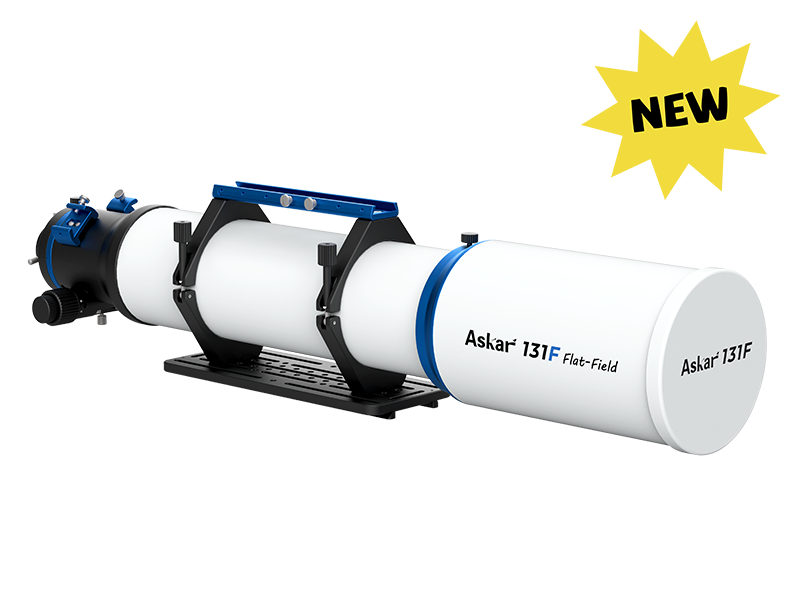
Askar 131F Flat-Field Quadruplet Astrograph — 131mm f/7.5
The Askar 131F Flat-Field is a premium 131mm aperture quadruplet APO astrograph designed for serious deep-sky astrophotographers and visual observers who want a large-aperture, plug-and-shoot instrument with no compromises. Built around a self-flattening quadruplet optical design — three elements at the front, one correcting element at the rear — the 131F delivers a flat, fully corrected image circle of 44mm, covering full-frame sensors without the need for a separate field flattener.
With a 983mm focal length at f/7.5, the 131F occupies an ideal position for wide-field deep-sky imaging: enough aperture to collect serious light on faint nebulae and galaxies, and a focal ratio that keeps exposure times manageable. One piece of ED (extra-low dispersion) glass in the optical group keeps chromatic aberration tightly controlled across the full field.
True to the Askar F Series philosophy, backfocus calculation is completely eliminated. Simply attach your camera adapter, achieve focus, and begin imaging — no spacer math, no flattener purchase required. The included photographic extension tube features a built-in 2-inch filter thread and ships with both M48×0.75 and M54×0.75 adapter options, covering a wide range of DSLR and dedicated astronomy cameras.
The mechanical package is equally well considered: a precision 3-inch rack-and-pinion focuser with 1:10 fine-focus adjustment, a built-in 360° camera rotator, a retractable dew shield, two finder scope bases, and a 300mm Losmandy-style dovetail plate — all finished in the iconic Askar blue-and-white CNC-machined tube body.
Who Is This Product Best For?
- Intermediate and advanced astrophotographers who want to step up to a large-aperture, full-frame-capable astrograph without the complexity of external flatteners or backfocus calculations.
- Deep-sky imagers targeting nebulae, galaxy clusters, and large emission regions who want both resolution and field width in a single instrument.
- One-scope-for-everything users — the 131F performs equally well for visual observing with standard 1.25" and 2" eyepieces, making it genuinely dual-purpose.
- Imagers who use full-frame cameras — the 44mm image circle fully covers Sony, Nikon, and Canon full-frame sensors as well as large dedicated astronomy sensors.
- Observers who prefer a clean, streamlined workflow — the self-flattening design removes setup variables and lets you focus on the sky.
Why Choose the Askar 131F?
- Self-flattening quadruplet design — no separate field flattener to buy, no backfocus distance to calculate. Attach and shoot.
- Full-frame sensor coverage — the 44mm image circle covers all modern full-frame DSLR and mirrorless sensors as well as large-format dedicated astronomy cameras.
- ED glass chromatic control — a single ED element in the quadruplet group suppresses false colour across the entire image field.
- Built-in 360° camera rotator — frame your target at any angle without repositioning the entire telescope.
- Premium 3" R&P focuser with 1:10 fine adjustment — large-format, low-flex focuser suited to heavy camera payloads.
- Dual-purpose: imaging and visual — the included 1.25"/2" visual adapter makes the 131F a capable visual telescope alongside its imaging role.
- Comprehensive standard package — tube rings, handle, 300mm Losmandy dovetail plate, and photographic adapter set are all included.
- Retractable dew shield — practical field protection without adding to transport length.
Recommended Uses
- Wide-field deep-sky astrophotography (nebulae, galaxy groups, star-forming regions)
- Full-frame DSLR and mirrorless astrophotography
- Dedicated astronomy camera imaging (mono and colour sensors)
- Narrowband and broadband filter imaging (2" filter thread built-in)
- Visual deep-sky observing with 1.25" and 2" eyepieces
- Dual-rig or multi-telescope observatory setups
- Astrophotography club and outreach use
Compatibility and Accessory Notes
Camera compatibility: The 131F ships with M48×0.75 and M54×0.75 photographic adapters. DSLR users will need their camera's standard T-ring. Dedicated astronomy camera users with M42, M54, or M48 connections are directly supported. The built-in 2-inch filter thread on the extension tube accepts standard 2" astronomy filters.
Mount compatibility: The included 300mm Losmandy-style dovetail plate is compatible with any mount that accepts a standard Losmandy D-plate saddle. At 7.9kg (OTA) and 9.4kg gross, a robust equatorial mount — such as a Sky-Watcher EQ6-R, iOptron CEM70, or equivalent — is recommended for imaging use.
Optional accessories: The Askar 131F 0.74× reducer is available separately to bring the system to approximately f/5.6 for faster imaging. Electronic focuser motor adapters are compatible with the 3" focuser for remote or automated focus control.
Guiding: Two built-in finder bases allow a guide scope to be mounted directly on the tube. Dedicated guide scopes such as the Askar 52mm guide scope series are compatible.
Important Limitations
- Weight requires a capable mount — at 9.4kg with rings and dovetail, this telescope needs a mid- to heavy-duty equatorial mount. It is not suited to lightweight travel mounts.
- f/7.5 is not ultrafast — for very faint targets in light-polluted skies, the optional 0.74× reducer (sold separately) is recommended to achieve f/5.6 for shorter exposures.
- Not ideal for planetary or lunar imaging — the 983mm focal length and f/7.5 ratio are optimized for wide-field deep sky; high-power planetary work benefits from longer focal lengths.
- Large instrument — at up to 1026mm total length with the dew shield extended, this is a full-size observatory-class refractor. Travel and portability should be considered.
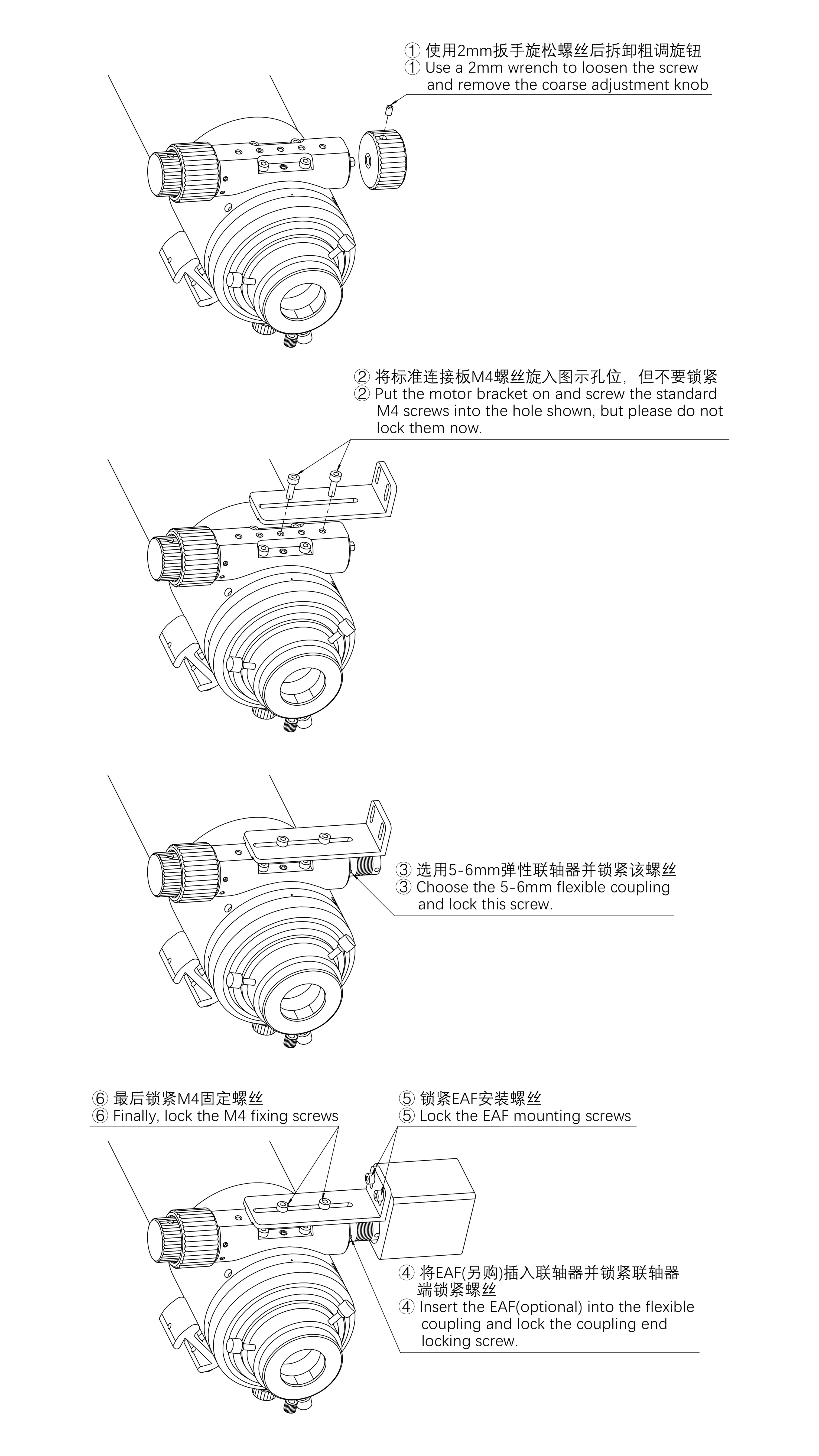
- No electronic focuser included — the focuser is manual; an electronic focuser motor is available separately if motorized focus control is desired.
Frequently Asked Questions
Do I need a field flattener with the Askar 131F?
No. The self-flattening quadruplet design produces a flat field natively. No separate flattener purchase is required, and no backfocus distance calculation is needed.
Does it cover a full-frame sensor?
Yes. The 44mm image circle fully covers all current full-frame DSLR, mirrorless, and dedicated astronomy camera sensors.
Is it suitable for beginners?
The 131F is best suited to intermediate or advanced users who already have a capable equatorial mount and some experience with astrophotography. The self-flattening design does remove significant complexity, but the telescope's size, weight, and price point are more appropriate for experienced observers.
What camera connections does it support?
The standard adapters cover M48×0.75 and M54×0.75 connections. DSLR users need a standard camera T-ring. Most dedicated astronomy cameras (ZWO, QHY, Player One, etc.) with M54 or M48 connections attach directly.
Can I use it for visual observing?
Yes. The included 1.25"/2" visual adapter lets you use standard eyepieces. The 131mm aperture and 983mm focal length provide excellent wide-field visual views of open clusters, nebulae, and galaxies.
What mount do I need?
A mount rated for at least 12–15kg of payload is recommended for imaging. Examples: Sky-Watcher EQ6-R Pro, iOptron CEM70, Rainbow RST-135, or equivalent.
Is a reducer available?
Yes. The Askar 131F 0.74× reducer (sold separately) reduces the focal ratio to approximately f/5.6, enabling faster exposures and a wider field of view.
What makes it different from similarly priced astrographs?
The self-flattening quadruplet design is the key differentiator — you get a flat field across a 44mm image circle without buying or collimating an additional flattener. The built-in 360° rotator, 3" focuser, and full accessory package also add significant real-world value over comparable bare OTAs.
Our Recommendation
At Ontario Telescope and Accessories, we recommend the Askar 131F Flat-Field for astrophotographers who are ready to step up to a large-aperture, full-frame-ready instrument and want the simplest possible imaging workflow. The self-flattening design is genuinely useful — it eliminates an entire category of compatibility and spacing problems that trip up even experienced imagers. Paired with a capable equatorial mount and a modern astronomy camera, the 131F is an exceptionally capable deep-sky imaging system.
If you are a beginner, a lighter and simpler telescope will serve you better while you develop your technique. If you primarily image planets or the Moon, a longer focal length instrument is a better match. But if wide-field deep-sky imaging on full-frame sensors is your goal, the Askar 131F is one of the most complete, ready-to-image packages available at this aperture class.
Optical Diagram Reports
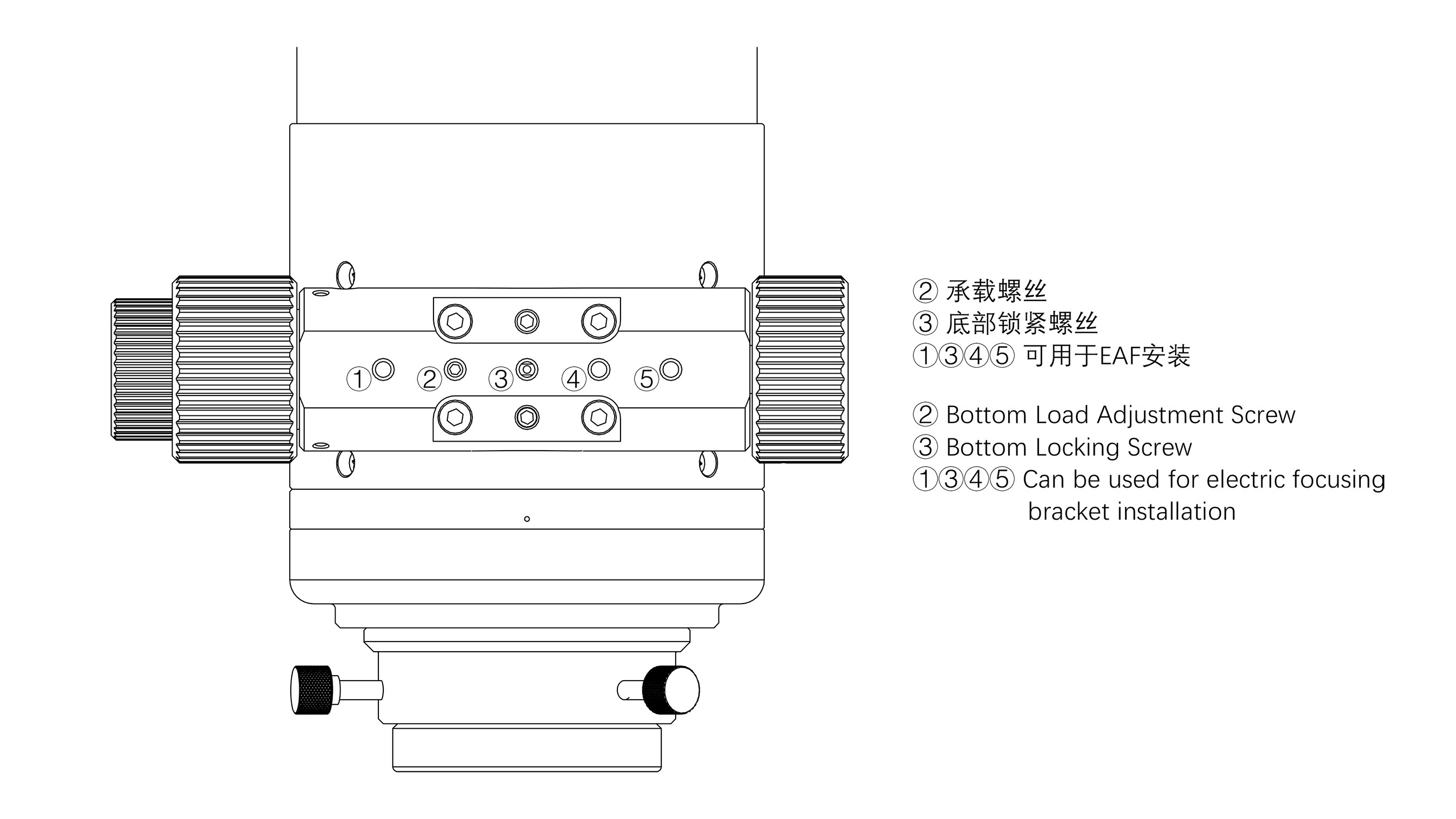
The following optical and mechanical diagrams are provided for customers who wish to review the Askar 131F's optical performance data, mechanical dimensions, connection specifications, and assembly details before purchasing or setting up the instrument.




| Specification | Value |
|---|---|
| Aperture | 131 mm |
| Focal Length | 983 mm |
| Focal Ratio | f/7.5 |
| Optical Design | Quadruplet Air-Spaced APO (3 front elements + 1 rear element, including one ED glass) |
| Image Circle | 44 mm (Full Frame compatible) |
| Focuser | 3" Rack-and-Pinion (R&P) with 1:10 fine adjustment |
| Focuser Travel | 30 mm |
| Visual Adapter | 1.25" and 2" eyepiece holders included |
| Rear-End Thread Types | M78×1–M54×0.75 / M54×0.75–M54×0.75 / M54×0.75–M48×0.75 (with built-in 2" filter thread) |
| Max Imaging Back Distance (focuser retracted) | 73 mm from M48×0.75 male thread / 91 mm from M54×0.75 male thread |
| Min Imaging Back Distance (focuser extended) | 43 mm from M48×0.75 / 61 mm from M54×0.75 |
| Max Visual Back Distance (focuser retracted) | 131 mm from end of 1.25" holder / 141 mm from end of 2" holder |
| Total Length (dew shield contracted, 1.25" adapter) | 878 mm |
| Total Length (dew shield extended, 1.25" adapter) | 963 mm |
| Total Length (dew shield contracted, photo adapter) | 941 mm |
| Total Length (dew shield extended, photo adapter) | 1026 mm |
| Net Weight | 7.9 kg |
| Gross Weight (with tube rings and dovetail) | 9.4 kg |
| Dovetail Plate | 300 mm Losmandy-style |
| Dew Shield | Retractable |
| Camera Rotator | 360° built-in rotator |
| Finder Bases | 2 × standard finder scope bases |
| Standard Package | OTA, pair of tube rings, handle, 300 mm Losmandy dovetail plate, 4-piece photographic adapter set |
You may also like
Recently viewed
Recent Blog Posts
View all
Your Guide Graph Is Lying to You
Read More

D-Size vs V-Size: A Complete Guide to Telescope Dovetail Systems
Read More

What Is Back Focus in Astrophotography? Telescope Reducers, Flatteners, and Spacing Explained
Read More