


- Description
- Specifications
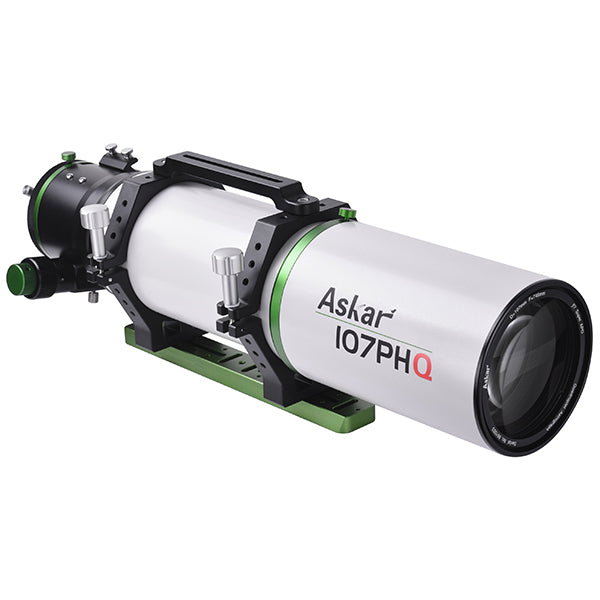
As the first long-focal-ratio Flatfield astrograph from Askar, 107PHQ is born with a special mission: whether you are just getting started in astrophotography, or an enthusiast who has been quite familiar with all equipment and devices, you can always find Askar 107PHQ a useful astrograph which is functionally practical and physically attractive.
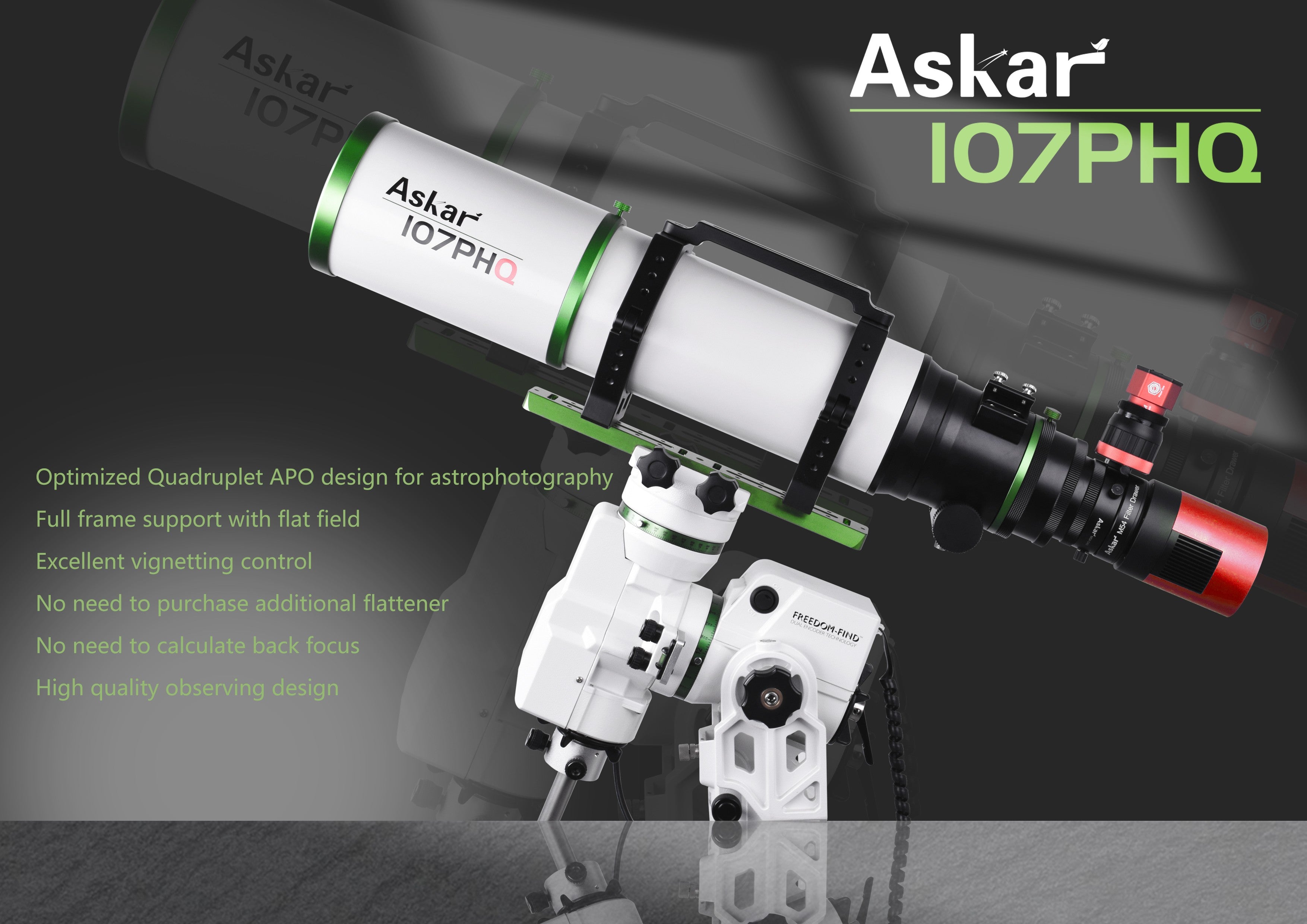
It's especially amateur or beginner friendly since you don't need to attach an extra field flattener to get a satisfactory picture. And for the fact that you don't need a flattener and you can easily get over back-focus calculation and confusing connection steps, all you need to do is to equip your 107PHQ with any possible imaging devices, make the target stay at the focus, and then the whole optical system is perfect for imaging. Askar 107PHQ, a versatile all-rounder. Askar 107PHQ can literally be applied in any conceivable situations, and that’s the top reason why 107PHQ is produced: to slash as much trouble for users as possible.
The sleek 107PHQ is assembled with high-quality CNC-machined components and wrapped with smooth coating. The calm and seriousness is offset by the bright green decorative rings or knobs. The 3.4" rigid focuser is capable of handling a load of 8kg. It’s designed with a long travel distance of 95mm, which is suitable for visual observation. And it's been optimized especially for astrophotography.
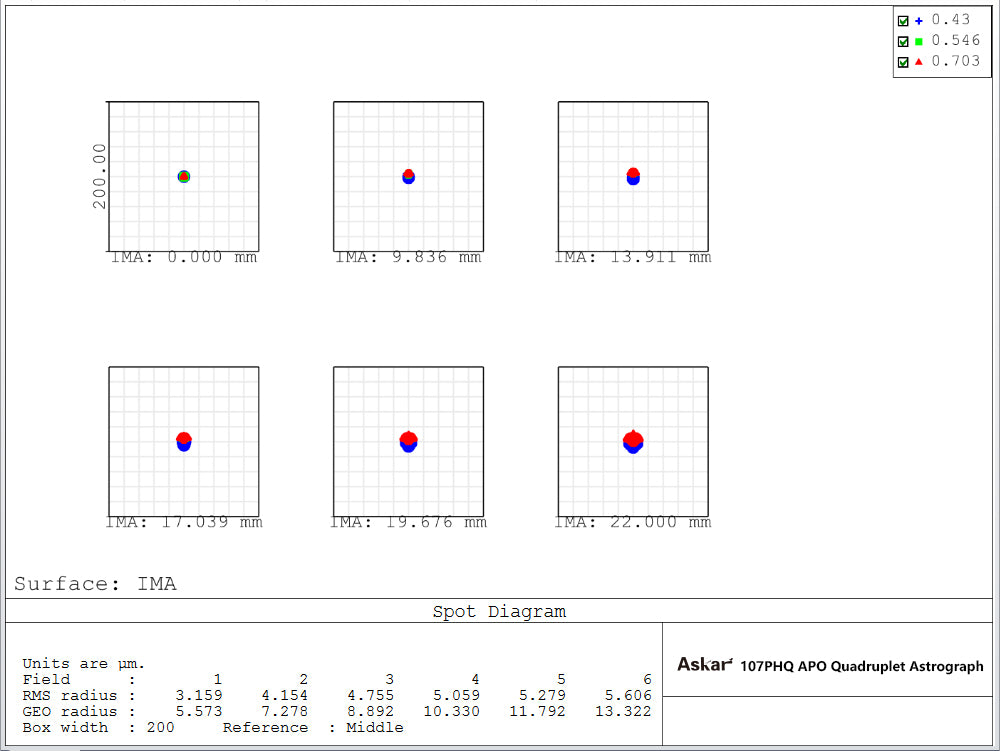
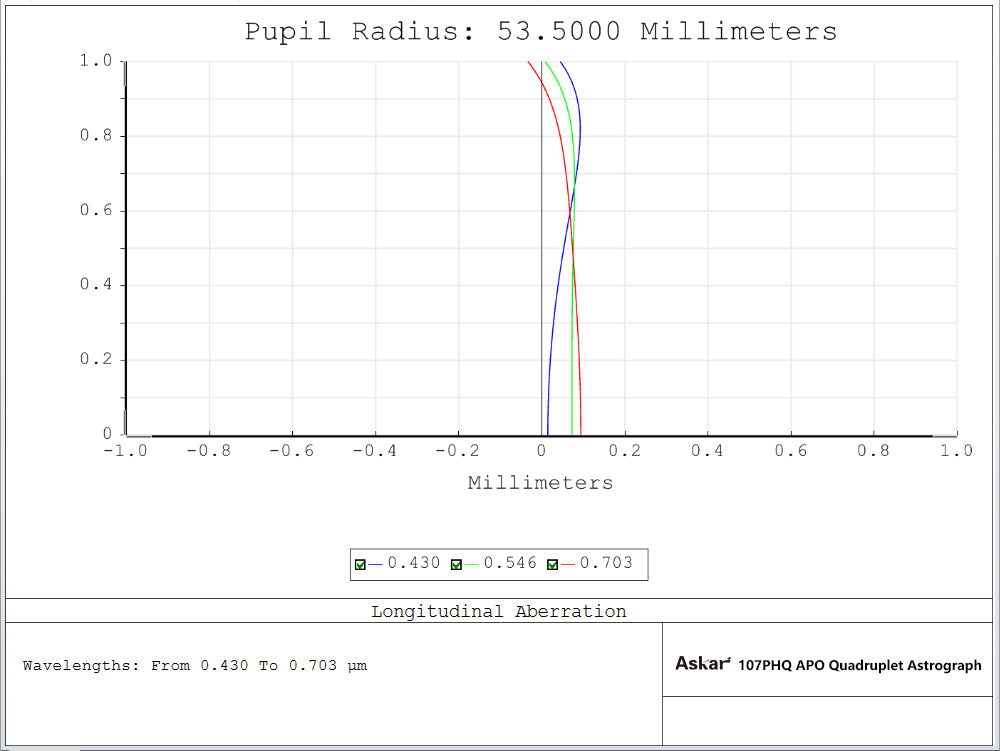
The built-in Flatfield lens is a great contribution to Askar 107PHQ’s imaging ability. It supports 44mm full-frame imaging. The stars around the corner of the images seldom suffer from distortion or deformation. At the center of its field of view, the RMS radius is merely 3um. Even a fastidious user can also be satiated when it comes to the shape of stars. Askar 170PHQ can effectively handle with problems of field curvature and vignette.
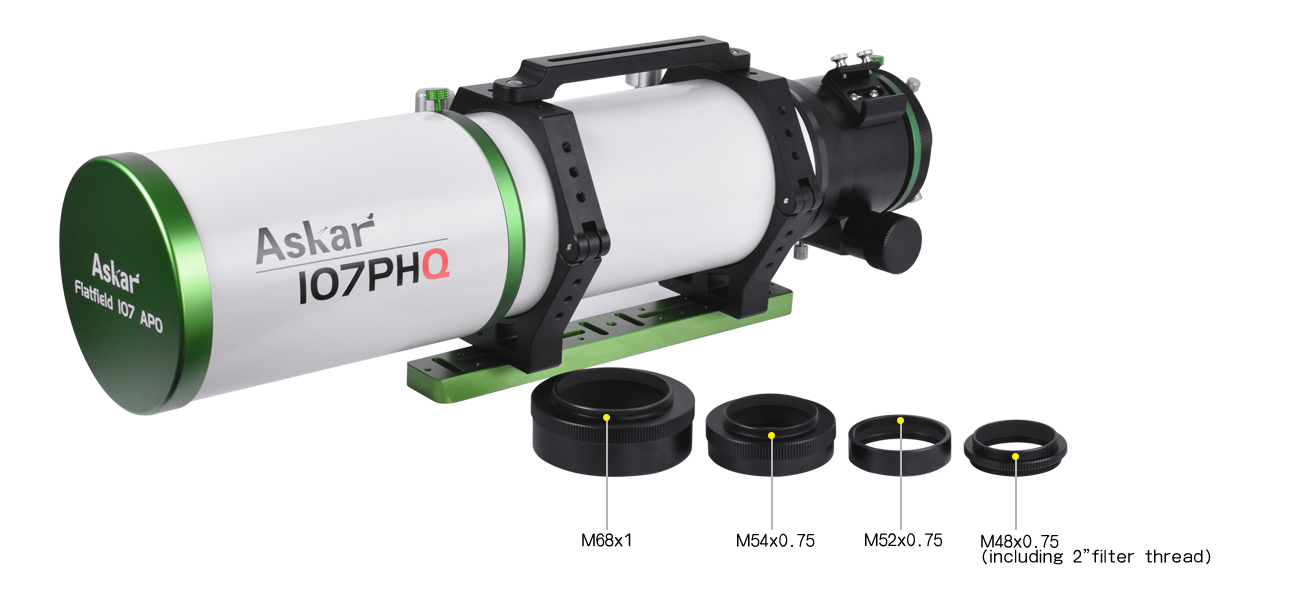
The standard package includes an Askar 107PHQ OTA, a set of four-piece M86-M48 adapters, a pair of tube rings, a 300mm Askar Vixen-style dovetail plate and a high-quality aluminum suitcase.
- Aperture size:107mm
- Focal length:749mm
- Focal ratio:f/7
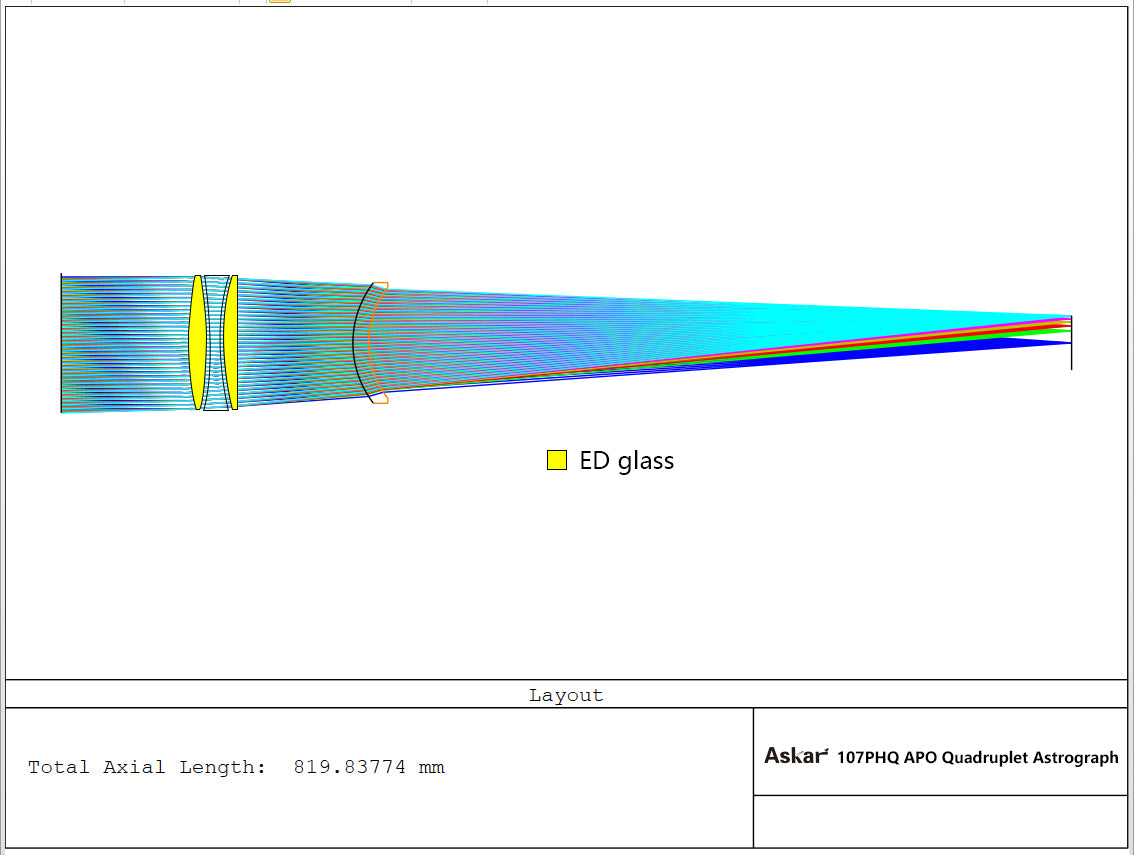
- Objective lens:Quadruplet air-spaced APO (including two ED glass)
- Image circle:44mm
- Maximum accessory connection (with the focuser fully retreated):
- 1. Imaging mode:
- 79mm (from the base of M48×0.75 male thread)
- 99mm (from the base of M54×0.75 male thread)
- 119mm (from the base of M68×1male thread)
- 149mm (from the base of M86×1 male thread)
- 2. Observing mode:
- 120mm (from the end of 2" visual back)
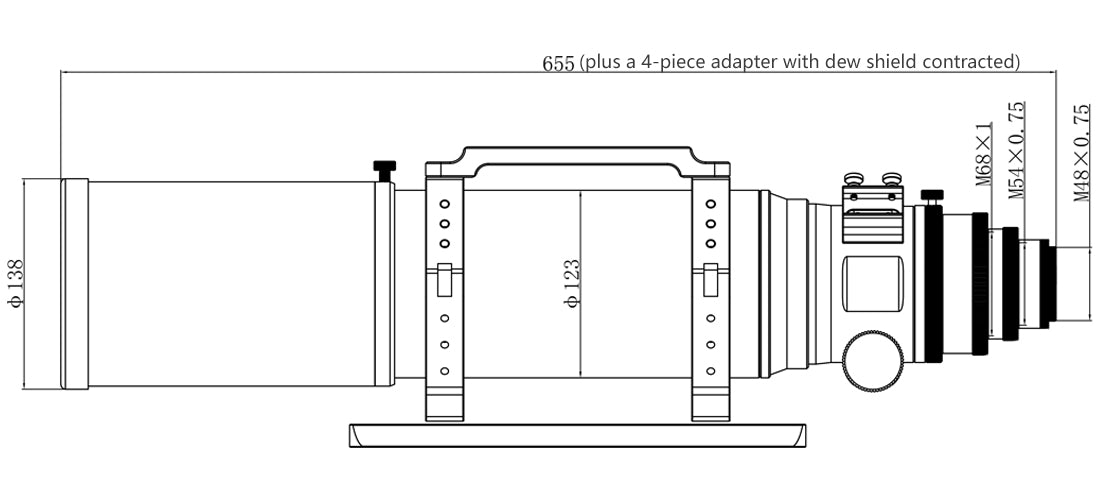
- Total length:603mm(when the dew shield is contracted)
- 754mm(when the dew shield is stretched)
- Net weight:5.7kg
- Gross weight:6.9kg
- Rear-end thread type:M86×1 to M68×1
- M68×1 to M54×0.75
- M54×0.75 to M52×0.75
- M52×0.75 to M48×0.75(with M48×0.75 filter thread)
- Four-piece photographic adapter:M48×0.75
- Standard package items:a 107PHQ OTA,a pair of tube rings, a handle, an Askar 300mm Vixen dovetail plate, a set of four-piece photographic adapters, a manual
You may also like
Recently viewed
Recent Blog Posts
View all
Your Guide Graph Is Lying to You
You drove ninety minutes to dark sky, PHD2 held 0.4 arcseconds all night, and half your subs still have eggs for stars. Here are the three things your
Read More
Read More

D-Size vs V-Size: A Complete Guide to Telescope Dovetail Systems
What's the difference between D-size and V-size telescope dovetails? Here's everything you need to know.
Read More
Read More

What Is Back Focus in Astrophotography? Telescope Reducers, Flatteners, and Spacing Explained
What Is Back Focus in Astrophotography? Telescope Reducers, Flatteners, and Spacing Explained
Back focus is one of those astrophotography terms that c
Read More
Read More