


- Description
- Specifications
Product Overview
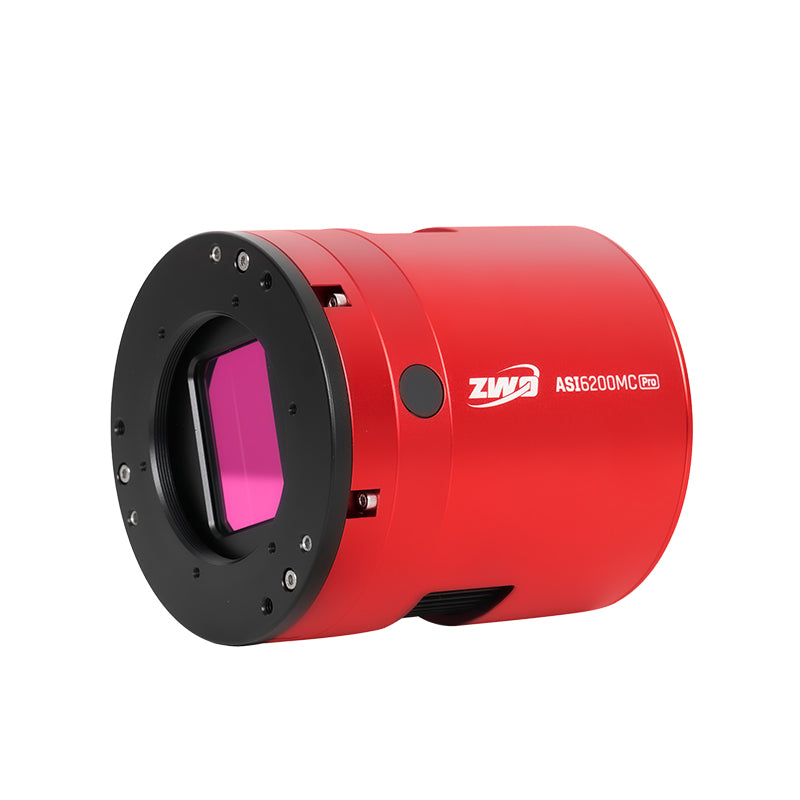
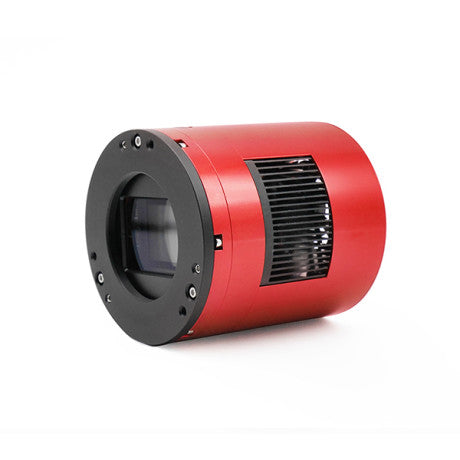
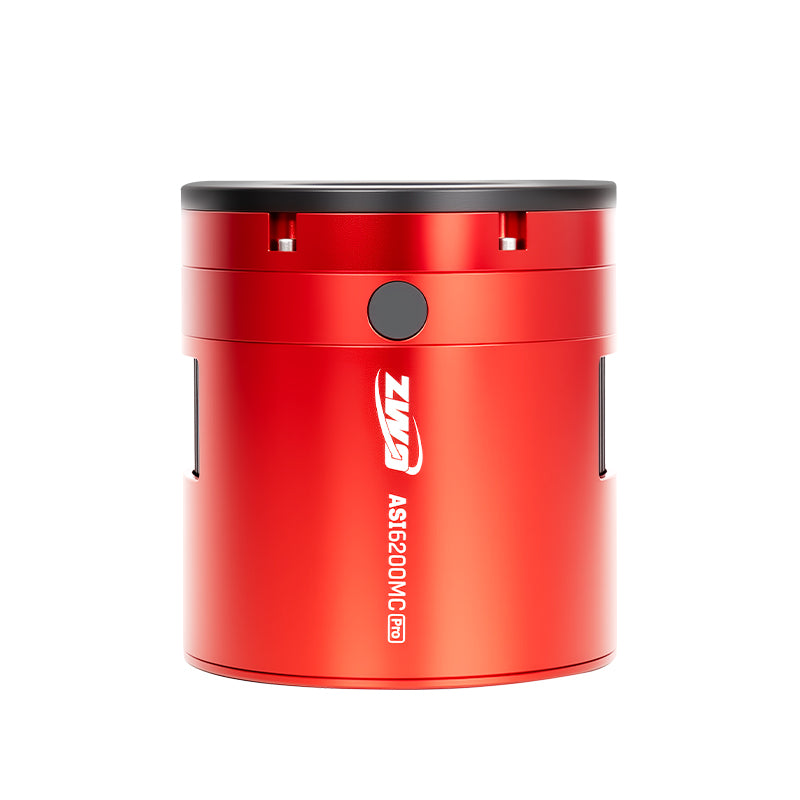
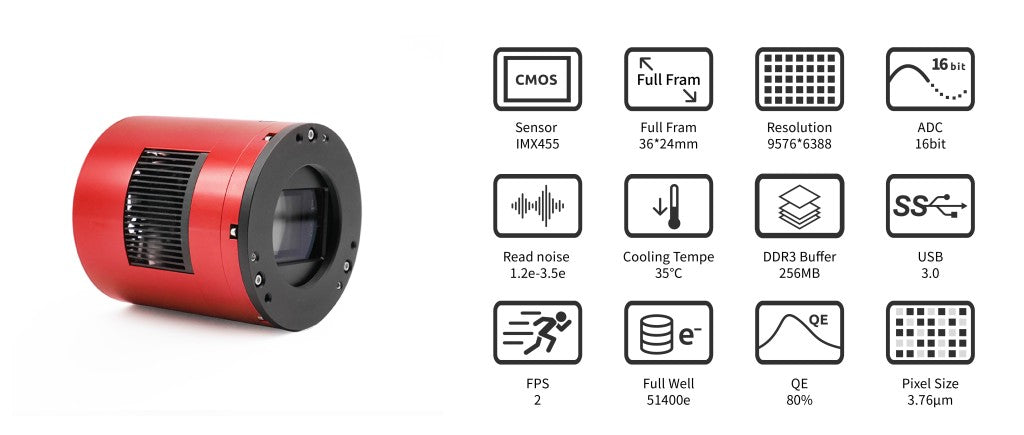
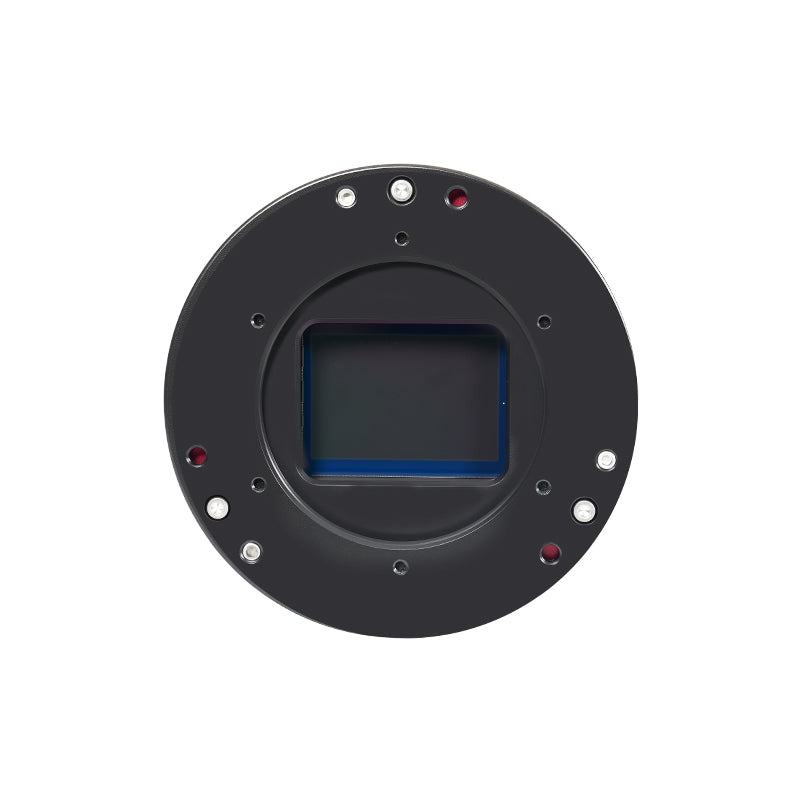
The ZWO ASI6200MM Pro is a cooled full-frame monochrome astronomy camera built around Sony’s IMX455 back-illuminated CMOS sensor. It uses a 36 mm × 24 mm full-frame sensor with 9576 × 6388 resolution, 3.76 µm pixels, native 16-bit ADC, and a 61.2-megapixel image size.
This camera is designed for advanced deep-sky imaging with LRGB, narrowband, and specialist filter workflows. The full-frame sensor, 14-stop dynamic range, low read noise, high quantum efficiency, and two-stage TEC cooling make it a high-end camera for permanent observatory systems and serious portable imaging rigs.
Who It’s For
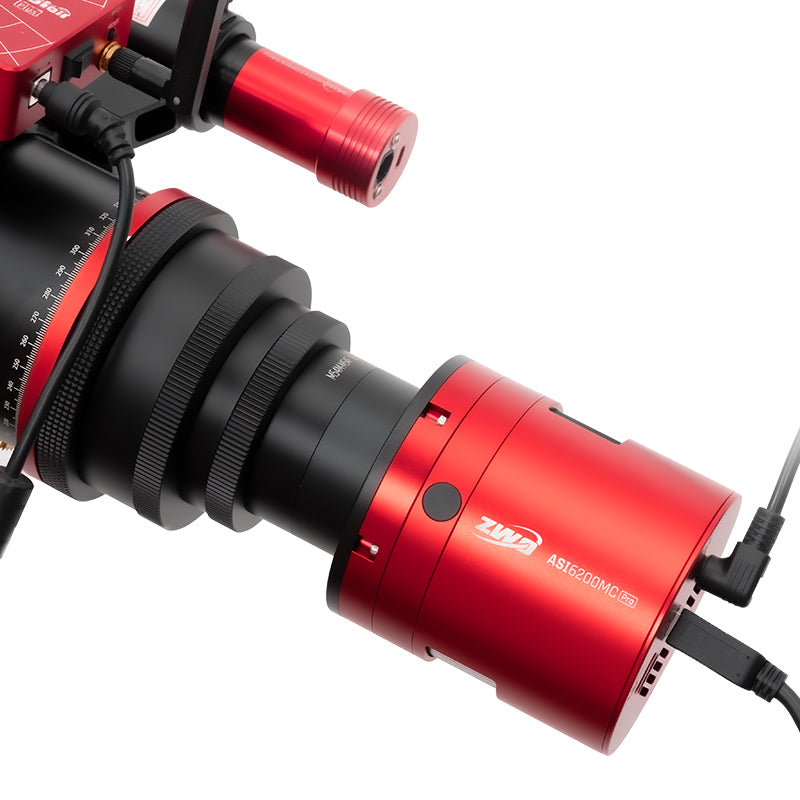
This is a good match if you want maximum sensitivity and filter-based control from a full-frame cooled camera. It suits advanced imagers using a filter wheel, off-axis guider, full-frame-corrected optics, and a stable 12 V power system.
Key Features & Design
- Sony IMX455 monochrome full-frame sensor: 36 mm × 24 mm sensor with a 43.3 mm diagonal.
- 61.2 MP resolution: 9576 × 6388 pixels for high-resolution deep-sky capture.
- Native 16-bit ADC: Supports smooth tonal gradients and high dynamic range imaging.
- High QE: ZWO lists the ASI6200MM Pro quantum-efficiency peak at 91%.
- Two-stage TEC cooling: Reduces sensor temperature by about 30°C–35°C below ambient under ZWO test conditions.
- 512 MB DDR3 buffer: Supports stable USB 3.0 data transfer.
Optical / Mechanical Design
The ASI6200MM Pro uses the full-frame IMX455 monochrome sensor with 3.76 µm pixels and a 43.3 mm diagonal. The monochrome sensor is intended for filter-based imaging and requires a filter wheel or filter drawer when colour or narrowband data is needed.

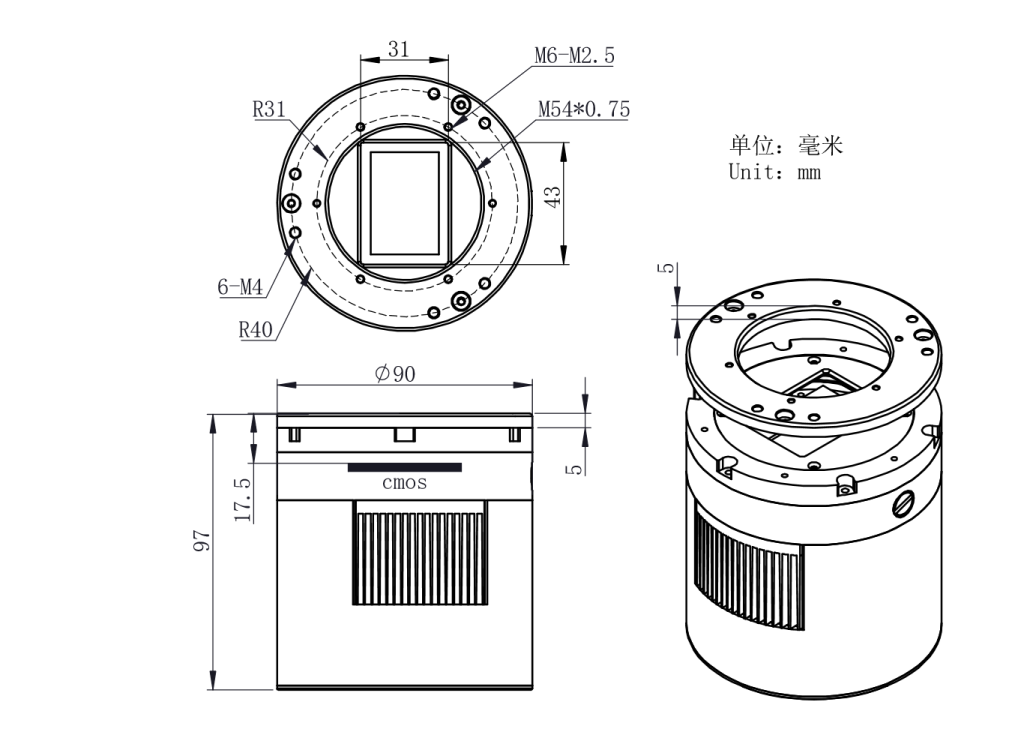
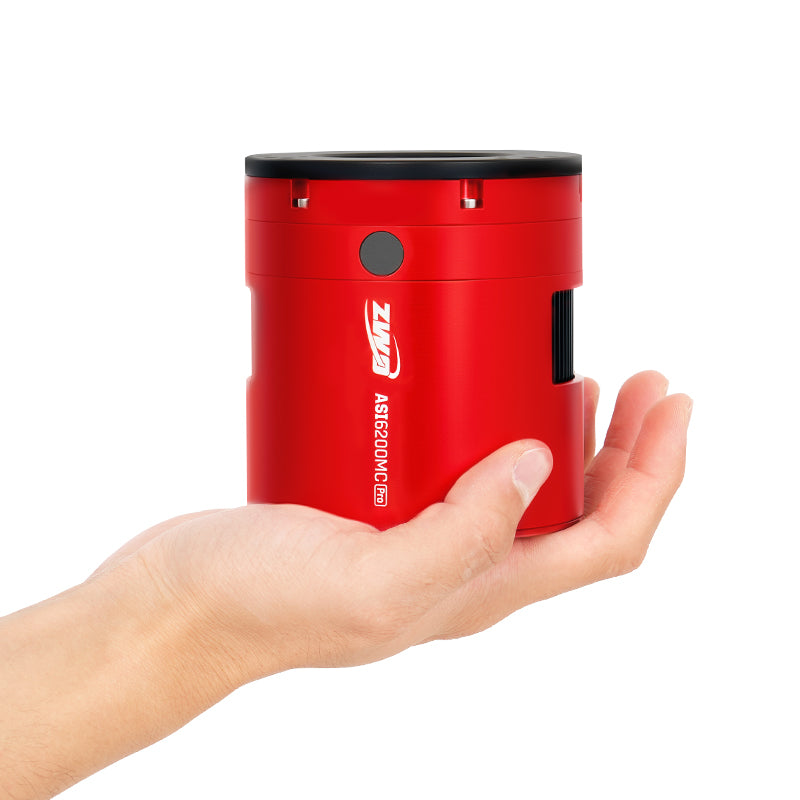
The camera body weighs about 0.7 kg. ZWO specifies a 55 mm back-focus solution for this camera family, and the sensor tilt adjustment system helps with full-frame corner performance when the imaging train requires fine alignment.
Recommended Uses
- LRGB deep-sky imaging: High-resolution luminance and colour-channel capture through filters.
- Narrowband imaging: H-alpha, OIII, SII, and SHO/HOO workflows with suitable filters.
- Full-frame observatory systems: Best paired with a corrected full-frame optical train.
- High-detail imaging: 61.2 MP files support large images, crops, and mosaic projects.
Compatibility and Accessory Notes
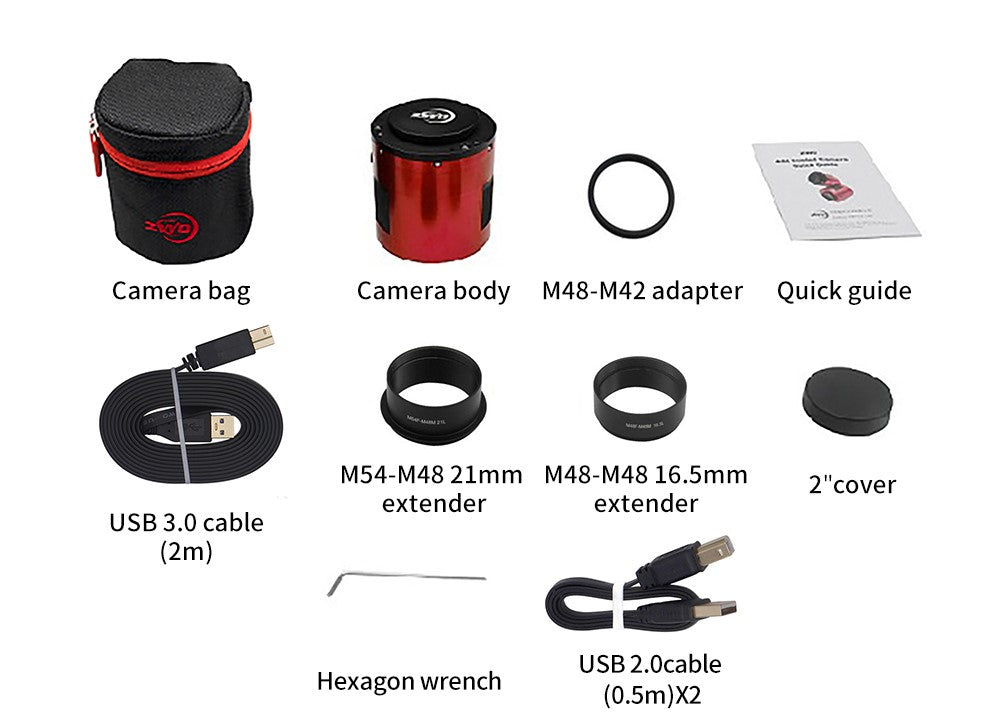
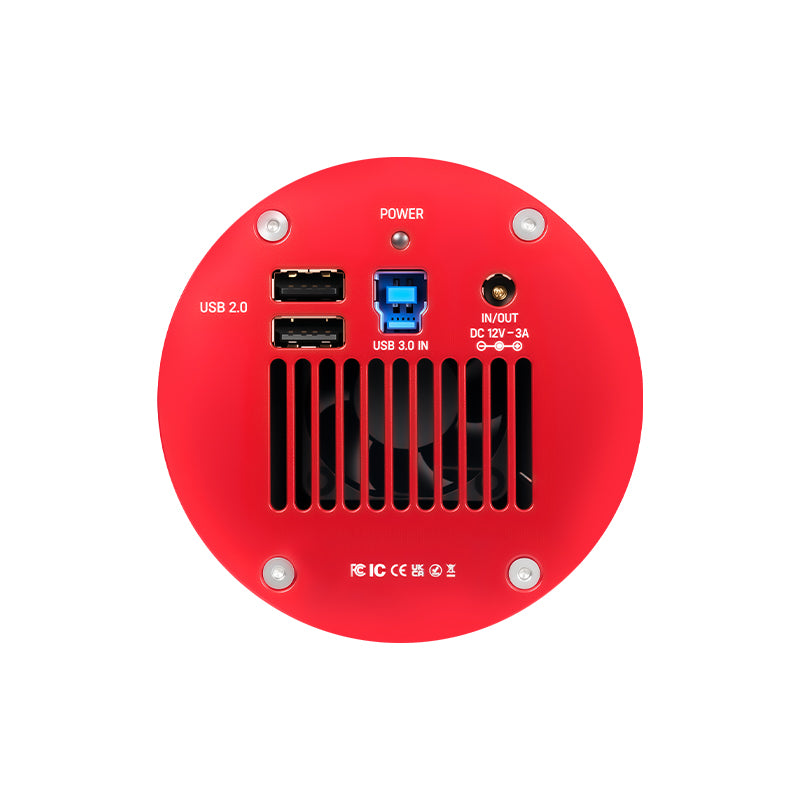
External power is required for all ZWO cooled cameras. ZWO recommends a 12 V, 3 A to 5 A DC adapter with a 5.5 × 2.1 mm centre-positive connector, or an 11–14 V lithium battery. For monochrome imaging, plan for a compatible filter wheel or filter drawer, suitable filters, and a full-frame-capable optical system.
For best full-frame results, use a telescope, reducer, or flattener that explicitly supports a 43.3 mm image diagonal and follow the required 55 mm back-focus spacing.
Important Limitations
- Requires filters for colour: This is a monochrome camera and needs filters for LRGB or narrowband imaging.
- Requires full-frame optics: Smaller corrected image circles will not fully support the sensor.
- Requires external 12 V power: USB alone does not power the cooled camera.
- Large files: 61.2 MP image data requires suitable processing and storage capacity.
Frequently Asked Questions
Is the ASI6200MM Pro a monochrome camera?
Yes. It is the monochrome version of the ASI6200 Pro family.
Does it need a filter wheel?
For colour or narrowband imaging, yes. A monochrome camera requires filters for LRGB, narrowband, or specialist imaging workflows.
Does it need full-frame optics?
For best results, yes. The 36 mm × 24 mm sensor needs optics that can illuminate and correct a full-frame field.
How is this different from the ASI6200MC Pro?
The MM version is monochrome and better suited to filter-based imaging. The MC version is colour and simpler for one-shot-colour workflows.
Bottom Line
In short: the ASI6200MM Pro is a 61.2 MP full-frame cooled monochrome camera for advanced LRGB and narrowband deep-sky imaging, best used with full-frame-corrected optics, a filter system, 55 mm backfocus, and stable 12 V power.
| Product Name | ZWO ASI6200MM Pro |
|---|---|
| Camera Type | Cooled full-frame monochrome deep-sky camera |
| Sensor | Sony IMX455 back-illuminated CMOS |
| Sensor Format | Full frame, 36 mm x 24 mm |
| Sensor Diagonal | 43.3 mm |
| Resolution | 9576 x 6388 |
| Megapixels | 61.2 MP |
| Pixel Size | 3.76 microns |
| Full Well | 51.4 ke |
| ADC | Native 16-bit |
| Dynamic Range | Up to 14 stops |
| Read Noise | Ultra-low 0.86e readout noise |
| QE Peak | 91% |
| Cooling | Two-stage TEC, about 30 C to 35 C below ambient |
| Interface | USB 3.0 |
| Built-in Memory | 512 MB DDR3 cache |
| Body Weight | 0.7 kg / 1.54 lb |
| Power Requirement | 12 V, 3 A to 5 A DC, 5.5 x 2.1 mm centre-positive |
| Recommended Backfocus | 55 mm solution shown by ZWO |
You may also like
Recently viewed
Recent Blog Posts
View all
Your Guide Graph Is Lying to You
Read More

D-Size vs V-Size: A Complete Guide to Telescope Dovetail Systems
Read More

What Is Back Focus in Astrophotography? Telescope Reducers, Flatteners, and Spacing Explained
Read More