


- Description
- Specifications
Product Overview
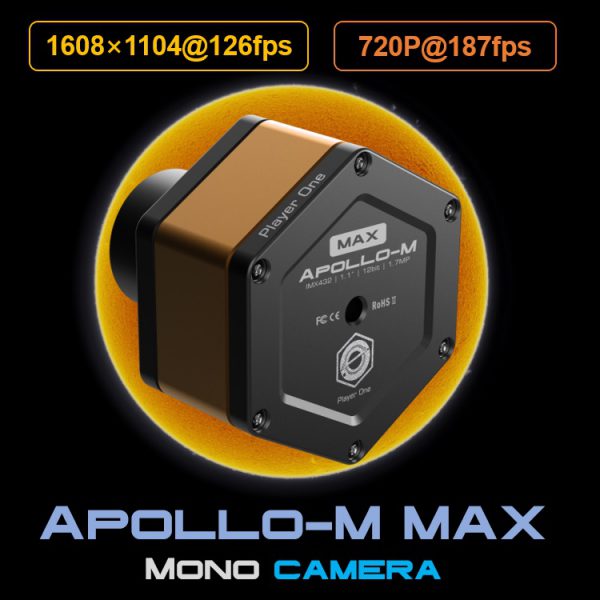
The Player One Astronomy Apollo-M MAX is a high-speed monochrome camera built for solar and planetary imaging around Sony's large 1.1″ IMX432 global-shutter CMOS sensor. Its 1.7-megapixel array (1608×1104) uses very large 9µm pixels across a 17.5mm diagonal, which gathers a great deal of light per pixel and, combined with a deep 100ke full-well capacity, gives you the dynamic range to hold both bright solar surface detail and fainter features in the same run. A 256MB DDR3 buffer sustains up to 126 fps in 12-bit mode over USB 3.0.
Who It's For
This camera suits solar and planetary imagers who want a larger sensor and wide dynamic range for full-disk and high-resolution solar work, along with lunar and planetary lucky imaging. Its global shutter reads the entire frame at one instant, which appeals to imagers capturing fast, structured detail where rolling-shutter skew would distort the result. Being monochrome, it works hand in hand with narrowband solar filters and accessories such as a Daystar Quark. It is a capture camera for astrophotography, not a visual eyepiece.
Key Features & Design
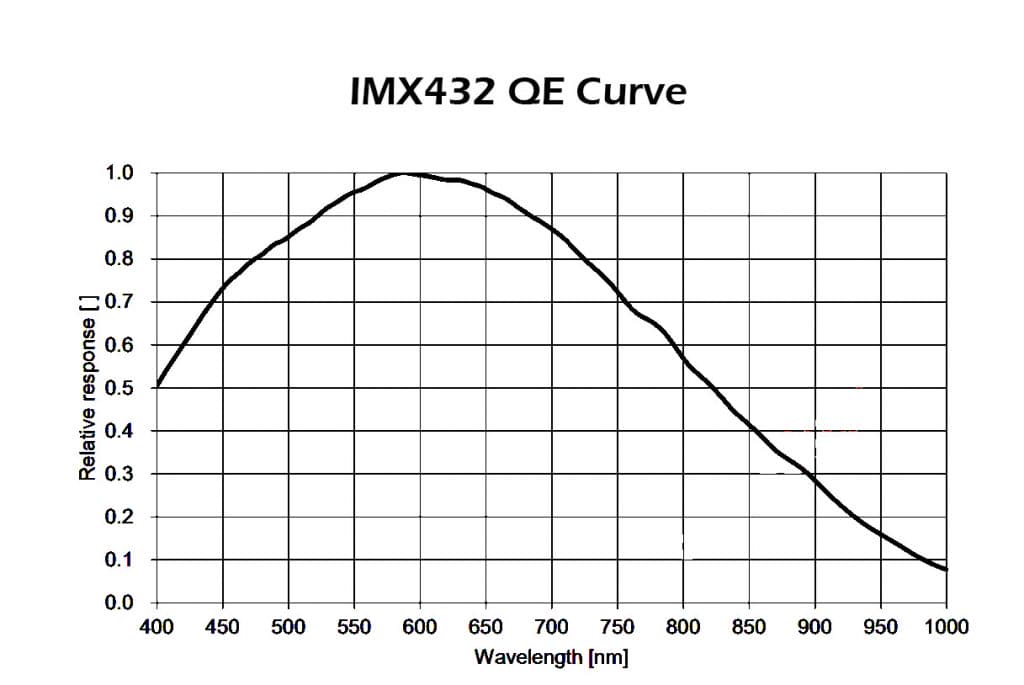
- Sony IMX432 mono global-shutter sensor: a large 1.1″ CMOS chip with 9µm pixels and a peak quantum efficiency of ≈79%, well matched to the coarse image scale of solar and planetary work.
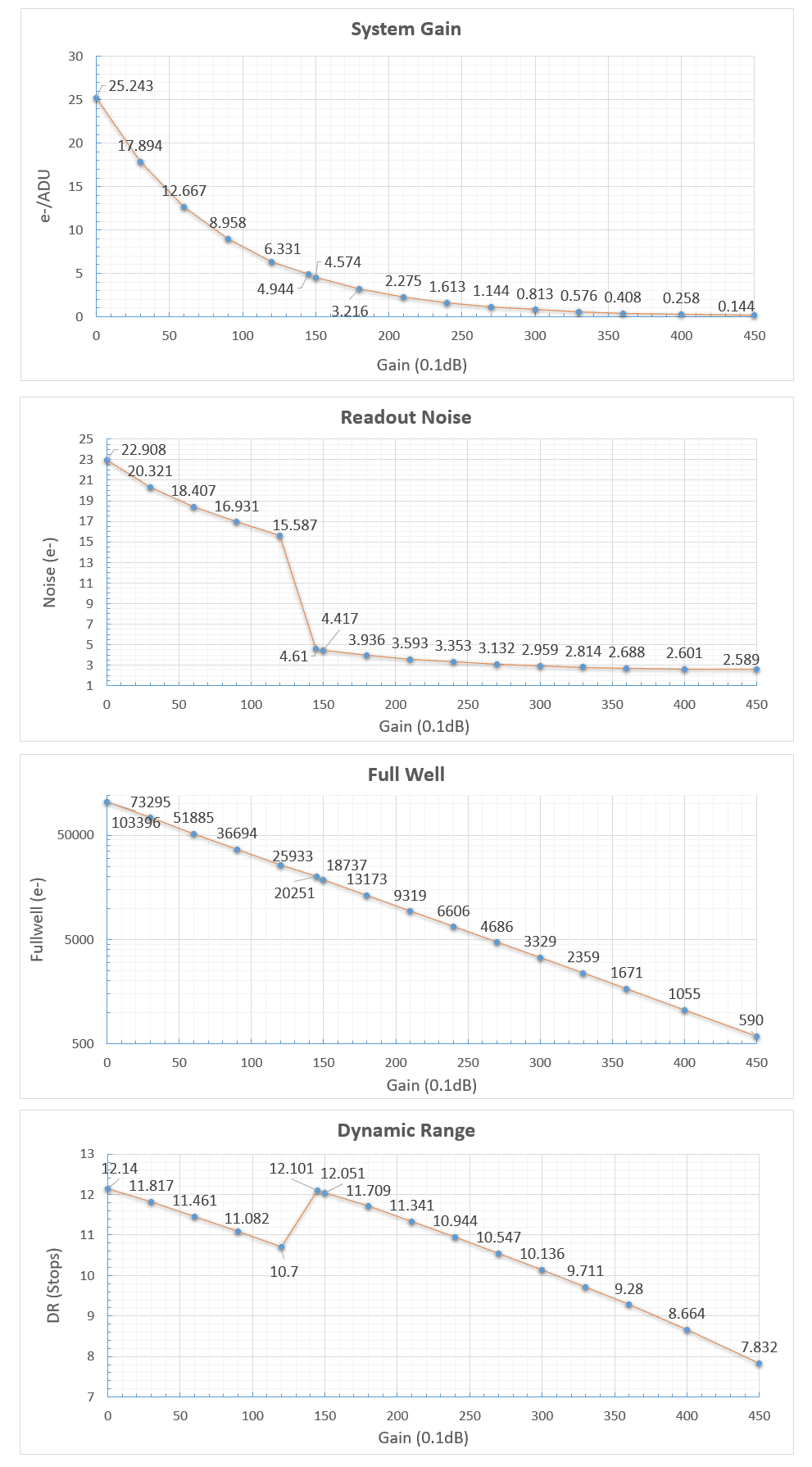
- 100ke full-well capacity: a deep well that resists saturation on the bright solar disk and gives smooth tonal range in a single exposure.
- Global shutter: the whole frame is exposed and read at once, eliminating the rolling-shutter distortion that can smear fast-moving or turbulent detail.
- Up to 126 fps: at full 1608×1104 resolution in 12-bit mode, with higher rates at reduced ROI (up to 268 fps at 640×480) for long lucky-imaging runs.
- Read noise 2.6e to 22.9e: dropping to 2.6e at higher gain to protect faint contrast.
- 256MB DDR3 buffer and built-in ST4 port: for a stable high-speed data stream and optional autoguiding duty.
Optical/Mechanical Design
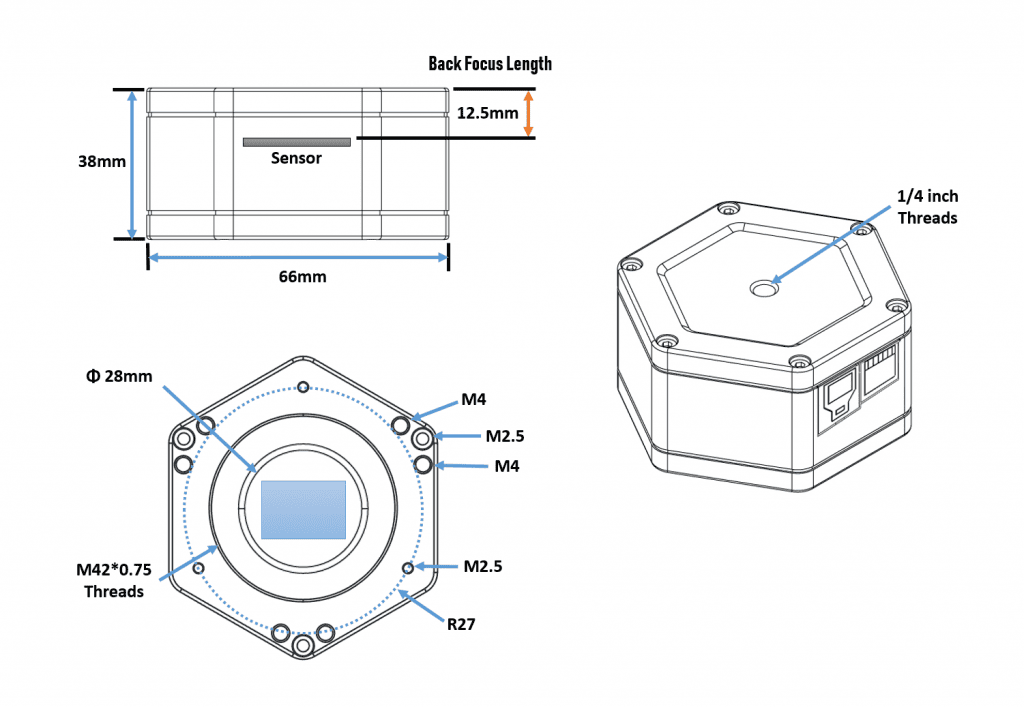
The Apollo-M MAX shares Player One's compact 66mm-diameter body and 12.5mm back focal distance, so it reaches focus in the same 1.25″ imaging trains as the rest of the range. Its sensor sits behind a D32×2mm AR-coated (anti-reflection, multi-layer) protective window to suppress reflections on the bright solar disk. Key optical and mechanical figures:
- Sensor: Sony IMX432, 1.1″ mono CMOS, global shutter, 14.5mm×9.9mm imaging area, 17.5mm diagonal.
- Read noise: 2.6e–22.9e.
- Full well: 100ke.
- Frame rate: up to 126 fps at full resolution (12-bit).
- Back focus: 12.5mm to the sensor.
- Connection: 1.25″ nosepiece and M42×0.75 threads; USB 3.0 / USB 2.0 interface.
Recommended Uses
- Full-disk and high-resolution solar imaging in white light or narrowband with an appropriate solar filter or energy-rejection filter.
- Lunar and planetary lucky imaging where a deep full well and global shutter help capture clean, high-contrast frames.
- Autoguiding through the built-in ST4 port when paired with a separate main imaging camera.
Compatibility & Accessory Notes
The Apollo-M MAX connects through its 1.25″ nosepiece or M42×0.75 female thread and drops into most Daystar Quark, dedicated solar scope, and standard telescope imaging trains. Its 12.5mm back focus matches Player One's other planetary cameras, keeping spacing predictable when you add filters or a Barlow. Note that its 17.5mm sensor diagonal is larger than a 1.25″ clear aperture, so plan your imaging train and filters to fully illuminate the chip. An optional Active Cooling System (ACS) is available for longer captures.
Good to Know Before You Order
- This is a monochrome camera; it records a single channel for maximum resolution and sensitivity and does not produce color on its own, which requires filters and channel combination.
- The 17.5mm sensor diagonal exceeds the clear aperture of a 1.25″ barrel, so a 2″ or dedicated imaging train gives you the full illuminated field.
- It is a computer-connected capture device with no onboard storage or screen; sustained frame rates rely on a USB 3.0 port.
FAQ
Is it difficult to set up? Setup is straightforward: the camera threads or slides into your imaging train, connects by USB 3.0, and is recognized by common capture programs (such as SharpCap or the vendor's own software) through standard drivers. Most of your effort goes into focusing and setting gain and exposure rather than into assembly.
Why choose the MAX over a smaller Apollo-M model? Its large 1.1″ sensor and 9µm pixels with a 100ke full well give a wider field and more dynamic range, which is useful for full-disk solar framing and for holding highlight detail on the bright solar surface.
What does the global shutter do for me? It exposes and reads the whole frame at the same instant, so fast or turbulent detail is not sheared the way it can be with a rolling shutter.
Can it autoguide? Yes. The built-in ST4 port lets it send guide corrections to a compatible mount.
Bottom Line
The Apollo-M MAX brings a large, sensitive IMX432 global-shutter monochrome sensor with a deep 100ke full well to solar and planetary imaging, giving you wide dynamic range and distortion-free frames at high speed. Its 12.5mm back focus and 1.25″/M42 connections keep it compatible with imaging trains you likely already own.
| Sensor | Sony IMX432 mono CMOS (global shutter) |
| Sensor Format | 1.1″ (17.5mm diagonal) |
| Resolution | 1.7 MP (1608×1104) |
| Pixel Size | 9µm |
| Full Well | 100ke |
| Read Noise | 2.6e–22.9e |
| ADC | 12-bit |
| Peak QE | ≈79% |
| Shutter | Global |
| Max Frame Rate | 126 fps (12-bit, full resolution) |
| Exposure Range | 32µs–2000s |
| Buffer | 256MB DDR3 |
| Interface | USB 3.0 / USB 2.0 |
| Guide Port | ST4 |
| Back Focus | 12.5mm |
| Connection | 1.25″ / M42×0.75 |
| Protective Window | D32×2mm AR multi-layer coated |
| Body Diameter | 66mm |
| Weight | 160 g |
You may also like
Recently viewed
Recent Blog Posts
View all
Your Guide Graph Is Lying to You
Read More
D-Size vs V-Size: A Complete Guide to Telescope Dovetail Systems
Read More
What Is Back Focus in Astrophotography? Telescope Reducers, Flatteners, and Spacing Explained
Read More