


- Description
- Specifications
Product Overview
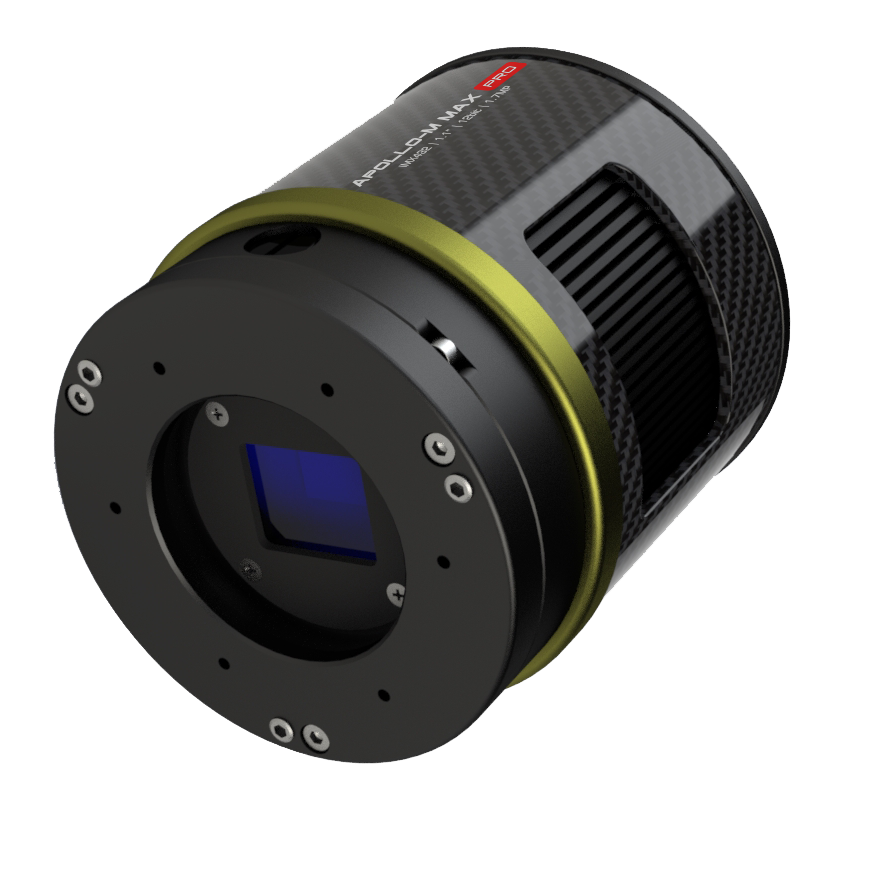
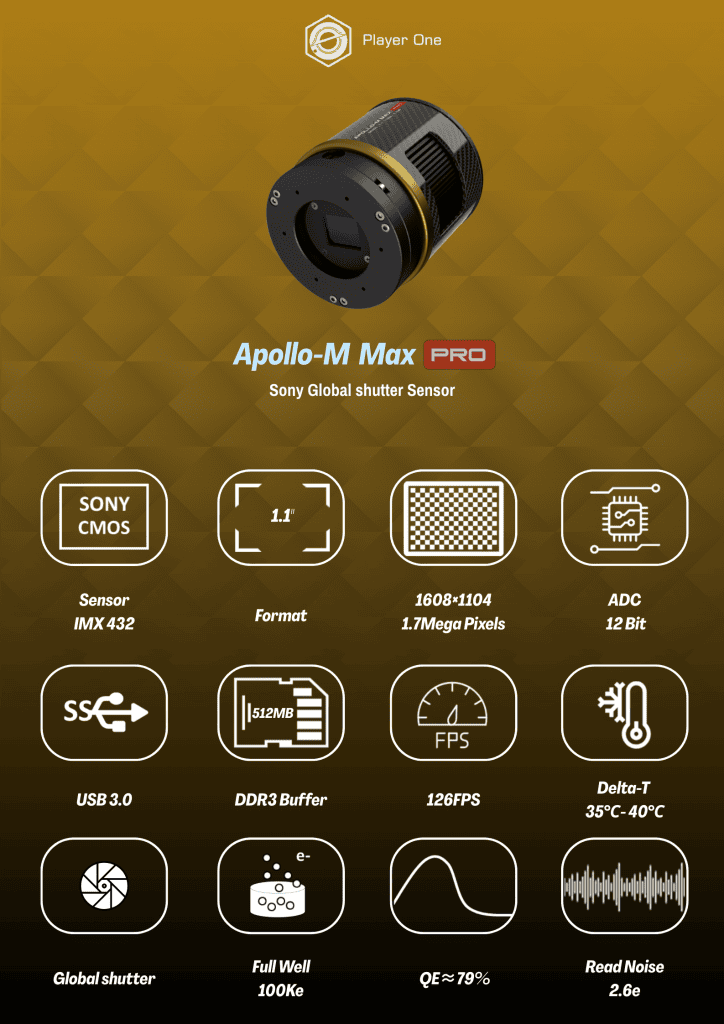
The Player One Astronomy Apollo-M MAX Pro is a cooled monochrome USB3.0 camera built around the 1.7-megapixel Sony IMX432 global-shutter CMOS sensor. Its 9 µm pixels sit on a 1.1″ sensor (17.5 mm diagonal, 14.5 mm × 9.9 mm imaging area) and pair with a deep 100 ke- full-well capacity, so bright targets hold their highlights instead of clipping. Read noise falls from 22.9e- at gain 0 to 2.6e- at high gain, and the sensor reads out at up to 126 fps in RAW8. A two-stage TEC cools the chip 35°C–40°C below ambient to keep dark current low on longer captures.
Because it uses a global shutter, every pixel starts and ends its exposure at the same instant — fast-changing solar and planetary detail is recorded without the geometric skew a rolling shutter can introduce during high-speed capture.
Who It's For
This is a good match if you image the Sun in H-alpha or white light, capture high-resolution lunar and planetary detail, or run lucky-imaging sessions where thousands of short frames are stacked. The large 9 µm pixels and global shutter suit long focal lengths and Daystar Quark-style solar setups. It is a dedicated imaging camera, so it is not intended for eyepiece observing.
Key Features & Design
- Sony IMX432 global-shutter mono sensor: 1608 × 1104 resolution with 9 µm pixels for high signal capacity and clean, distortion-free frames.
- 100 ke- full-well capacity: holds highlight detail on bright solar and lunar features before saturation.
- Read noise 22.9e- to 2.6e-: low high-gain noise for short, fast exposures in lucky imaging.
- Up to 126 fps (RAW8), 12-bit ADC: high frame rates let you capture more usable frames through moments of steady seeing.
- Two-stage TEC cooling, 35°C–40°C below ambient: suppresses dark current for longer or repeated captures.
- 512 MB DDR3 buffer: stabilizes the USB3.0 data stream to reduce dropped frames.
Optical / Mechanical Design
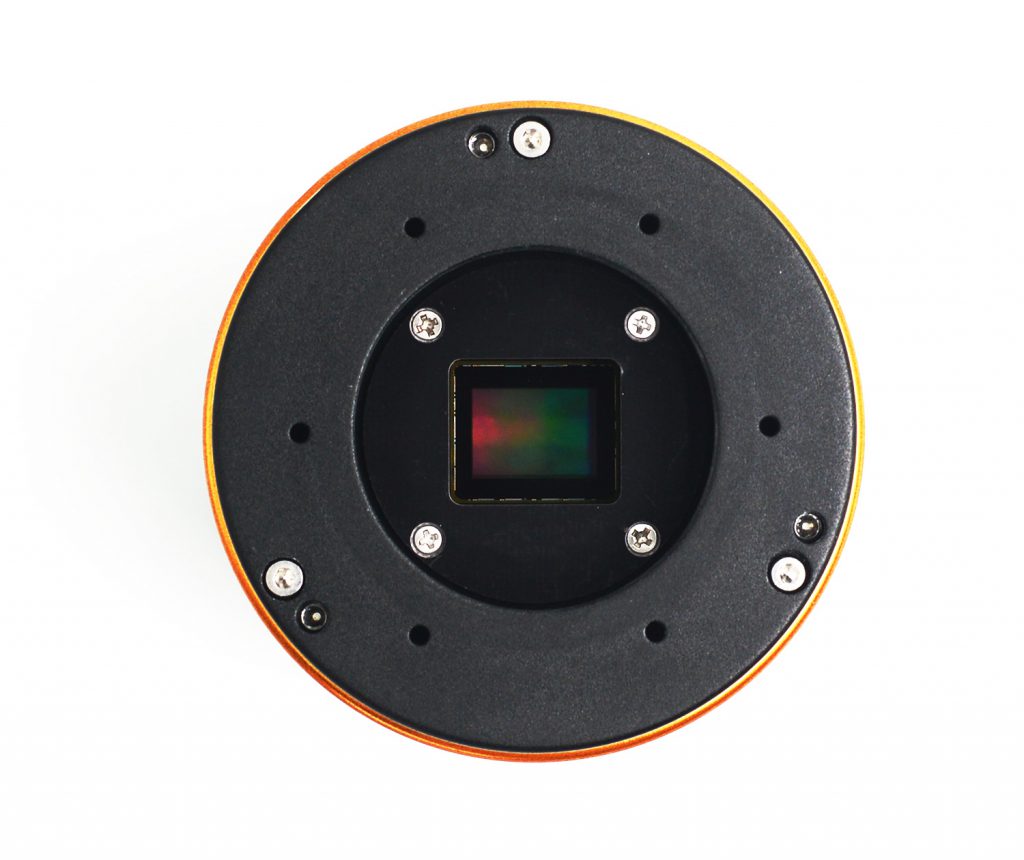
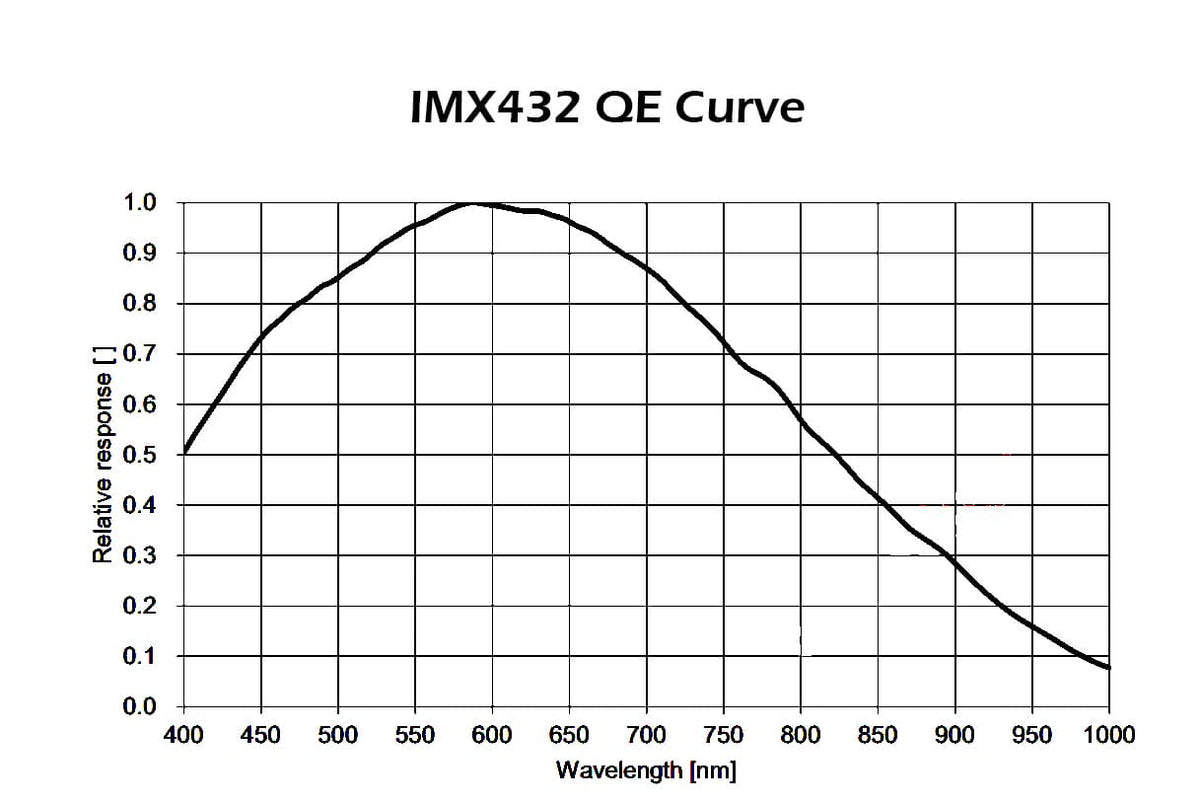
The IMX432 is a 1.1″-format global-shutter CMOS with a peak quantum efficiency of about 79%. Combined with the 100 ke- full well and 12-bit readout, it favours dynamic range and frame rate over sheer pixel count — the profile that suits solar and planetary imaging. A D32 × 2 mm AR Plus multi-layer coated protective window sits in front of the sensor, and cooling brings dark current to 0.3 e/s/pixel at -20°C.

Recommended Uses
- Solar imaging: H-alpha and white-light disc and close-up work, including with a Daystar Quark.
- Lunar and planetary: high-frame-rate capture for stacking the sharpest frames.
- Cooled short-exposure work: where low dark current improves stacked results.
Compatibility & Accessory Notes
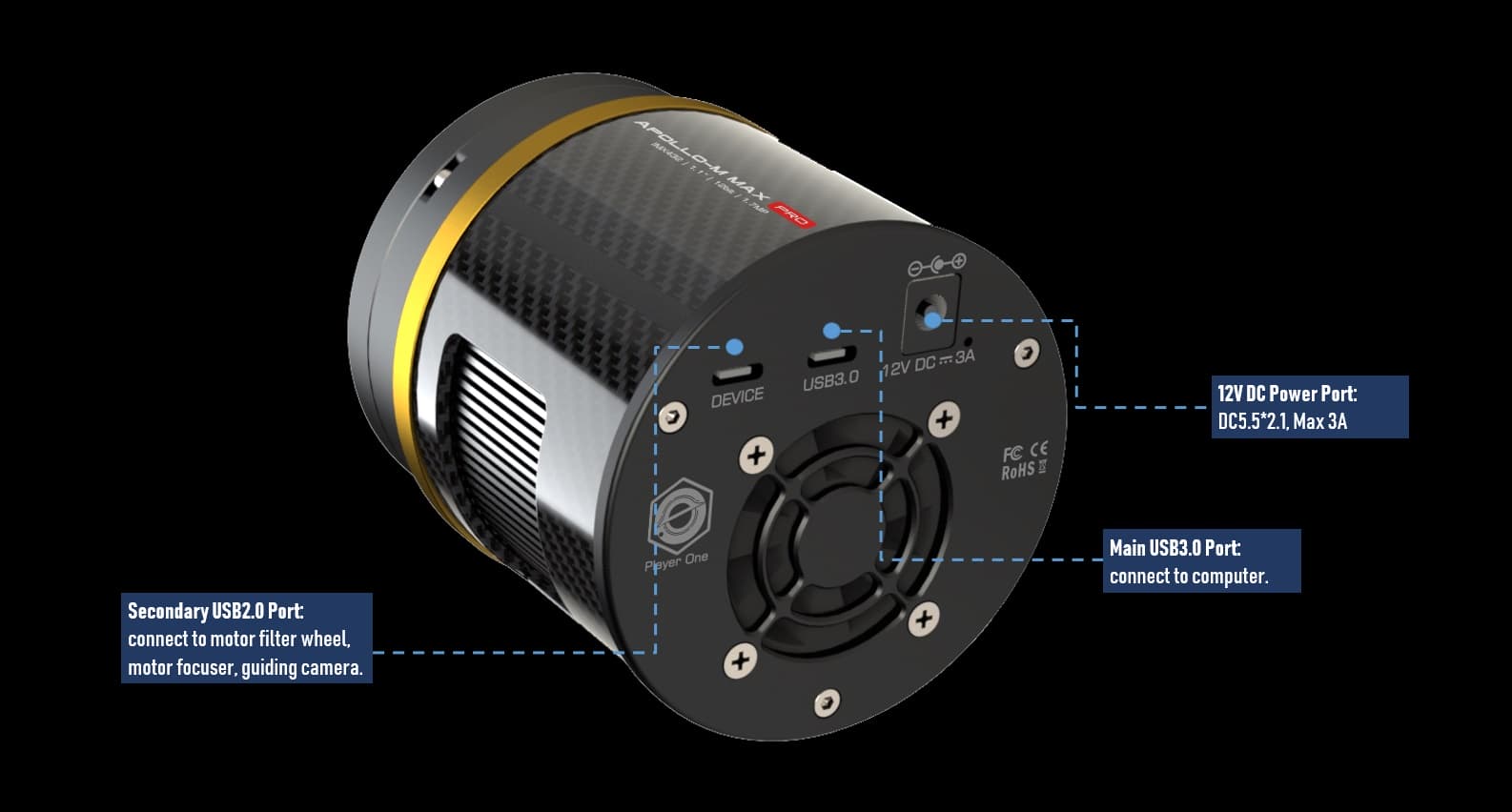
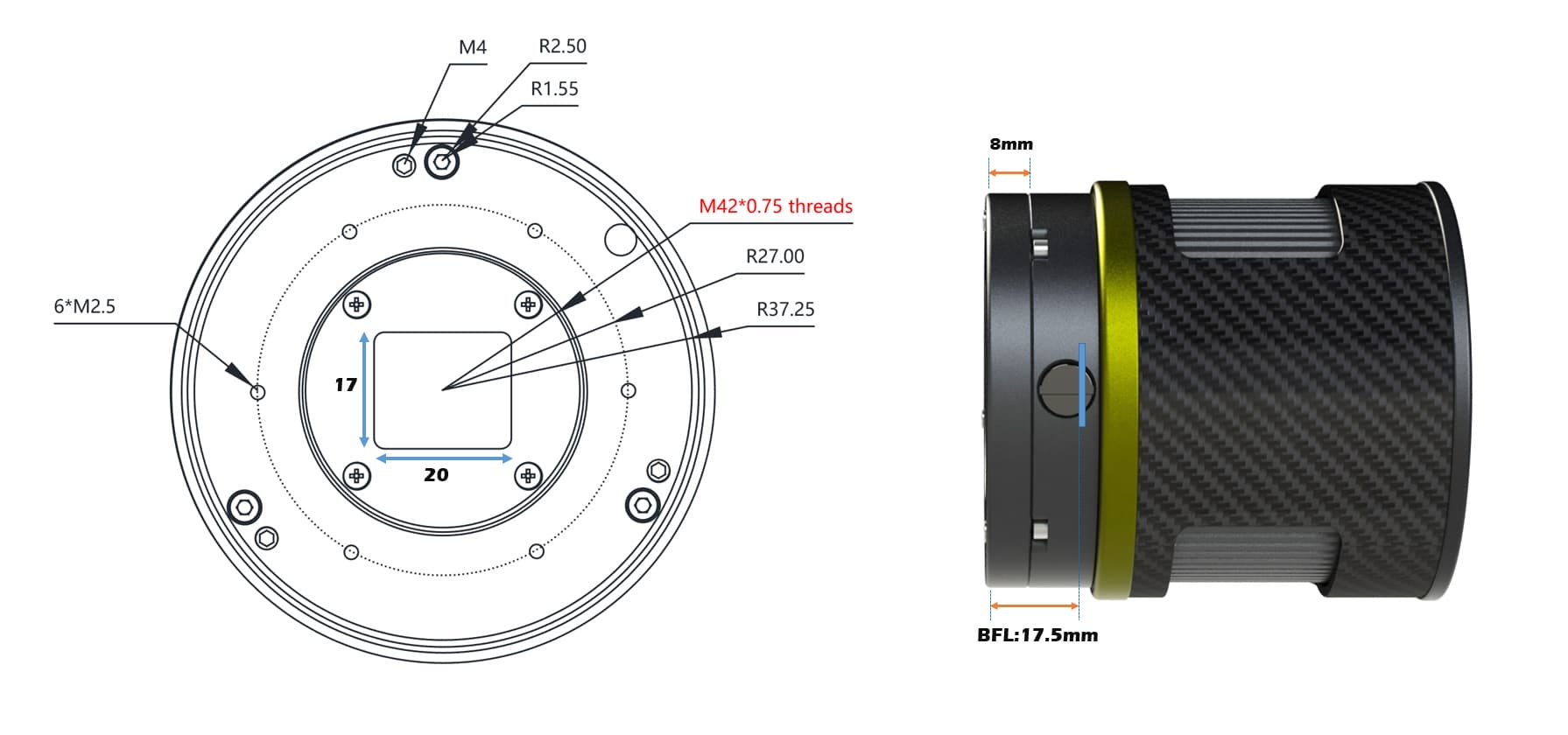
The camera connects through USB3.0/USB2.0 (Type-C) and powers from a 12 V DC 5.5 × 2.1 mm input (up to 3 A). The nose and adapters use a 1.25″ fit and M42 × 0.75 threads, and the sensor sits at a 17.5 mm back focal distance from the front face. Account for that 17.5 mm when planning spacing to a filter, Barlow, or telecentric such as a Daystar Quark.

Good to Know Before You Order
- It is an imaging camera, not a visual eyepiece: it produces images through a computer and has no application in a visual train.
- Cooling needs 12 V power: the TEC runs from the 12 V DC input, so plan a suitable supply alongside the USB data connection.
- Spacing matters at the sensor: the 17.5 mm back focus is the figure to work from when adding filters or a telecentric — send us your setup and we will confirm the spacing with you.
Frequently Asked Questions
Is it difficult to set up?
No. It threads onto a 1.25″ or M42 interface, connects over a single USB3.0 Type-C cable for data, and takes 12 V DC for cooling. Once your capture software recognizes it, exposure and gain are set on screen.
What is it best used for?
High-frame-rate solar and planetary imaging. The global shutter and 9 µm pixels make it well suited to H-alpha solar work and lunar/planetary lucky imaging.
Why a global shutter?
A global shutter exposes all pixels simultaneously, so rapidly changing detail is captured without the skew a rolling shutter can add during fast capture.
Can I use it with a Daystar Quark?
Yes. Its 1.25″/M42 interface and 17.5 mm back focus fit Quark-style H-alpha imaging; confirm total spacing for your specific train.
Bottom Line
In short: a cooled, global-shutter mono camera on the 1.7 MP Sony IMX432, built for high-frame-rate solar and planetary imaging with 9 µm pixels, a 100 ke- full well, and 35°C–40°C of cooling below ambient. Give it 12 V power and a USB3.0 connection and it captures clean, fast frames for stacking.
| Sensor | Sony IMX432 CMOS, monochrome, global shutter |
|---|---|
| Sensor format | 1.1″ (17.5 mm diagonal) |
| Imaging area | 14.5 mm × 9.9 mm |
| Resolution | 1.7 MP (1608 × 1104) |
| Pixel size | 9 µm |
| Full-well capacity | 100 ke- |
| Read noise | 2.6e- – 22.9e- |
| ADC | 12-bit |
| Max frame rate | 126 fps (RAW8) |
| Peak QE | ≈79% |
| Cooling | Two-stage TEC, 35°C–40°C below ambient |
| Dark current | 0.3 e/s/pixel at -20°C; 0.39 e/s/pixel at 0°C |
| Exposure range | 32 µs – 2000 s |
| Back focal length | 17.5 mm |
| Protective window | D32 × 2 mm AR Plus multi-layer coating |
| Buffer | 512 MB DDR3 |
| Data interface | USB3.0 / USB2.0 (Type-C) |
| Power | 12 V DC (5.5 × 2.1 mm), max 3 A |
| Adapters | 1.25″ / M42 × 0.75 |
| Diameter | 78 mm |
| Weight | 420 g |
| Working temperature | -10°C to 60°C |
You may also like
Recently viewed
Recent Blog Posts
View all
Your Guide Graph Is Lying to You
Read More
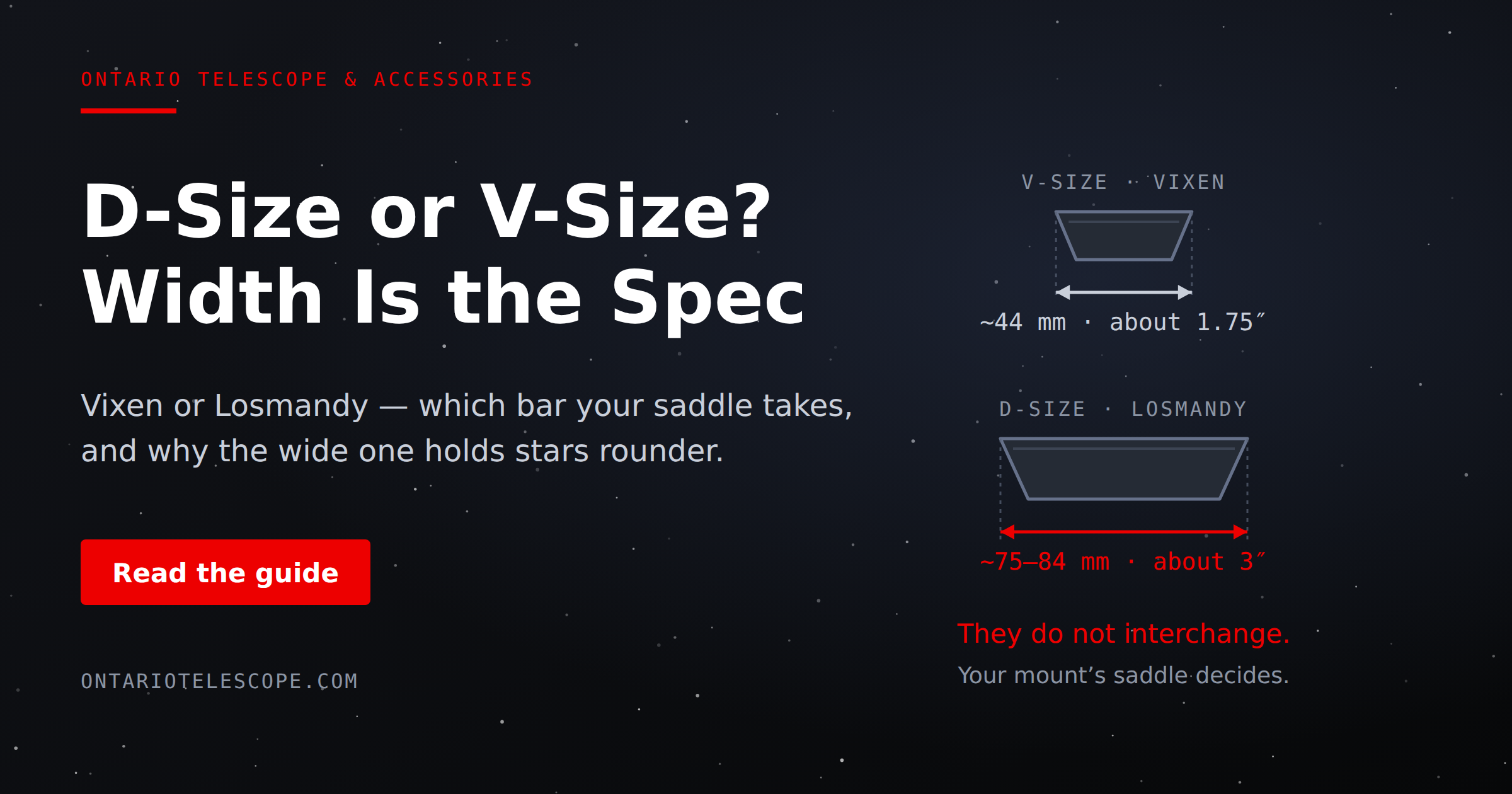
D-Size vs V-Size: A Complete Guide to Telescope Dovetail Systems
Read More
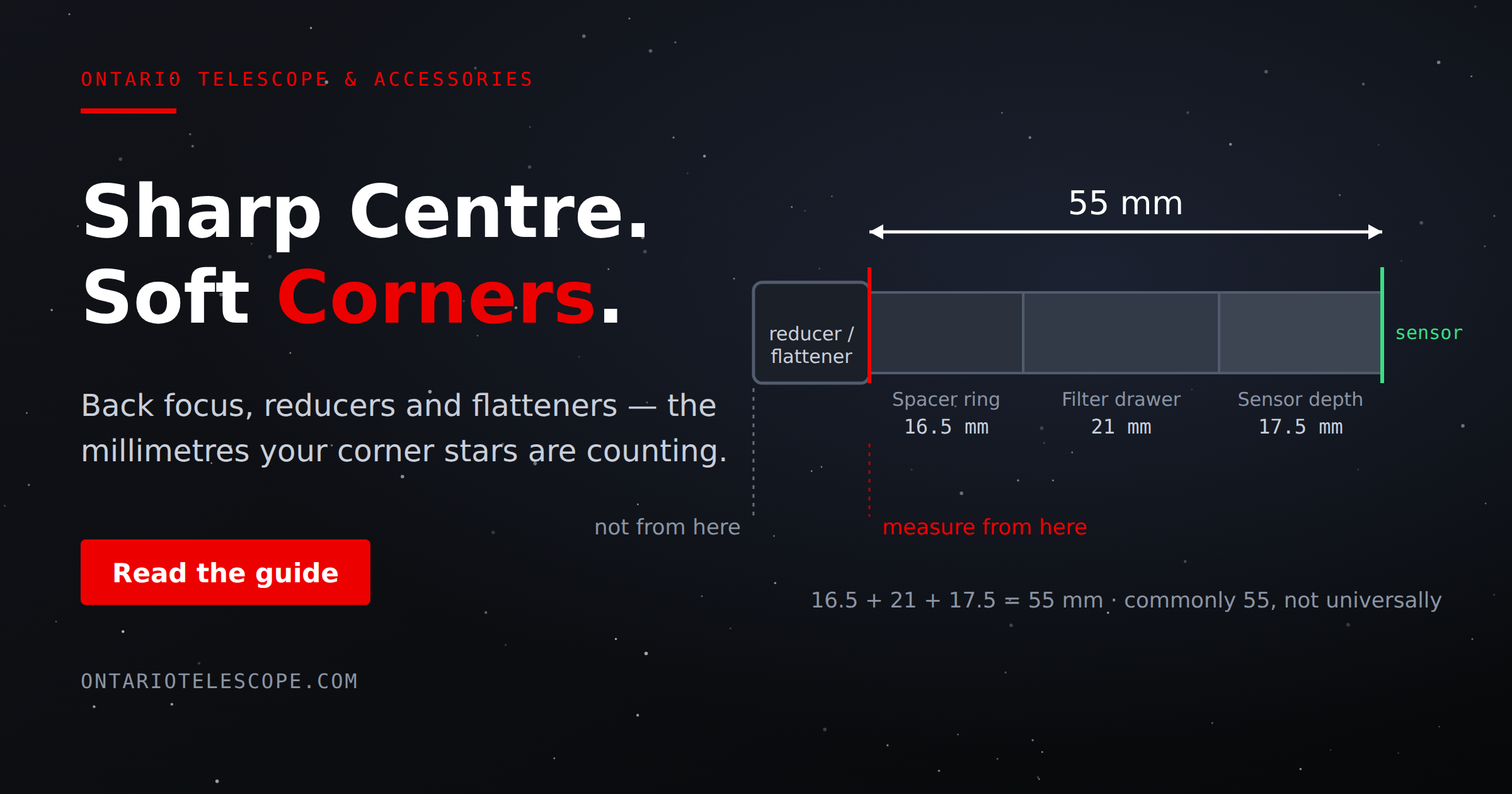
What Is Back Focus in Astrophotography? Telescope Reducers, Flatteners, and Spacing Explained
Read More