


- Description
- Specifications
Product Overview
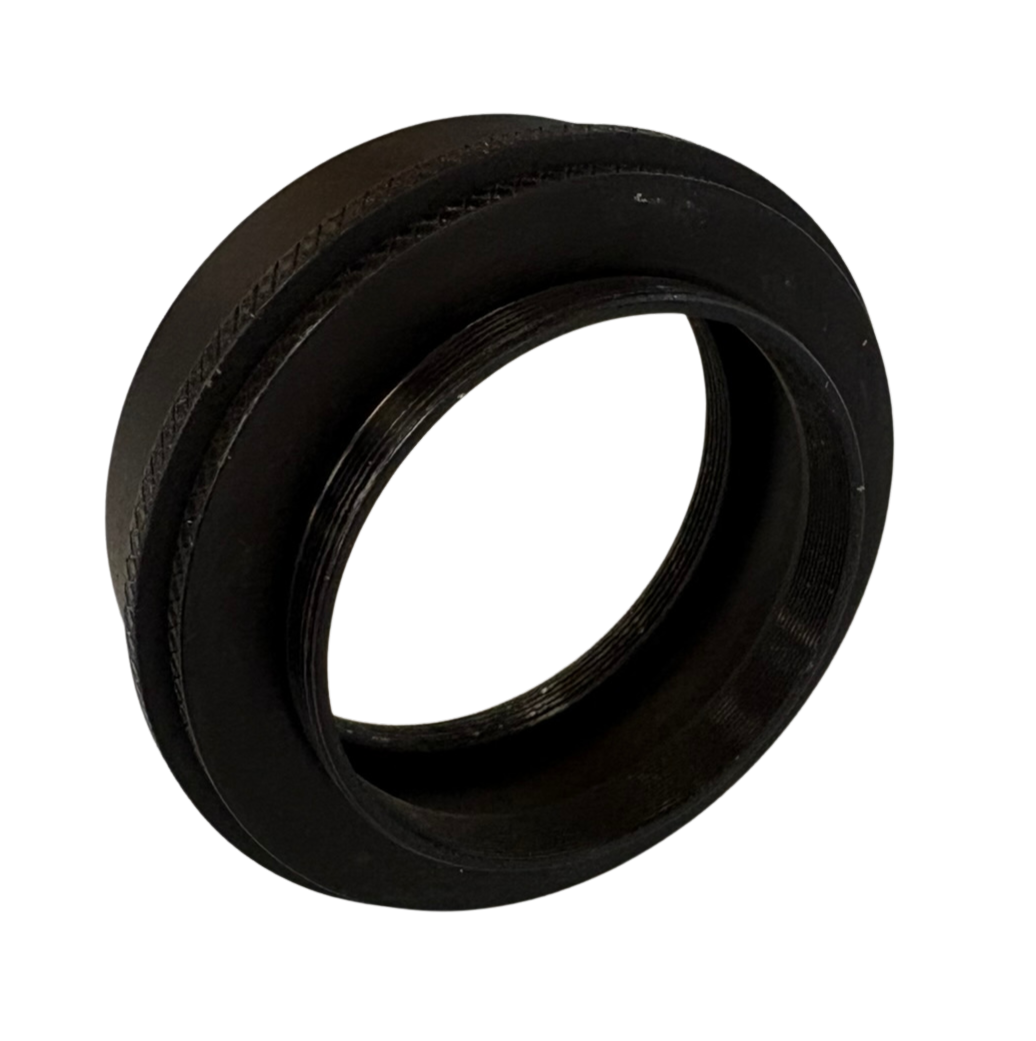
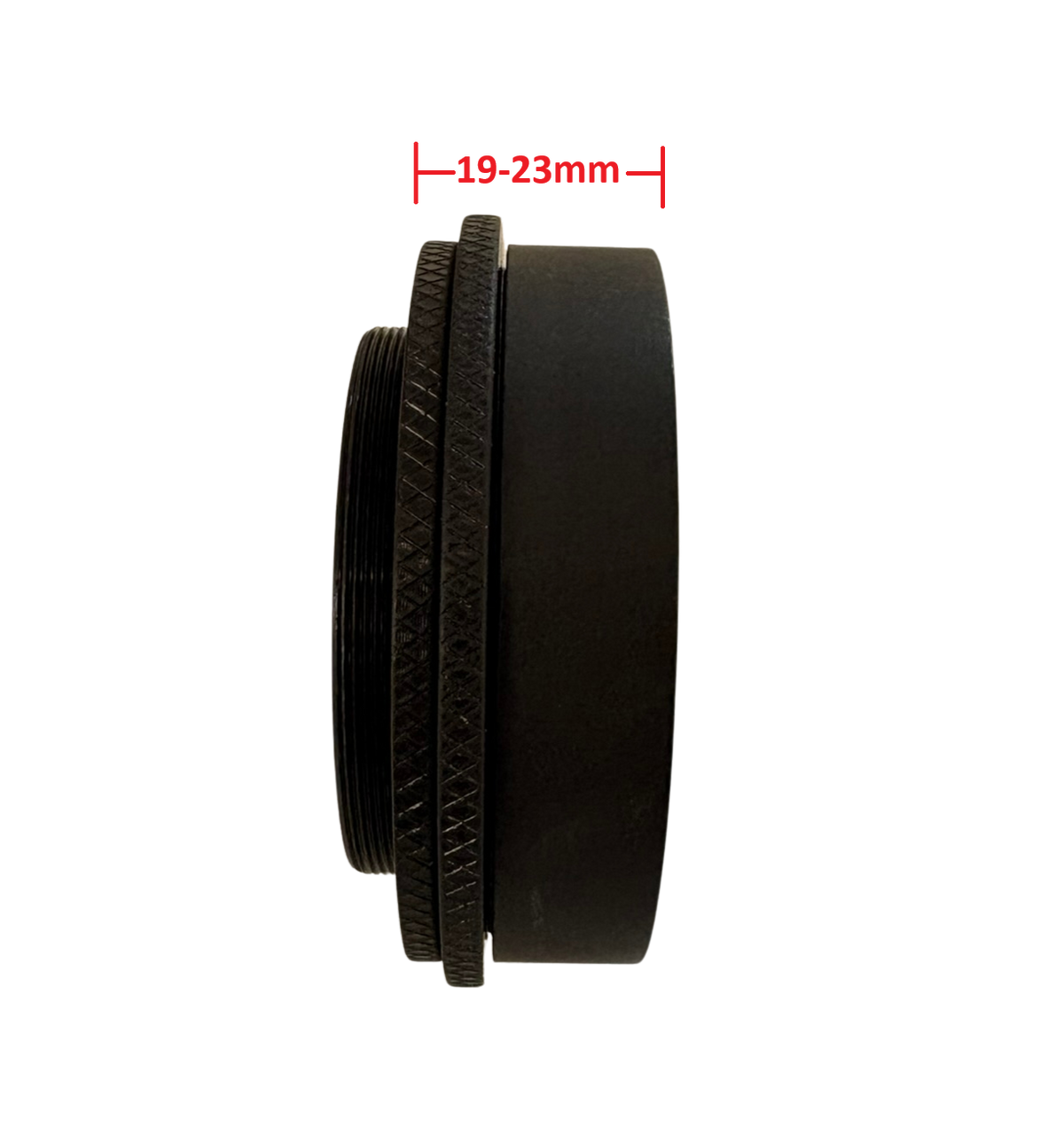
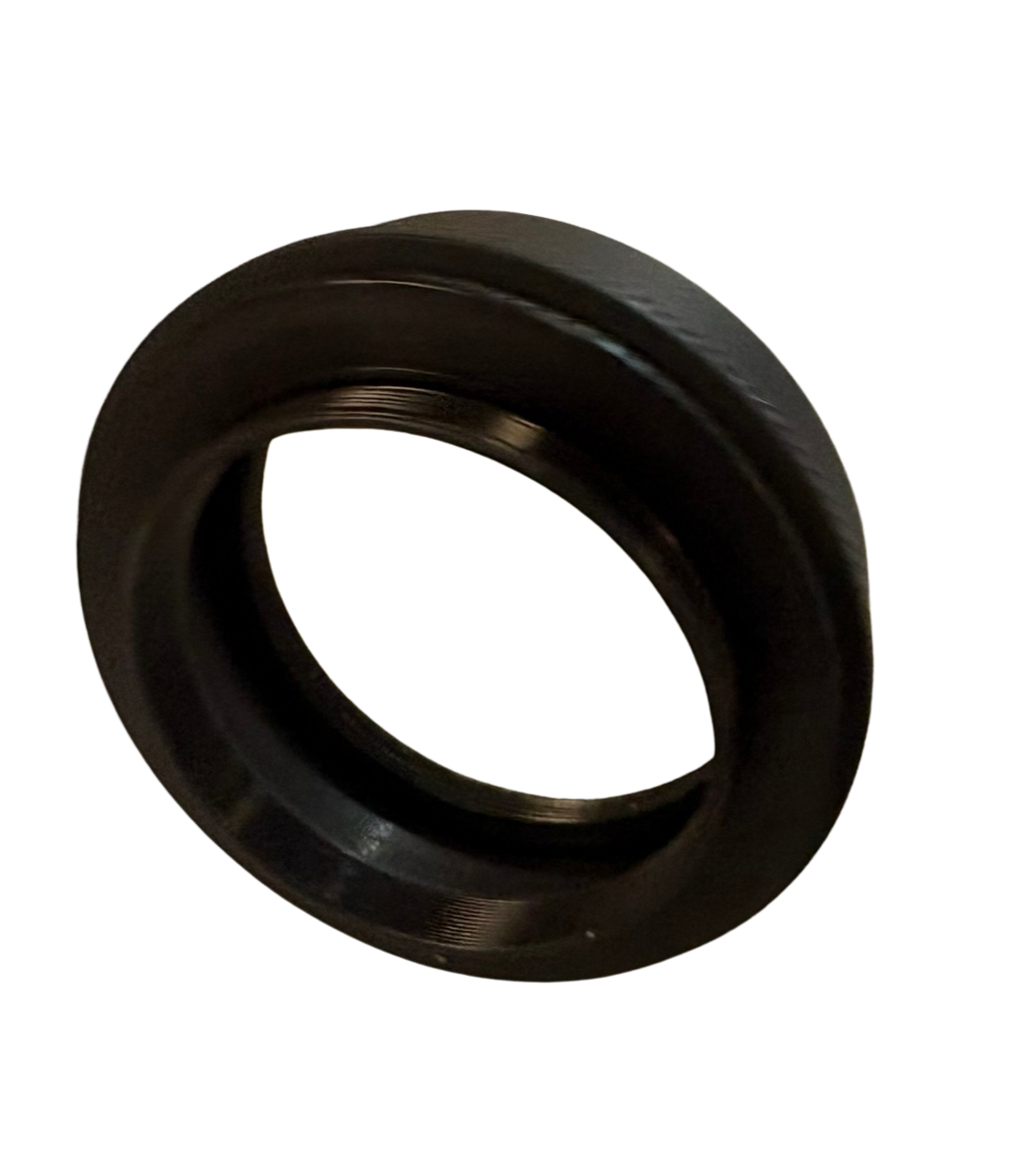
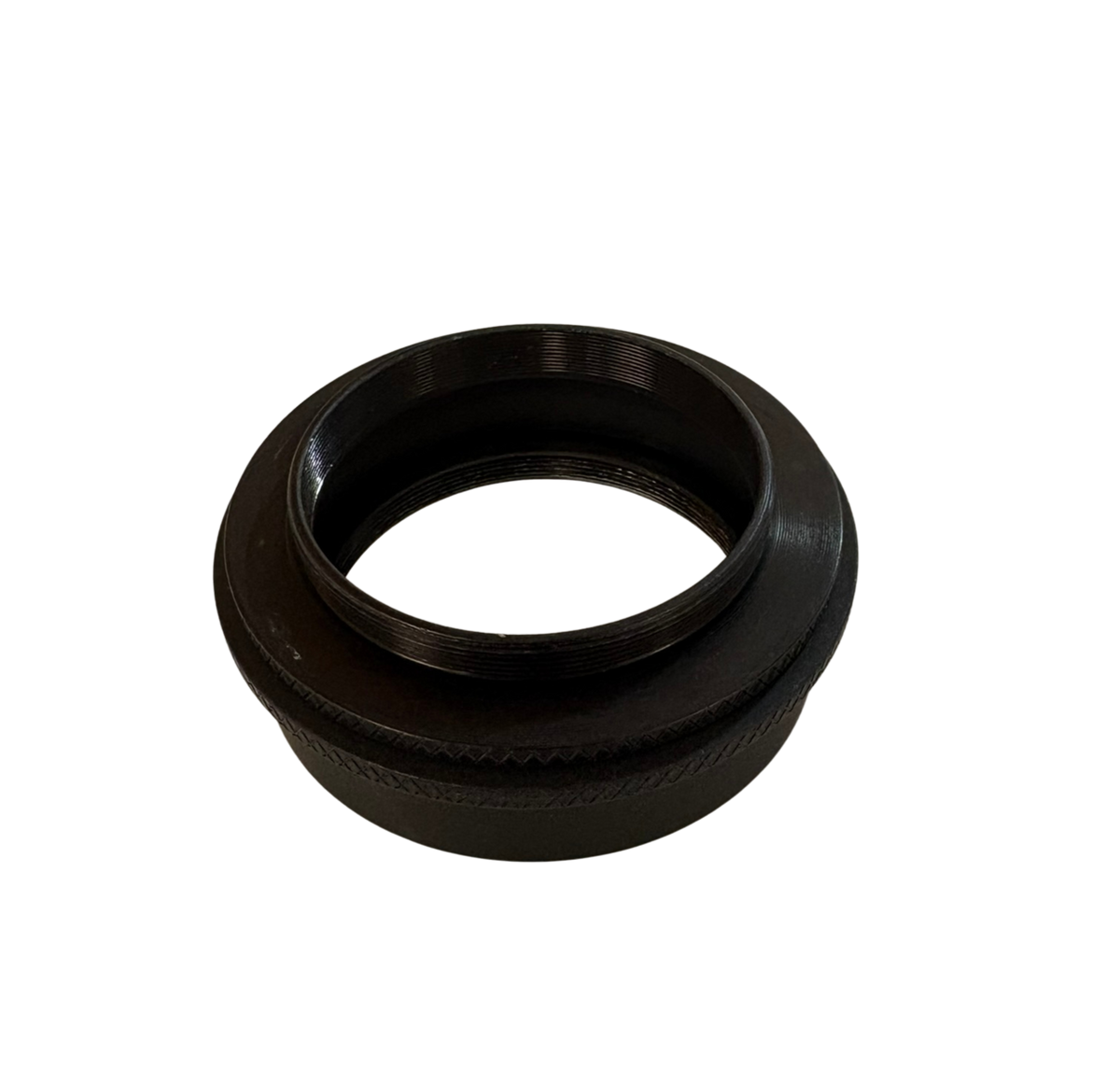
The Antares TEXT-48 is a variable-length M48 spacer for imaging trains. It carries M48 x 0.75 threads — male on one end, female on the other — and adjusts continuously through a 19-23 mm range of optical length. A locking ring secures the setting once it is dialled in, and the threading accepts 2″ filters.
Focal reducers, field flatteners and Barlows each specify a backfocus distance from their rear surface to the sensor. Fixed spacers get you to that figure in discrete steps; this one covers an 18 mm span continuously, so the exact published number — or the number your own star tests settle on — is reachable without stacking shims.
Who It’s For
This is a good match if you:
- Image through a focal reducer, field flattener or corrector that calls for a specific backfocus and your current spacer stack lands beside it rather than on it.
- Are assembling an M48 imaging train and want the spacing to be adjustable rather than fixed at build time.
- Swap cameras, filter drawers or off-axis guiders between sessions and need to re-establish the same total optical length each time.
- Prefer to dial spacing in empirically, watching corner stars across a few test frames, instead of ordering a new fixed spacer for each attempt.
Key Features & Design
- 19-23 mm continuous adjustment: an 18 mm span of optical length, set anywhere within the range rather than in fixed increments.
- M48 x 0.75 male and female: threads at both ends, so it drops into an existing M48 train in place of a fixed spacer without adding a thread change.
- Locking ring included: clamps the chosen length so the setting survives handling, transport and re-mounting.
- Mechanical only: no optical elements, no electrical connection — it sets separation and nothing else, and adds no aberrations of its own.
- Hybridisable with the TEXT-42: Antares publishes that the TEXT-48 and TEXT-42 can be combined to change the input or output thread of the assembly.
Recommended Uses
- Setting the published backfocus of a focal reducer or field flattener ahead of a cooled or DSLR camera.
- Fine-tuning corner star shape by walking spacing across a few millimetres between test exposures.
- Re-establishing a known total optical length after swapping cameras or filter hardware in the same train.
- Replacing a stack of fixed M48 spacers and shims with one adjustable component.
- Adding a 2″ filter position to an M48 imaging train.
Compatibility and Accessory Notes
- Thread standard: M48 x 0.75 on both ends — male one side, female the other.
- Where it sits: anywhere in an M48 train that needs its length set — typically between a reducer or flattener and the camera, filter drawer or off-axis guider.
- Thread changes: Antares publishes that it can be hybridised with the TEXT-42 variable M42 adapter to change the input or output thread of the combination. If you need an M48-to-M42 transition inside a variable spacer, that is the route Antares describes.
- Working out your total: backfocus is the sum of every component between the corrector and the sensor — this spacer, any filter drawer, the camera’s own sensor-to-flange distance, and filter glass thickness. Send us your camera, corrector and filter setup and we will work the total out with you.
Good to Know Before You Order
- It is a spacer, not a corrector. There are no optical elements inside. It sets separation; the field correction comes from whatever reducer or flattener sits ahead of it.
- It has no eyepiece holder. With M48 threads at both ends it belongs in a camera train — there is no 1.25″ or 2″ receptacle for visual use.
- The range starts at 31 mm. If your train needs less than 31 mm of spacing at this point, a fixed low-profile spacer is the component for that job — get in touch and we will point you at the right one.
- Antares does not publish a weight or outside diameter for this part. If either figure matters for your focuser load or a tight dew shield, get in touch and we will measure the one on the shelf.
Frequently Asked Questions
Is it difficult to set up?
No. It threads into the train like any other M48 spacer, you extend or retract it to the length you want, and the locking ring holds it there. The work is in knowing your target backfocus figure — and if you tell us your corrector, camera and filters, we will calculate that number for you before you order.
What backfocus range does it cover?
19-23 mm, continuously adjustable across that span rather than in fixed steps.
Will it fit my reducer or flattener?
If the corrector has an M48 x 0.75 output and your camera side is M48, yes. Correctors with M42/T2 or M54 outputs need a thread change — Antares publishes that this adapter can be hybridised with the TEXT-42 to alter the input or output thread, and we can confirm what else the transition needs.
Can I use it for visual observing?
It has M48 threads on both ends and no eyepiece receptacle, so it is built for a camera train. For visual spacing, a 1.25″ or 2″ extension tube is the right part.
How is this different from a set of fixed spacers?
A fixed spacer gives one length; reaching a different figure means buying or re-stacking. This one covers 31–49 mm in a single component, which matters most while you are still finding the spacing that gives clean corners.
Does it need anything else to work?
No — the locking ring is included. What it needs is a train with M48 x 0.75 on both sides of it.
Bottom Line
In short: an M48 x 0.75 variable spacer covering 19-23 mm with a locking ring, for setting the backfocus a reducer or flattener asks for without stacking fixed shims. If you want the spacing total worked out before you order, send us your corrector, camera and filter details and we will do the arithmetic with you.
| Type | Variable-length camera spacer (mechanical only, no optical elements) |
|---|---|
| Thread | M48 x 0.75 — male one end, female the other |
| Adjustment range | 31–49 mm |
| Filter thread | Accepts 2″ filters |
| Locking ring | Included |
| Thread hybridisation | Can be combined with Antares TEXT-42 to change the input or output thread |
| Part number | TEXT-48 |
| Weight | Not published by vendor |
| Outside diameter | Not published by vendor |
| Material | Not published by vendor |
You may also like
Recently viewed
Recent Blog Posts
View all
Your Guide Graph Is Lying to You
Read More

D-Size vs V-Size: A Complete Guide to Telescope Dovetail Systems
Read More

What Is Back Focus in Astrophotography? Telescope Reducers, Flatteners, and Spacing Explained
Read More