


- Description
- Specifications
Product Overview
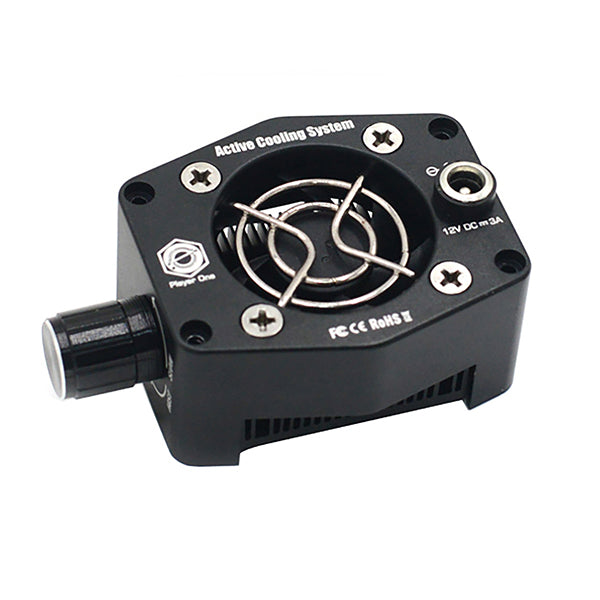
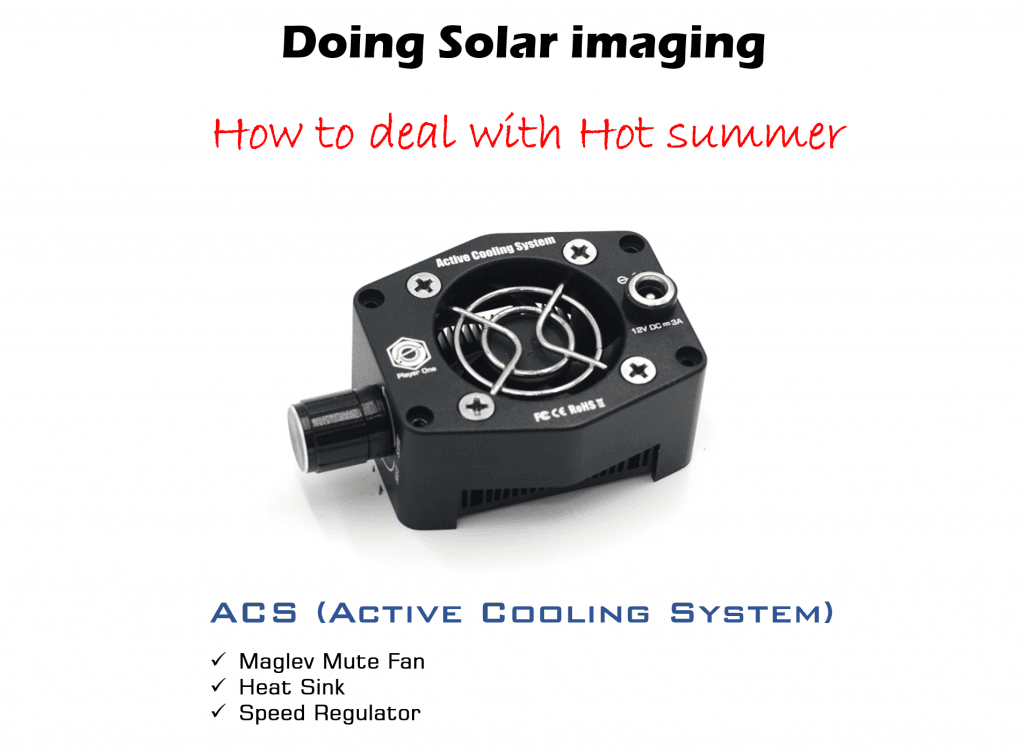
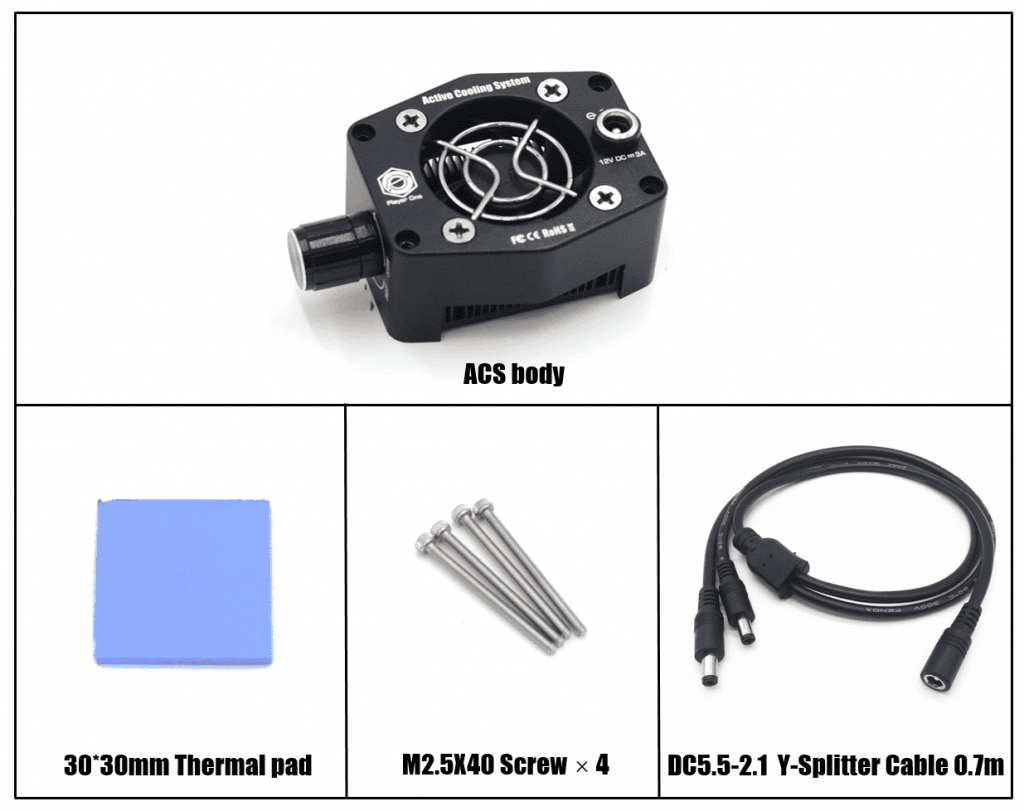
The Player One Active Cooling System (ACS) is an add-on cooling unit for Player One uncooled cameras that already include a Passive Cooling System (PCS). It actively pulls heat away from the camera's cooling shield so your sensor runs far cooler during demanding daytime sessions, most notably solar and large-format planetary imaging, where a camera sitting in direct sunlight can otherwise heat up dramatically.
Who It's For
The ACS is for imagers running an uncooled Player One camera equipped with PCS who shoot long solar or planetary sessions in warm, sunlit conditions and want to keep sensor temperature, and the thermal noise that comes with it, under control.
Key Features & Design
- Active heat extraction: the unit dissipates heat from the camera's shield, taking over where passive cooling alone reaches its limit.
- Built for sunlight: designed specifically for solar and large-format planetary cameras that sit in direct sun for extended periods.
- Works with the PCS shield: it relies on the camera transmitting heat from the sensor out to the shield, so the ACS can carry it away.
Cooling Design & Behavior
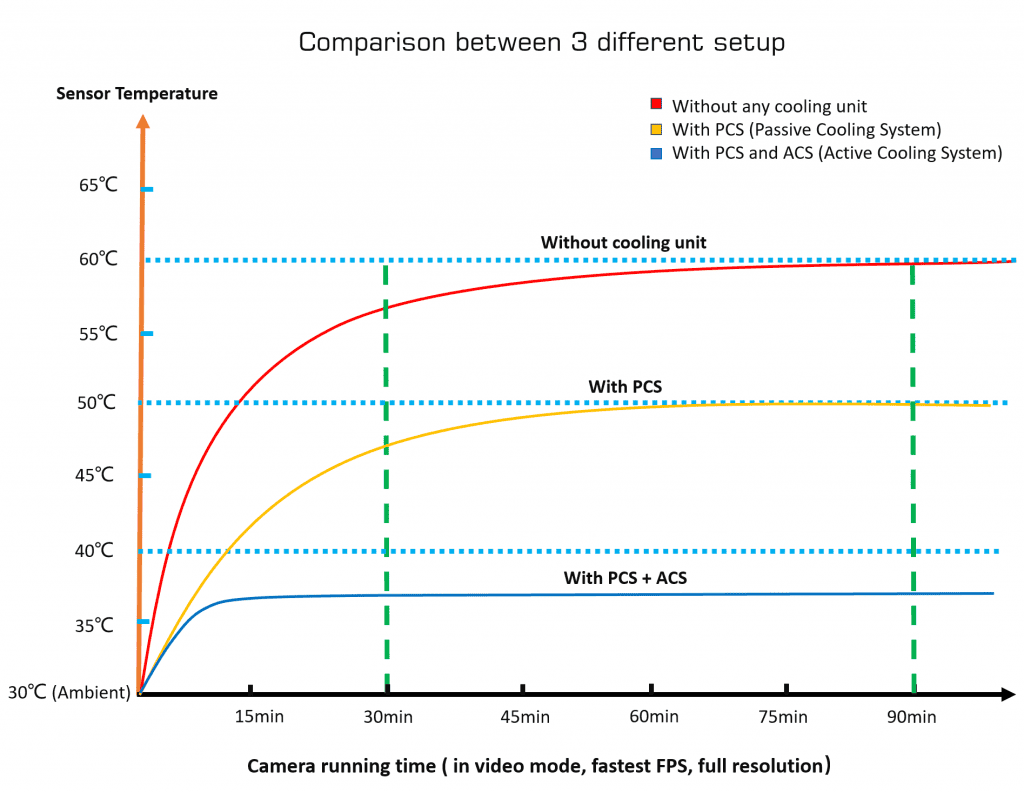
Player One reports that a camera fitted with both PCS and ACS holds its sensor to roughly 7°C above ambient, even under extended direct sunlight, a large improvement over an uncooled body that can climb toward 60°C in the same conditions. In practice the camera body stays a little warm rather than hot, which keeps dark current and thermal noise down through long solar and planetary runs.
Recommended Uses
Reach for the ACS during solar narrowband and white-light imaging and large-format planetary sessions on hot, sunny days, where sensor heating would otherwise raise noise and shorten how long you can keep shooting.
Compatibility & Accessory Notes
- Camera requirement: the ACS is for uncooled cameras that already carry Player One's Passive Cooling System; the camera must be able to move heat from the sensor to its shield for the ACS to help.
- Not a replacement for TEC cooling: this is an active air-cooling accessory for uncooled bodies, not a regulated thermoelectric cooler.
Good to Know Before You Order
- Player One does not publish dimensions, weight, or power specifications for the ACS; if you need those details to plan your setup, contact us and we will help.
- The roughly 7°C-above-ambient result applies to a camera running PCS and ACS together, since the ACS is designed to supplement passive cooling rather than work on its own.
FAQ
Is it difficult to set up? No. The ACS attaches to a compatible PCS-equipped camera and runs as an active air-cooling unit; there is no imaging-train reconfiguration required.
Which cameras is it for? Uncooled Player One cameras that include the Passive Cooling System, particularly solar and large-format planetary models.
How much cooling does it provide? With PCS and ACS together, Player One reports the sensor stays about 7°C above ambient even in direct sunlight.
Bottom Line
If you shoot the sun or large-format planetary targets with a PCS-equipped Player One camera, the ACS keeps your sensor close to ambient through long, sunlit sessions so noise stays low.
| Type | Active air-cooling unit for uncooled cameras with PCS |
|---|---|
| Cooling performance | Sensor ~7°C above ambient with PCS + ACS (direct sunlight) |
| Intended cameras | Uncooled solar and large-format planetary cameras (must include Passive Cooling System) |
You may also like
Recently viewed
Recent Blog Posts
View all
Your Guide Graph Is Lying to You
Read More

D-Size vs V-Size: A Complete Guide to Telescope Dovetail Systems
Read More

What Is Back Focus in Astrophotography? Telescope Reducers, Flatteners, and Spacing Explained
Read More