

- Description
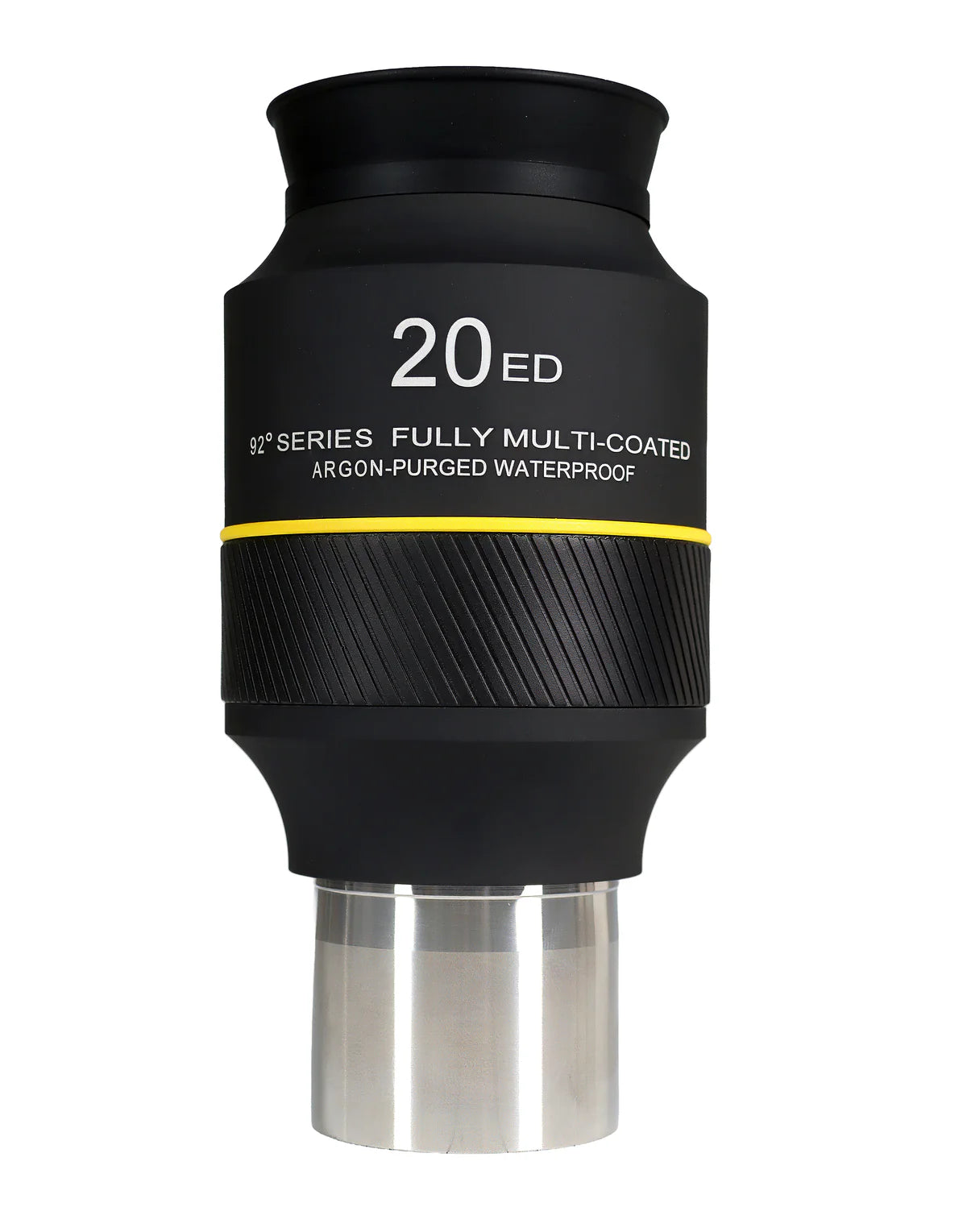
The Explore Scientific 92 degree ED 20mm eyepiece with a 2 inch barrel is designed for immersive, wide field viewing with a balance of brightness and magnification. It is particularly effective for observing deep sky objects while maintaining an expansive perspective. The ultra wide 92 degree apparent field of view creates a panoramic experience that enhances the sense of depth and scale. Objects remain in view longer, making observation more fluid and engaging.
The extra low dispersion glass ensures that image quality remains sharp and well corrected. Color fringing is minimized, and contrast is enhanced, resulting in a clean and detailed image. The eyepiece is built for comfort, with long eye relief that supports extended observation.
This focal length is ideal for those who want a wide field experience while still maintaining enough magnification to reveal structure and detail.
You may also like
Recently viewed
Recent Blog Posts
View all
Your Guide Graph Is Lying to You
Read More

D-Size vs V-Size: A Complete Guide to Telescope Dovetail Systems
Read More

What Is Back Focus in Astrophotography? Telescope Reducers, Flatteners, and Spacing Explained
Read More