


- Description
- Specifications
Product Overview
This is the Explore Scientific 8x50 straight-through illuminated finder scope, supplied with its quick-release bracket and the long-battery-life Illuminator II. It magnifies 8x through a 50mm objective and shows a 6-degree field of view, which is roughly twelve full-moon diameters across in a single look. A roof prism inside the body presents the image the right way up and the right way round, so what you see in the finder matches what you see with your eyes and matches a printed or on-screen chart.
The reticle is an open-centre illuminated crosshair carrying degree markings, with variable red brightness so it can be dimmed to a faint glow on dark targets or turned up when the sky is bright. EMD-coated optics are used through the optical path to raise contrast. Published dimensions are 216mm x 57mm x 62mm at 15.9 oz, and the bracket fits standard Explore Scientific finder bases.
The box contains the viewfinder, its bracket and the Illuminator II unit. The Illuminator II runs on two AAA batteries, which the vendor does not include.
Who It's For
- Star hoppers: 8x50 with a 6-degree field is the classic combination for working a chart down from a naked-eye star to a faint target, and the erect image removes the mental gymnastics of a flipped or mirrored view.
- Owners of telescopes with an undersized or missing finder: a 50mm objective gathers roughly fifty times the light of a 7mm dark-adapted pupil, so it reaches stars well beyond naked-eye range from a suburban yard.
- Observers who use a reticle for centring: the open-centre crosshair leaves the target visible instead of hiding it behind an intersection, and the degree markings give a scale for offsetting from a bright reference star.
Key Features & Design
- 8x magnification over a 50mm objective: enough magnification to show real detail in a star field, enough aperture to reach well past naked-eye limits.
- 6-degree field of view: wide enough to bridge the gap between a naked-eye chart and a telescope eyepiece field without losing your place.
- Roof prism erect-image optics: correct orientation left-to-right and top-to-bottom, which is what makes chart matching straightforward.
- Open-centre illuminated reticle with degree markings: the target stays visible at the centre, and the markings give you a measured offset to work with.
- Variable red brightness: the illumination dials down far enough not to wash out a faint star, and up far enough to be readable under a bright sky.
- Illuminator II: the current long-battery-life illuminator unit, running on two AAA cells.
- EMD coatings through the optical path for contrast.
- Quick-release bracket included, fitting standard Explore Scientific finder bases.
- Published size and weight: 216mm x 57mm x 62mm, 15.9 oz.
Recommended Uses
- Star hopping from naked-eye stars to deep-sky targets on any telescope.
- Centring an object before switching to a high-power eyepiece, where the main telescope's field is far narrower than 6 degrees.
- Aligning a GoTo mount, where the illuminated crosshair gives a repeatable centring reference on each alignment star.
- Outreach nights, where a queue moves faster if the object can be recovered quickly between viewers.
- Replacing an unilluminated or damaged finder on an existing telescope.
Compatibility and Accessory Notes
- Mounting: the supplied bracket fits standard Explore Scientific finder bases. If your telescope carries a different pattern of shoe, send us the make and model and we will check what it takes to mount this cleanly.
- Batteries: two AAA cells run the Illuminator II. They are not supplied with the finder, and they are the one item worth having on hand before the first clear night.
- Field of view in context: at 6 degrees, the finder field is around twelve times the apparent width of the full Moon. A 30mm eyepiece in a 952mm telescope shows about 2.6 degrees, so the finder comfortably brackets the main instrument's widest view.
- Exit pupil: 50mm divided by 8x works out to 6.25mm, which is close to a fully dark-adapted pupil and part of why the view stays bright.
- Straight-through geometry: you sight along the tube in the same direction the telescope points. On a refractor or Schmidt-Cassegrain aimed near the zenith that can mean an awkward neck position; right-angle finders exist for exactly that reason, and we stock them if that is how you observe.
- Alignment: the bracket carries adjustment screws for aligning the finder to the main telescope, done once in daylight on a distant fixed object and then touched up rarely.
Good to Know Before You Order
- Batteries are not in the box. The Illuminator II takes two AAA cells, which are inexpensive and available anywhere — worth adding to the order if you would rather not hunt for them at dusk.
- It is a straight-through finder, not a right-angle one. That keeps the view intuitive and the body short, at the cost of comfort when the telescope is pointed high. If most of your observing happens near the zenith, a right-angle finder is the more comfortable tool and we can suggest one.
- Explore Scientific does not publish eye relief or exit pupil figures for this finder, so those rows are absent below rather than estimated. The 6.25mm exit pupil quoted in the notes above is simple arithmetic from the published 8x and 50mm.
- The bracket is built for standard Explore Scientific finder bases. Most telescopes use one of two common shoe patterns, and adapters are available for the rest — send us your scope and we will confirm which route applies.
Frequently Asked Questions
Is it difficult to set up?
No. The bracket slides onto a standard Explore Scientific finder base and locks down, then the finder is aligned to the main telescope using the bracket's adjustment screws — a five-minute job in daylight on a distant chimney or pole. After that it holds alignment and only needs an occasional touch-up.
Is the image the right way up?
Yes. The roof prism gives a fully erect image, correct both vertically and horizontally, so the star field in the finder matches your chart and your naked-eye view.
What batteries does the illuminator take?
Two AAA cells, which are not included. The Illuminator II is the long-battery-life version, so a set lasts a long stretch of observing nights.
How wide is the field?
6 degrees. For scale, the full Moon is about half a degree across, so the finder shows roughly twelve Moon-widths at once.
What reticle pattern does it use?
A standard crosshair with an open centre and degree markings. The open centre means a faint object sits in clear sky rather than behind the intersection of the lines.
Will it fit my telescope?
It comes with a bracket for standard Explore Scientific finder bases. Many telescopes from other makers use a compatible shoe, and where the pattern differs, an adapter base solves it. Send us the telescope model and we will tell you which situation you are in.
Bottom Line
In short: an 8x50 straight-through finder with erect-image roof prism optics, a 6-degree field, an open-centre illuminated crosshair with degree markings and variable red brightness, supplied with its bracket and the long-life Illuminator II at a published 15.9 oz. If you are not sure whether the bracket matches the finder base on your telescope, send us the model and we will sort the fit out with you.
| Description | 8x50 Erect Image Illuminated Finder Scope |
|---|---|
| Item Number | VFEI0850-01 |
| Magnification | 8x |
| Objective Diameter | 50mm |
| Field of View | 6 degrees |
| Reticle | Standard Crosshair |
| Illumination | Illuminator II, variable red brightness, two AAA batteries (not included) |
| Image Orientation | Erect image, roof prism |
| Weight | 15.9 oz |
| Size | 216mm x 57mm x 62mm |
| Eye Relief | Not published by vendor |
| Exit Pupil | Not published by vendor |
You may also like
Recently viewed
Recent Blog Posts
View all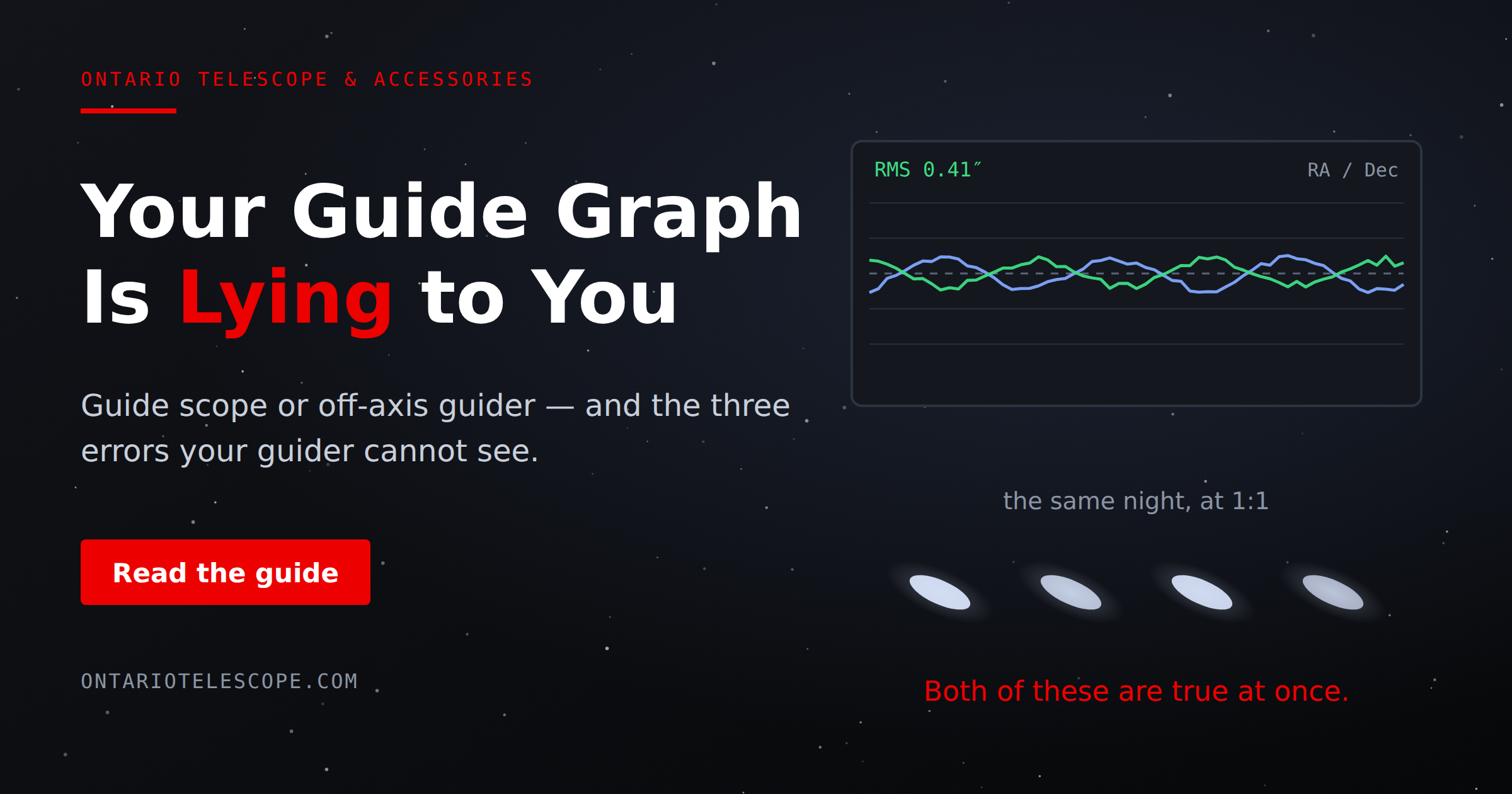
Your Guide Graph Is Lying to You
Read More
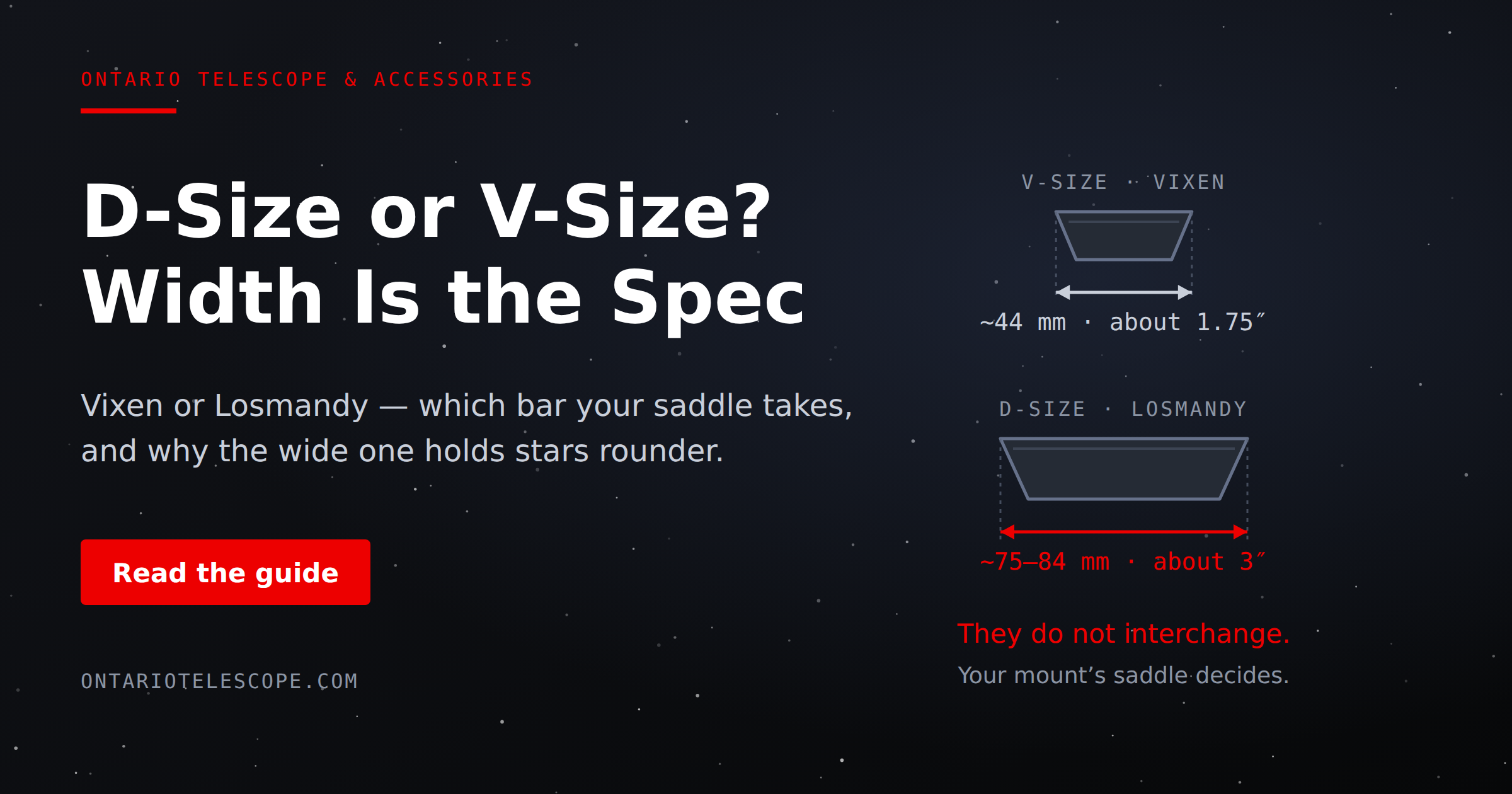
D-Size vs V-Size: A Complete Guide to Telescope Dovetail Systems
Read More
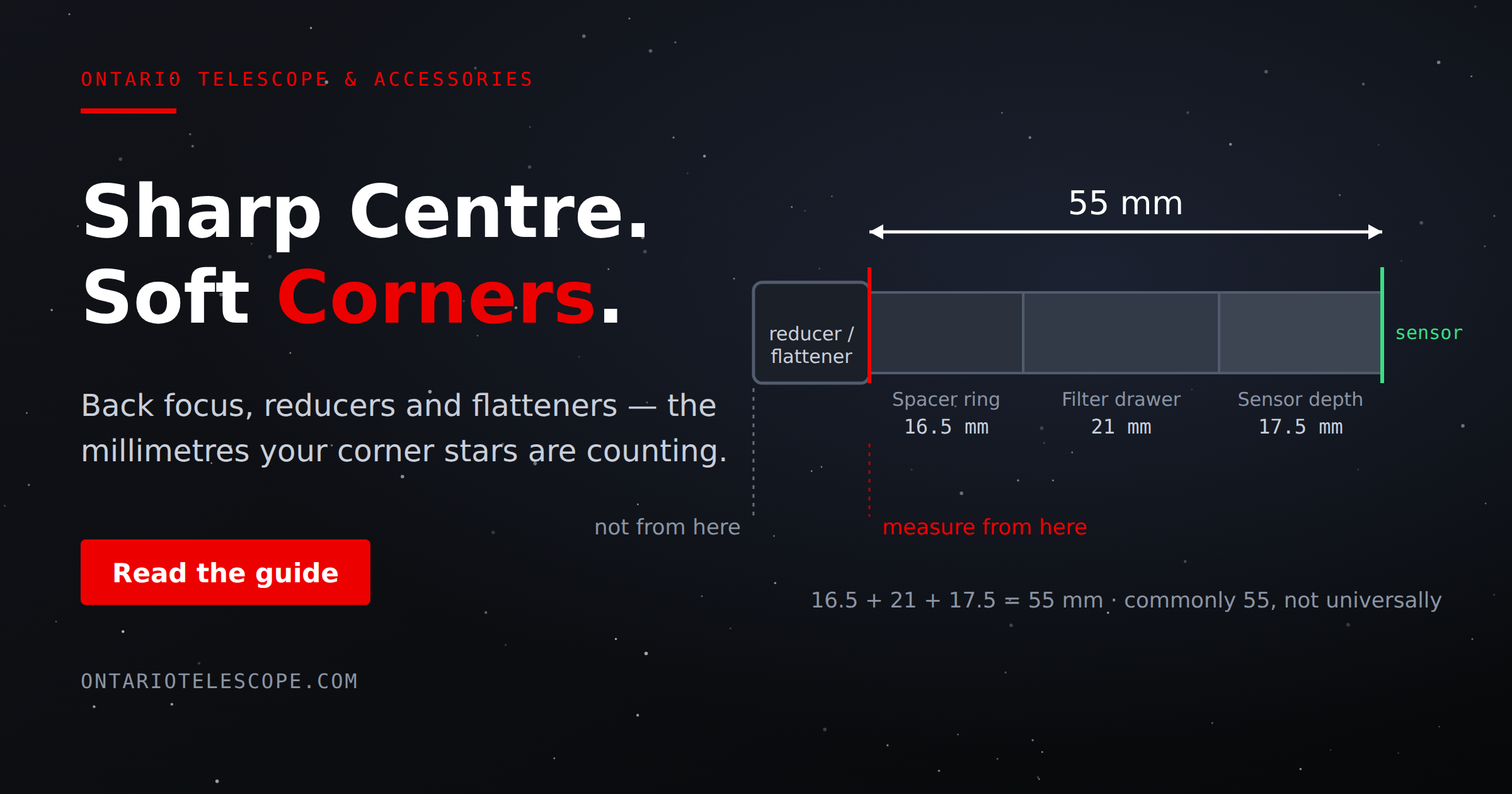
What Is Back Focus in Astrophotography? Telescope Reducers, Flatteners, and Spacing Explained
Read More