
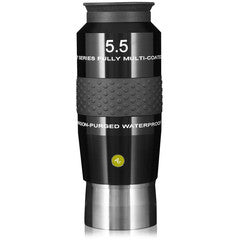

- Description
- Specifications
Product Overview
The Explore Scientific 100° Series 5.5mm is the short focal length end of the widest apparent field Explore Scientific builds. It uses a 2.00″ barrel, measures 150mm long and 56mm wide, and weighs 21.6oz (612g) — a large, dense eyepiece, which is what a 100° field at 5.5mm requires physically.
At 5.5mm this is high magnification in almost any telescope: 150x in an 826mm refractor, 218x in a 1200mm Dobsonian, 364x in a 2000mm SCT. The published field stop is 9.6mm, which puts the true field at roughly 0.46° at 1200mm — slightly less than a full Moon — and eye relief is 10.5mm.
The housing is argon-purged and internally sealed, tested by submersion to 1 metre for 30 minutes, and the optics are multi-coated for maximum contrast. Registering the eyepiece with Explore Scientific within 60 days activates their lifetime coverage.
Who It's For
- Observers who want the spacewalk view at high power: at 100° the field edge is well outside where the eye naturally looks, so the framing effectively disappears.
- Dobsonian and undriven-mount users at high magnification: apparent field is what buys drift time, and 100° buys close to twice what a 52° eyepiece does at the same power.
- Planetary and lunar observers with a telescope and a site that support 200x and beyond.
- Globular cluster and planetary nebula observers, where high magnification and a dark background sky pull faint structure out.
- Observers in dew-prone conditions, given the sealed, argon-filled body.
Key Features & Design
- 100° apparent field of view: the widest series Explore Scientific produces, where the eye scans within the field rather than taking it in at once.
- 9.6mm field stop: the figure that sets true field — 57.3 × 9.6 ÷ your telescope's focal length gives the field in degrees.
- 10.5mm eye relief: workable at 5.5mm, a focal length where eye relief is the usual sacrifice.
- 2.00″ barrel: the large barrel is what carries a 100° field at a short focal length; a 1.25-inch barrel could not pass the same light cone.
- Argon-purged and internally sealed: tested by submersion to 1 metre of water for 30 minutes, with an inert fill that gives internal fogging nothing to condense from.
- Multi-coated optics for contrast on low-surface-brightness detail at high magnification.
- Published dimensions: 150mm long, 56mm wide, 21.6oz (612g).
- Explore Scientific lifetime coverage on registration within 60 days of purchase.
Recommended Uses
- High-power lunar observing, where a wide field keeps a whole region of the terminator in view.
- Planetary detail on nights of steady seeing.
- Globular clusters, planetary nebulae and compact galaxies at high magnification.
- Double-star work at 150x and above.
- Manual-mount high-power observing, where apparent field converts directly into observing time.
Compatibility and Accessory Notes
- Requires a 2-inch focuser or diagonal. The 2.00″ barrel does not step down, so a 1.25-inch-only focuser is outside its range. We can check your focuser against it before you order.
- Magnification: telescope focal length ÷ 5.5. An 826mm refractor gives 150x; a 1200mm Newtonian gives 218x; a 1500mm Maksutov gives 273x.
- True field: 57.3 × 9.6 ÷ focal length — about 0.46° at 1200mm and 0.67° at 826mm.
- Exit pupil: 5.5 divided by focal ratio — 1.17mm at f/4.7 and 0.55mm at f/10.
- Balance: 21.6oz at the focuser end is a genuine load. On a Dobsonian, tube friction or a counterweight handles it; on a small refractor, moving the tube back in its rings does the same job.
- Filters: 2-inch threaded filters are the match. Neutral density and variable polarising filters are the usual companions for lunar work at this magnification.
- Focal extenders: 5.5mm is already short, and an extender on top of it exceeds what most apertures and most nights will support. A longer eyepiece in the series is the better base for one.
Good to Know Before You Order
- It is a large, heavy 2-inch eyepiece. 150mm long and 612g means both a 2-inch focuser and a moment's thought about balance. Both are easily handled, and we can suggest a counterweight if your telescope needs one.
- Seeing sets the ceiling at 5.5mm. Around 218x in a 1200mm telescope, this is a good-night eyepiece — steady air rewards it and turbulent air will not. A longer focal length alongside it covers the rest of the nights.
- 10.5mm of eye relief is workable rather than generous. If you observe with glasses on, the 82° Series LER designs carry more eye relief, and we stock those.
- The exit pupil is small. At f/10 it is 0.55mm, which can make floaters in your own eye visible. That is a normal effect of high magnification rather than anything happening in the optics.
- Explore Scientific does not publish an element count, a group count or a filter thread specification for this eyepiece, so those rows are absent below rather than estimated. If one of those decides it for you, ask and we will take the question to our Explore Scientific contact.
Frequently Asked Questions
Is it difficult to set up?
No — it slides into any 2-inch focuser or diagonal and is ready to use straight away. The only thing worth a moment is rebalancing the telescope, since 21.6oz at the back end will shift a light tube.
What magnification will I get?
Divide your telescope's focal length in millimetres by 5.5. A 1000mm telescope gives 182x and a 1200mm gives 218x.
How much sky does it show?
57.3 multiplied by the 9.6mm field stop, divided by your focal length. At 1200mm that is about 0.46°, a little under the width of a full Moon — presented across a 100° apparent field, which is why it feels so much larger than the number suggests.
Will it fit a 1.25-inch focuser?
No, the barrel is 2.00″. For a 1.25-inch focuser at a similar magnification, the 82° Series LER designs are the ones to look at and we carry them.
Can I use it with glasses on?
10.5mm of eye relief is on the shorter side for spectacle wearers. Observers who take their glasses off and focus the telescope instead get on well with it; if you keep glasses on, the 82° LER series carries more eye relief.
Is the 100° field really different from 82°?
Yes. At 82° the field edge is at the outer limit of a relaxed gaze; at 100° you turn your eye to find it. The practical effect at 218x is that an object stays in view noticeably longer on an undriven mount.
Does it need a special diagonal?
A standard 2-inch diagonal is fine. Given the 612g weight, a diagonal with a compression ring rather than a single thumbscrew holds it more securely, and we stock those.
Bottom Line
In short: a 612g, argon-purged 5.5mm eyepiece with a 100° apparent field, a 9.6mm field stop and a 2-inch barrel, sealed and tested to 1 metre for 30 minutes — the widest view Explore Scientific builds, at magnifications where a wide field does the most good. If you would like a second, longer focal length to pair with it for average nights, send us your telescope's focal length and we will suggest one that matches.
| Item Number | EPWP10055-01 |
|---|---|
| Description | 5.5mm 100° Series Argon-Purged Waterproof Eyepiece |
| Apparent Field of View | 100° |
| Focal Length | 5.5mm |
| Length | 150mm |
| Width | 56mm |
| Weight | 21.6oz; 612g |
| Barrel Size | 2.00" |
| Eye Relief | 10.5mm |
| Field Stop Diameter | 9.6mm |
| Waterproof | Argon-purged, internally sealed; tested by submersion to 1 meter for 30 minutes |
| Coatings | Multi-coated |
| Lens Elements/Groups | Not published by vendor |
| Filter Thread | Not published by vendor |
You may also like
Recently viewed
Recent Blog Posts
View all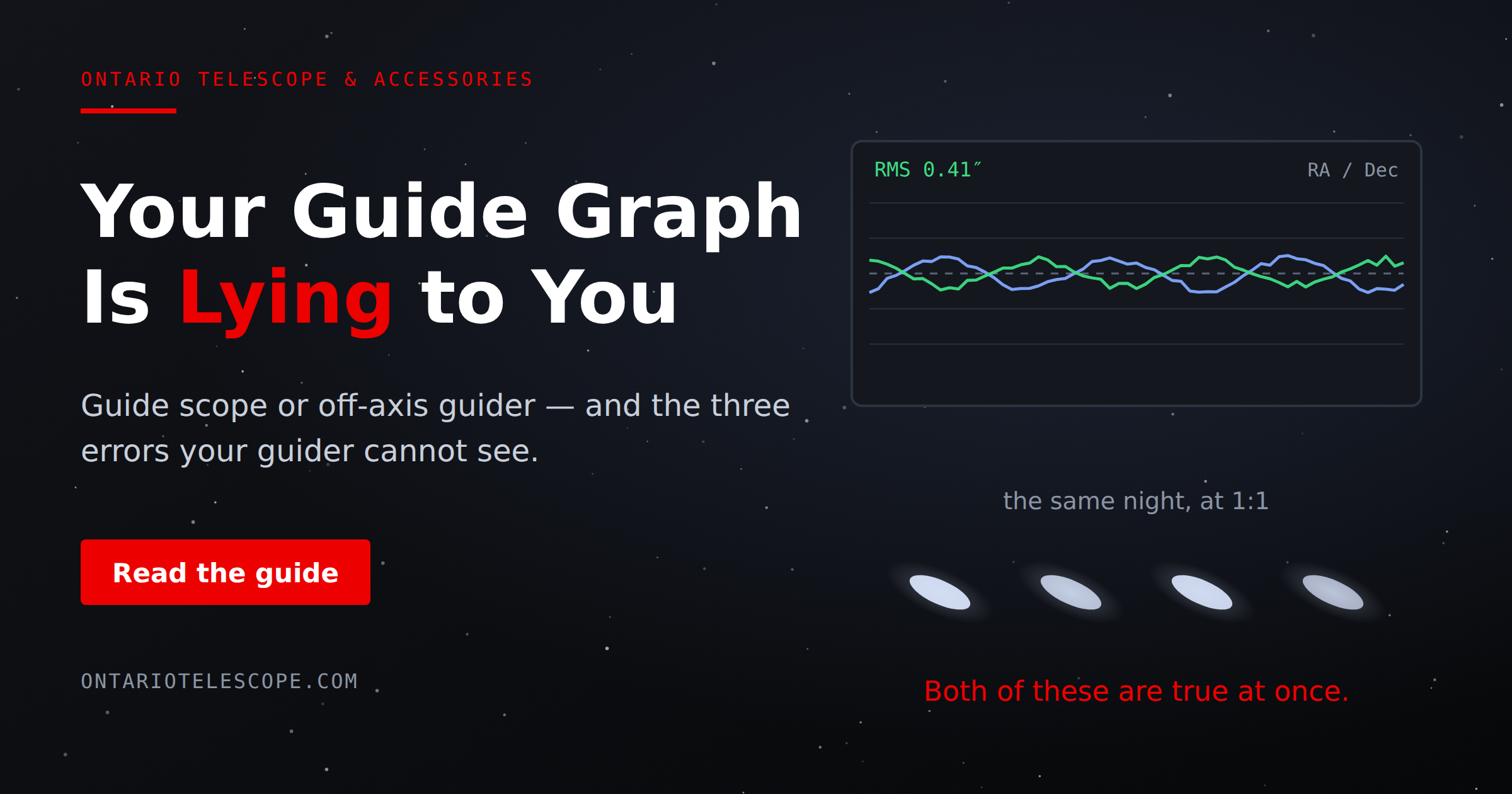
Your Guide Graph Is Lying to You
Read More
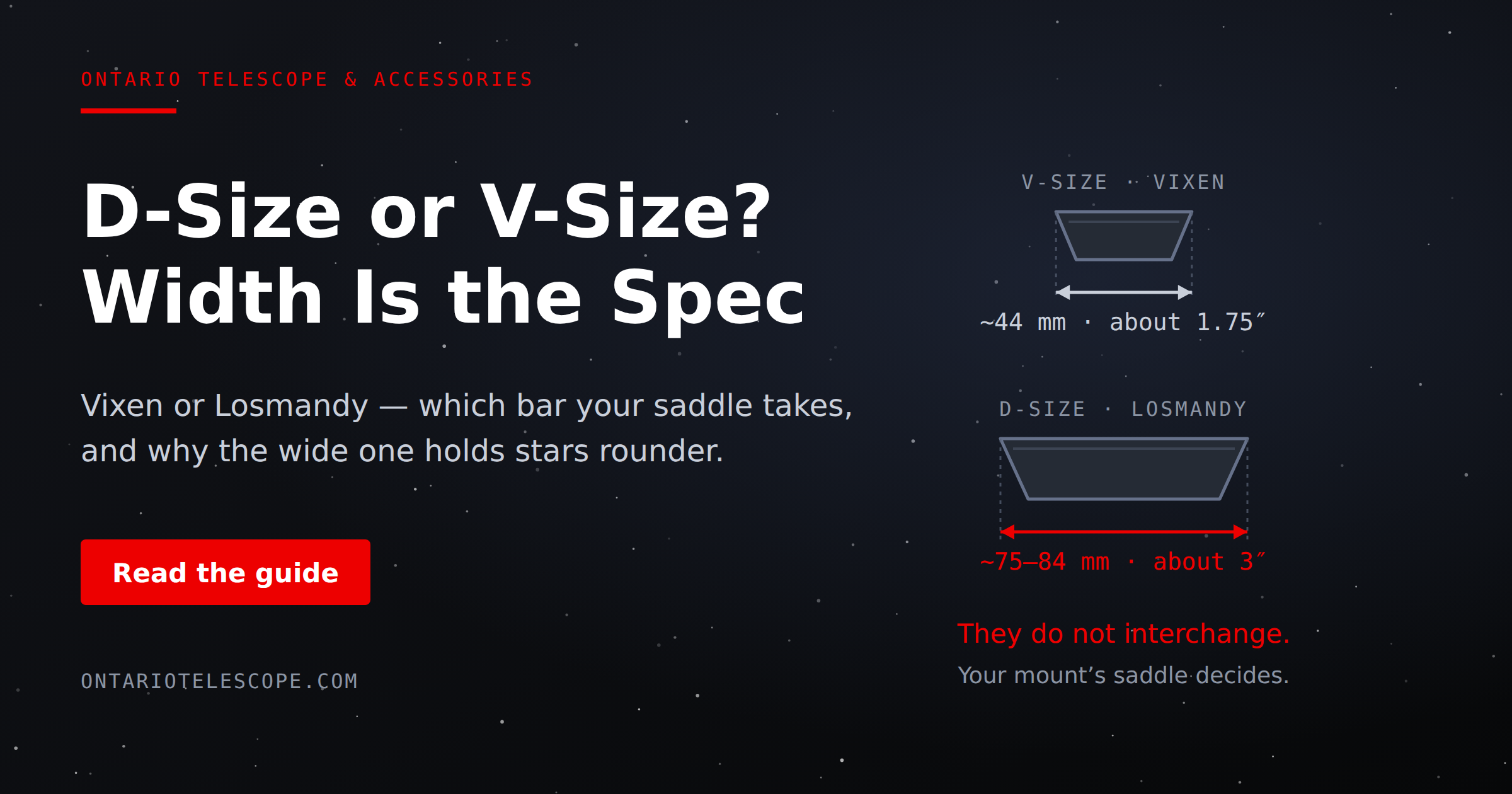
D-Size vs V-Size: A Complete Guide to Telescope Dovetail Systems
Read More
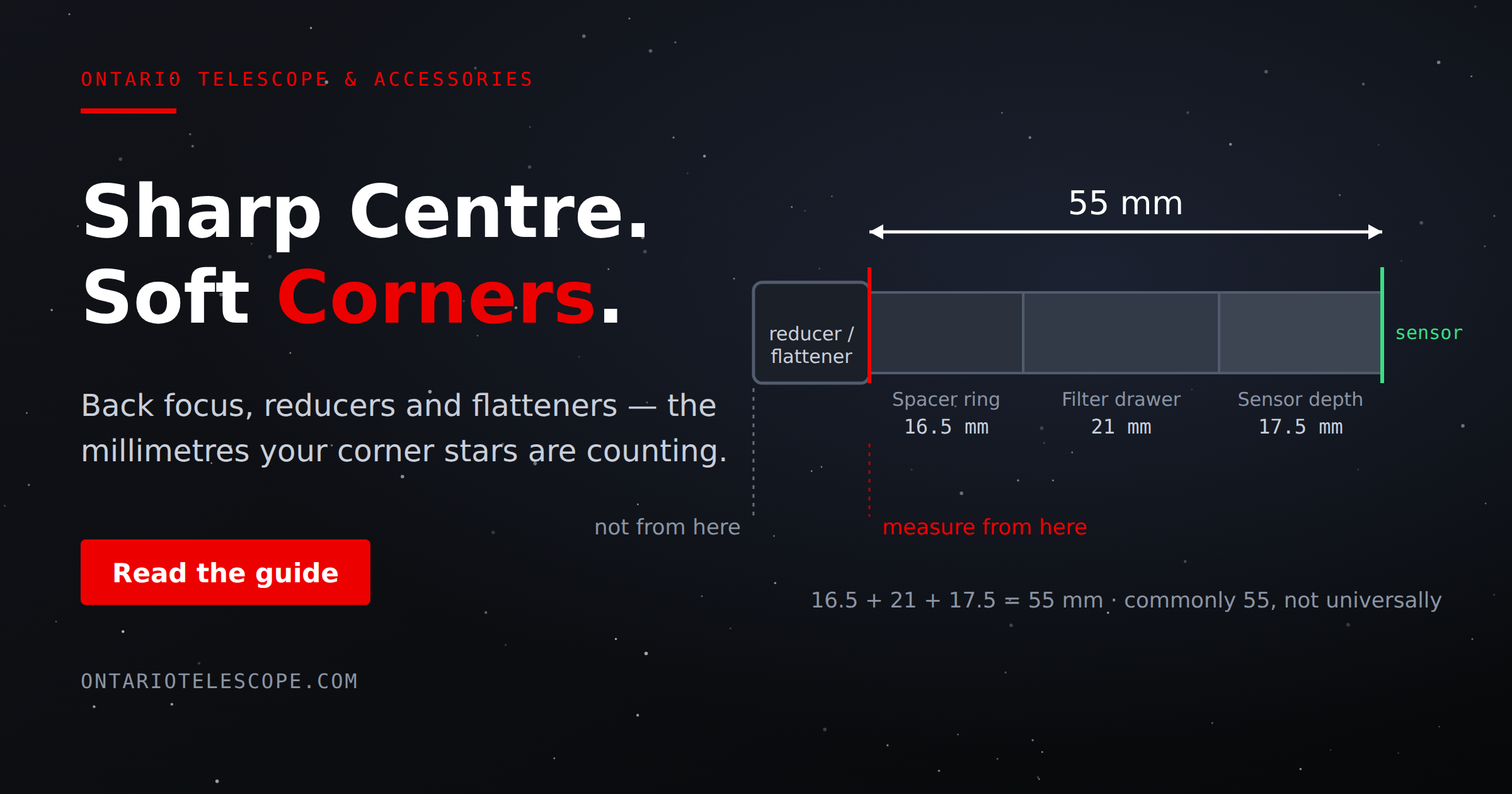
What Is Back Focus in Astrophotography? Telescope Reducers, Flatteners, and Spacing Explained
Read More