


- Description
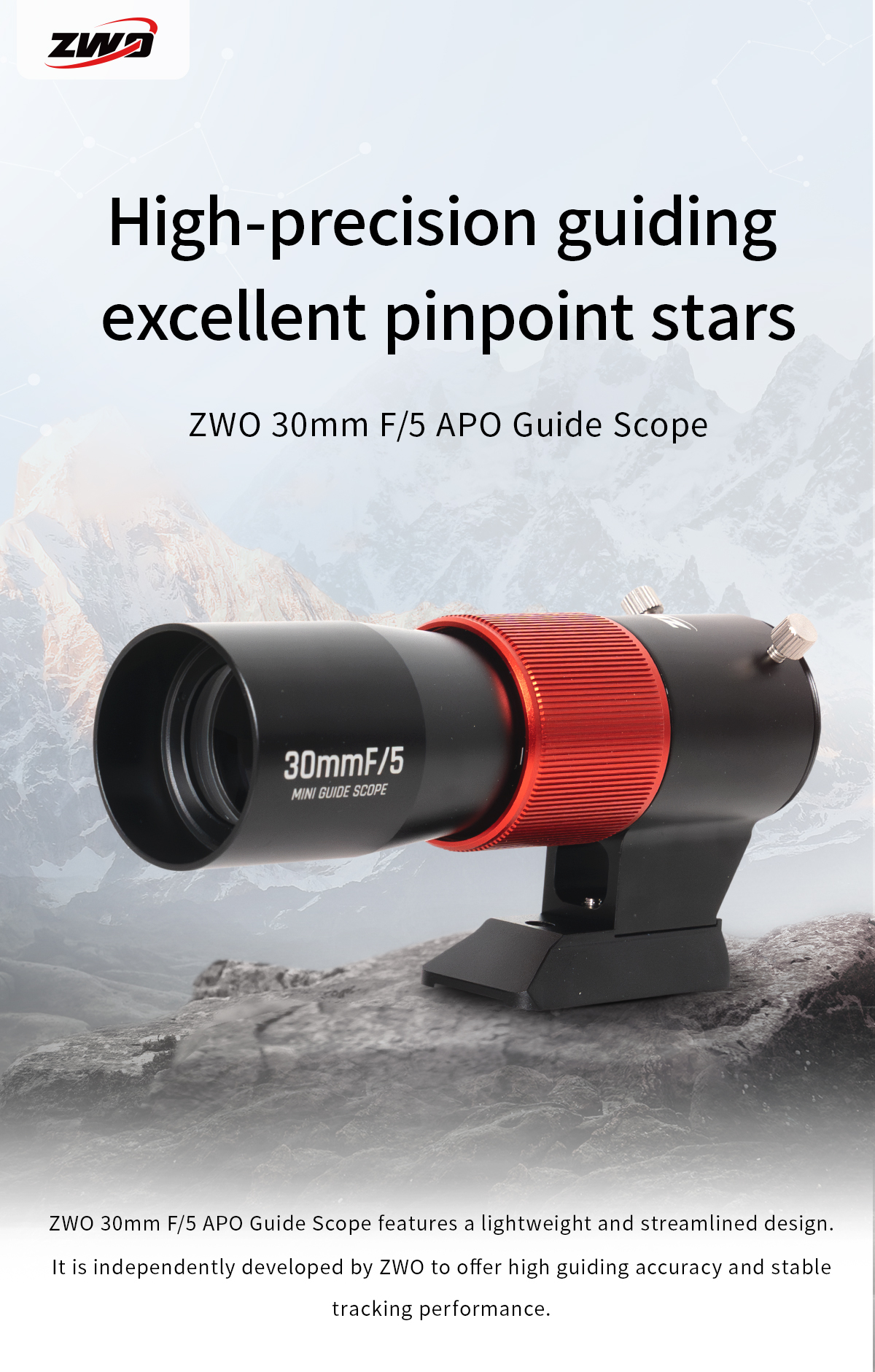
Its ED triplet APO optics are built to keep stars crisp and well-defined (instead of bloated or fringed), which helps guiding software lock onto a stronger centroid—especially on busy star fields or average seeing nights.
For imagers stretching beyond widefield, the 30F5 is a smarter pairing than the earlier model because it delivers sharper guide stars with better sampling, making it a more confident match for many rigs up to roughly ~750mm focal length.
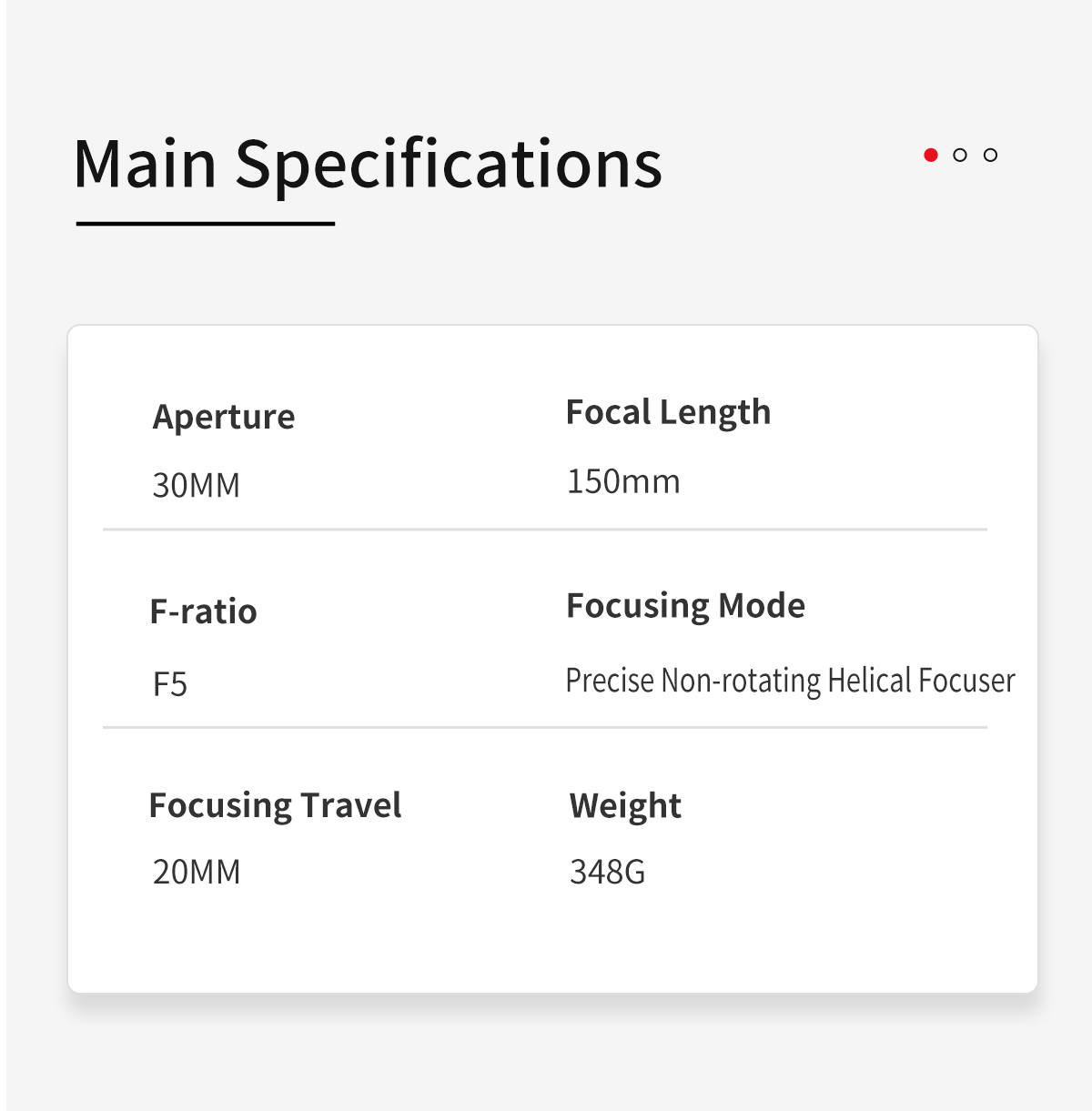
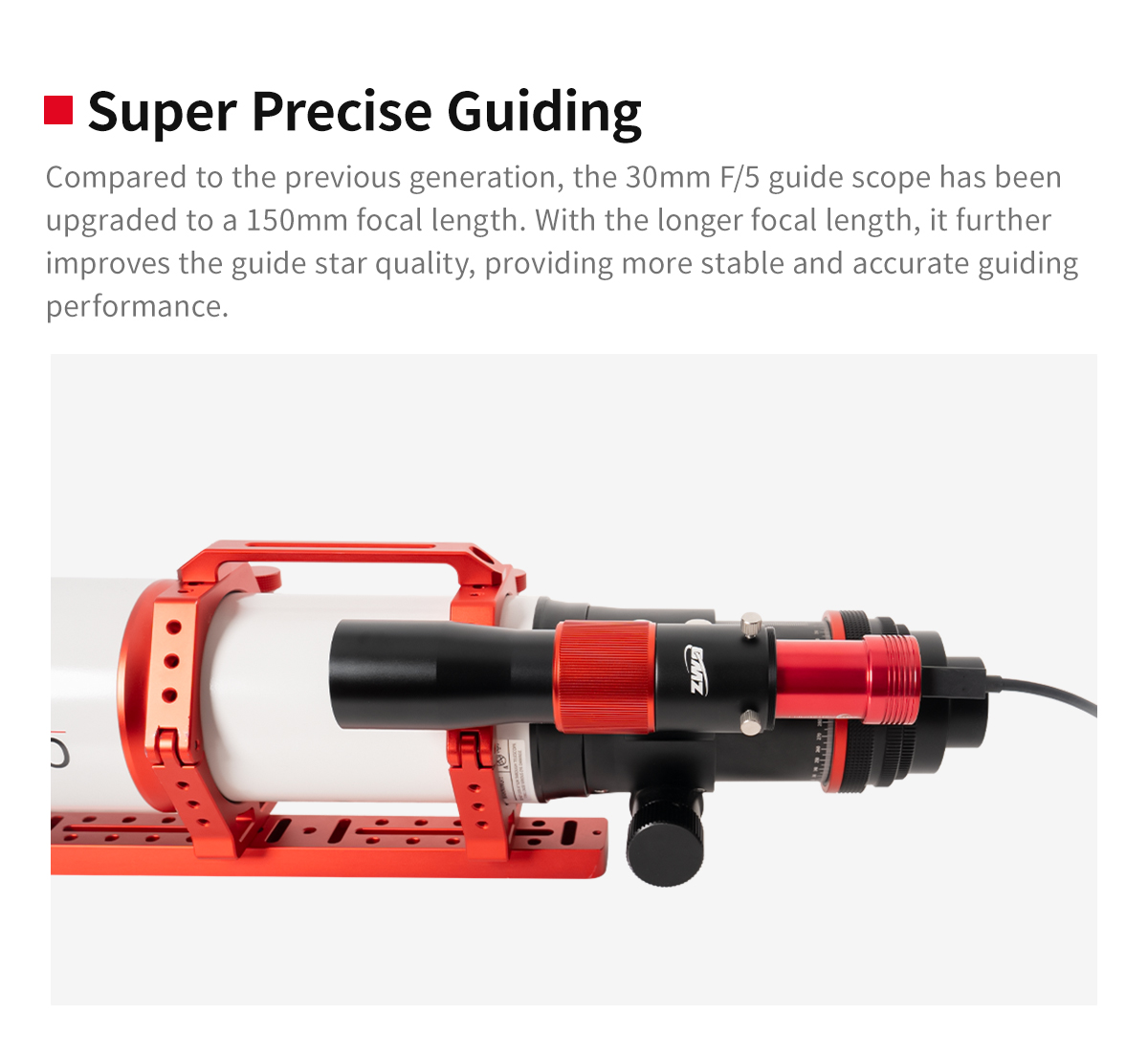
The ZWO 30F5 30mm f/5 mini guide scope gives your guiding a real advantage over the older 30mm f/4 by moving to a 150mm focal length, letting your guide camera measure star movement more precisely for steadier tracking corrections.





FAQ — ZWO 30mm f/5 (30F5) Mini Guide Scope
Q1) What’s improved vs the older 30mm f/4 (30F4)?
The 30F5 steps up to 150mm focal length and ED triplet APO optics, giving cleaner, tighter guide stars and more precise guiding on many setups.
Q2) What imaging focal lengths is the 30F5 best suited for?
A strong match for many rigs up to about ~750mm. If you’re pushing longer focal lengths or fighting flexure, consider a larger guide scope or an OAG.
Q3) Why does ED triplet APO matter for guiding?
It reduces color fringing and soft star halos, helping your guide camera centroid on sharper star profiles.
Q4) Which guide cameras work well with it?
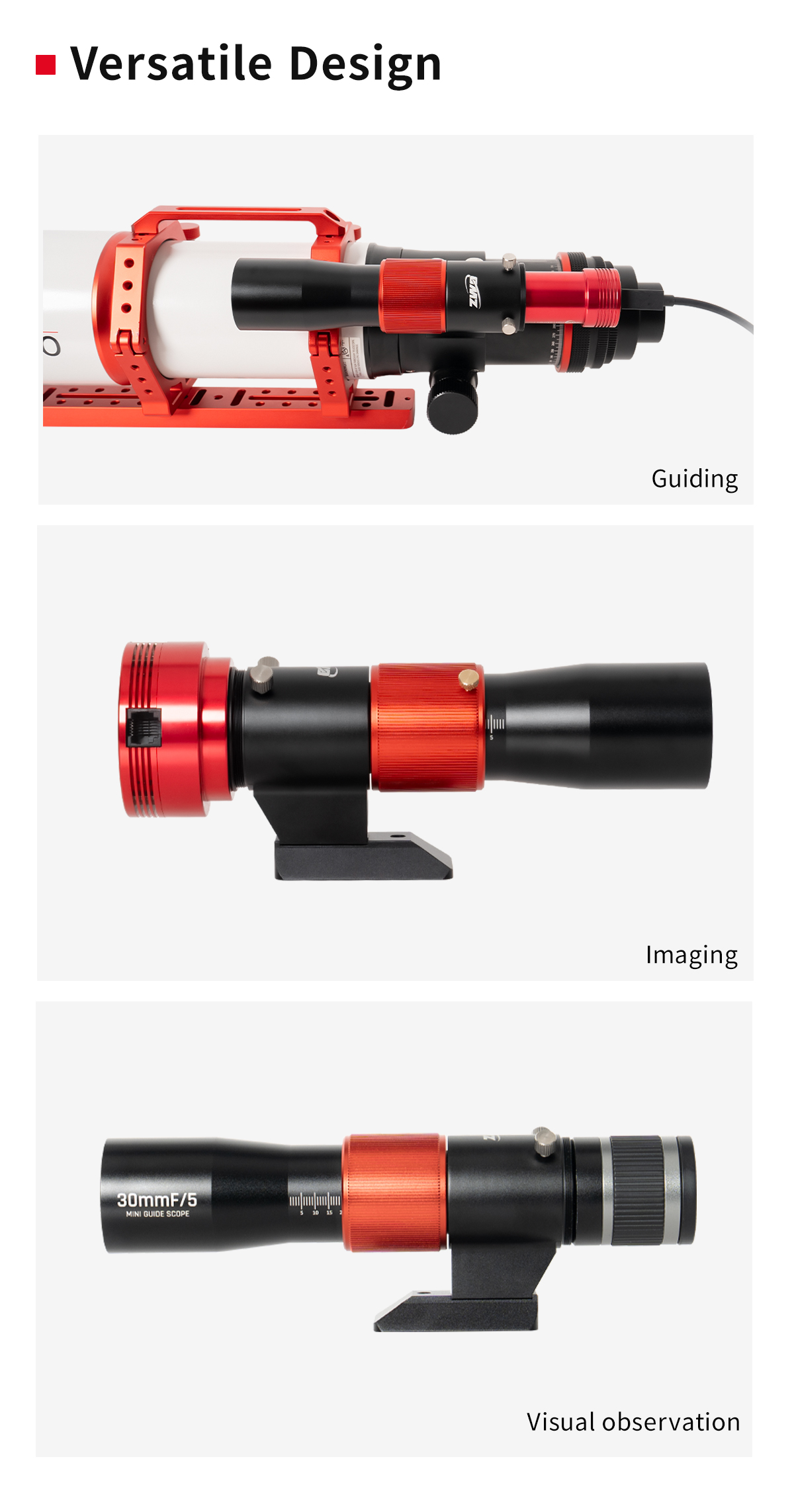
It pairs nicely with popular mini guide cameras (e.g., ASI120MM Mini / ASI220MM Mini) and other compact guide cams that can be securely mounted and focused.
Q5) How do I mount it?
Typically in a finder-style shoe/bracket or a small top-plate mount. If your rig doesn’t have a finder shoe, you’ll just need the appropriate bracket/adapter.
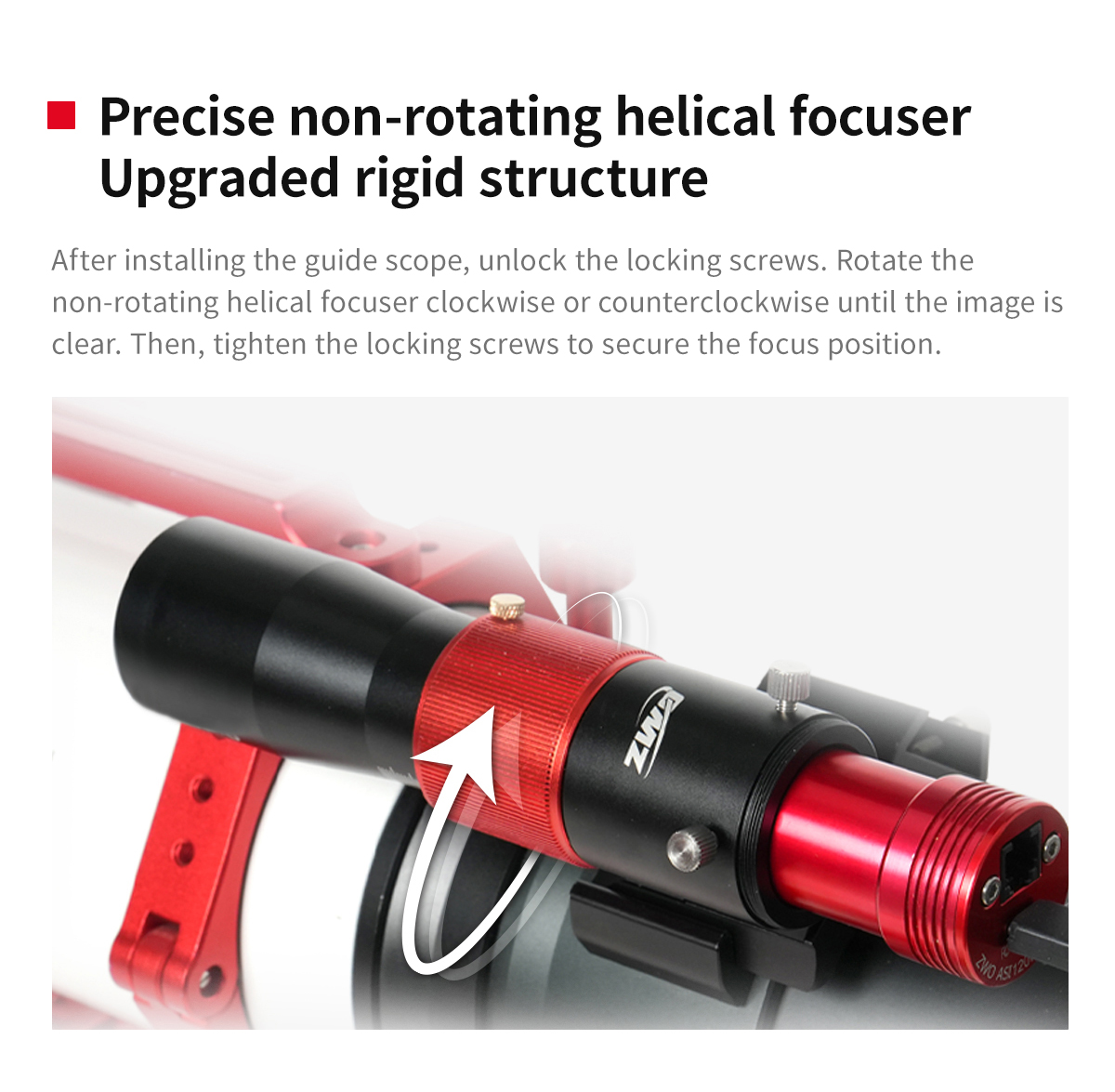
Q6) How do I focus it?
Start looping exposures in your guiding software and fine-tune focus until stars are smallest. The 30F5’s focusing design is made for easy micro-adjustments and solid hold.
Q7) I can’t reach focus—what should I try?
Adjust the camera insertion depth and check your adapters; some setups need a small spacer/extension to land the sensor in the sweet spot.
Q8) Guide scope or OAG—when should I choose an OAG?
Choose an OAG if you’re at long focal length, running a heavy imaging train, or you suspect differential flexure is limiting your guiding.
You may also like
Recently viewed
Recent Blog Posts
View all
Your Guide Graph Is Lying to You
Read More

D-Size vs V-Size: A Complete Guide to Telescope Dovetail Systems
Read More

What Is Back Focus in Astrophotography? Telescope Reducers, Flatteners, and Spacing Explained
Read More