



- Description
- Specifications

Product Overview
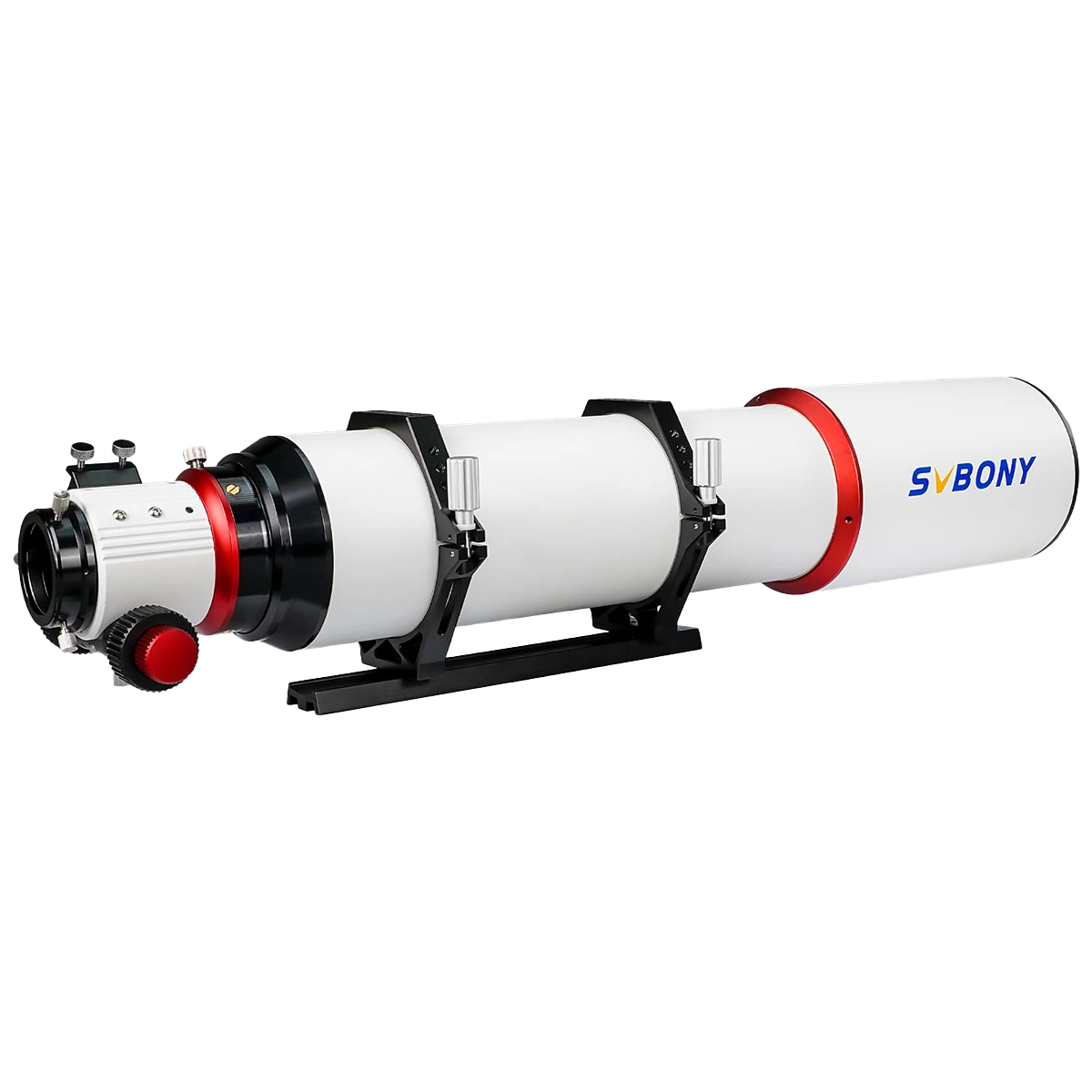
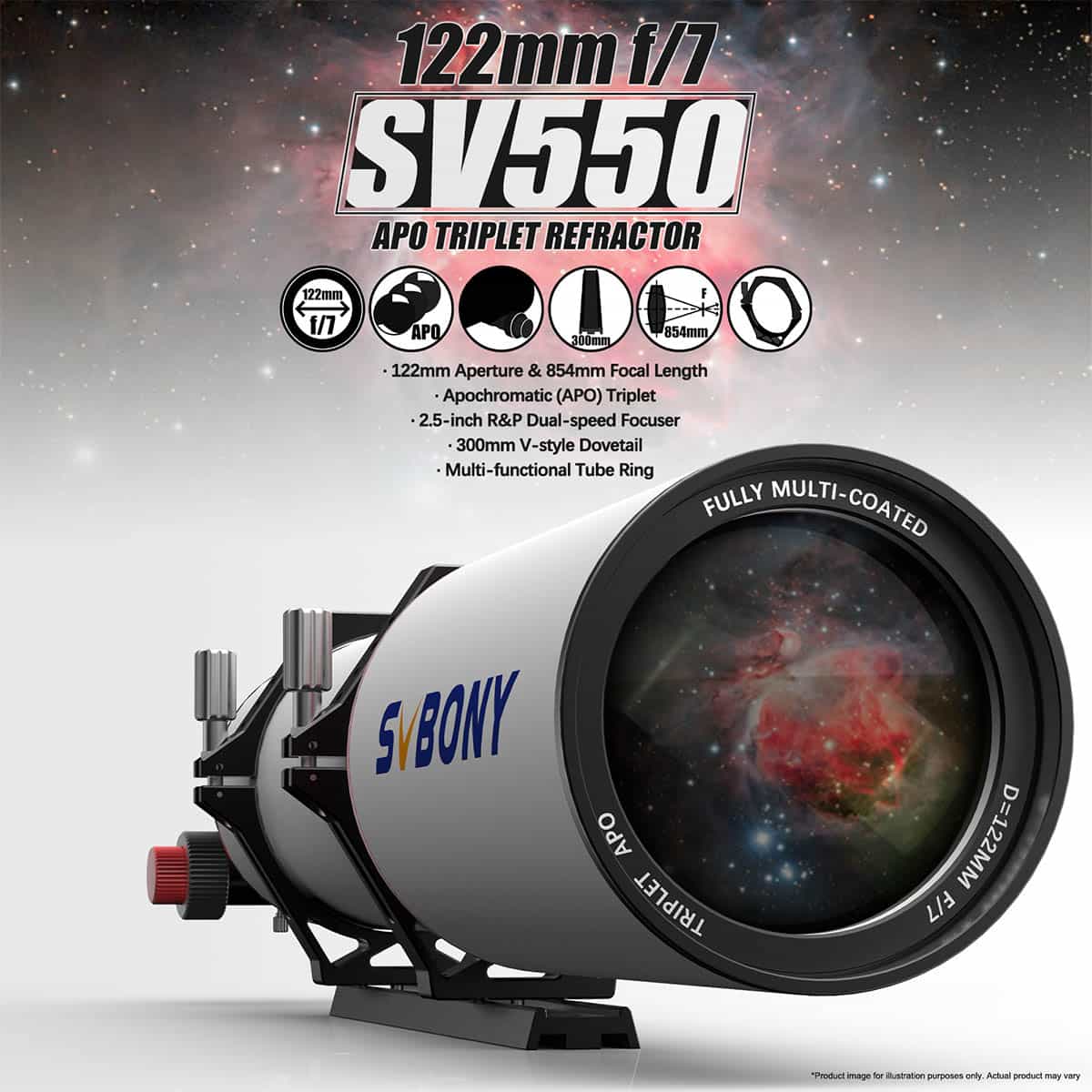
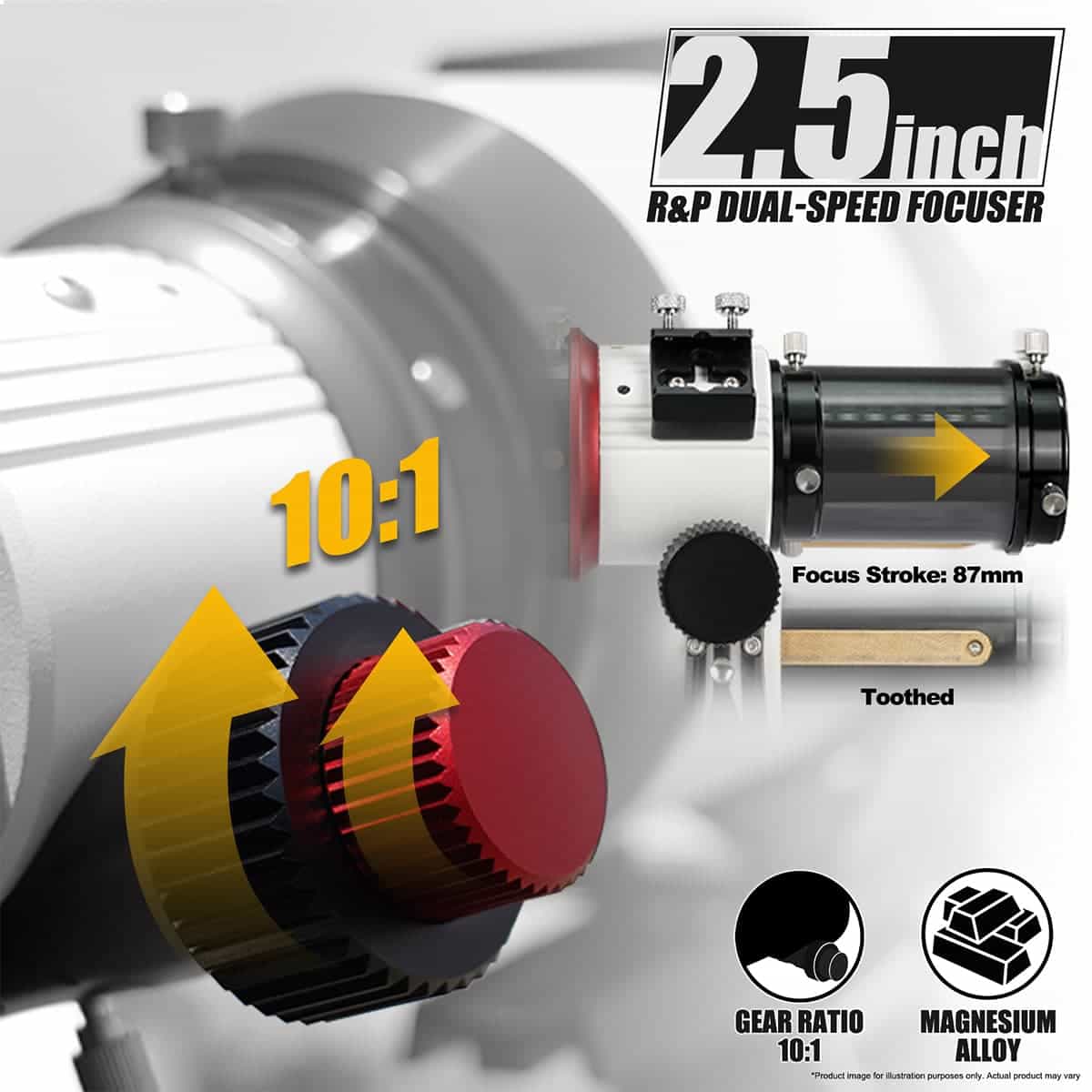
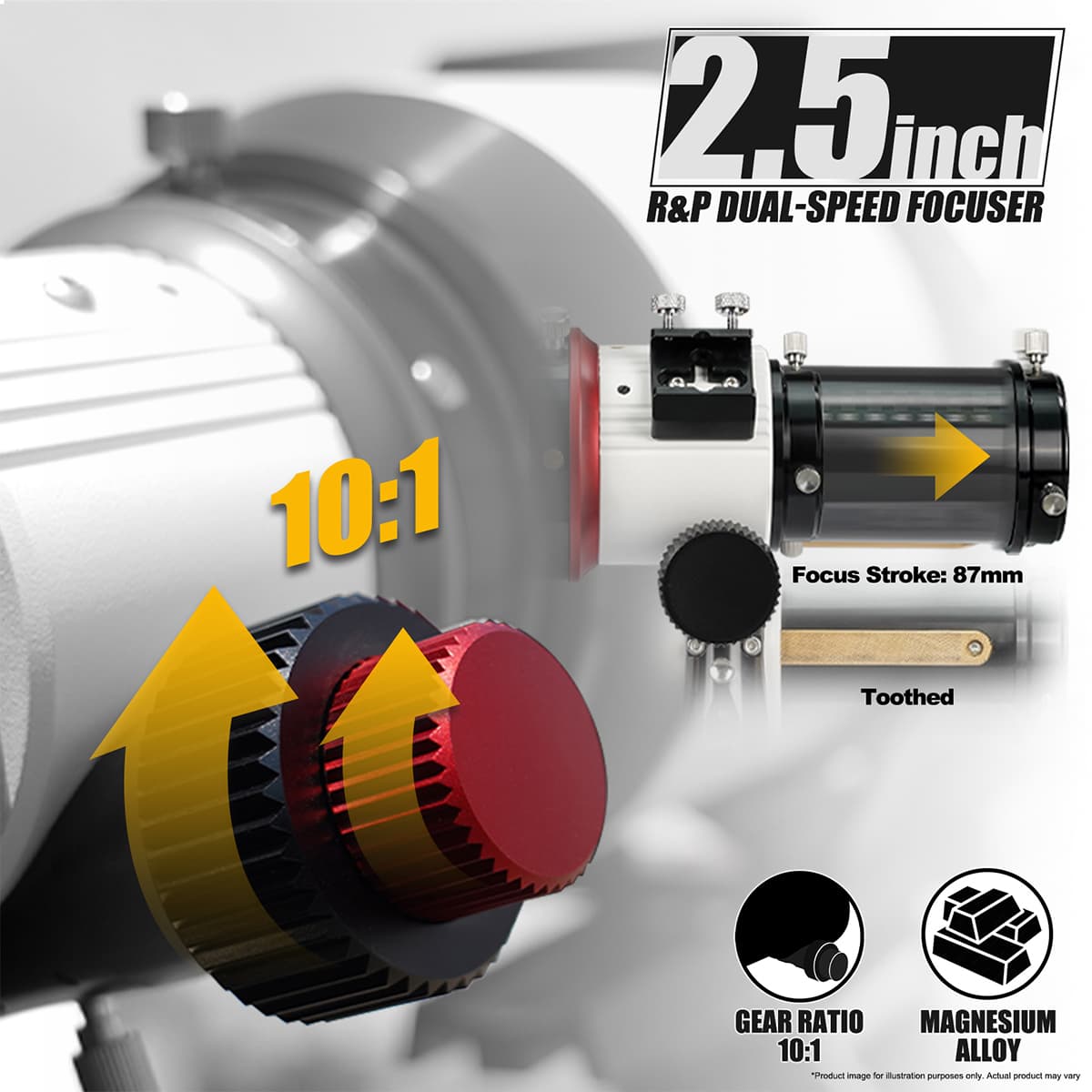
The SVBONY SV550 122 is a 122 mm, 854 mm focal length apochromatic triplet refractor working at f/7. Its fully multi-coated objective uses an FPL51 ED centre element between two correcting elements, and the optical tube carries a 2.5″ rack-and-pinion dual-speed focuser with 1:10 fine focus and 87 mm of travel. SVBONY rates resolution at 1.15 arc seconds, a visual limiting magnitude of 12.3 and a highest useful magnification of 244x.
The aluminium tube is CNC machined, measures 154 mm in outer diameter and weighs 6440 g (14.18 lb) net. It rides in split tube rings with 26 screw holes and a carry handle on a 300 mm V-style dovetail, has a retractable dew shield, and ships in a protective carry case with shoulder and hand straps.
Who It's For
This is a good match if you:
- Image galaxies, nebulae and clusters: 854 mm frames mid-sized targets, and the SV209 0.8x reducer/flattener widens that to f/5.6 for faster imaging.
- Observe visually: 122 mm of colour-corrected aperture gives bright, high-contrast views of the Moon, planets and double stars.
- Want aperture you can still travel with: SVBONY designed the SV550 122 as a compact travel refractor, and the retracted dew shield shortens it for its case.
- Are moving up from an 80 mm refractor: the 122 adds light grasp and resolution with the same style of focuser and accessory threads as the SV550 80.
It suits a confident first large refractor as well as an experienced imager's main deep-sky scope.
Key Features & Design
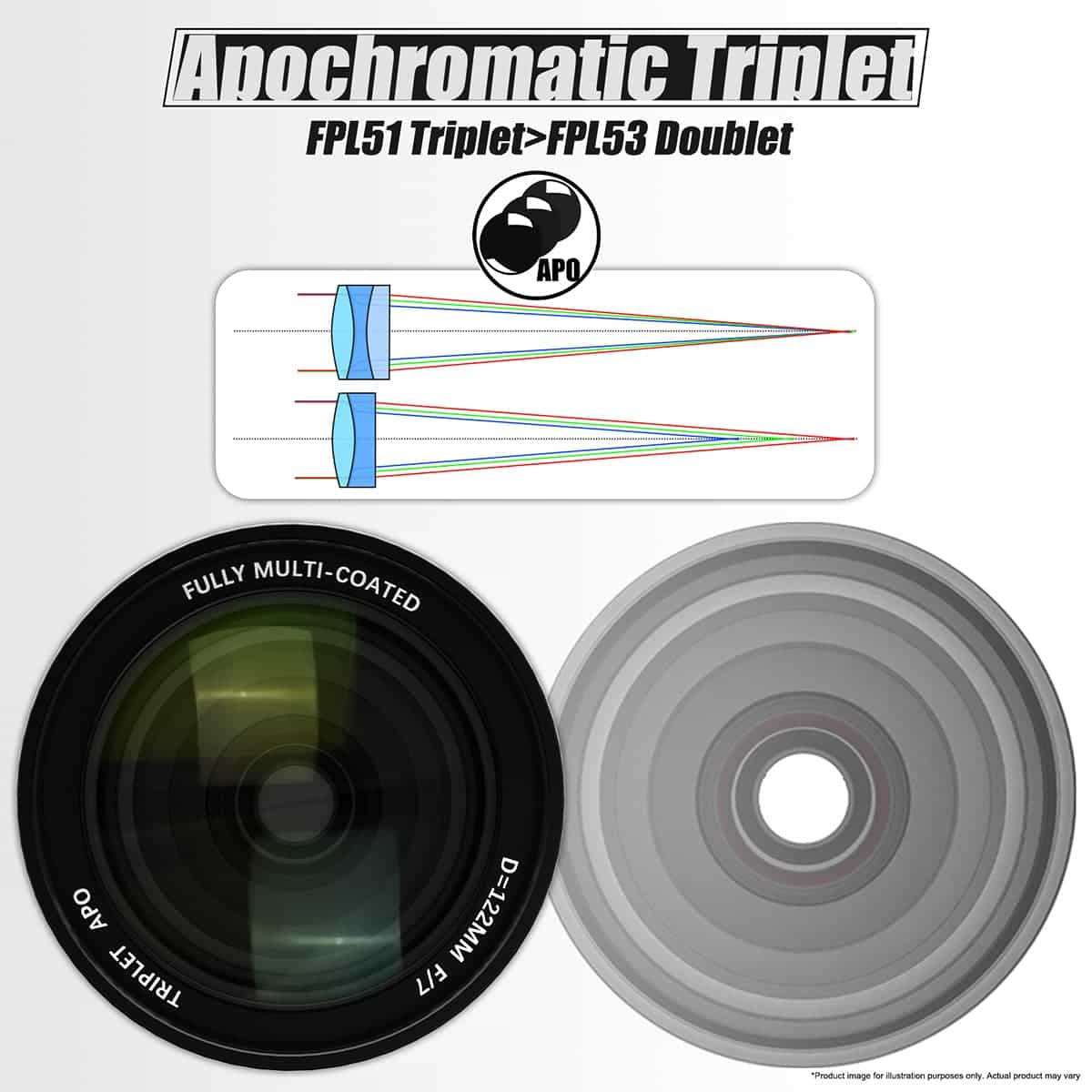
- 122 mm f/7 triplet apochromat: 854 mm focal length, FPL51 ED centre element, fully multi-coated.
- 2.5″ rack-and-pinion focuser: dual speed with 1:10 fine focus on coaxial knobs, 87 mm travel.
- Split tube rings and handle: 26 screw holes for guide scopes, finders and accessories.
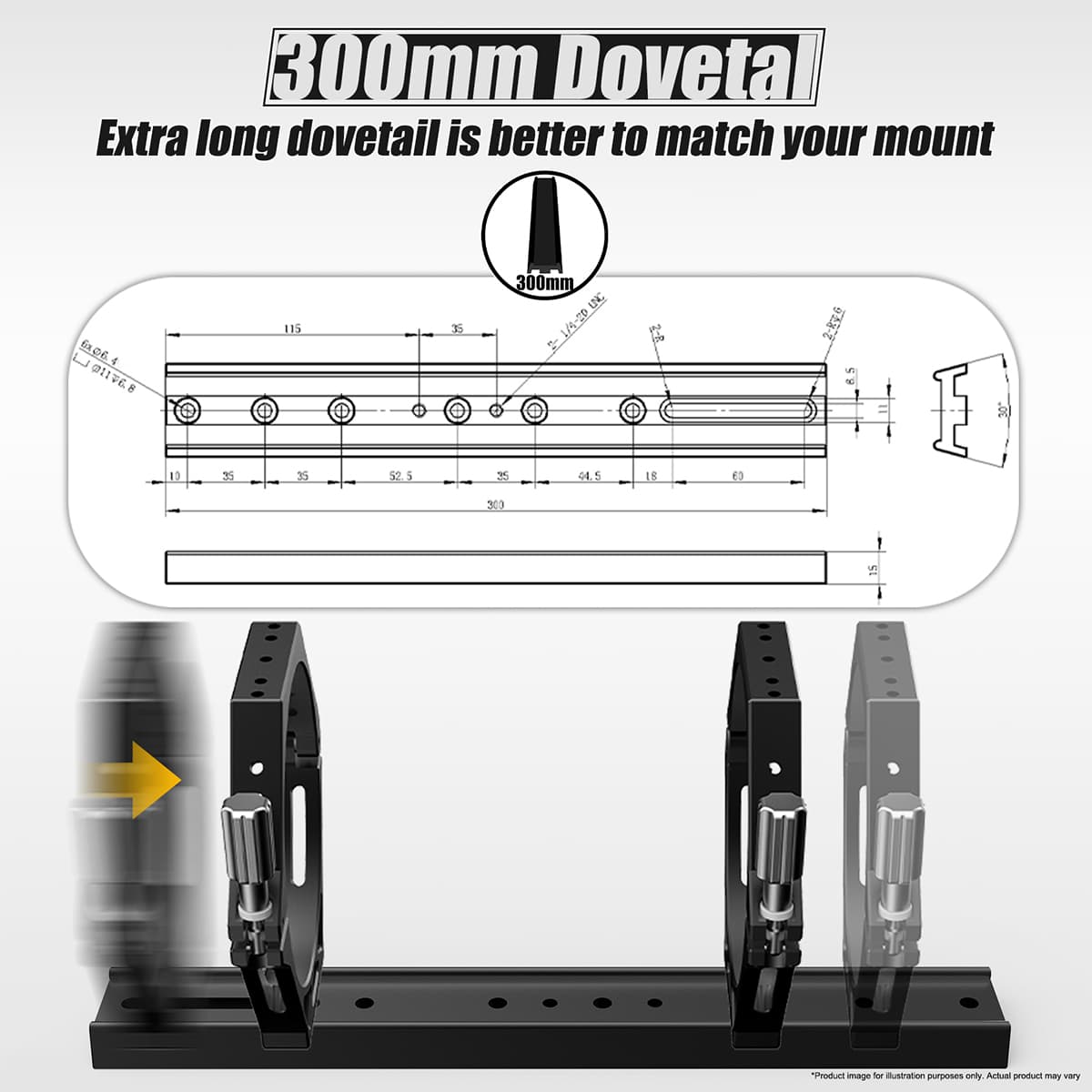
- 300 mm V-style dovetail: room to balance a camera and guide scope.
- 2″ front adapter and M63x1 thread: the 2″ adapter takes diagonals and cameras; the M63x1 female thread takes the SV209 reducer/flattener.
- EAF ready: SVBONY shows installation of an electronic auto focuser in place of the focus knob.
- Retractable dew shield and a finder shoe on the focuser.


Optical Design
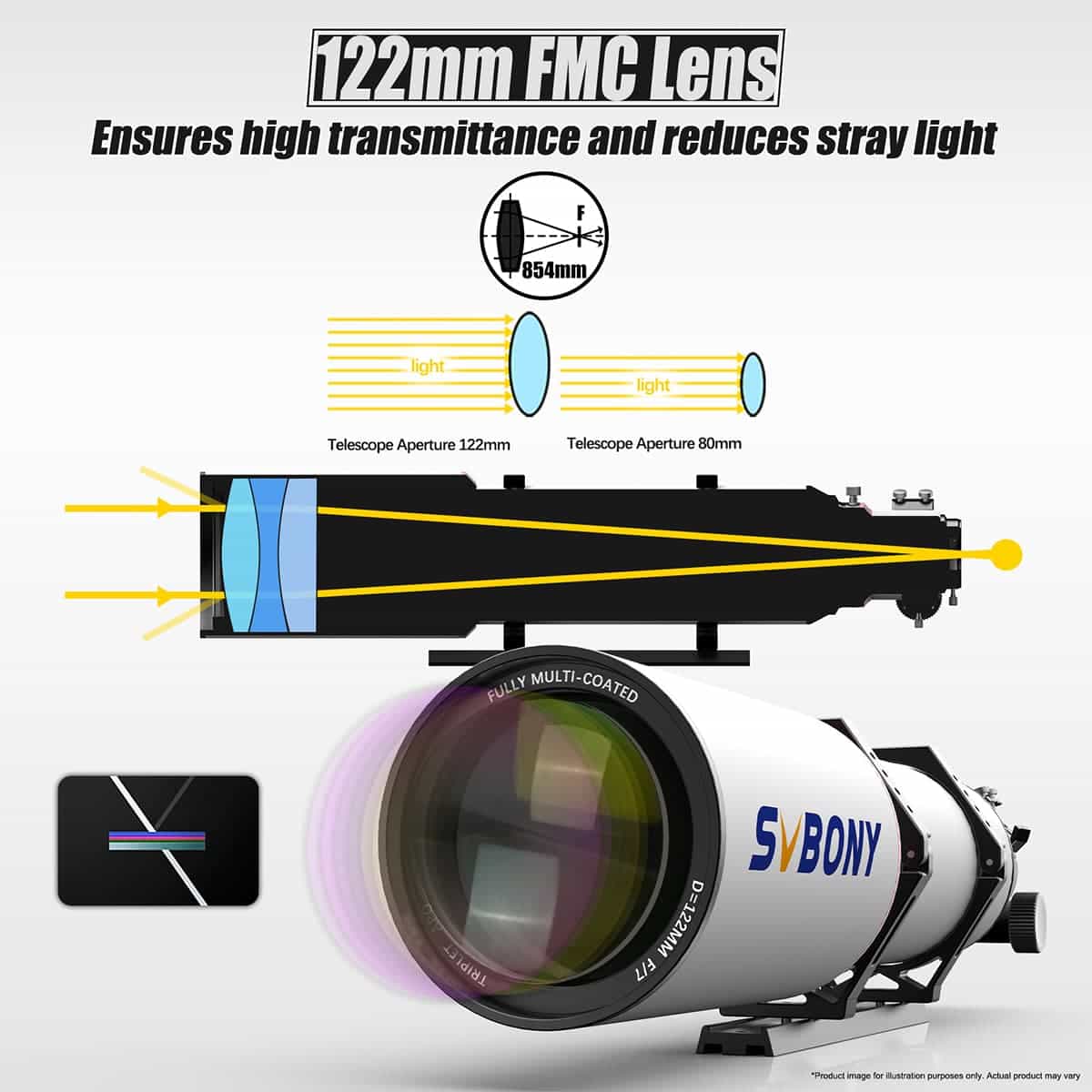
The SV550 122 is an air-spaced apochromatic triplet: an FPL51 ED element sits between two correcting elements to bring red, green and blue light to a common focus and keep false colour off bright stars and the lunar limb. Full multi-coating on the air-glass surfaces controls reflections and keeps contrast up, and the tube interior is blackened against stray light.
At f/7 the native field is well suited to visual work and to imaging with the SV209 reducer/flattener, which SVBONY specifies at 0.8x for this telescope, taking 854 mm to about 683 mm at f/5.6 with 55 mm of back focus.

Recommended Uses
- Deep-sky imaging: galaxies, nebulae and star clusters at 854 mm, or at f/5.6 with the SV209.
- Visual observing: Moon, planets and double stars up to SVBONY's rated 244x, plus bright deep-sky objects at low power.
- Travel and outreach: a refractor that needs no collimation and packs into its own case.
Compatibility and Accessory Notes
- Visual: the 2″ front adapter accepts 2″ diagonals; eyepieces and diagonal are sold separately.
- Imaging: remove the 2″ adapter to reach the M63x1 female thread for the SV209 0.8x reducer/flattener (55 mm back focus).
- Auto focus: the focuser accepts an EAF; SVBONY shows the knob slide-off installation.
- Mounting: 300 mm V-style (Vixen-style) dovetail. At 6440 g before camera and accessories, a mount with comfortable payload headroom keeps guiding smooth.
- Accessories: the tube rings' 26 screw holes and the focuser finder shoe take guide scopes and finders such as the SVBONY SV165.
If you want to confirm a camera and filter train against the SV209's 55 mm back focus, send us your setup and we will work out the spacing with you.


What's in the Box
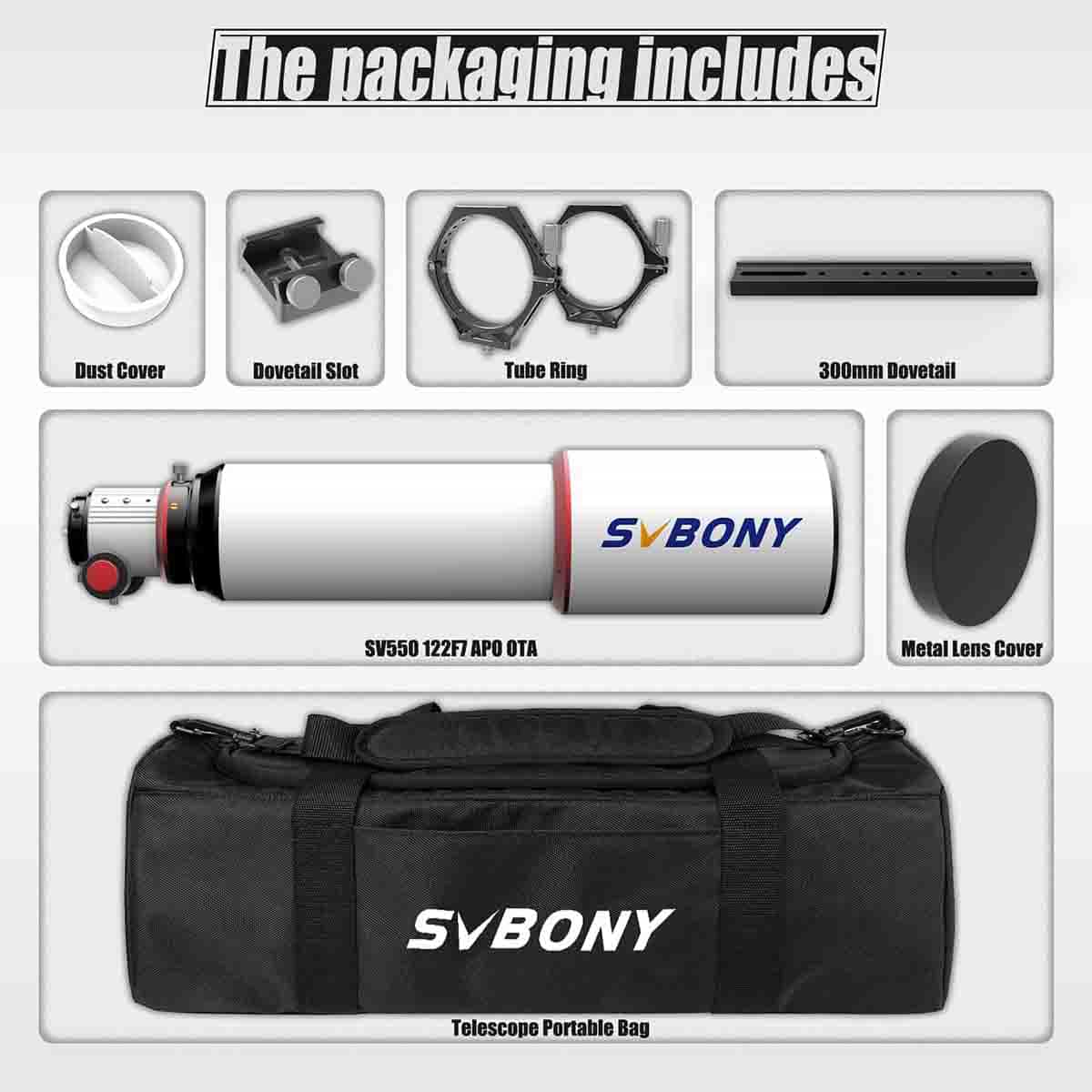
- 1 x SV550 122 APO optical tube with tube rings, handle and 300 mm dovetail
- 1 x protective carry case with removable shoulder strap and hand strap
- Finder shoe on the focuser and retractable dew shield (fitted)
Good to Know Before You Order
- Optical tube only: no mount, diagonal, eyepiece or reducer is included. SVBONY's bundle sets and the add-ons on this page cover those.
- Flat-field imaging: full-field astrophotography uses the SV209 0.8x reducer/flattener on the M63x1 thread.
- Weight: 6440 g net for the tube; the packed shipment is 10000 g gross.
- Dew: on humid Ontario nights a dew heater around the dew shield keeps the objective clear.
Frequently Asked Questions
Is it difficult to set up?
No. The tube arrives assembled in its rings on the dovetail. Drop it into a Vixen-style saddle, add a 2″ diagonal and eyepiece, and it is ready to observe; for imaging, swap the 2″ adapter for the SV209.
Which flattener does it use?
The SV209 0.8x reducer/flattener for the SV550 122, which threads to the M63x1 connection and needs 55 mm of back focus.
Is it for visual or imaging?
Both. SVBONY designed it for visual observing and astrophotography.
Can I fit an electronic focuser?
Yes. The focuser accepts an EAF in place of the coarse focus knob.
Does it come with a case?
Yes, a protective carry case with shoulder and hand straps is included.
What is the outer diameter of the tube?
154 mm, the figure to use when choosing a dew heater strip.
Bottom Line
In short: a 122 mm f/7 FPL51 triplet apochromat with a 2.5″ dual-speed focuser, rings, handle, 300 mm dovetail and case, ready for visual observing and, with the SV209 0.8x reducer/flattener, deep-sky imaging at f/5.6. Add a mount and your visual or imaging accessories to complete it.
| Brand | SVBONY |
|---|---|
| Model | SV550 |
| Aperture | 122 mm |
| Focal length | 854 mm |
| Focal ratio | f/7 |
| ED glass | FPL51 |
| Telescope type | Refractor |
| Lens design | Apochromatic |
| Resolution | 1.15 arc seconds |
| Coatings | Fully multi-coated |
| Tube material | Aluminum |
| Focuser | 2.5″ rack-and-pinion, dual speed (1/10) |
| Tube travel | 87 mm |
| Visual limiting magnitude | 12.3 |
| Highest useful magnification | 244x |
| Dovetail plate length | 300 mm |
| Additional thread | M63x1 female thread for adaptions |
| Dew shield type | Retractable |
| Tube outer diameter | 154 mm |
| Net weight | 6440 g / 14.18 lb |
| Gross weight | 10000 g |
| Included accessories | Tube rings, handle and 300 mm dovetail; carry case with shoulder and hand straps; finder shoe |
You may also like
Recently viewed
Recent Blog Posts
View all
Your Guide Graph Is Lying to You
Read More

D-Size vs V-Size: A Complete Guide to Telescope Dovetail Systems
Read More

What Is Back Focus in Astrophotography? Telescope Reducers, Flatteners, and Spacing Explained
Read More