


- Description
- Specifications

Product Overview
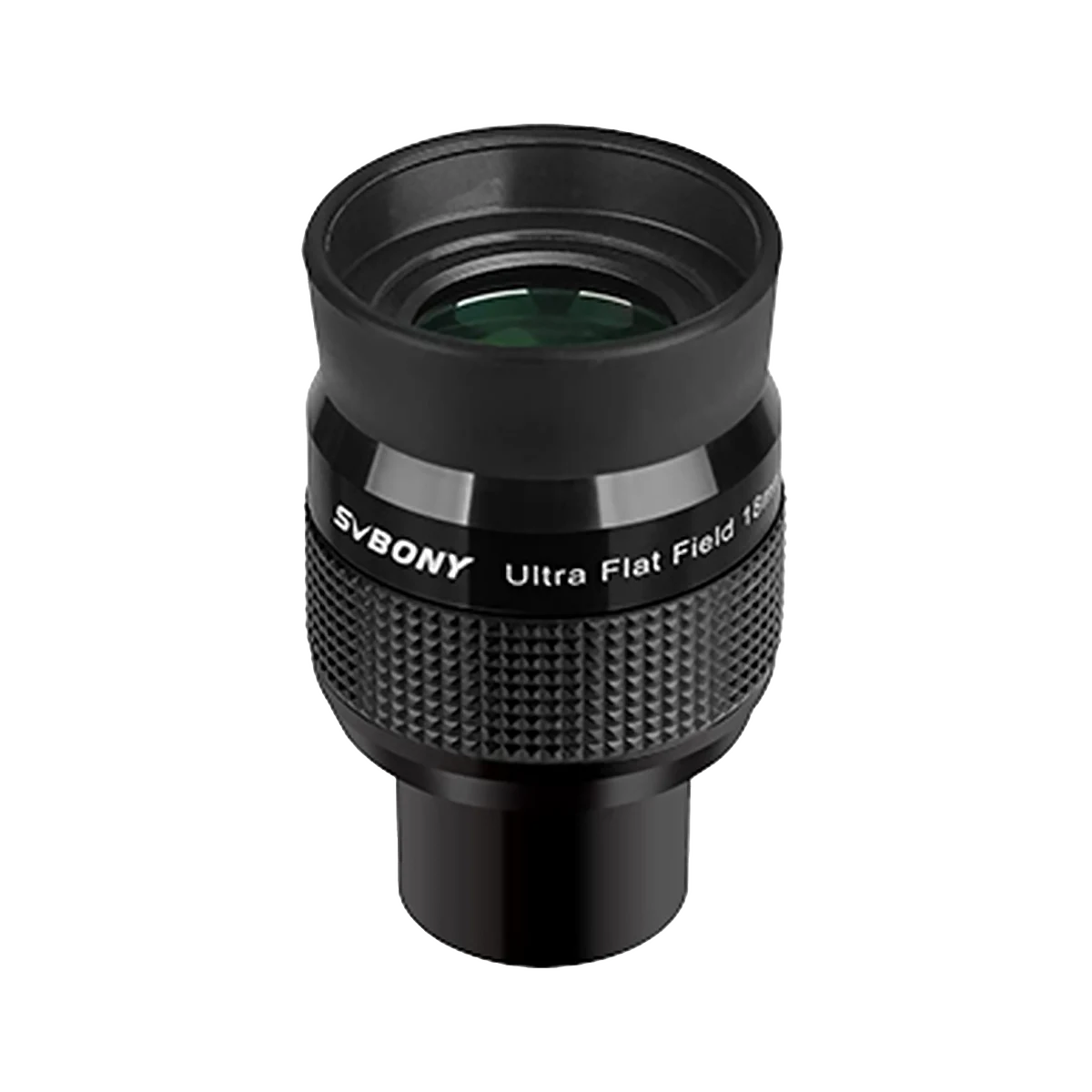
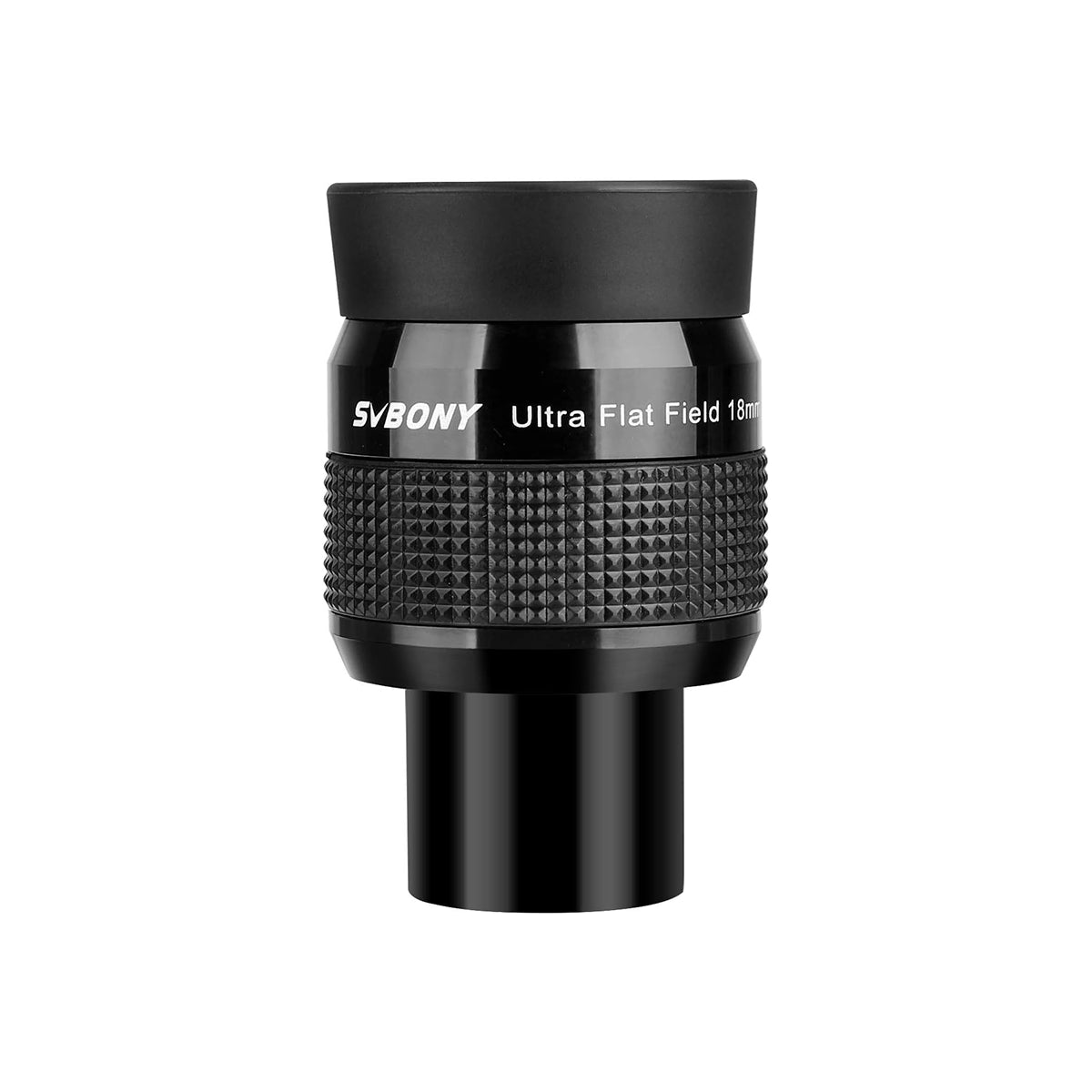
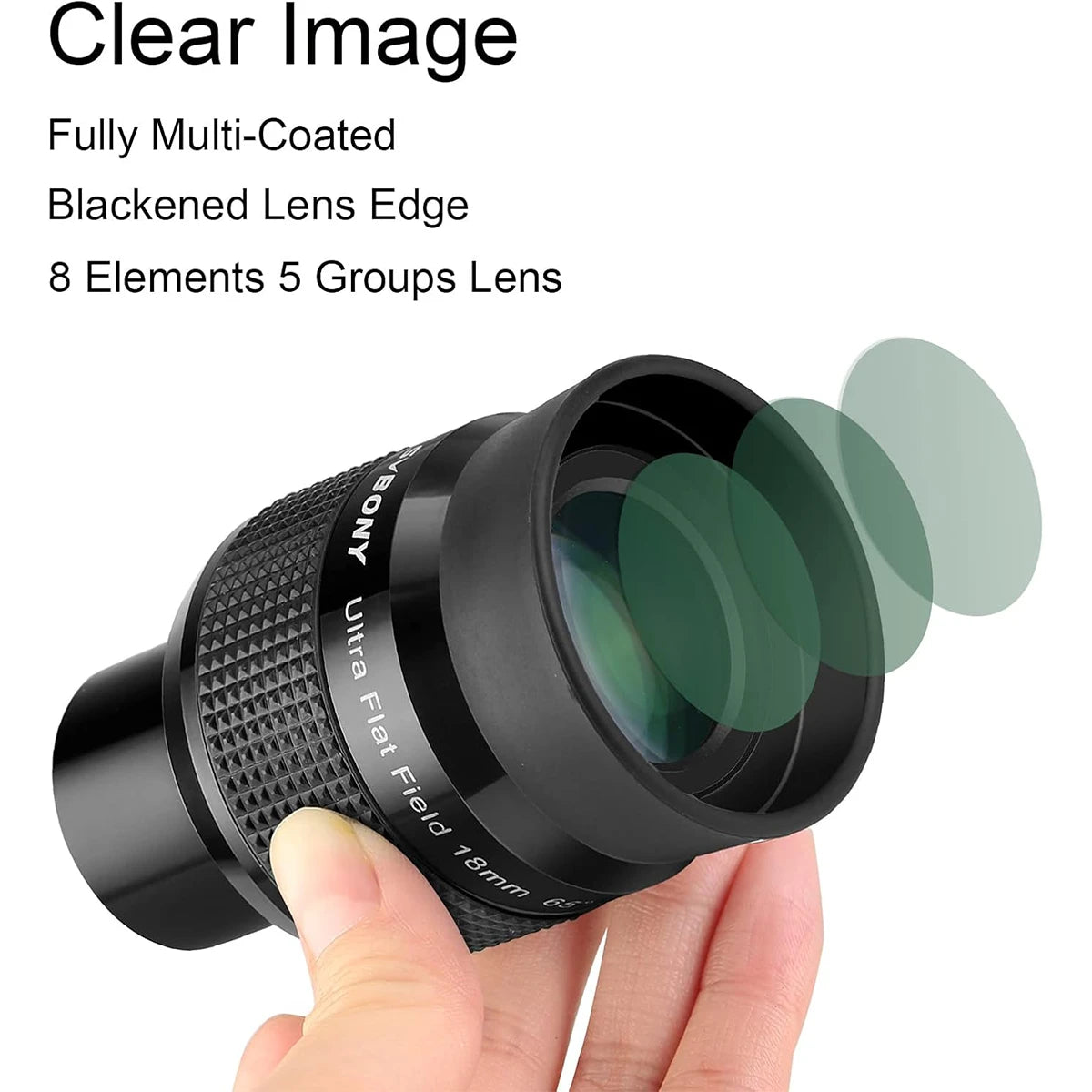
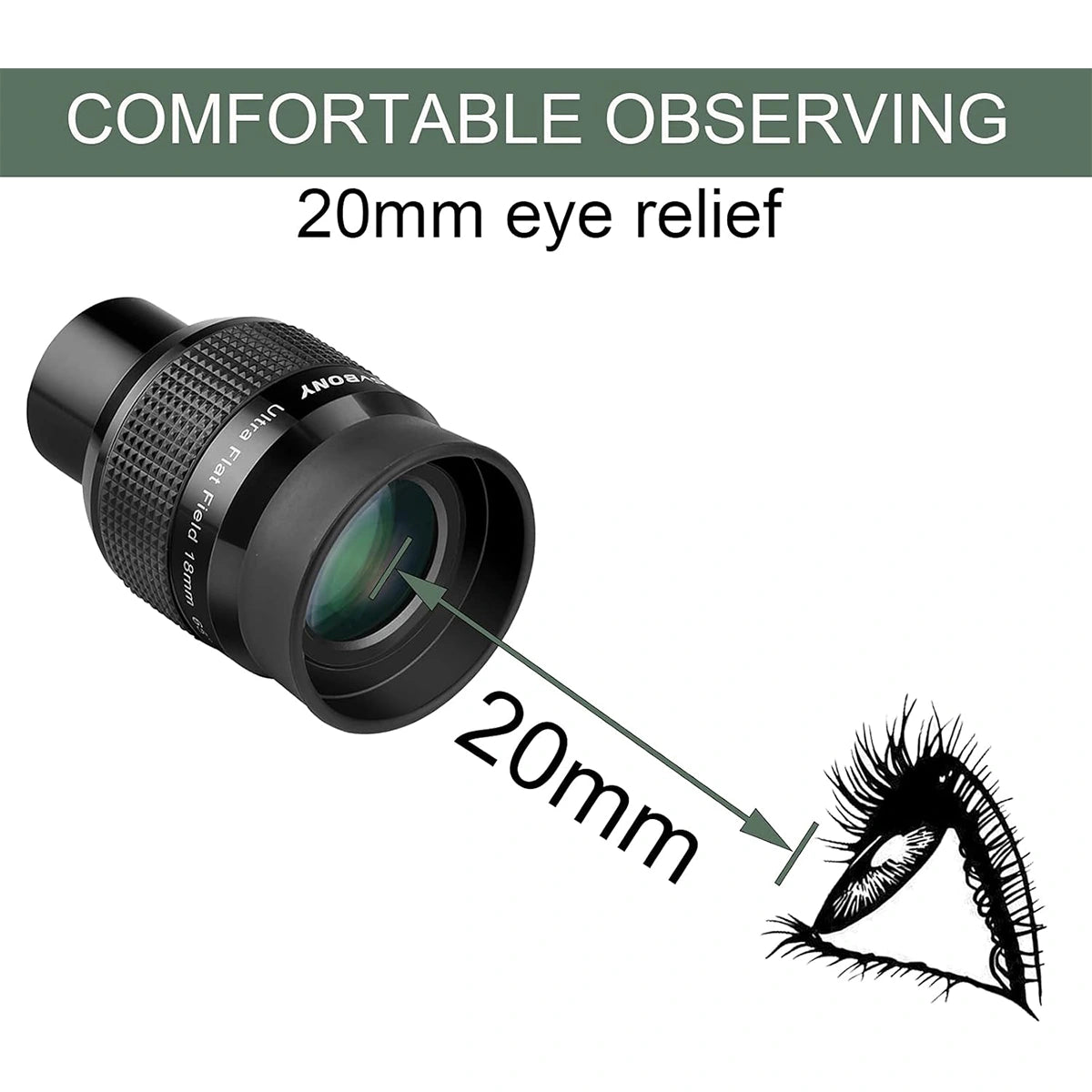
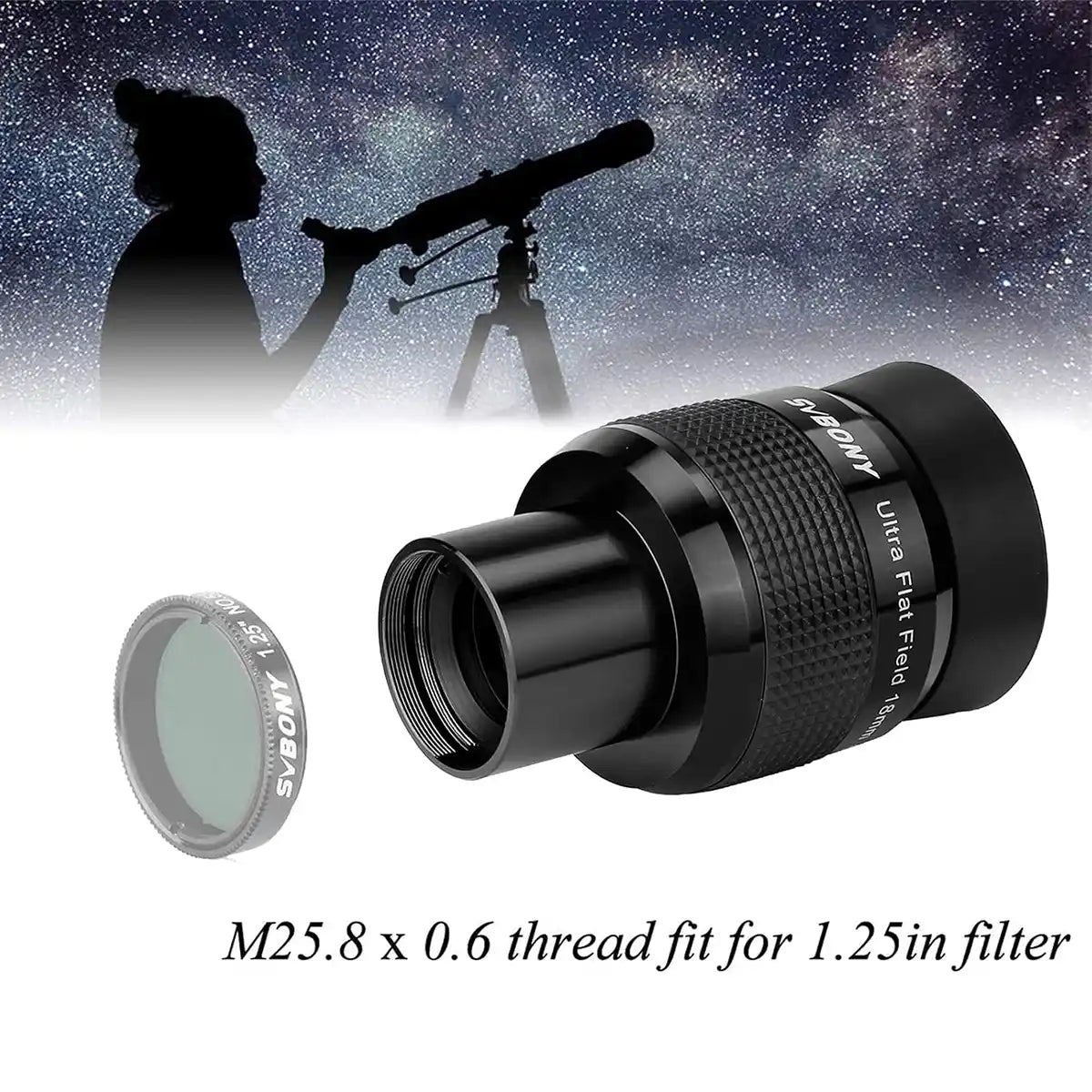
The SVBONY SV190 18 mm is a 1.25″ ultra flat field eyepiece with a 65° apparent field of view and 20 mm of eye relief. Its 8-element, 5-group fully multi-coated design keeps stars sharp from the centre to the edge, and its 23.4 mm field stop gives a wider view than typical Plössl eyepieces. The barrel takes standard M28.5×0.6 filters, and an M42×0.75 thread under the eyecup allows a camera to be attached for eyepiece projection.

Who It's For
This is a good match if you want a low-to-medium power 1.25″ eyepiece with a wide, flat field for deep-sky scanning, the full lunar disc and wide double stars, with eye relief comfortable enough for glasses.
Key Features & Design
- 65° apparent field at 18 mm, wider than a standard Plössl.
- 20 mm eye relief with a rubber eyecup.
- 8 elements in 5 groups, fully multi-coated.
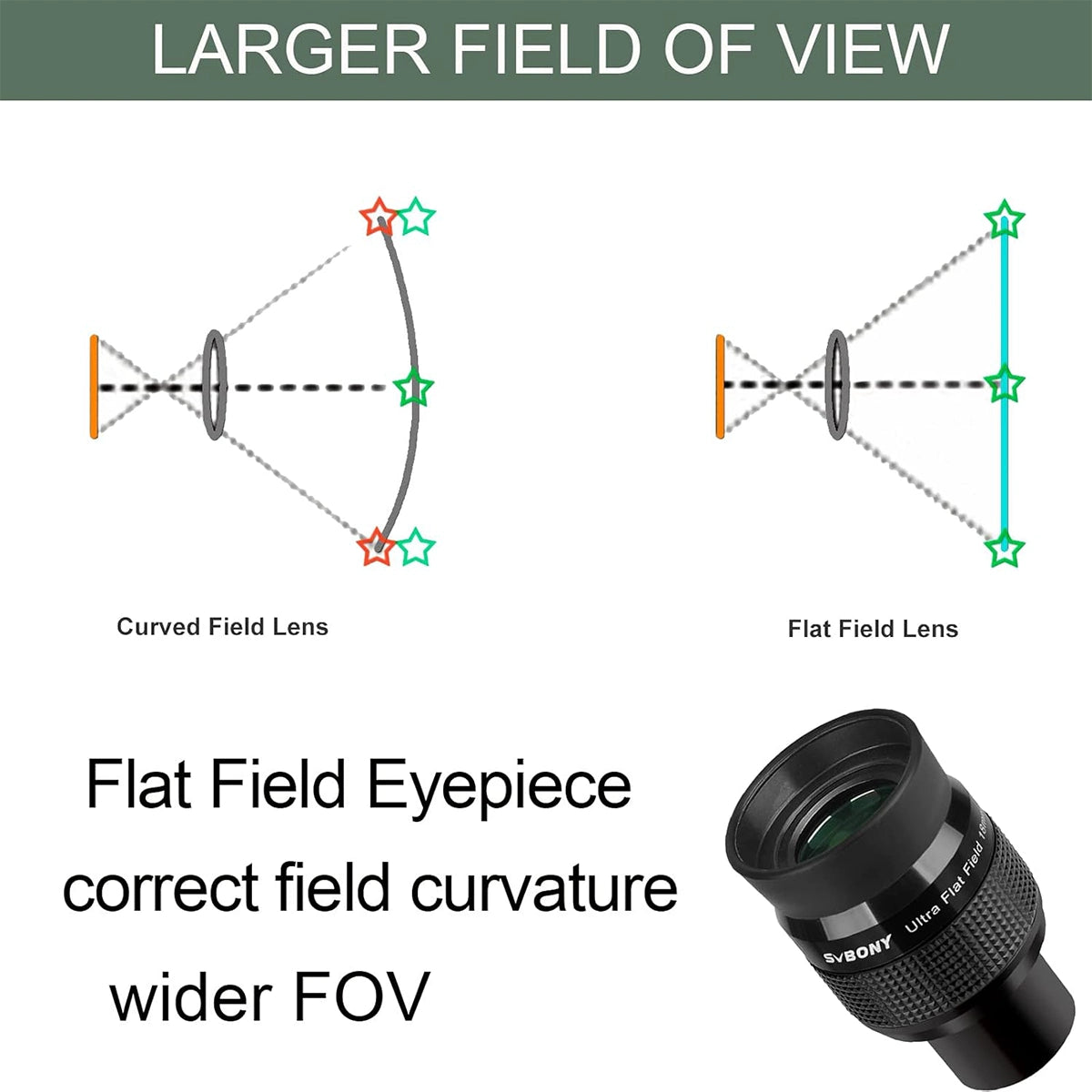
- Flat field: sharp from centre to edge.
- M42×0.75 thread under the eyecup for camera connection.
- Lightweight, durable build.

Optical Design
The eight-element layout includes a field-flattening group, which is what keeps stars in focus out to the 23.4 mm field stop. At 18 mm and 65°, the true field in your telescope is 65° divided by the magnification (telescope focal length ÷ 18 mm), so it frames large clusters and nebulae that a narrower eyepiece crops.
Recommended Uses
- Deep-sky observing: open clusters, larger nebulae and galaxies.
- Whole-Moon views at moderate power.
- Afocal or projection photography via the M42 thread under the eyecup; SVBONY notes it can be matched with the SV406P for scenery.

Compatibility and Accessory Notes
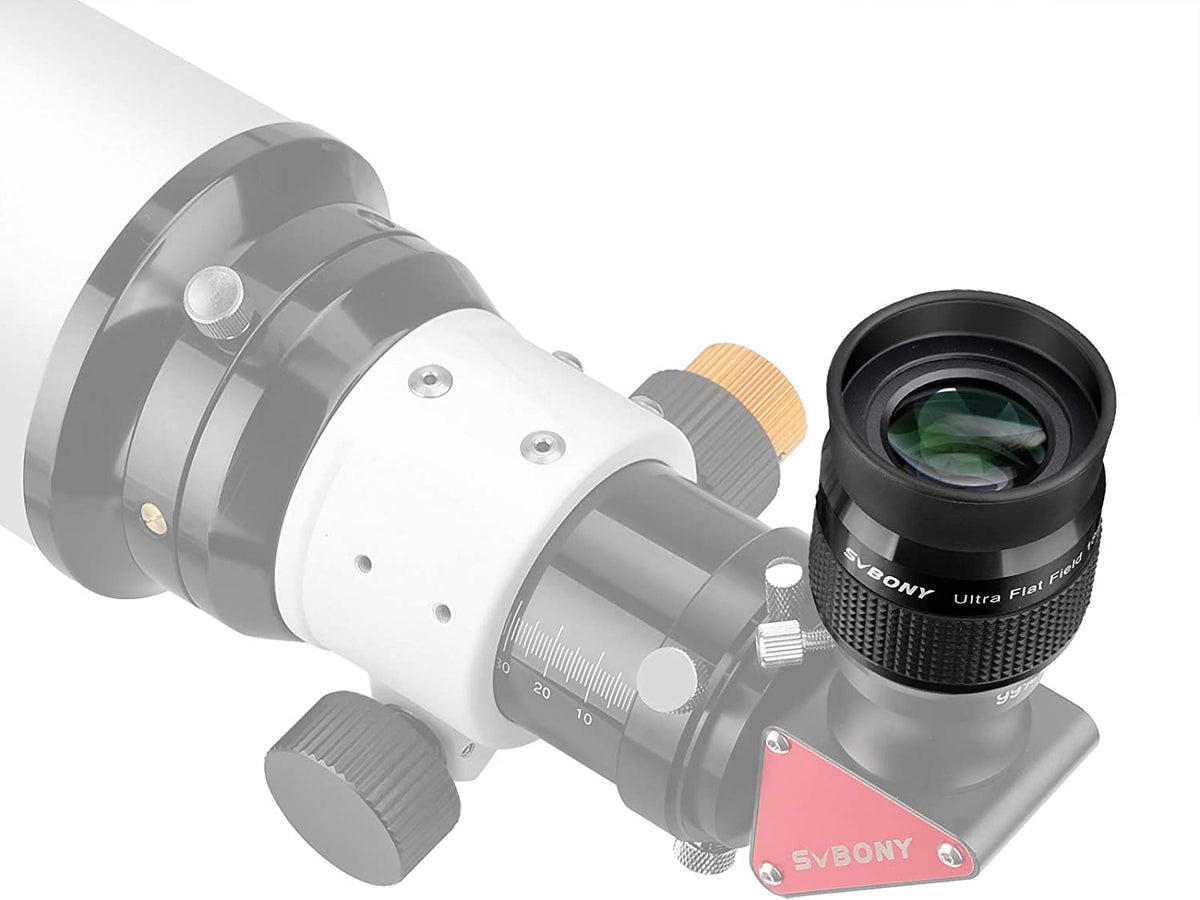
- Barrel: 1.25″ for 1.25″ focusers, diagonals and 2″-to-1.25″ adapters.
- Filter thread: M28.5×0.6.
- Camera thread: M42×0.75 under the eyecup.
- Companion focal length: SVBONY makes the SV190 in 10 mm as well (60°).


Good to Know Before You Order
- 1.25″ only: no 2″ skirt.
- Weight: SVBONY does not publish a weight for the 18 mm.
Frequently Asked Questions
Is it difficult to set up?
No. It slides into any 1.25″ focuser or diagonal and is held by the thumbscrew.
Can I attach a camera?
Yes. Remove the eyecup to reach the M42×0.75 thread.
How wide is the view?
65° apparent field with a 23.4 mm field stop.
Is it good with glasses?
SVBONY describes the 20 mm eye relief as comfortable for eyeglass wearers.
Bottom Line
In short: an 18 mm, 65° flat field 1.25″ eyepiece with 8-element FMC optics, 20 mm eye relief and an M42 camera thread, for wide, sharp deep-sky and lunar views.
| Model | SV190 |
|---|---|
| Focal length | 18 mm |
| Barrel | 1.25″ |
| Apparent field of view | 65° |
| Eye relief | 20 mm |
| Lens structure | 8 elements / 5 groups |
| Coatings | Fully multi-coated |
| 1.25″ filter thread | M28.5×0.6 |
| Thread under eyecup | M42×0.75 |
| Eyecup | Rubber |
| Field diaphragm | 23.4 mm |
| Weight | Not published by vendor |
You may also like
Recently viewed
Recent Blog Posts
View all
Your Guide Graph Is Lying to You
Read More

D-Size vs V-Size: A Complete Guide to Telescope Dovetail Systems
Read More

What Is Back Focus in Astrophotography? Telescope Reducers, Flatteners, and Spacing Explained
Read More