


- Description
- Specifications
Product Overview
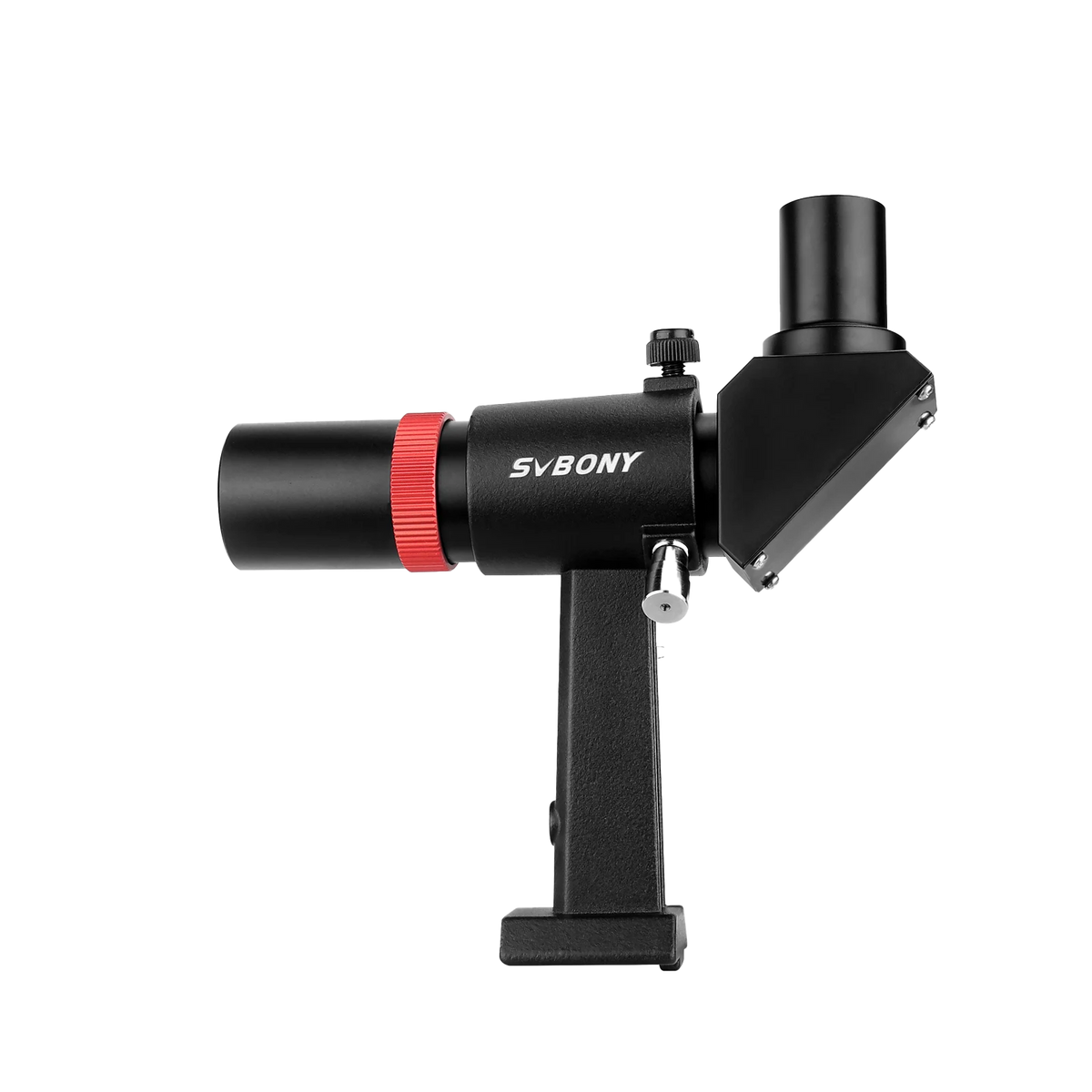
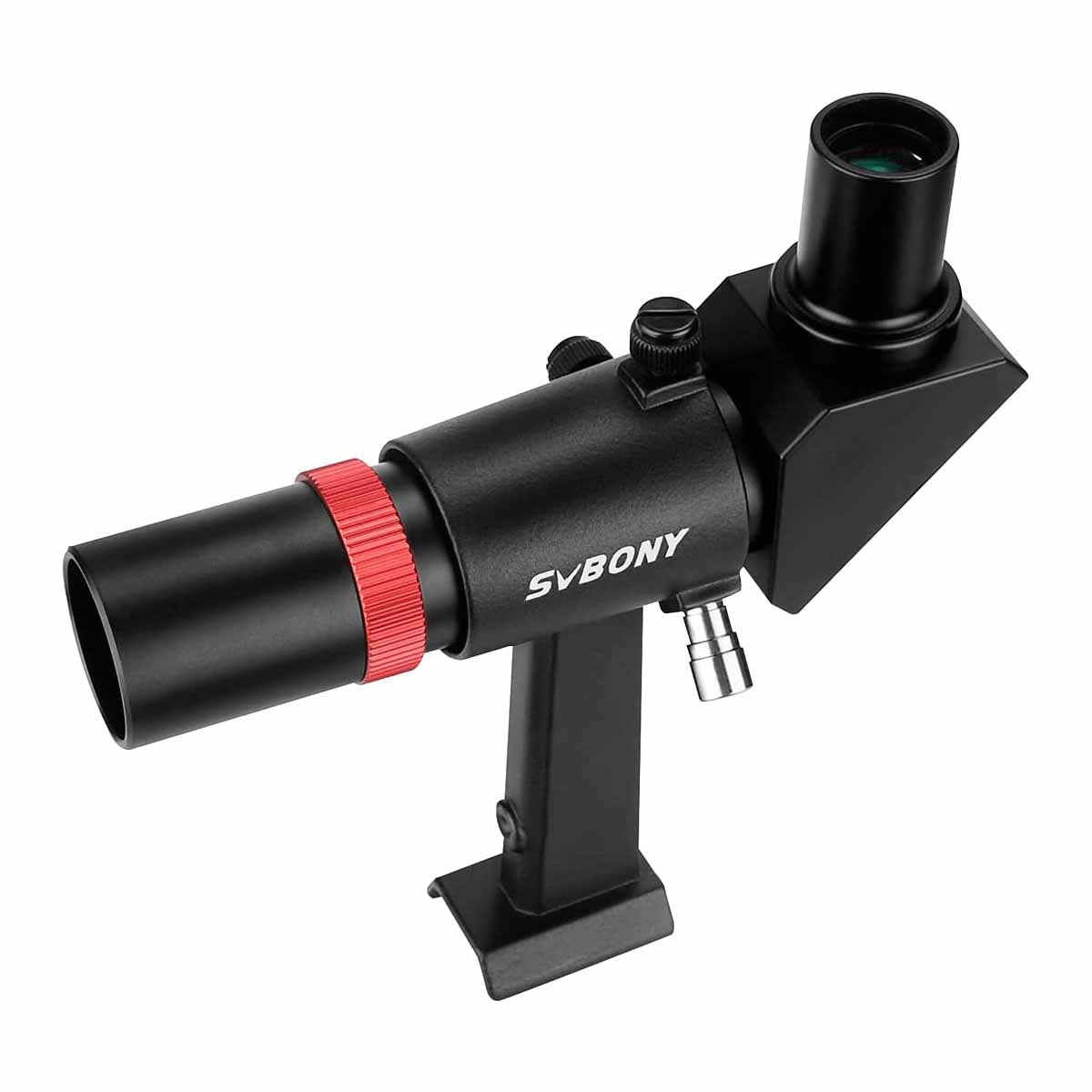
The SVBONY SV182 is a 6x30 finder scope with a 90° eyepiece and an upright, correctly oriented image. The fully multi-coated two-element achromatic objective gives a 7.5° field with a single crosshair reticle, 15 mm of eye relief and a 5 mm exit pupil. A spring-loaded X-Y bracket makes alignment with your main telescope straightforward. It weighs 295 g.
Who It's For
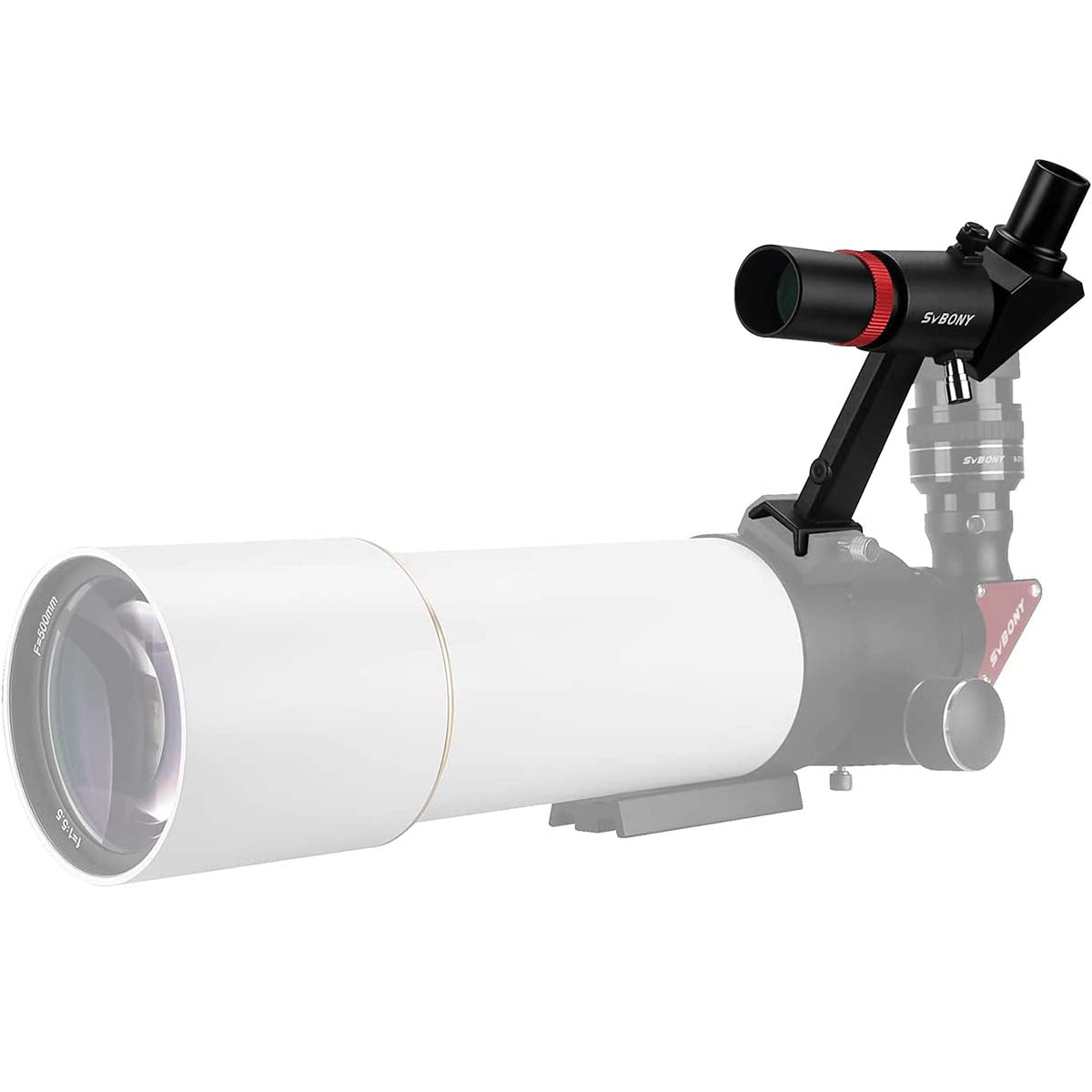
This is a good match if your telescope points high in the sky, as Maksutovs and SCTs often do, and you want to aim it without bending under a straight-through finder, or if you prefer a finder view that matches star charts and daytime landmarks the right way up.
Key Features & Design
- 90° viewing angle: look down into the finder rather than sighting along the tube.
- Correct image: upright and not mirror-reversed, so the view matches the sky and the landscape.
- 6x30, 7.5° field: 120 mm focal length, 5 mm exit pupil and 15 mm eye relief.
- Fully multi-coated achromat: two-element 30 mm objective.
- Single crosshair: non-illuminated reticle for centring targets.
- Spring-loaded X-Y alignment and adjustable focus.
Recommended Uses
- Star hopping to planets, clusters and nebulae.
- Aligning GoTo mounts on bright alignment stars.
- Daytime aiming at landmarks to align the finder with the main scope.
Compatibility and Accessory Notes
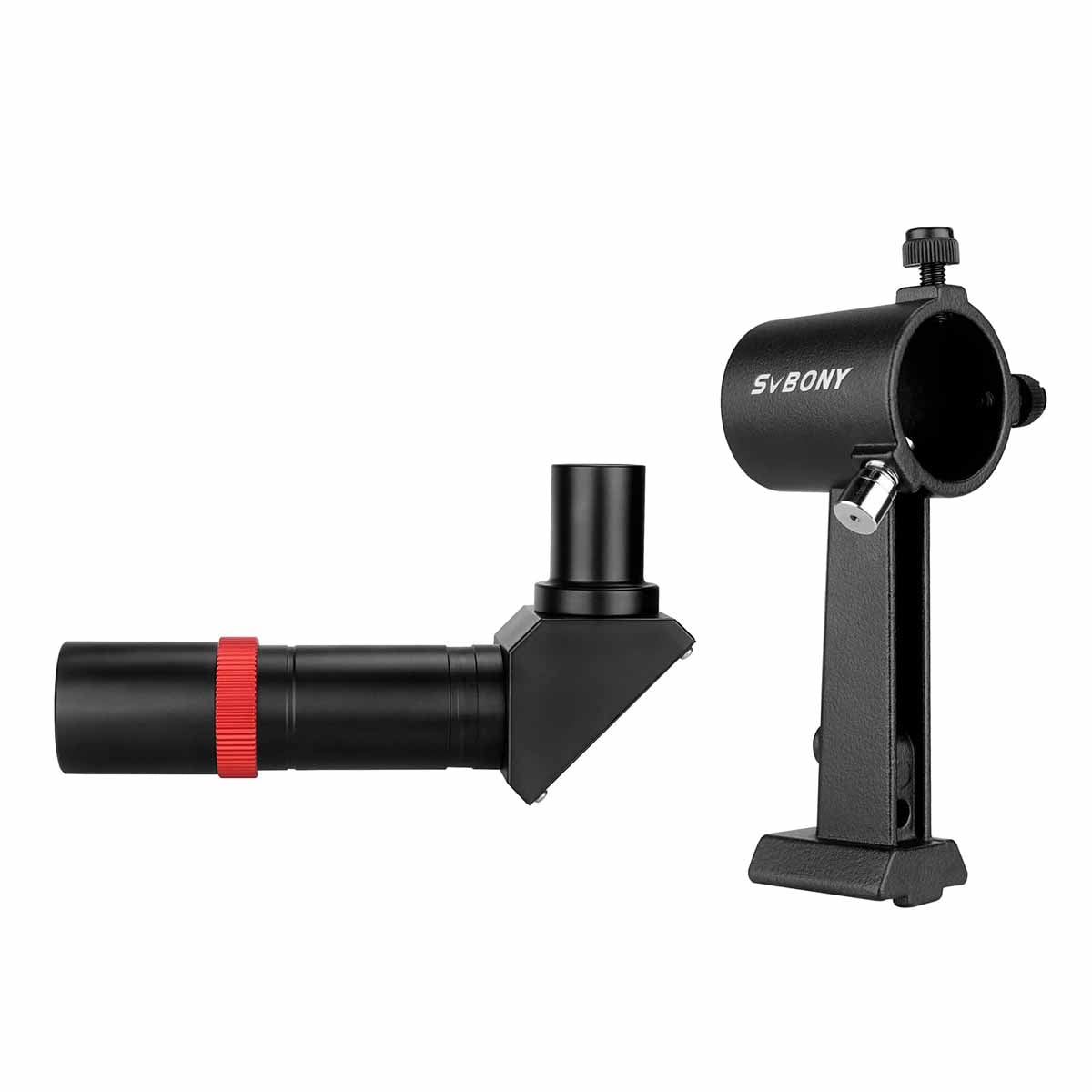
- Mounting: supplied with its bracket. If you want to confirm it suits the finder shoe on your telescope, send us the model and we will check it with you.
- With the SVBONY MK127: the MK127 does not include a finder, and the SV182's right-angle eyepiece suits a scope pointed high toward the planets.
Good to Know Before You Order
- Reticle: the crosshair is not illuminated; it shows best against a lightly lit sky or on bright stars.
Frequently Asked Questions
Is it difficult to set up?
No. Mount the bracket, aim the main telescope at a distant landmark or the Moon, and use the two alignment screws to bring the crosshair onto the same target.
Is the image upright?
Yes. It is a correct-image finder, upright and not reversed.
Why a right-angle finder?
When a telescope points high, a straight-through finder puts the eyepiece close to the tube and low. The 90° eyepiece of the SV182 keeps the viewing position comfortable.
Bottom Line
In short: a 6x30 right-angle finder with an upright, correct image, 7.5° field and crosshair, for comfortable aiming of a telescope that points high.
| Model | SV182 |
|---|---|
| Magnification | 6x |
| Objective | 30 mm, 2-element achromatic, fully multi-coated |
| Focal length | 120 mm |
| Field of view | 7.5° |
| Eye relief | 15 mm |
| Exit pupil | 5 mm |
| Viewing angle | 90° |
| Image orientation | Correct image |
| Reticle | Single crosshair, not illuminated |
| Adjustment | Spring-loaded X-Y; adjustable focus |
| Included | Bracket |
| Weight | 295 g |
| Use case | Star hopping and telescope aiming |
You may also like
Recently viewed
Recent Blog Posts
View all
Your Guide Graph Is Lying to You
Read More

D-Size vs V-Size: A Complete Guide to Telescope Dovetail Systems
Read More

What Is Back Focus in Astrophotography? Telescope Reducers, Flatteners, and Spacing Explained
Read More