



- Description
- Specifications

Product Overview
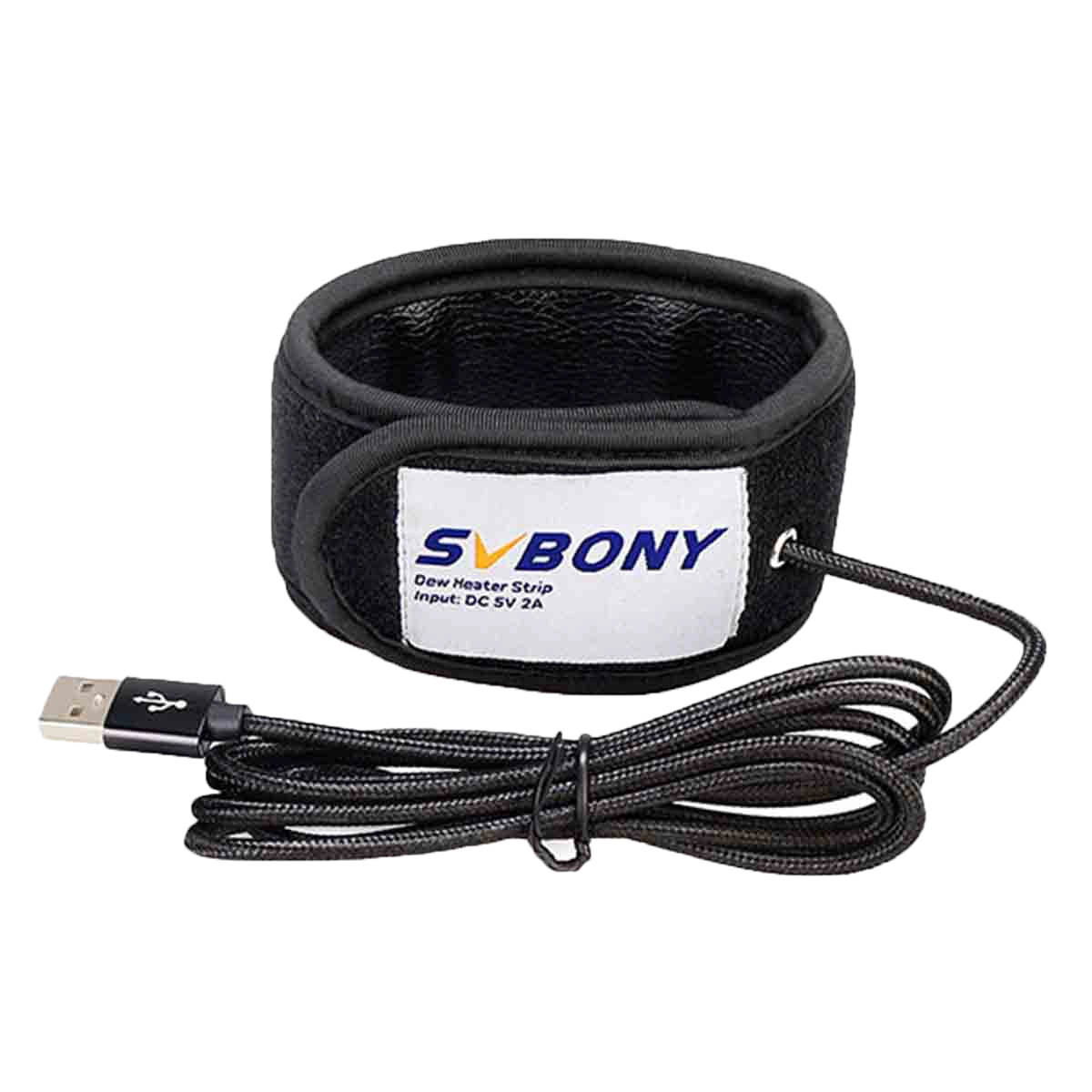
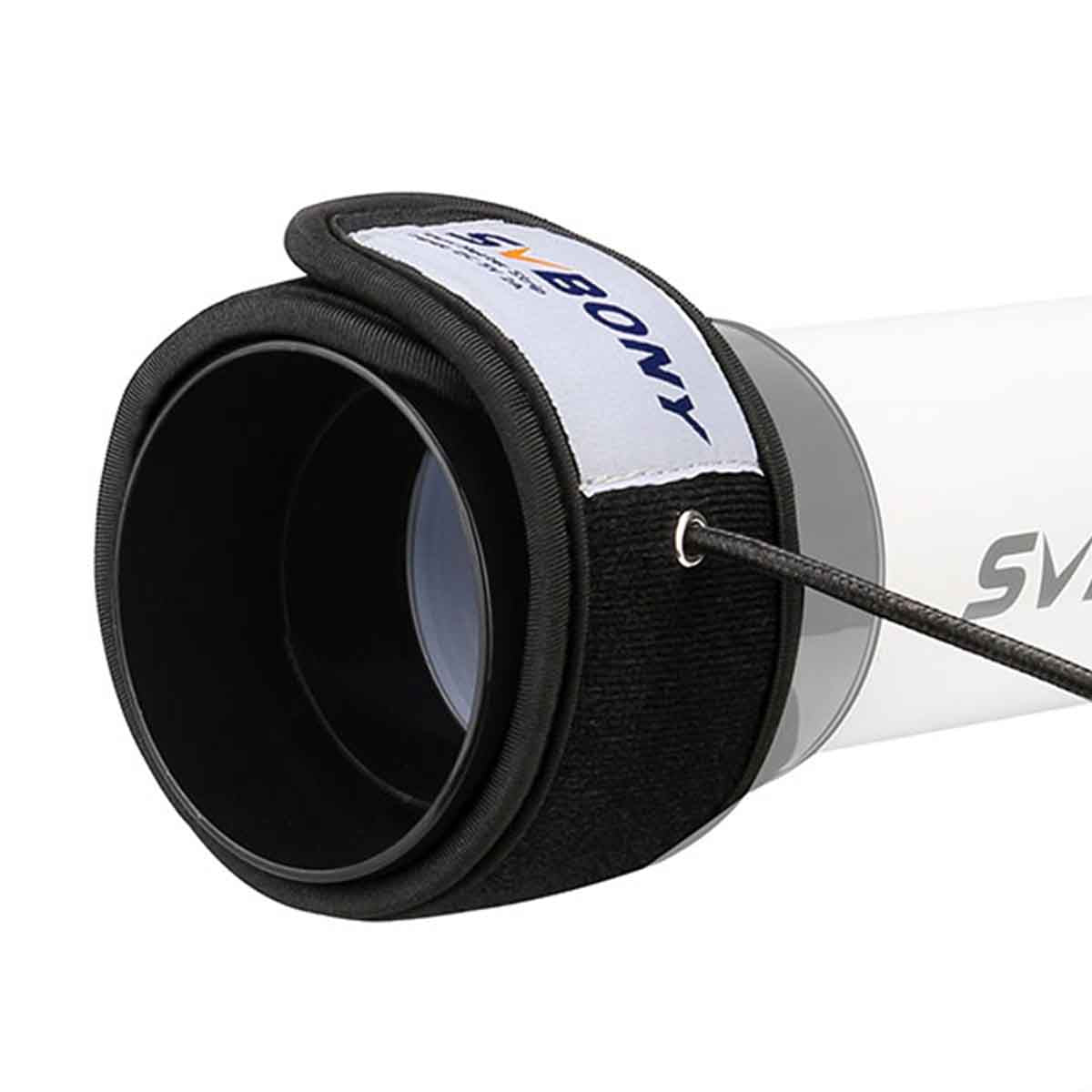
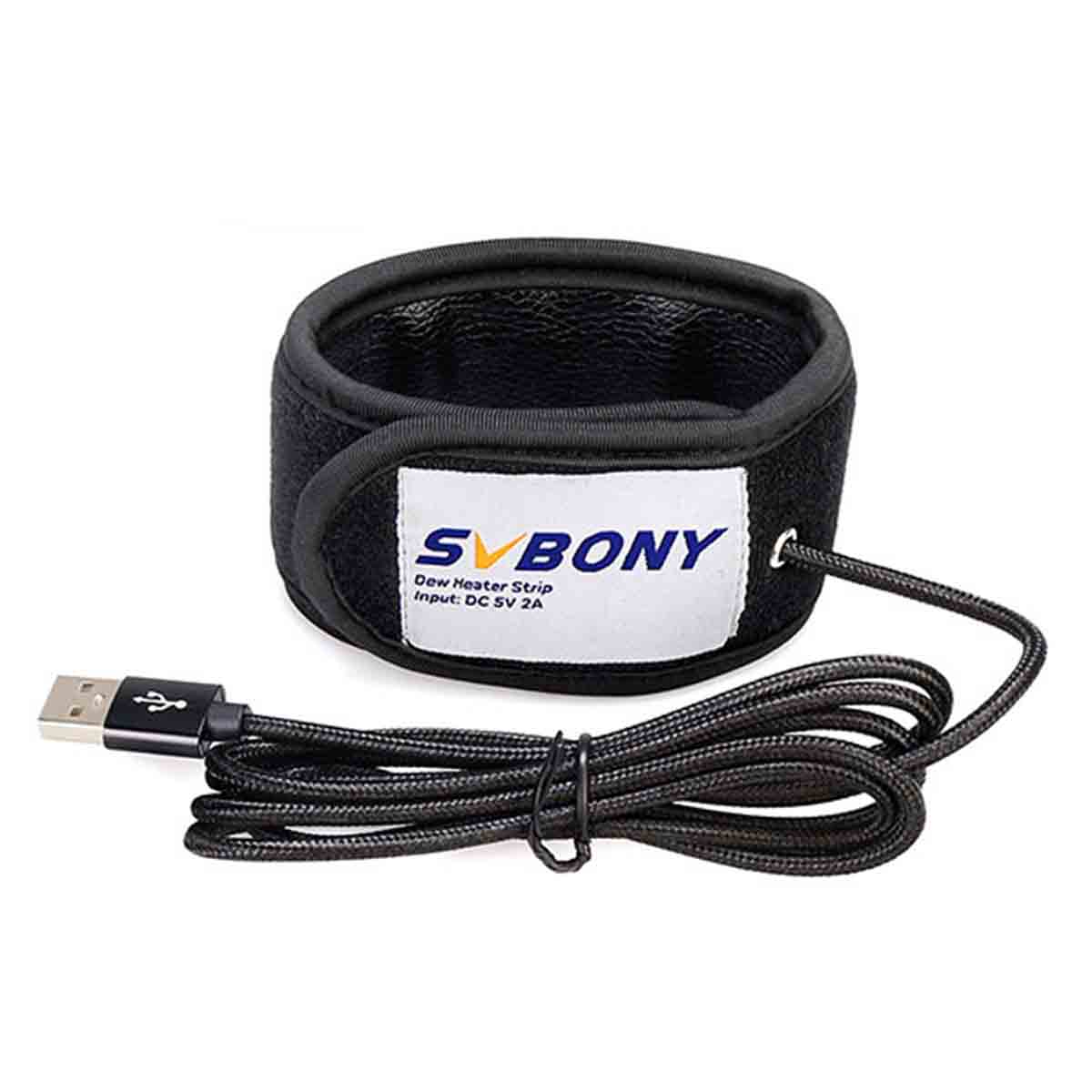
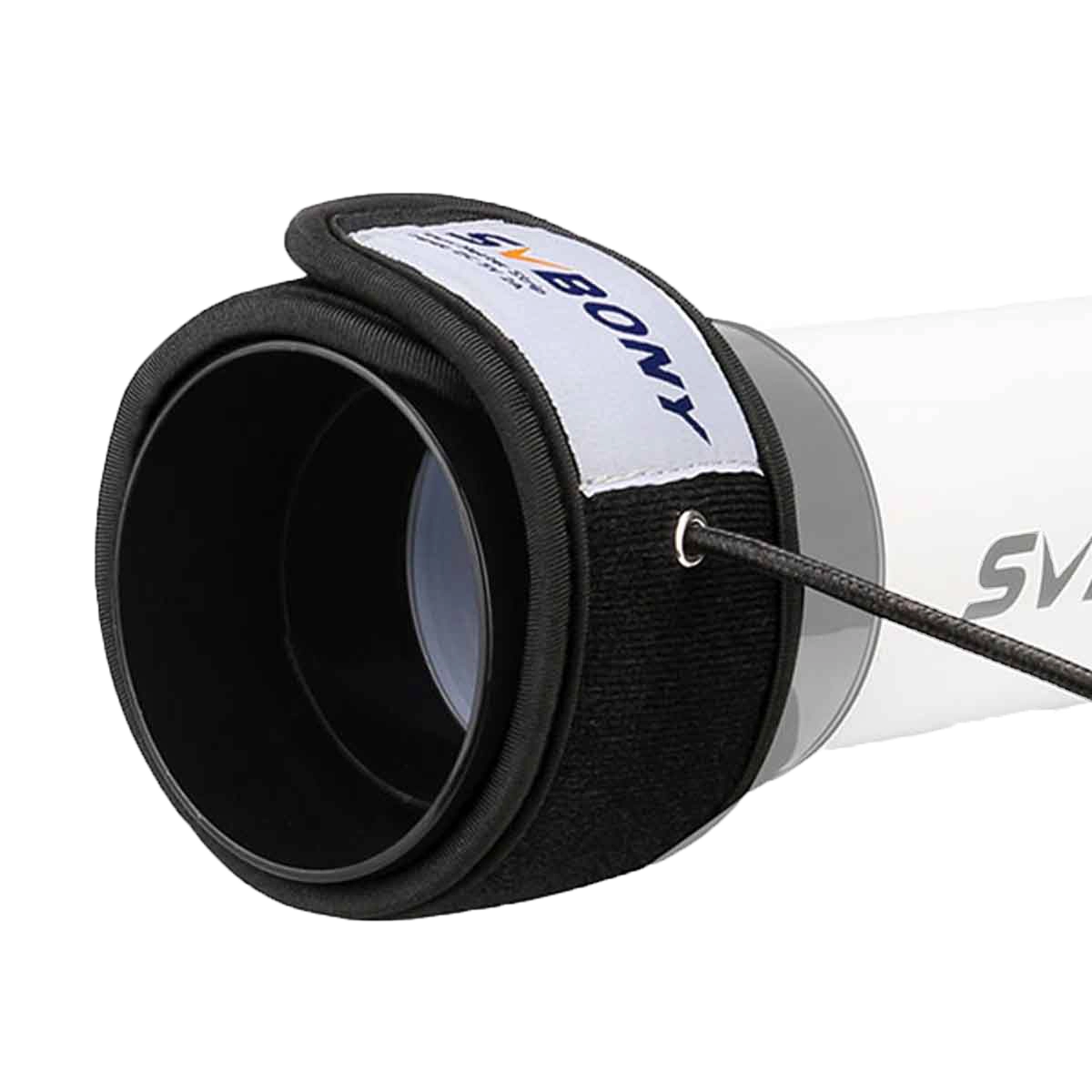
The SVBONY SV172 is a USB-powered dew heater strip that wraps around a telescope dew shield, objective cell or camera lens and keeps the front optic a few degrees above the dew point. It runs from 5V on a USB Type-A plug, is 50 mm wide, and has a three-level heat regulator. This listing offers three heater lengths — 240 mm, 320 mm and 400 mm — drawing 7.25–7.75 W, 9–9.25 W and 9.5–9.75 W respectively, each on a 1.8 m nylon-braided power cable.


Who It's For
This is a good match if you observe or image with a small to mid-size refractor or a camera lens on nights when dew forms, and want a heater that runs from a USB power bank, USB hub or power box without a separate controller.
Key Features & Design
- 5V USB power: runs from a USB Type-A port on a power bank, power box or hub.
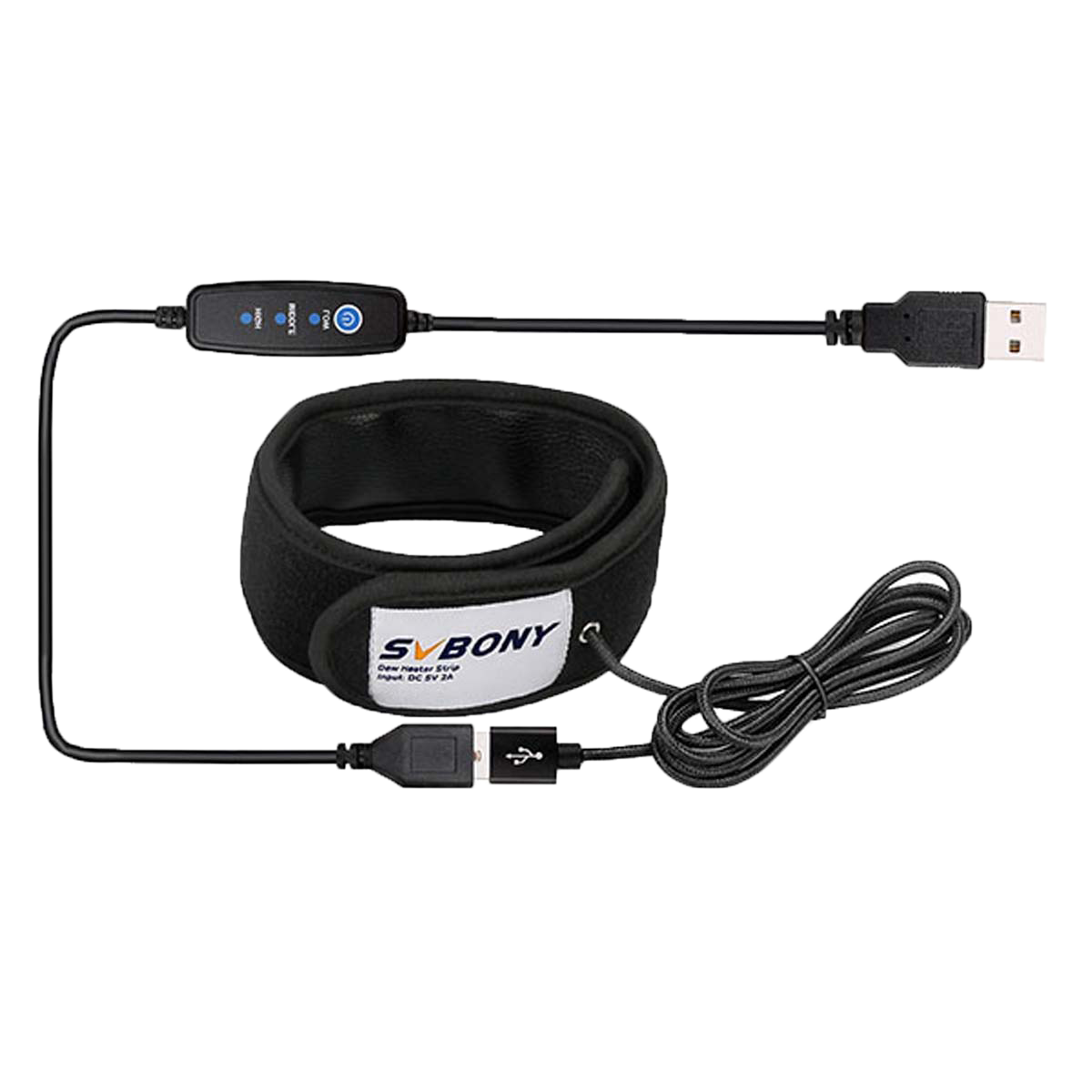
- Three heat levels: strong, medium and weak settings on the inline regulator.
- 50 mm width: narrow enough to sit behind the front optic without intruding into the light path or causing vignetting.
- Layered construction: imitation OK cloth, SBR, Black-T, aluminium film and PU layers spread heat evenly and hold it against the tube.
- Alloy fibre heating wire with silicone insulation: fast, continuous warming with insulation against internal shorts.
- 1.8 m nylon power cable: enough reach from the telescope to a mount-mounted power source.


Choosing a Length
The heater length is the heated section that wraps the optic; the total length adds the strap ends. SVBONY lists these fits for its own telescopes:
- 240 mm (W9132A): total length 320 mm, 1.45–1.55 A. Sized for camera lenses and compact optics.
- 320 mm (W9132B): total length 400 mm, 1.8–1.95 A. SVBONY lists it for the SV503 70ED.
- 400 mm (W9132C): total length 480 mm, 1.9–2.2 A. SVBONY lists it for the SV48P 90, SV503 80ED and SV550 80APO.
For other telescopes, measure the circumference where the strip will sit and compare it with the heater length. Send us the measurement and we will help you pick the right size.

Recommended Uses
- Refractor dew prevention: keeps the objective clear through long imaging sessions.
- Camera lenses: wide-field and Milky Way imaging with DSLR or mirrorless lenses.
- Guide scopes and finders: the shorter strip suits smaller tubes.

Compatibility and Accessory Notes
- Power source: any USB Type-A port able to supply the listed current — up to 2.2 A for the 400 mm strip. A USB power bank or a powered USB port on a power box covers this.
- Larger telescopes: SVBONY offers the SV172 430mm PWM strip and the 12V SV192 for larger tubes.


Good to Know Before You Order
- USB current: some computer USB ports supply less than the strip draws; a power bank or a power box USB port rated at 2A or more runs it at full output.
- Controller: heat is set with the three-level inline regulator; this strip has no PWM input for automatic controllers.
Frequently Asked Questions
Is it difficult to set up?
No. Wrap the strip around the dew shield or lens barrel just behind the front optic, fasten the strap, plug it into a USB port and pick a heat level.
Which length do I need?
Match the heater length to the circumference of your dew shield or lens. SVBONY lists the 320 mm for the SV503 70ED and the 400 mm for the SV48P 90, SV503 80ED and SV550 80APO.
Can it run from a power bank?
Yes. It plugs into a standard USB Type-A port.
Will it work on a camera lens?
Yes. SVBONY lists it as compatible with DSLR camera lenses.
Bottom Line
In short: a 50 mm wide, 5V USB dew heater strip in three heater lengths with a three-level regulator, for keeping refractors, guide scopes and camera lenses clear of dew.
| Model | SV172 (W9132A / W9132B / W9132C) |
|---|---|
| Heater length | 240 mm / 320 mm / 400 mm |
| Total length | 320 mm / 400 mm / 480 mm |
| Strip width | 50 mm |
| Interface | USB Type-A |
| Input voltage | 5V |
| Input current | 1.45–1.55 A / 1.8–1.95 A / 1.9–2.2 A |
| Power | 7.25–7.75 W / 9–9.25 W / 9.5–9.75 W |
| Temperature control | Adjustable, three levels (strong / medium / weak) |
| Power cable | 1.8 m, nylon |
| Strip material | Imitation OK cloth + SBR + Black-T + aluminium film + PU |
| Heating element | Alloy fibre heating wire, silicone insulation |
| SVBONY-listed fit | 320 mm: SV503 70ED; 400 mm: SV48P 90, SV503 80ED, SV550 80APO |
| Weight | Not published by vendor |
You may also like
Recently viewed
Recent Blog Posts
View all
Your Guide Graph Is Lying to You
Read More

D-Size vs V-Size: A Complete Guide to Telescope Dovetail Systems
Read More

What Is Back Focus in Astrophotography? Telescope Reducers, Flatteners, and Spacing Explained
Read More