


- Description
- Specifications

Product Overview
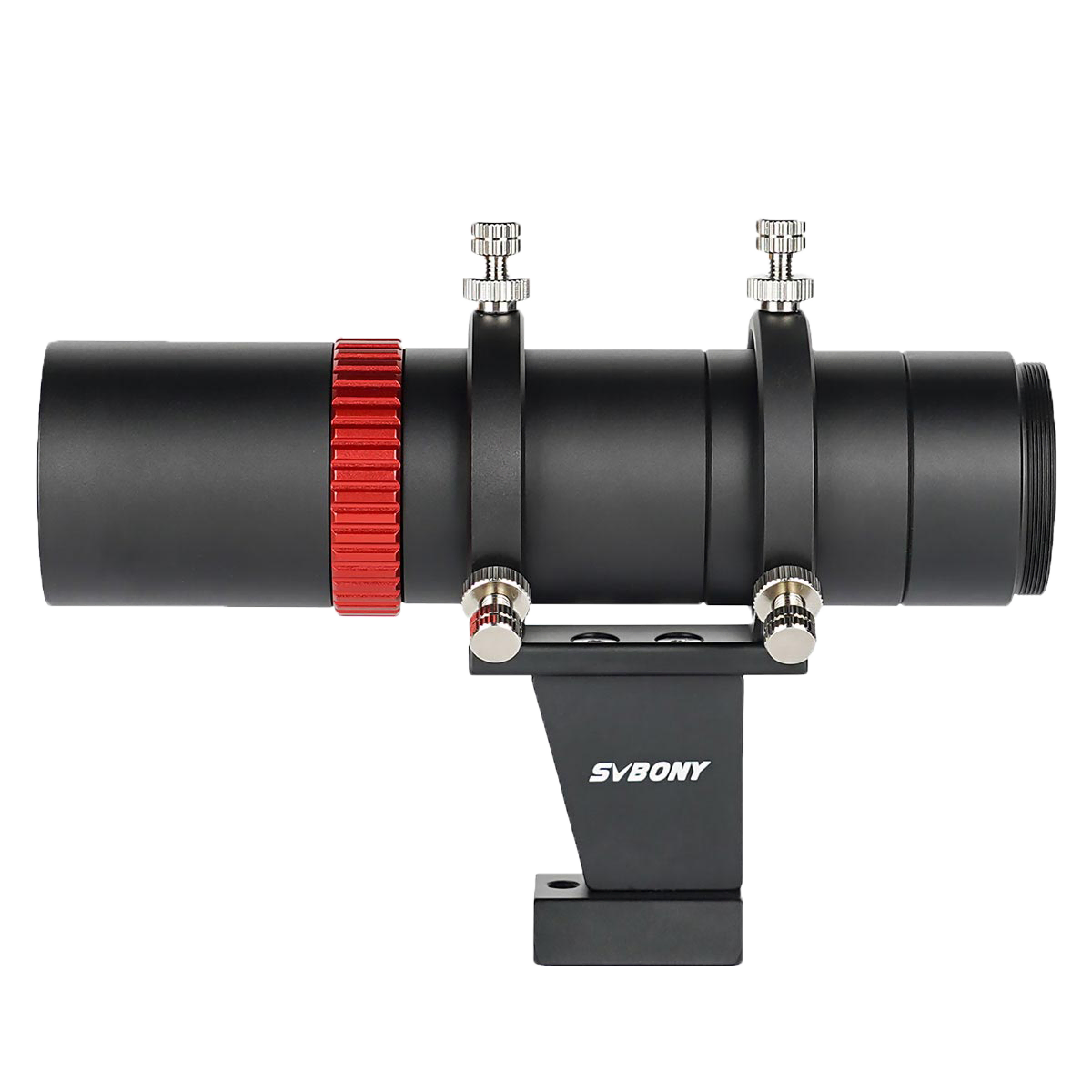
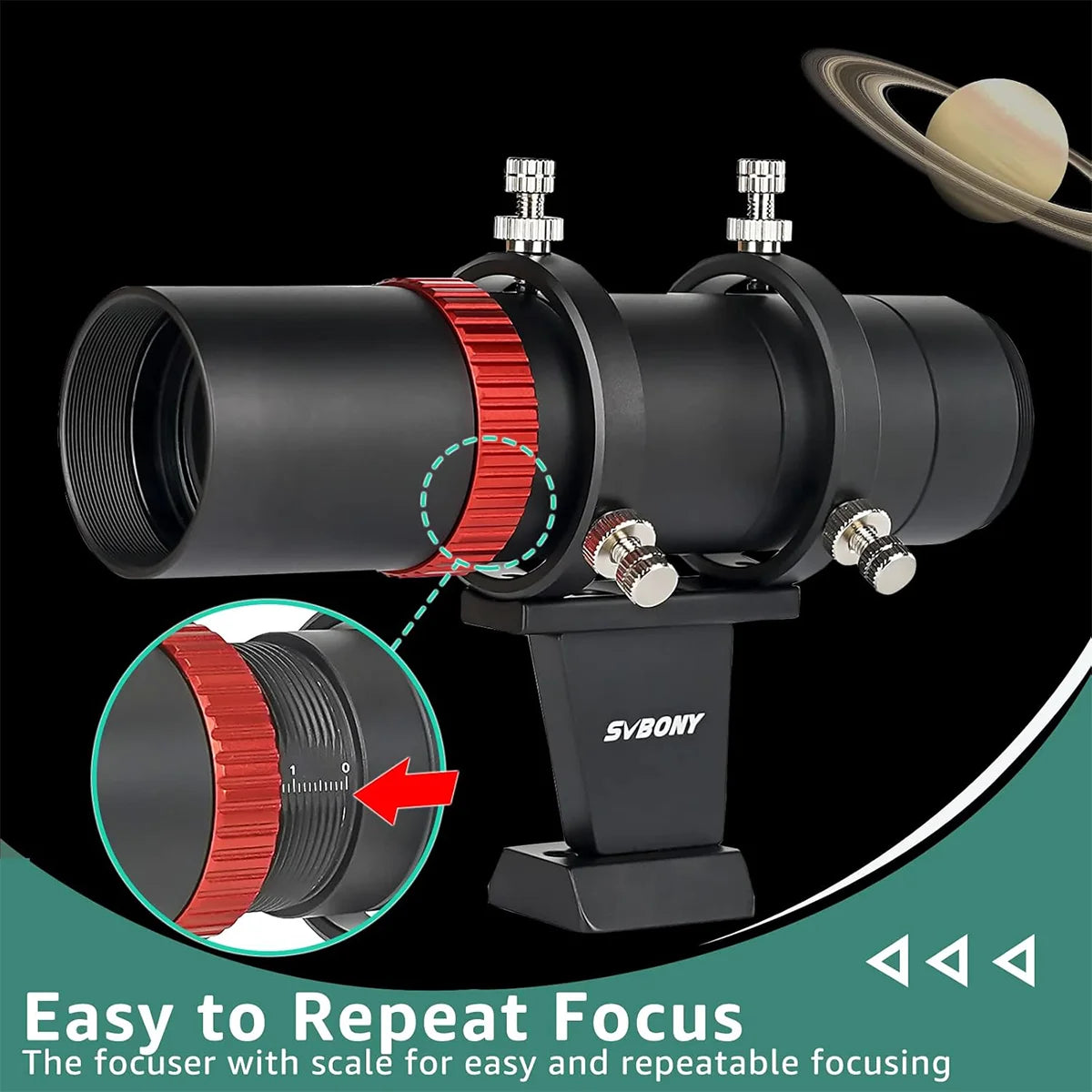
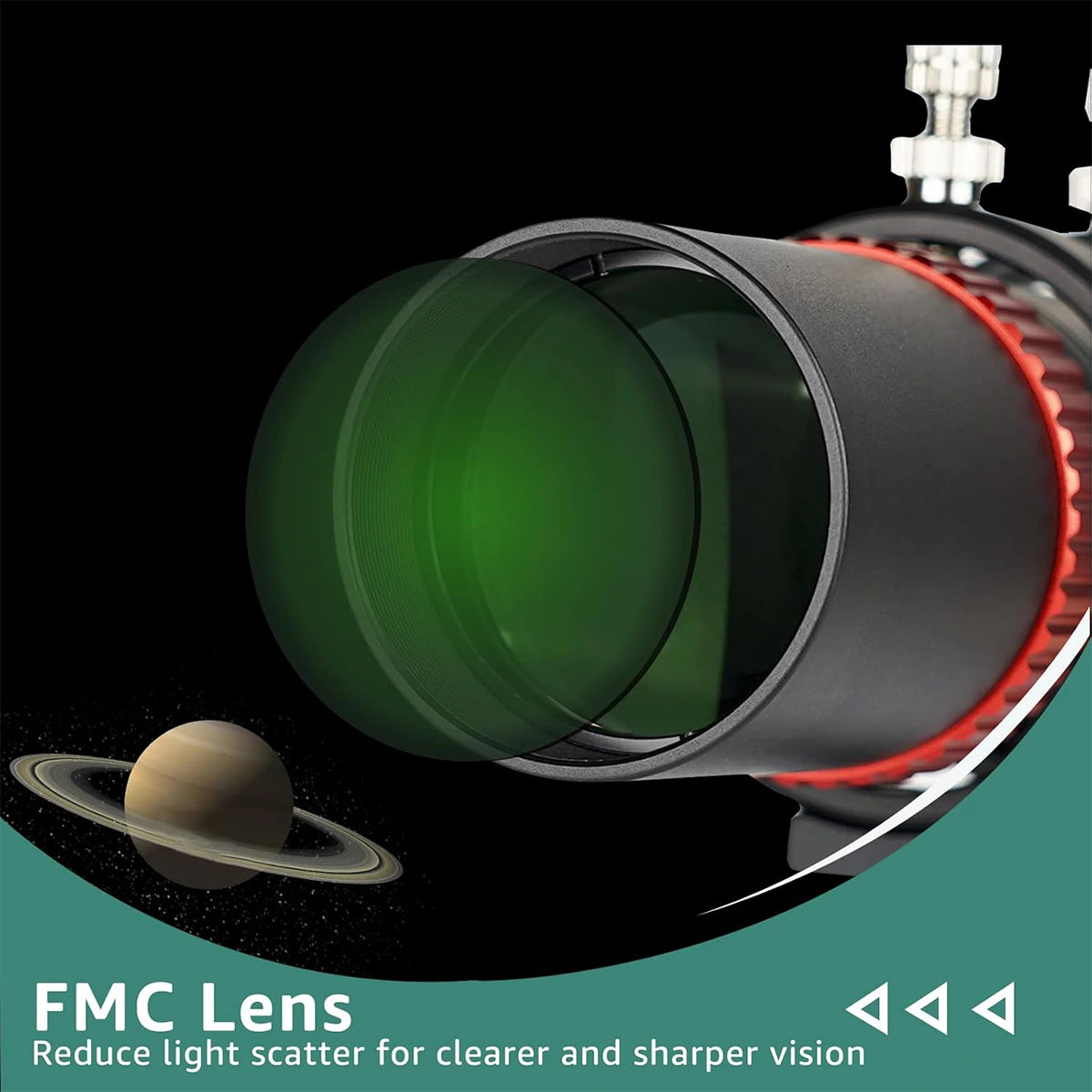
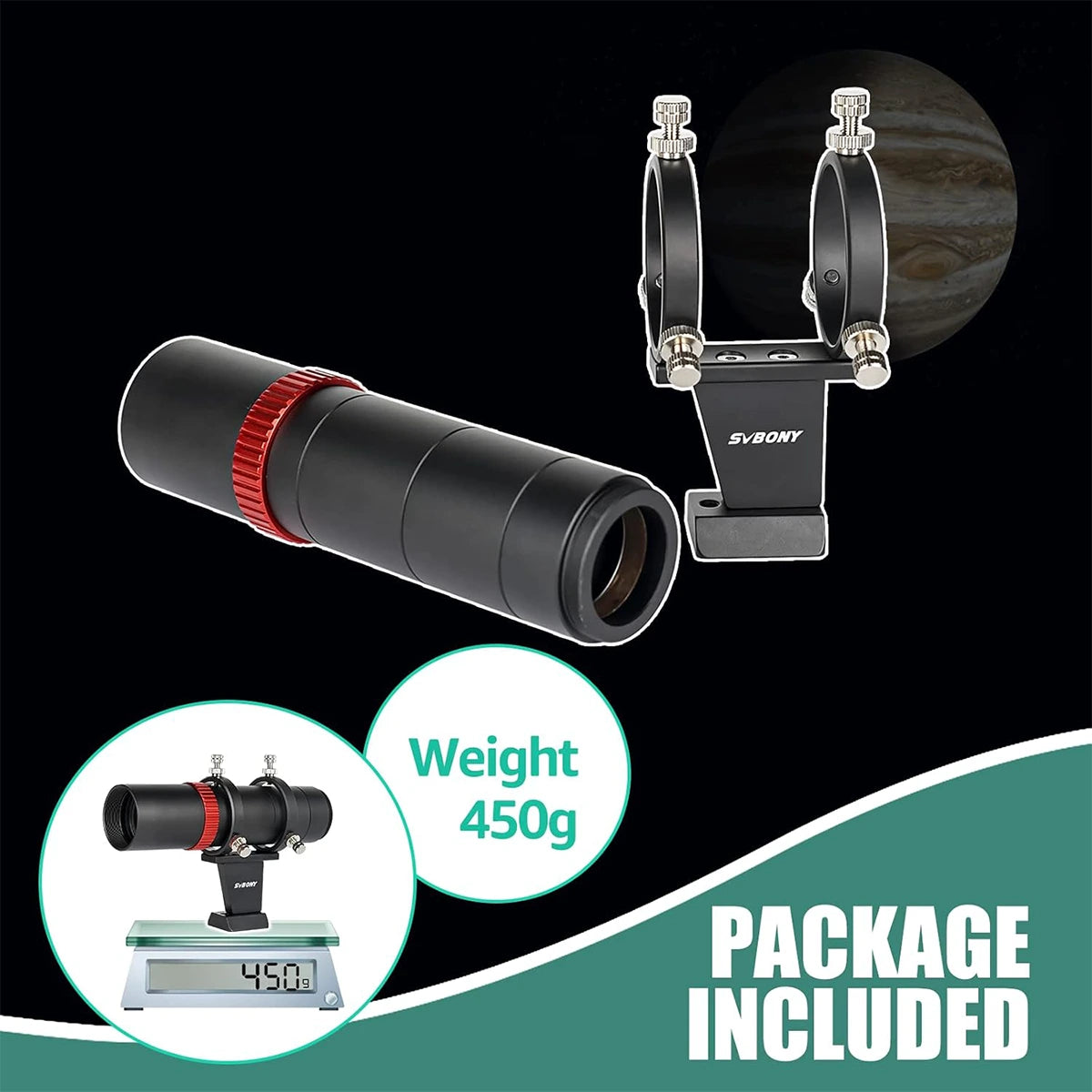
The SVBONY SV165 40 mm is a compact f/4 guide scope for autoguiding deep-sky imaging rigs. Its two-element, fully multi-coated objective gives a 160 mm focal length. Focus is set with a front-part focuser that has a scale and locking ring, with 15 mm of travel, and the camera end accepts 1.25″ nosepieces and T2 threads with 12.5 mm of back focus. The aluminium body measures 179 x 114 x 59 mm and weighs 449.8 g.


Who It's For
This is a good match if you image deep-sky targets with a telescope of up to 700 mm focal length and want a guide scope with a little more aperture than the 30 mm version, for more guide-star choice in sparse fields, while keeping weight under half a kilogram.
Key Features & Design
- 40 mm f/4 objective: two-element, fully multi-coated, 160 mm focal length.
- Front focuser with scale and locking ring: 15 mm of travel; the scale lets you return to a known focus position.
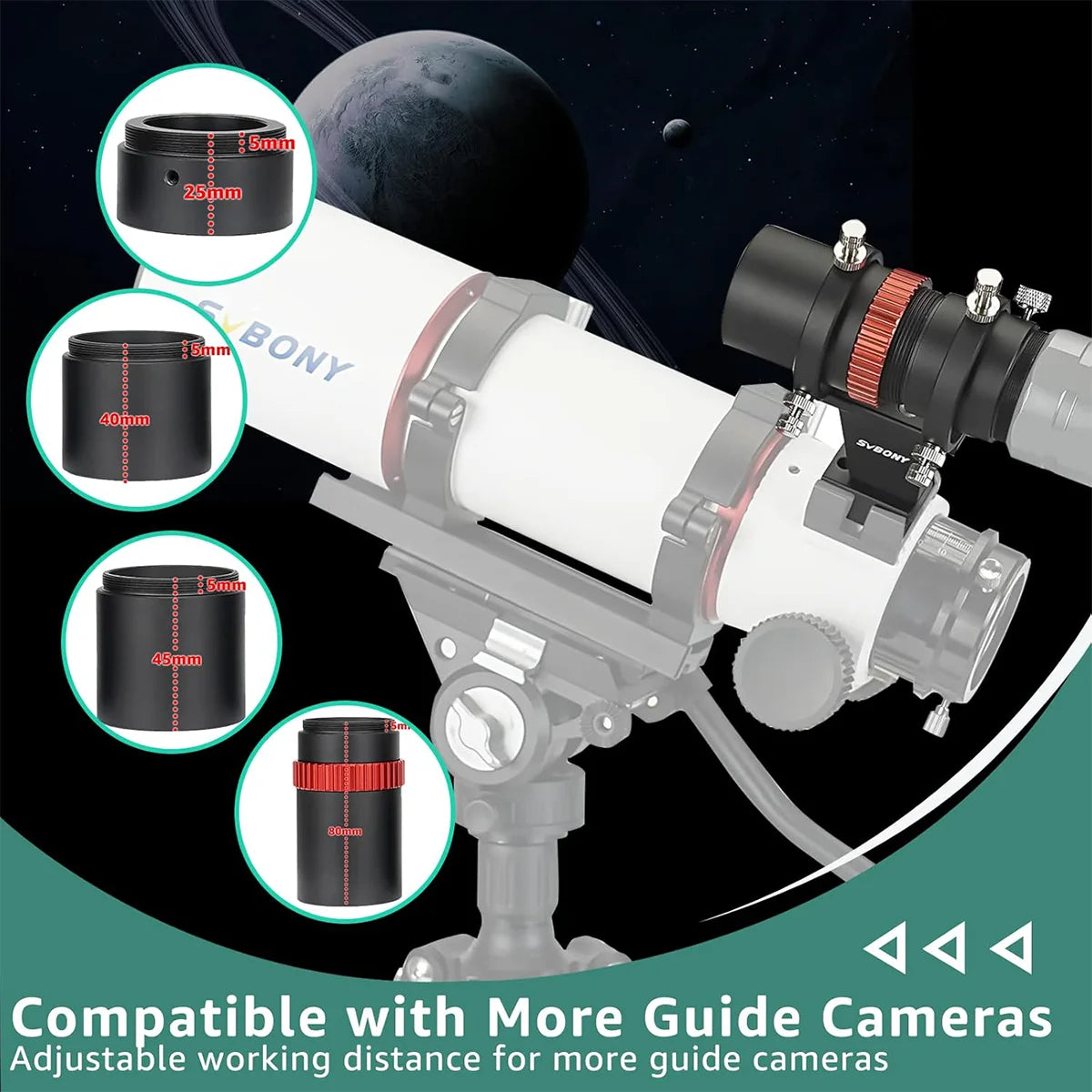
- 1.25″ and T2 camera interface with 12.5 mm back focus.
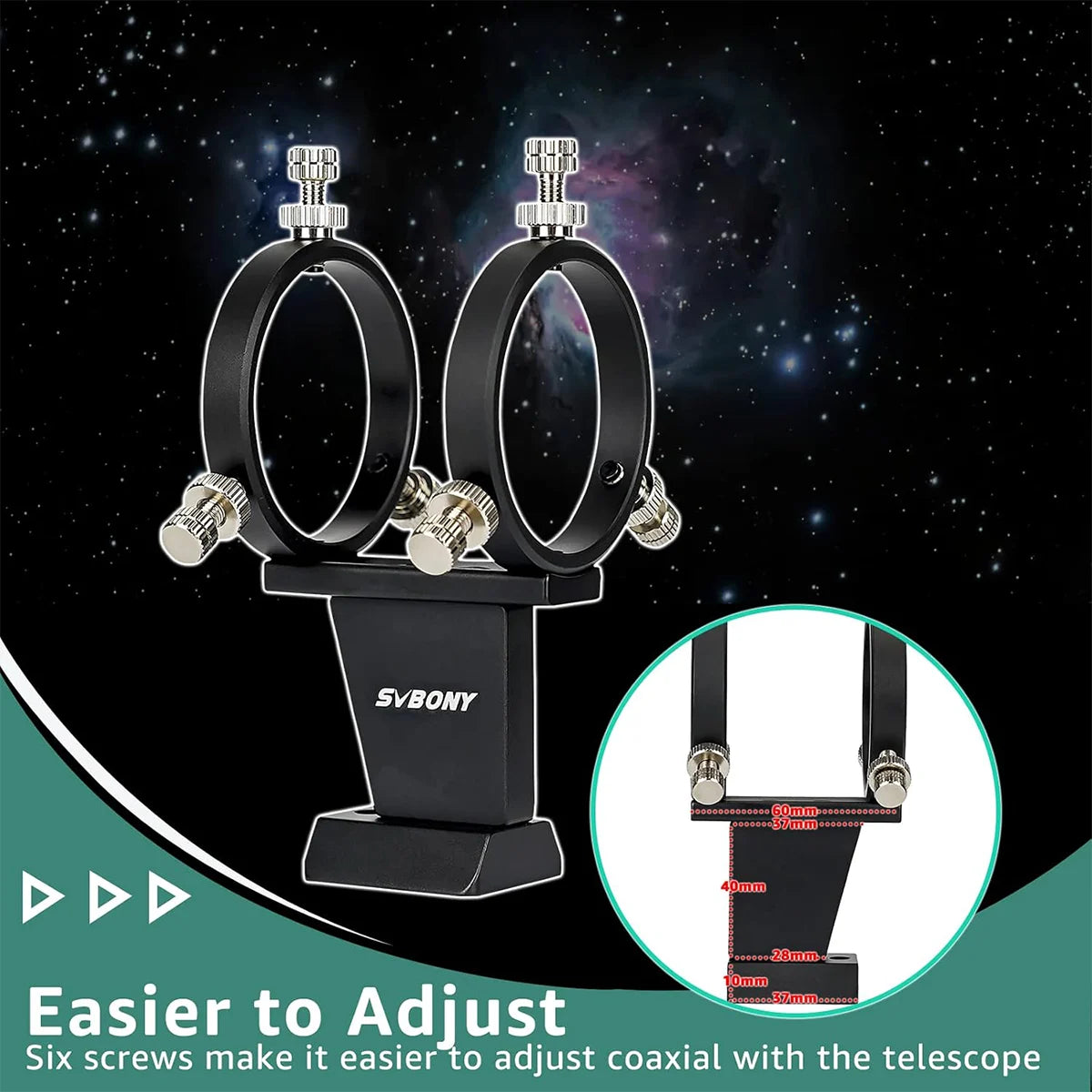
- Six-point guide ring: adjusts alignment of the guide scope relative to the main telescope.
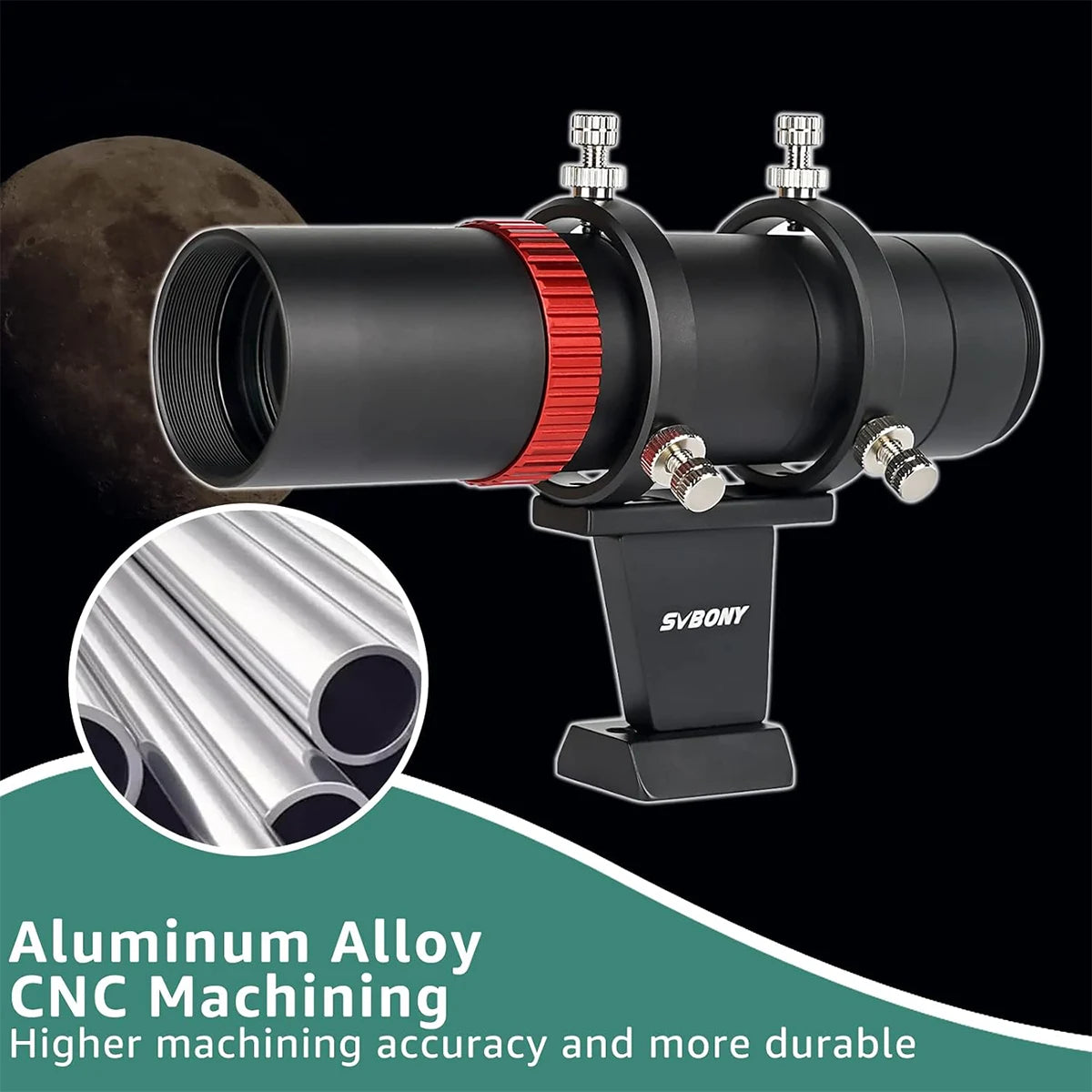
- Aluminium body with a sandblasted, oxidized finish; 449.8 g.


Optical Design
A two-element, fully multi-coated 40 mm objective at f/4 gives 160 mm of focal length. The extra aperture over a 30 mm guide scope collects more light per guide star, while the fast focal ratio keeps guide exposures short. SVBONY rates it for main telescopes with focal lengths up to 700 mm, a range where a 160 mm guide focal length keeps the guiding image scale close enough to the imaging scale for accurate corrections.


Recommended Uses
- Autoguiding deep-sky astrophotography with PHD2 or similar software.
- Guiding refractors and short reflectors up to 700 mm focal length.
- Compact imaging rigs where weight on the main telescope matters.


Compatibility and Accessory Notes
- Main telescope: SVBONY specifies it for telescopes with focal lengths within 700 mm.
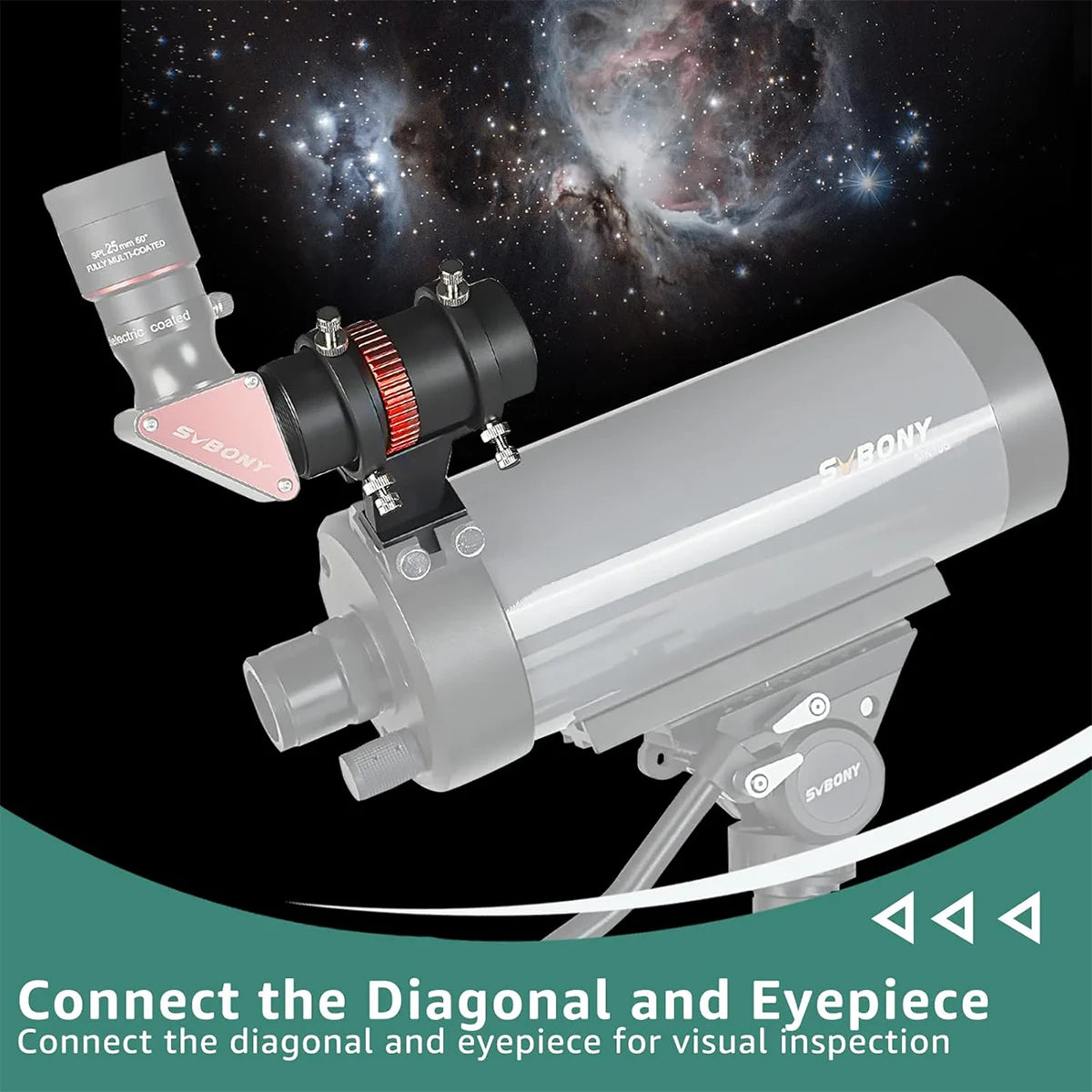
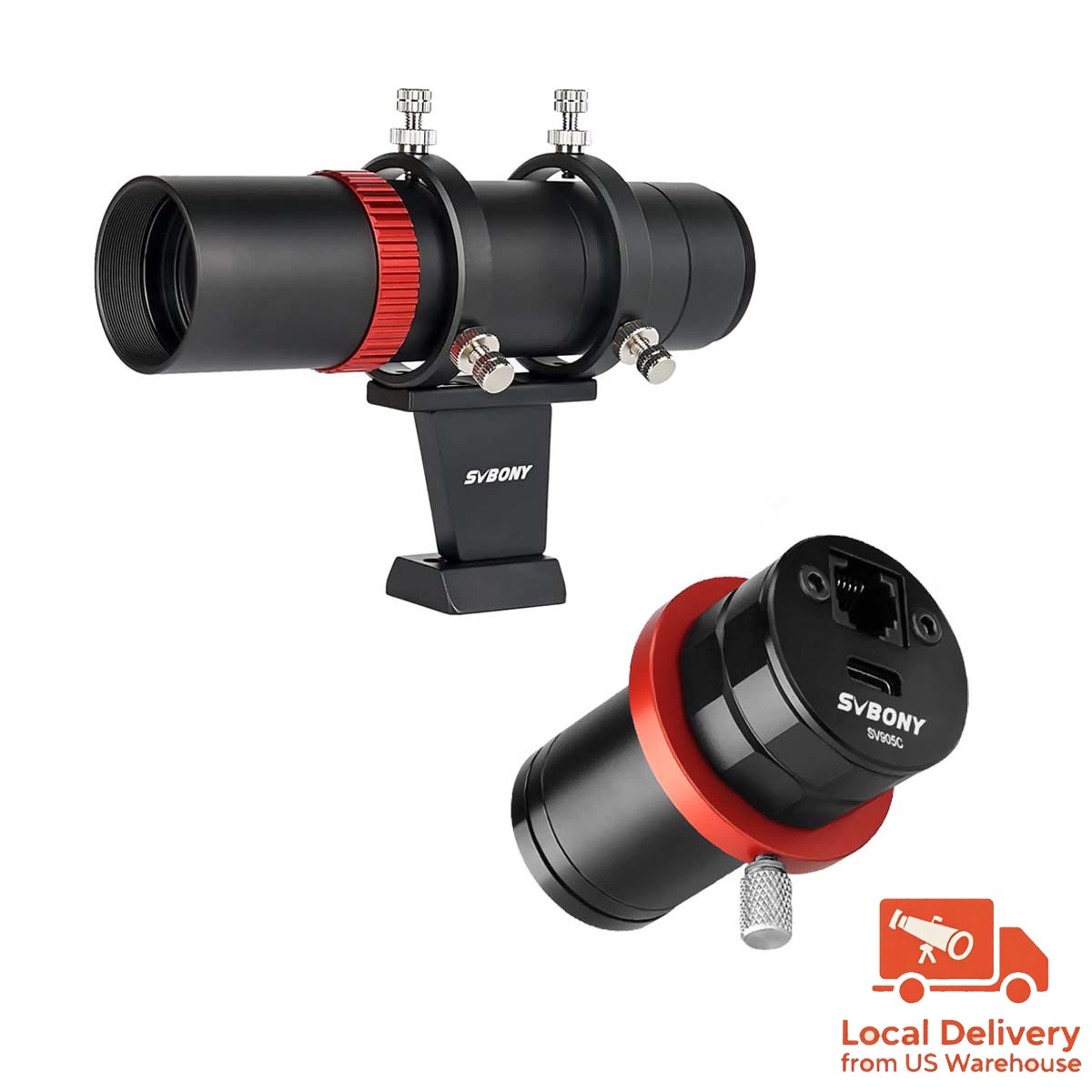
- Guide cameras: the 1.25″ and M42 interface accepts guide cameras such as the SVBONY SV305 Pro and ZWO, QHY and Orion models.
- Focusing: SVBONY notes that T2 extension tubes can assist in reaching focus with some cameras.
- Back focus: 12.5 mm.


Good to Know Before You Order
- Guide camera sold separately: this listing is the guide scope alone.
- Focal-length range: it is specified for main telescopes up to 700 mm; longer focal lengths are usually better served by an off-axis guider. Get in touch if you would like help choosing.
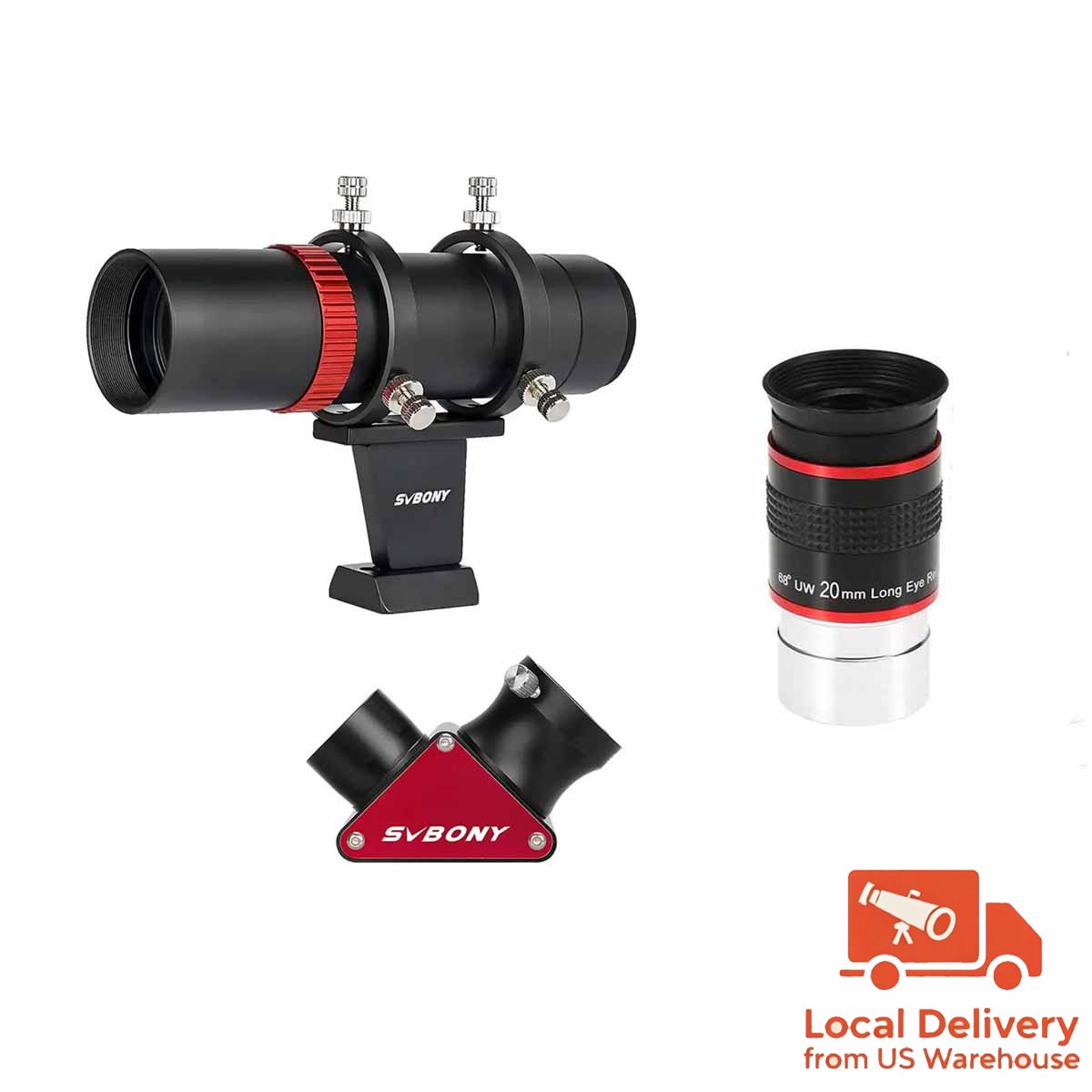
- Package contents: SVBONY does not publish a contents list for this model.
Frequently Asked Questions
Is it difficult to set up?
No. Mount the scope, insert or thread the guide camera, focus on a bright star using the front focuser, and lock it with the locking ring. The focus scale lets you return to the same position next session.
How is it different from the SV165 30 mm?
It has 40 mm of aperture and 160 mm focal length versus 30 mm and 120 mm, and a front-part focuser with a scale instead of a helical focuser.
What telescopes does it suit?
SVBONY specifies main telescopes with focal lengths up to 700 mm.
Which guide cameras fit?
Cameras with a 1.25″ nosepiece or T2/M42 thread, including the SVBONY SV305 Pro and ZWO, QHY and Orion guide cameras.
Bottom Line
In short: a 40 mm f/4 guide scope with 160 mm focal length, a scaled front focuser and 1.25″/T2 camera fit, for guiding imaging telescopes up to 700 mm focal length once a guide camera is added.
| Model | SV165 (40 mm) |
|---|---|
| Aperture | 40 mm |
| Focal length | 160 mm |
| Focal ratio | f/4 |
| Lens | 2-element, fully multi-coated |
| Connection | 1.25″ and T2 |
| Focuser | Front-part focuser |
| Tube travel | 15 mm |
| Back focus | 12.5 mm |
| Material | Aluminium, sandblasted oxidized finish |
| Body size | 179 x 114 x 59 mm |
| Net weight | 449.8 g |
| Compatibility | Main telescopes with focal length within 700 mm |
| Use case | Autoguiding for astrophotography |
You may also like
Recently viewed
Recent Blog Posts
View all
Your Guide Graph Is Lying to You
Read More

D-Size vs V-Size: A Complete Guide to Telescope Dovetail Systems
Read More

What Is Back Focus in Astrophotography? Telescope Reducers, Flatteners, and Spacing Explained
Read More