


- Description
- Specifications

Product Overview
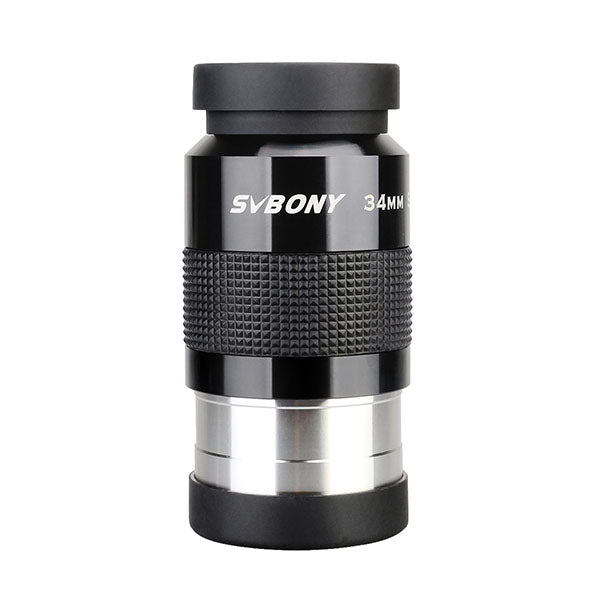
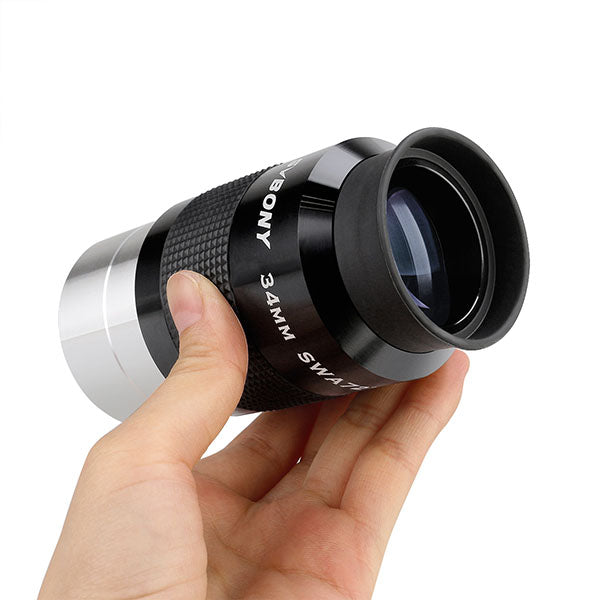
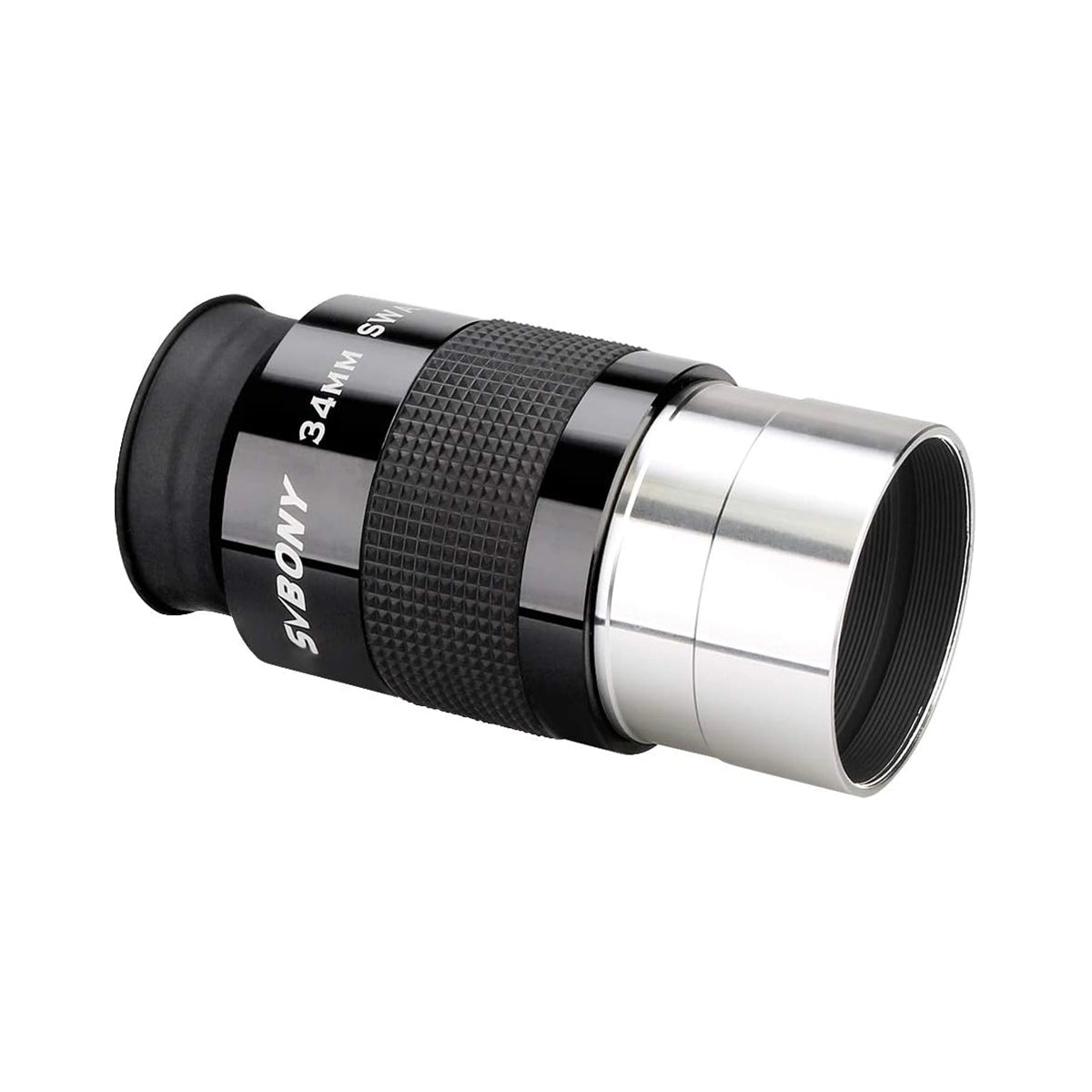
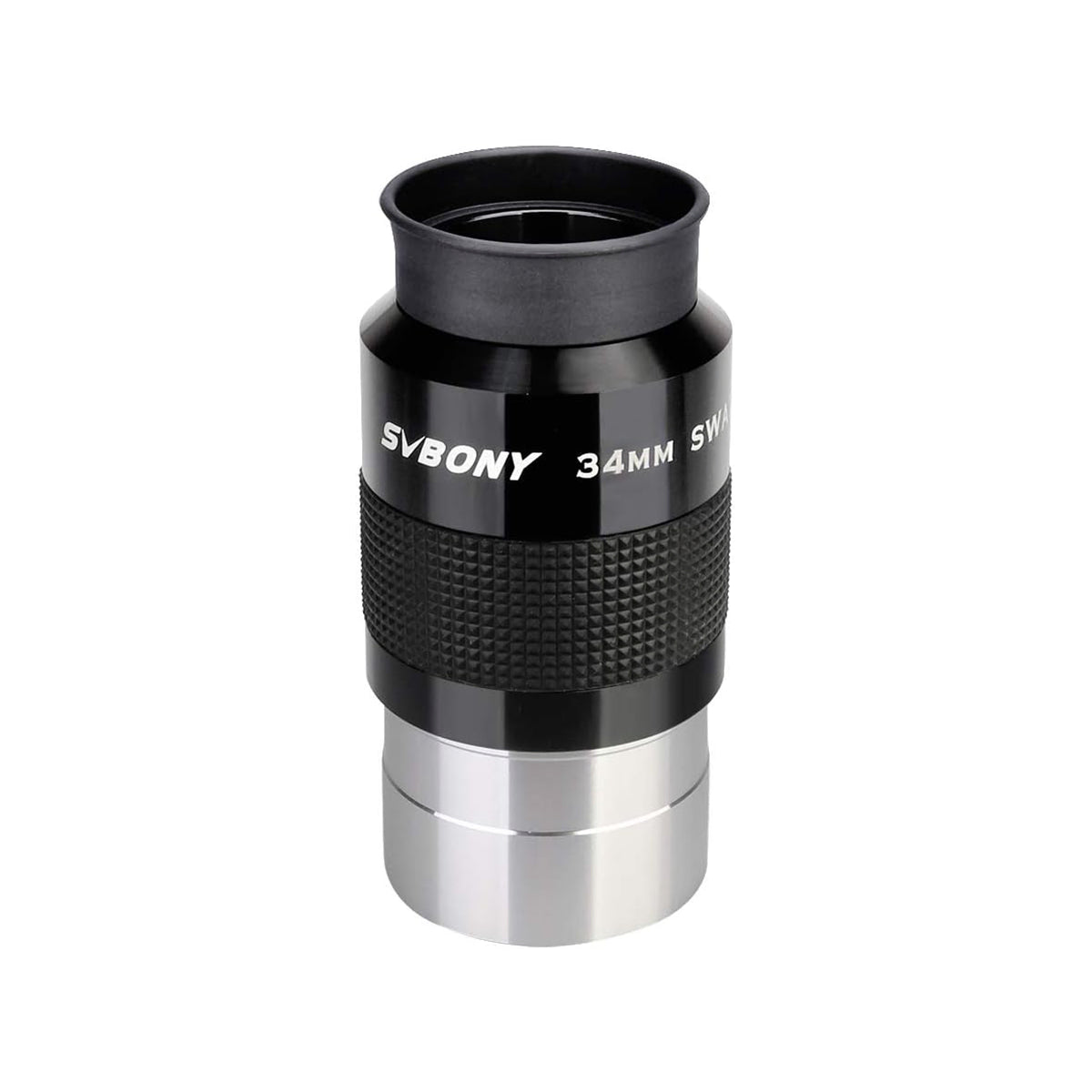
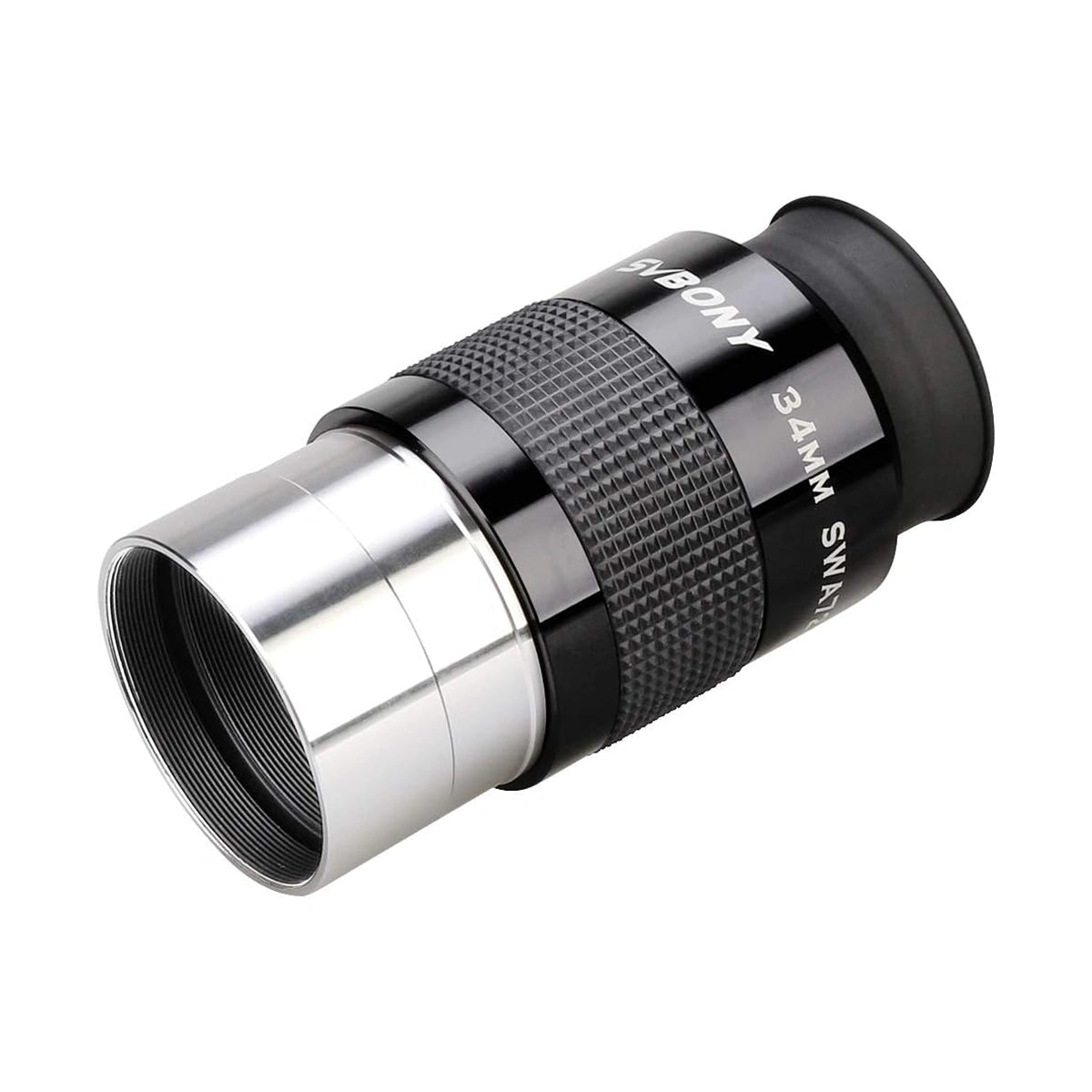
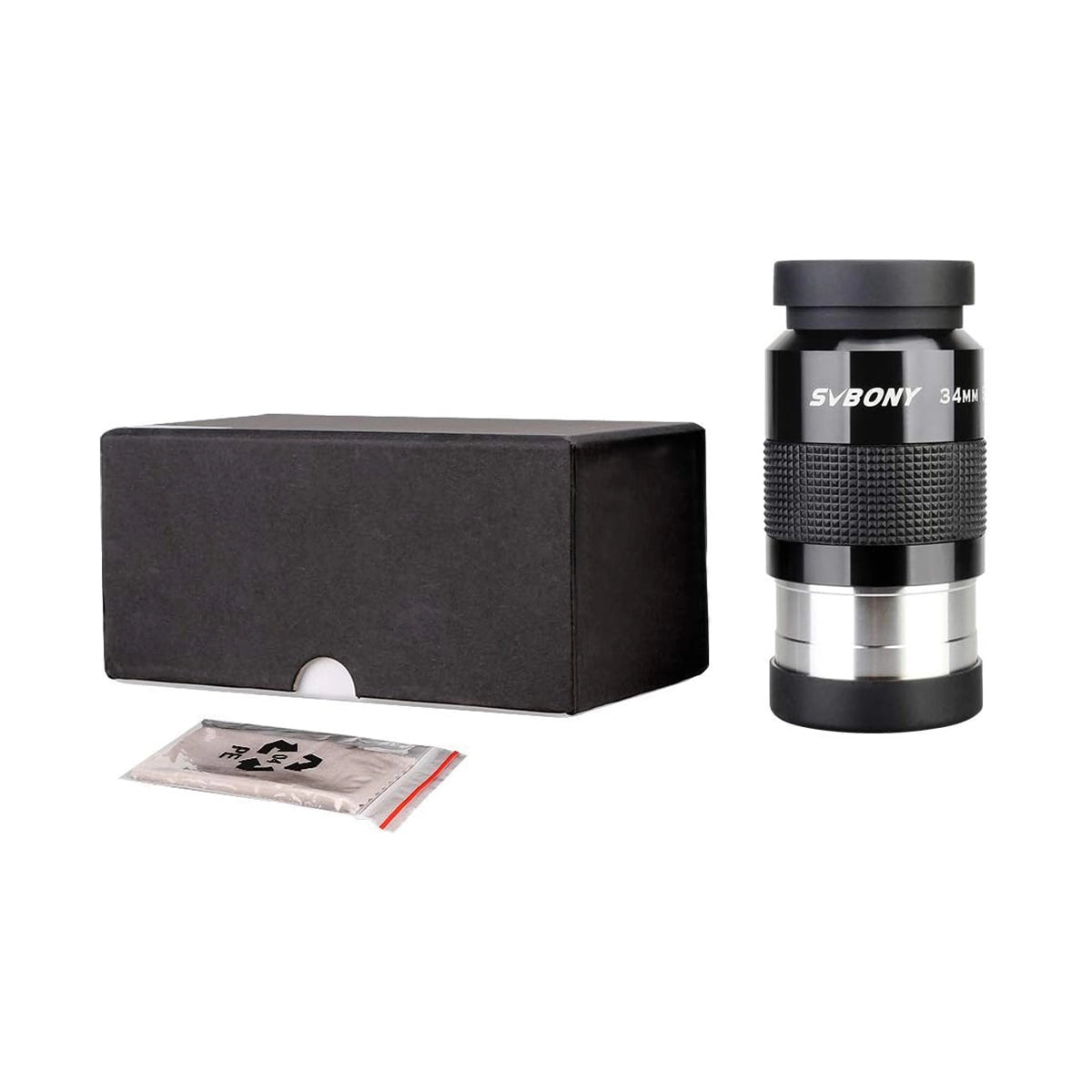
The SVBONY SV136 34 mm is a 2″ wide-field eyepiece with a 72° apparent field of view and a 40 mm field stop. Its fully multi-coated 5-element, 4-group design gives 24 mm of eye relief, and the barrel carries a standard 2″ (M48 × 0.75) filter thread. At 34 mm it is a low-power, maximum-field eyepiece — the one that frames large nebulae, open clusters and star fields, and the easiest to find targets with.

Who It's For
This is a good match if your telescope has a 2″ focuser or diagonal and you want the widest true field it can deliver — for sweeping the Milky Way, framing the Double Cluster or the Veil, or as a finding eyepiece before switching to higher power. The 24 mm eye relief and folding eyecup work for observers with or without glasses.
Key Features & Design
- 72° apparent field: a wide, immersive view at low power.
- 40 mm field stop: close to the practical maximum for a 2″ barrel, so the true field is about as wide as your telescope allows.
- 24 mm eye relief: with a fixed folding rubber eyecup, usable with or without glasses.
- Fully multi-coated, blackened edges: for contrast and to cut internal reflections.
- Two-step anodized aluminium body: matte finish that resists reflections and glare.
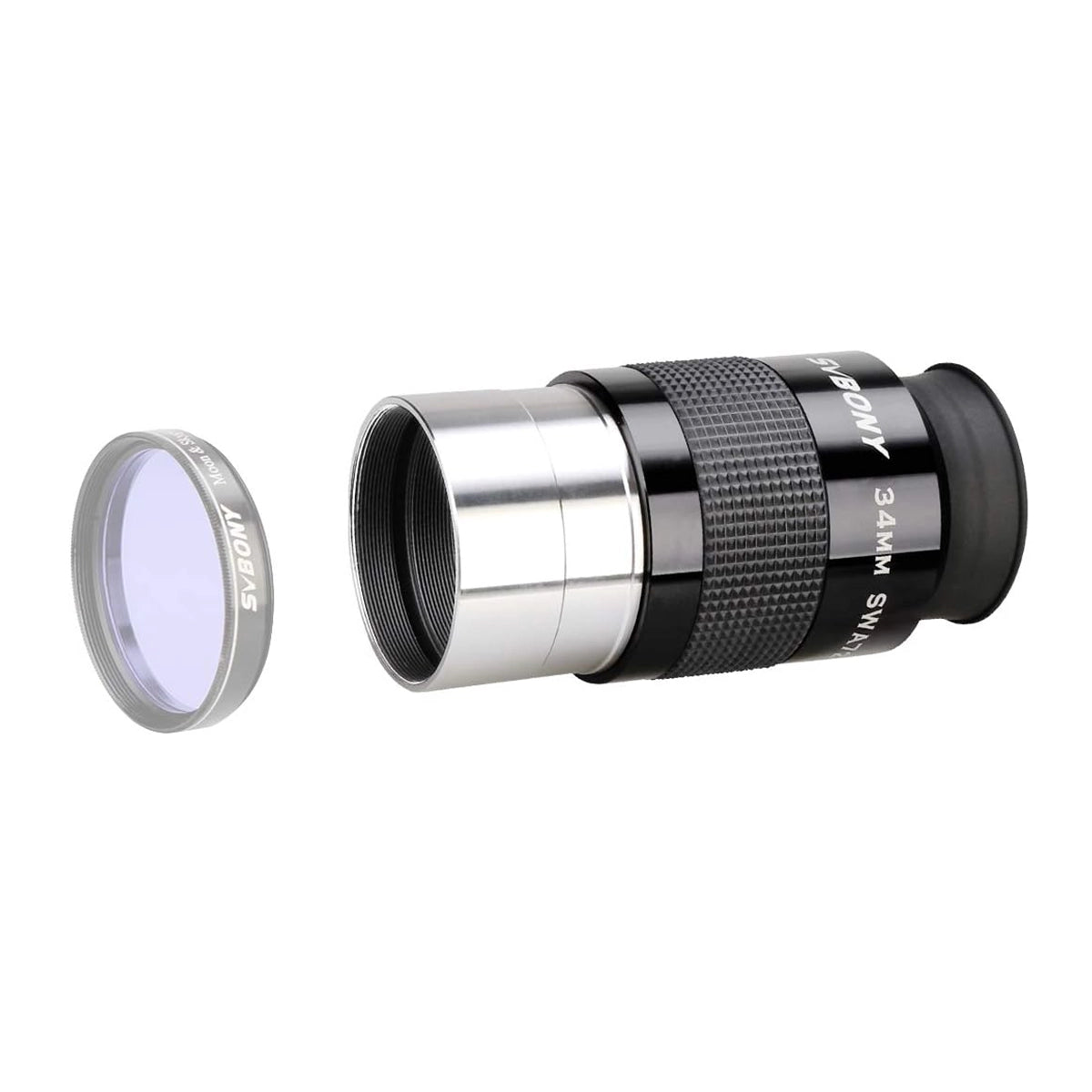
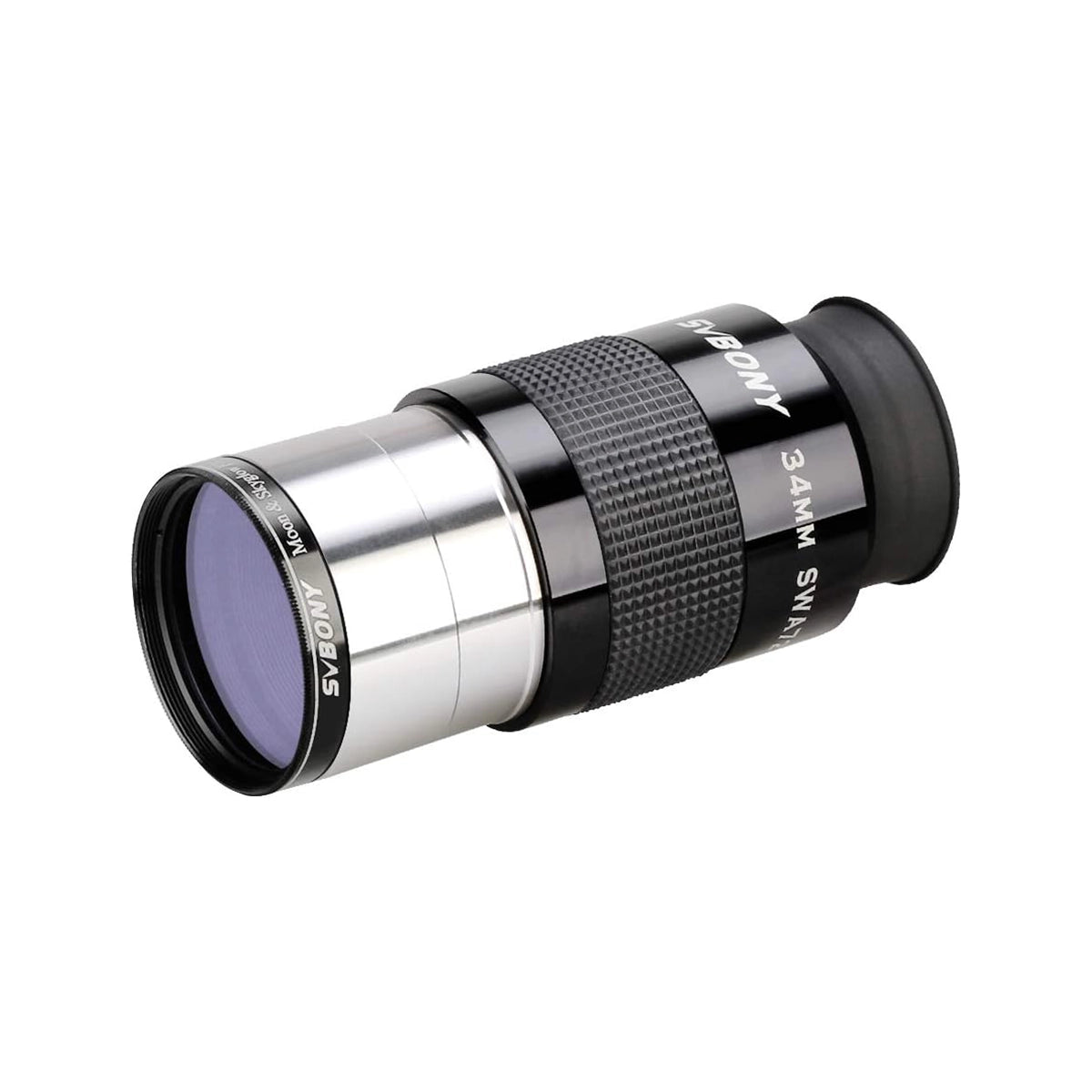
- 2″ filter thread (M48 × 0.75): takes SVBONY 2″ filters.


Optical Design
The SV136 uses five elements in four groups, fully multi-coated, to spread a 72° field across a 40 mm field stop. Because true field is set by the field stop divided by the telescope's focal length, a 40 mm stop gives roughly 2.3° of sky on a 1000 mm telescope at about 29×, and close to 4° on a 600 mm refractor. The exit pupil grows with focal ratio — about 6.8 mm at f/5 — which is worth matching to your telescope and sky conditions.
Recommended Uses
- Large nebulae: the Veil, North America and Orion nebulae, especially with a 2″ nebula filter.
- Open clusters and star fields: the Double Cluster, the Pleiades and Milky Way sweeping.
- Finding and framing: locate targets at low power before moving to a shorter eyepiece.
- Moon and bright planets at low power: whole-disc lunar views.

Compatibility and Accessory Notes
- Barrel: 2″ only — needs a 2″ focuser or diagonal.
- Filters: M48 × 0.75 thread for SVBONY 2″ filters.

Good to Know Before You Order
- 2″ focuser required: it does not fit 1.25″-only focusers.
- Exit pupil: on fast telescopes (f/4–f/5) the exit pupil is large; on Newtonians the secondary shadow can become visible in daylight or bright skies.
- Weight: SVBONY does not publish this eyepiece's weight.
Frequently Asked Questions
Is it difficult to set up?
No. It slides into a 2″ focuser or diagonal and is held by the clamp screw or compression ring like any 2″ eyepiece.
Can I wear glasses with it?
Yes. The 24 mm eye relief and folding eyecup are designed to work with or without glasses.
What is it best for?
Low-power, wide-field observing of large nebulae, open clusters and star fields, and as a finding eyepiece.
Will it work in my 1.25″ focuser?
No; it has a 2″ barrel only.
Bottom Line
In short: a 2″, 34 mm eyepiece with a 72° field, a 40 mm field stop and 24 mm eye relief — a low-power, wide-field eyepiece for telescopes with a 2″ focuser.
| Model | SV136 (F9172D) |
|---|---|
| Focal length | 34 mm |
| Apparent field of view | 72° |
| Eye relief | 24 mm |
| Field stop diameter | 40 mm |
| Barrel size | 2″ |
| Lens structure | 5 elements / 4 groups |
| Filter thread | 2″ filter thread (M48 × 0.75) |
| Coatings | Fully multi-coated |
| Weight | Not published by vendor |
| Use case | Low-power, wide-field visual observing |
You may also like
Recently viewed
Recent Blog Posts
View all
Your Guide Graph Is Lying to You
Read More

D-Size vs V-Size: A Complete Guide to Telescope Dovetail Systems
Read More

What Is Back Focus in Astrophotography? Telescope Reducers, Flatteners, and Spacing Explained
Read More