


- Description
- Specifications
Product Overview
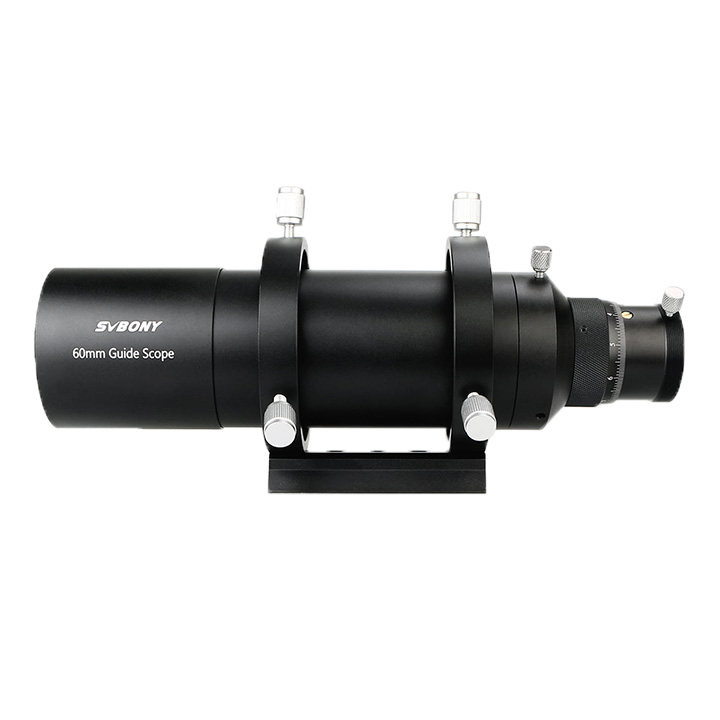
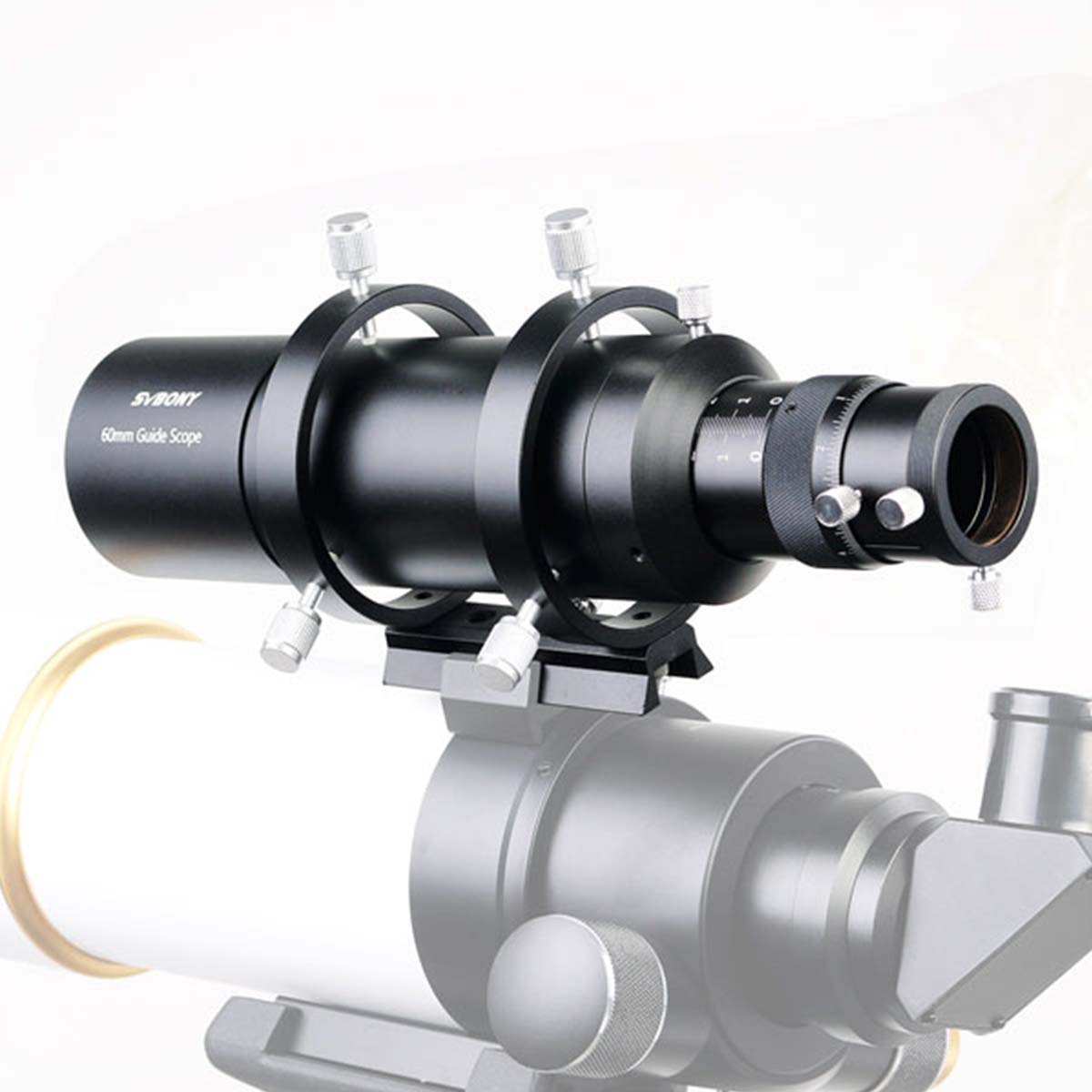
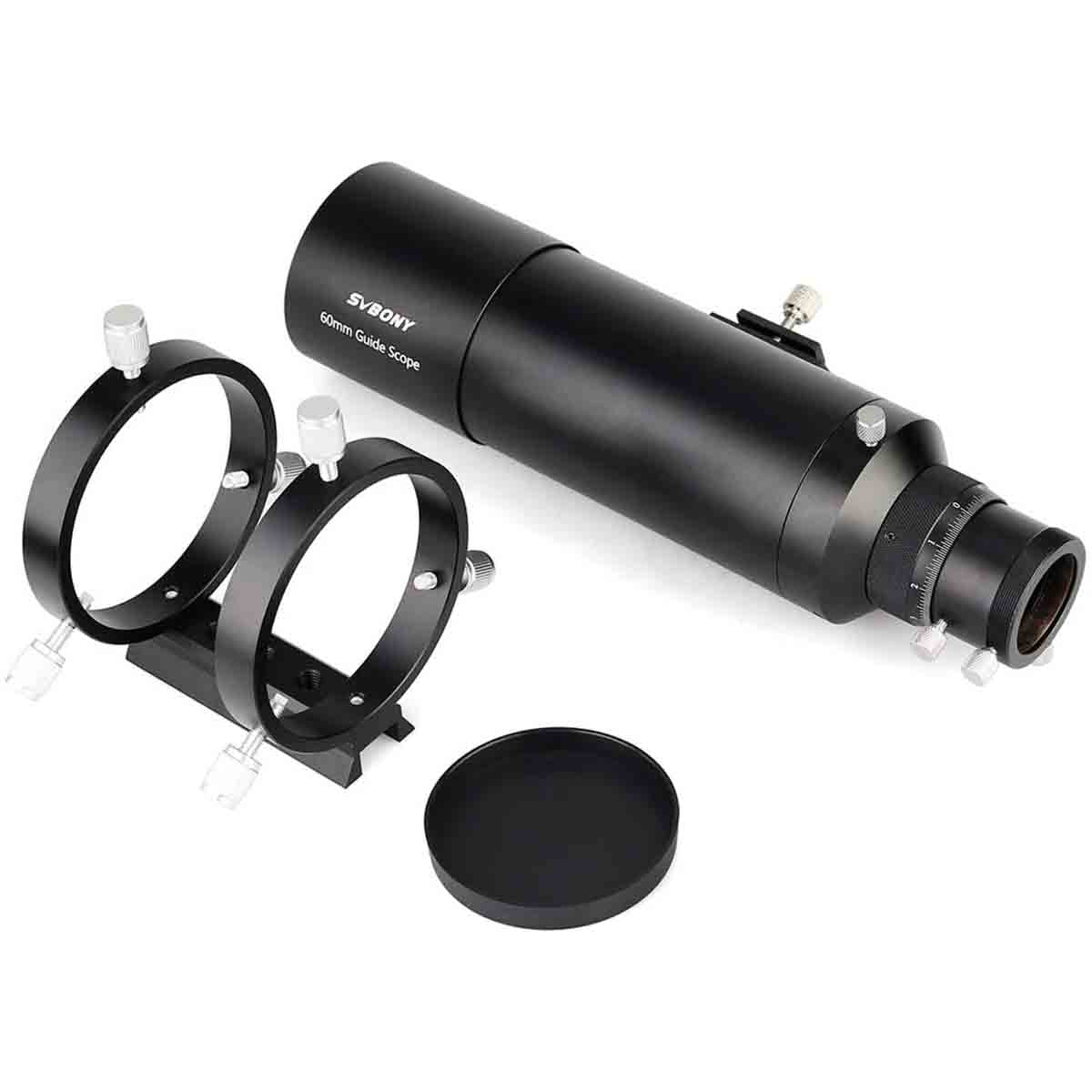
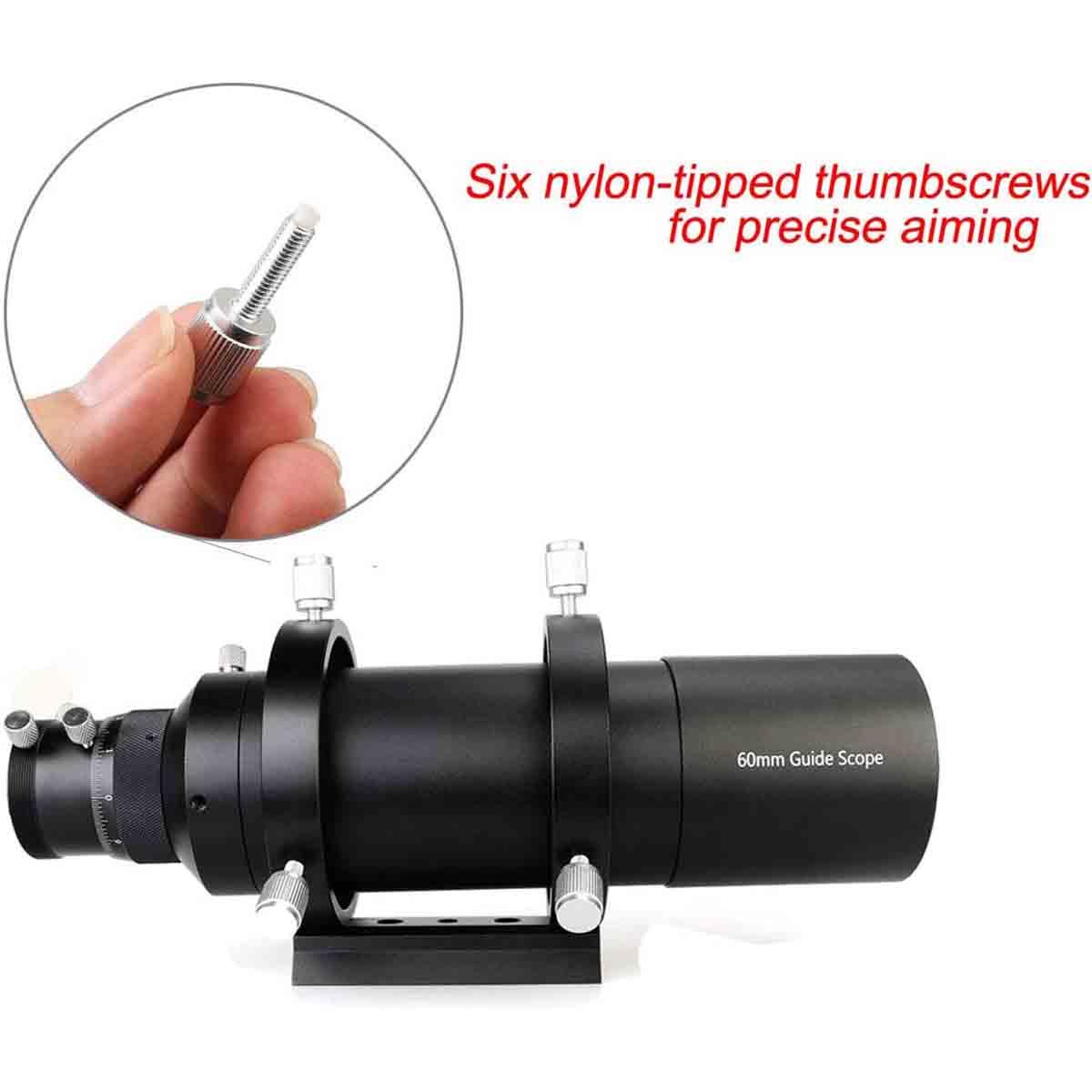
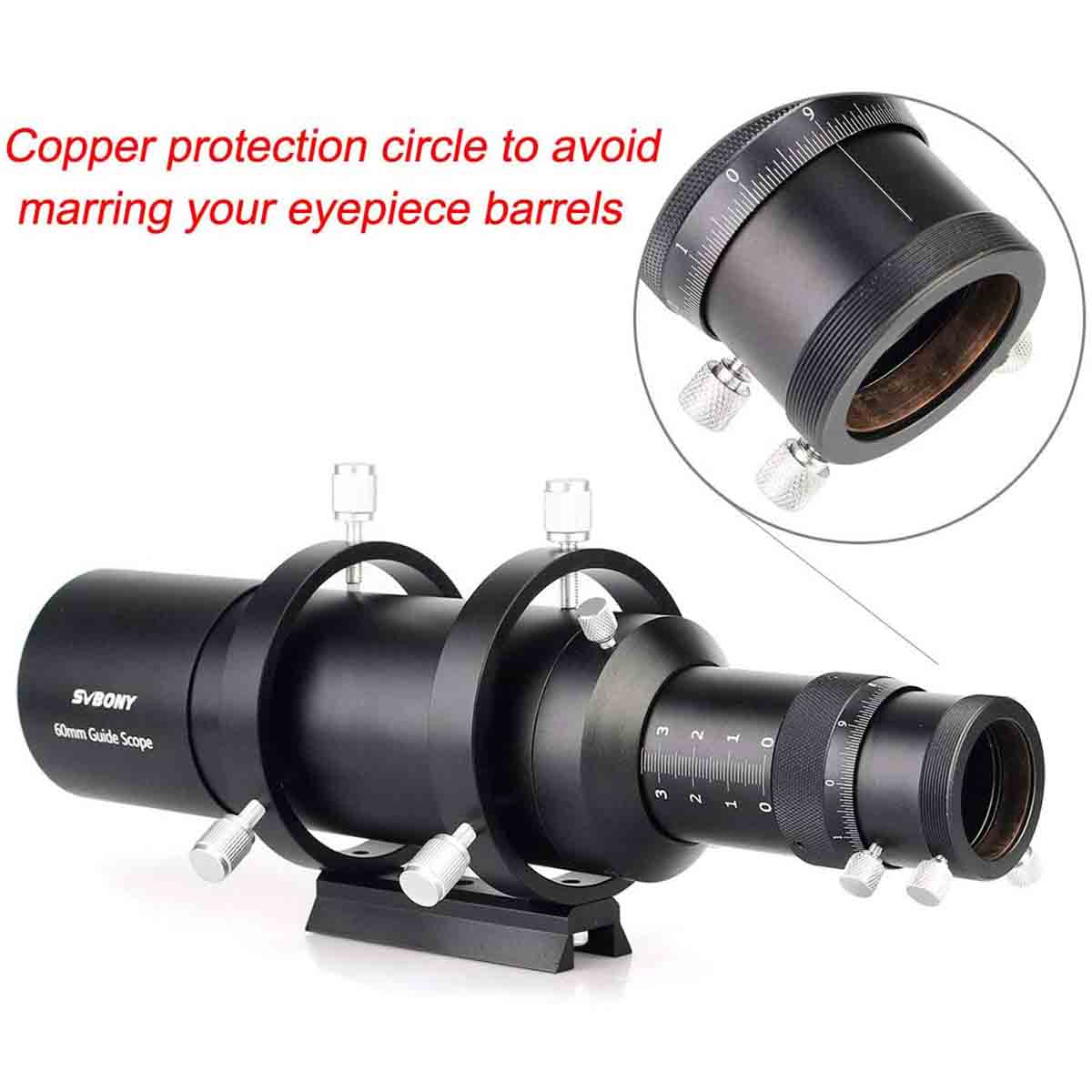
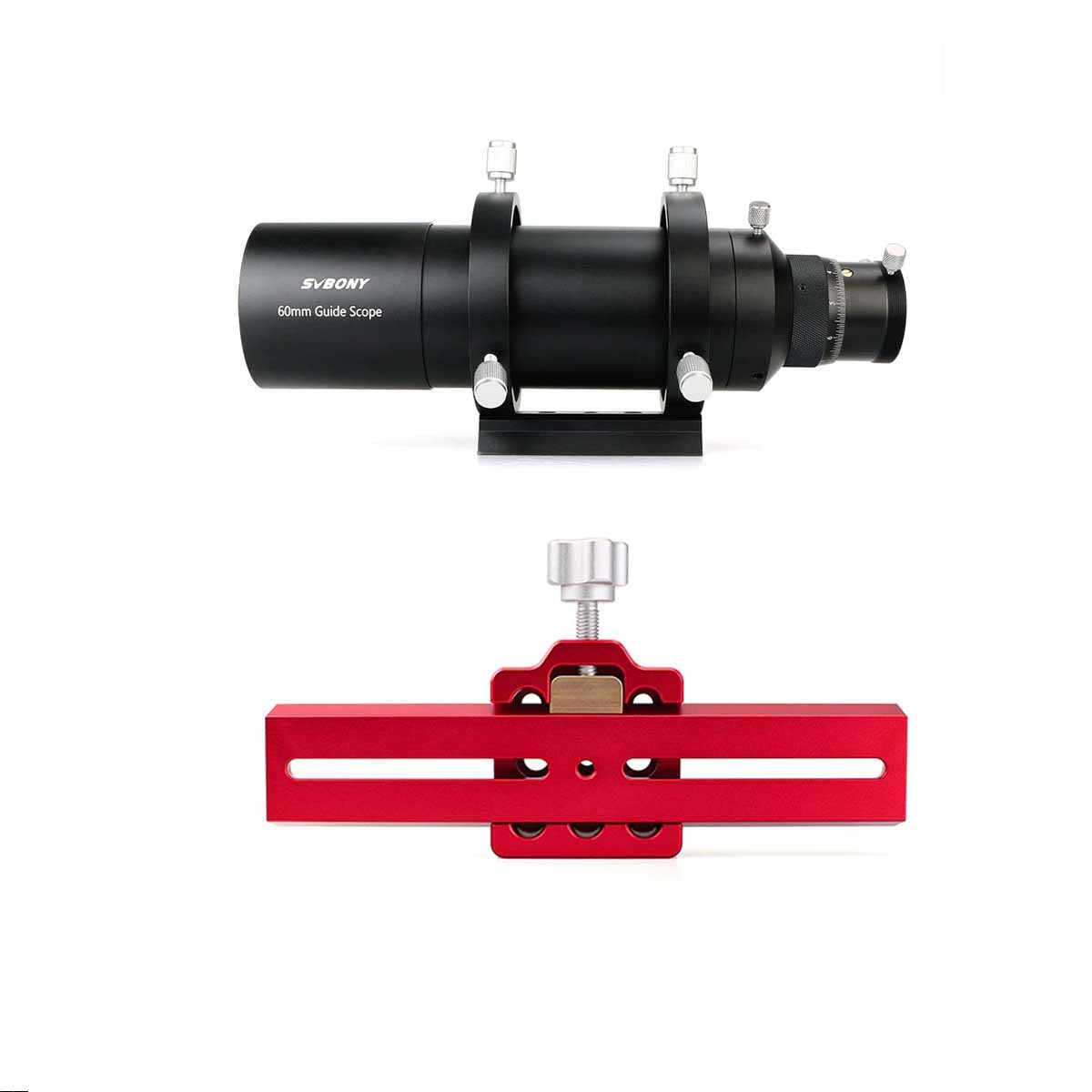
The SVBONY SV106 is a 60 mm f/4 achromatic guide scope with a 240 mm focal length and a helical focuser with 8 mm of travel. The focuser collar does not rotate as it moves, so an attached guide camera keeps its orientation while you focus. Tube rings and a dovetail rail are included, and the 1.25″ holder also accepts an eyepiece, so the SV106 works as a straight-through finder as well. It weighs 790 g.
Who It's For
This is a good match if you are autoguiding a deep-sky imaging telescope and want a short, fast guide scope that gathers plenty of guide stars, or if you want one scope that serves as both guider and finder.
Key Features & Design
- 60 mm, 240 mm, f/4: a wide, bright guide field for finding guide stars quickly.
- Non-rotating helical focuser: 8 mm of fine travel without turning the camera.
- Telescoping drawtube: 35 mm of coarse adjustment before the helical stage.
- Compression-ring holder: grips a 1.25″ camera or eyepiece without marring it.
- Fully multi-coated achromat: blackened lens edges for contrast.
- Aluminium tube: 66 mm tube diameter, 69 mm dew cap, 270 mm overall length.
- Rings and dovetail included: ready to mount on your imaging telescope.

Recommended Uses
- Autoguiding: paired with a guide camera such as the SVBONY SC715C or SV905C under PHD2.
- Finder scope: with a 1.25″ eyepiece for straight-through star hopping.
- Wide-field imaging: short focal length for very wide star fields with a small camera.
Compatibility and Accessory Notes
- Camera connection: 1.25″ compression-ring holder, plus male T-threads on the focuser collar for guide cameras with female T-threads.
- Back focal length: 220 mm.
- Mounting: included tube rings and dovetail rail. If you want to confirm the fit to a particular finder shoe or saddle on your telescope, send us the model and we will check it with you.
- With the SVBONY MK127: use it alongside the telescope for guided imaging with the 0.65x reducer, mounted on the rings and dovetail.
Good to Know Before You Order
- Guide camera sold separately: the SV106 is the optics and focuser; a guide camera or eyepiece is needed to use it.
- Achromat: as a two-element guide scope it is optimized for guiding and finding rather than colour-critical imaging.
Frequently Asked Questions
Is it difficult to set up?
No. Mount the rings and dovetail to your telescope, slide a guide camera into the 1.25″ holder, rack the drawtube to rough focus, and finish with the helical focuser.
Will the camera turn while focusing?
No. The helical focuser collar is non-rotating, so the guide camera stays in the same orientation.
Can it be used as a finder?
Yes. Insert a 1.25″ eyepiece for a straight-through finder view.
What focal length does it give?
240 mm at f/4, with a 220 mm back focal length.
Bottom Line
In short: a 60 mm f/4 guide scope with a non-rotating helical focuser, rings and dovetail included, that adds autoguiding to an imaging rig and doubles as a finder with an eyepiece.
| Model | SV106 (F9177B) |
|---|---|
| Optical design | Achromatic refractor, fully multi-coated, blackened lens edges |
| Aperture | 60 mm |
| Focal length | 240 mm |
| Focal ratio | f/4 |
| Back focal length | 220 mm |
| Focuser | Helical, 8 mm travel, non-rotating |
| Eyepiece / camera connection | 1.25″ |
| Tube diameter | 66 mm |
| Dew cap diameter | 69 mm |
| Total length | 270 mm |
| Tube material | Aluminium alloy |
| Included accessories | Tube rings and dovetail rail |
| Weight | 790 g |
| Recommended use | Autoguiding for deep-sky imaging; finder scope |
You may also like
Recently viewed
Recent Blog Posts
View all
Your Guide Graph Is Lying to You
Read More

D-Size vs V-Size: A Complete Guide to Telescope Dovetail Systems
Read More

What Is Back Focus in Astrophotography? Telescope Reducers, Flatteners, and Spacing Explained
Read More