


- Description
- Specifications
Product Overview
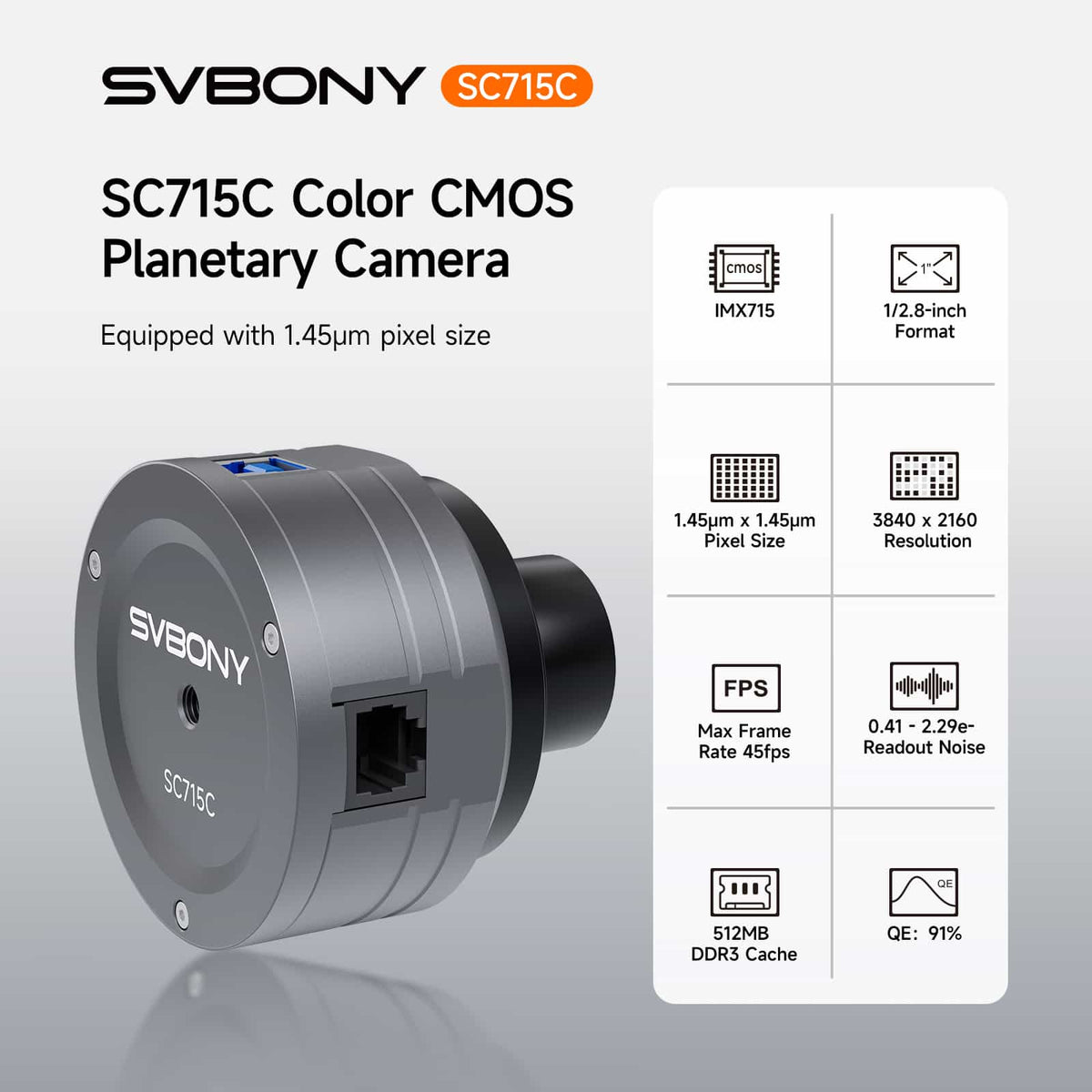
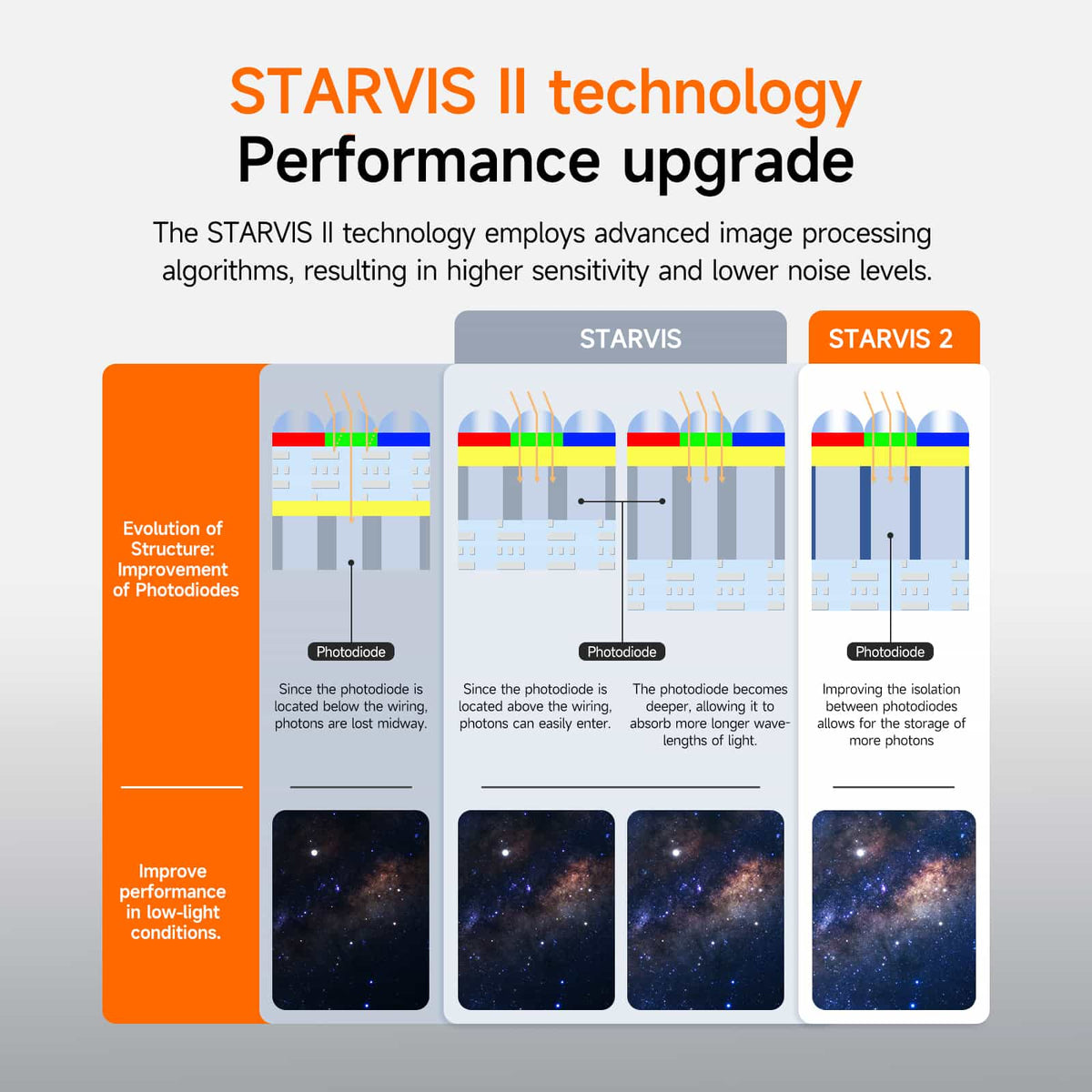
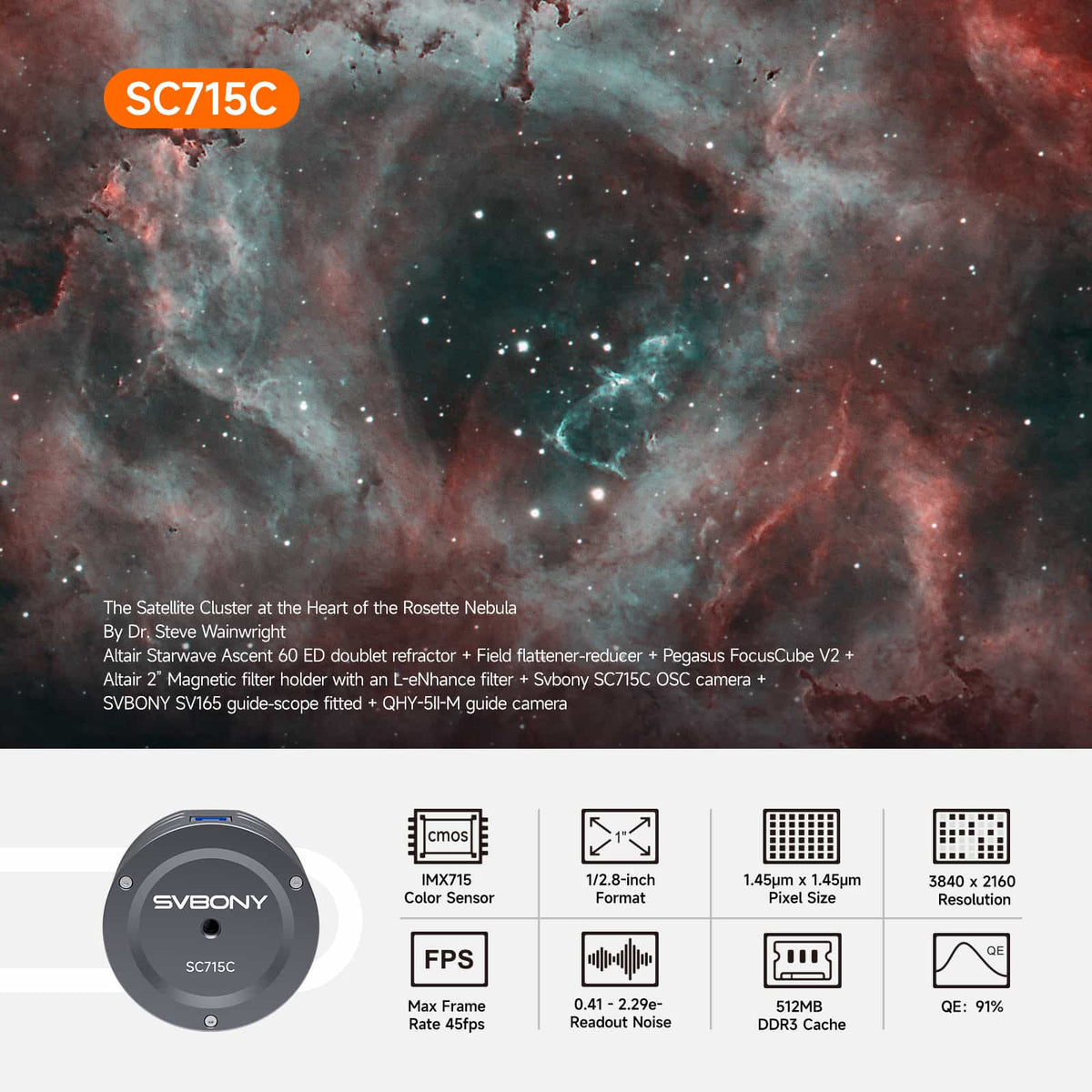
The SVBONY SC715C is an uncooled one-shot-colour astronomy camera built around the Sony IMX715 STARVIS 2 sensor. The 1/2.8″ sensor (6.39 mm diagonal) delivers 3840 x 2160 pixels at 1.45 µm with 0.41–2.29 e⁻ read noise and 12-bit output over USB 3.0. It is designed for high-frame-rate lunar and planetary imaging and doubles as a guide camera through its ST4 port. The body weighs 147 g.
Who It's For
This is a good match if you image the Moon and planets with a long-focal-length telescope such as a Maksutov or SCT, want a small-pixel colour camera that resolves fine planetary detail without a long Barlow, or need a light camera that can also guide a deep-sky rig.
Key Features & Design
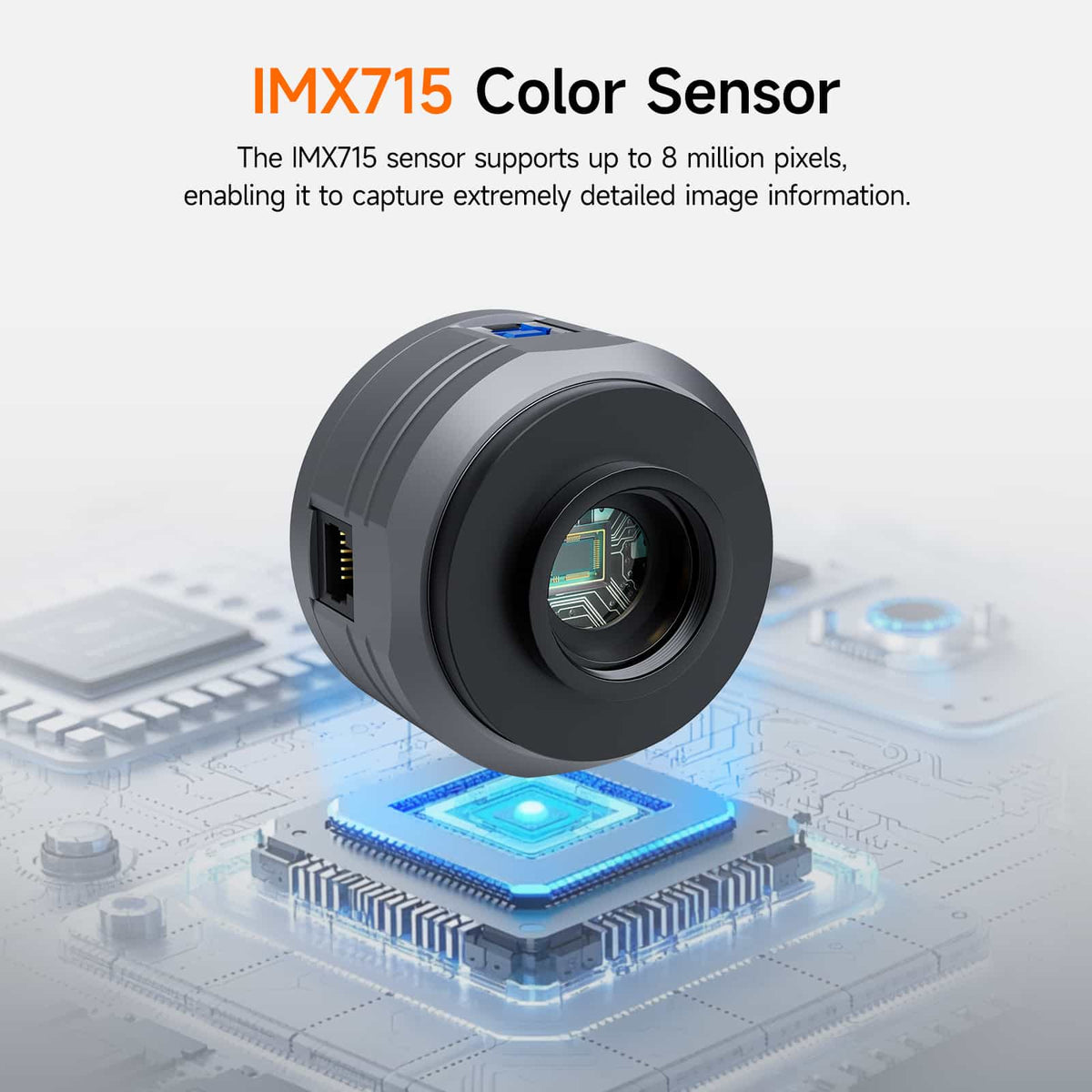
- Sony IMX715 STARVIS 2 sensor: 8.4 MP, 3840 x 2160, 1.45 µm pixels for a fine image scale at long focal lengths.
- Low read noise: 0.41–2.29 e⁻, with 72.8 dB dynamic range.
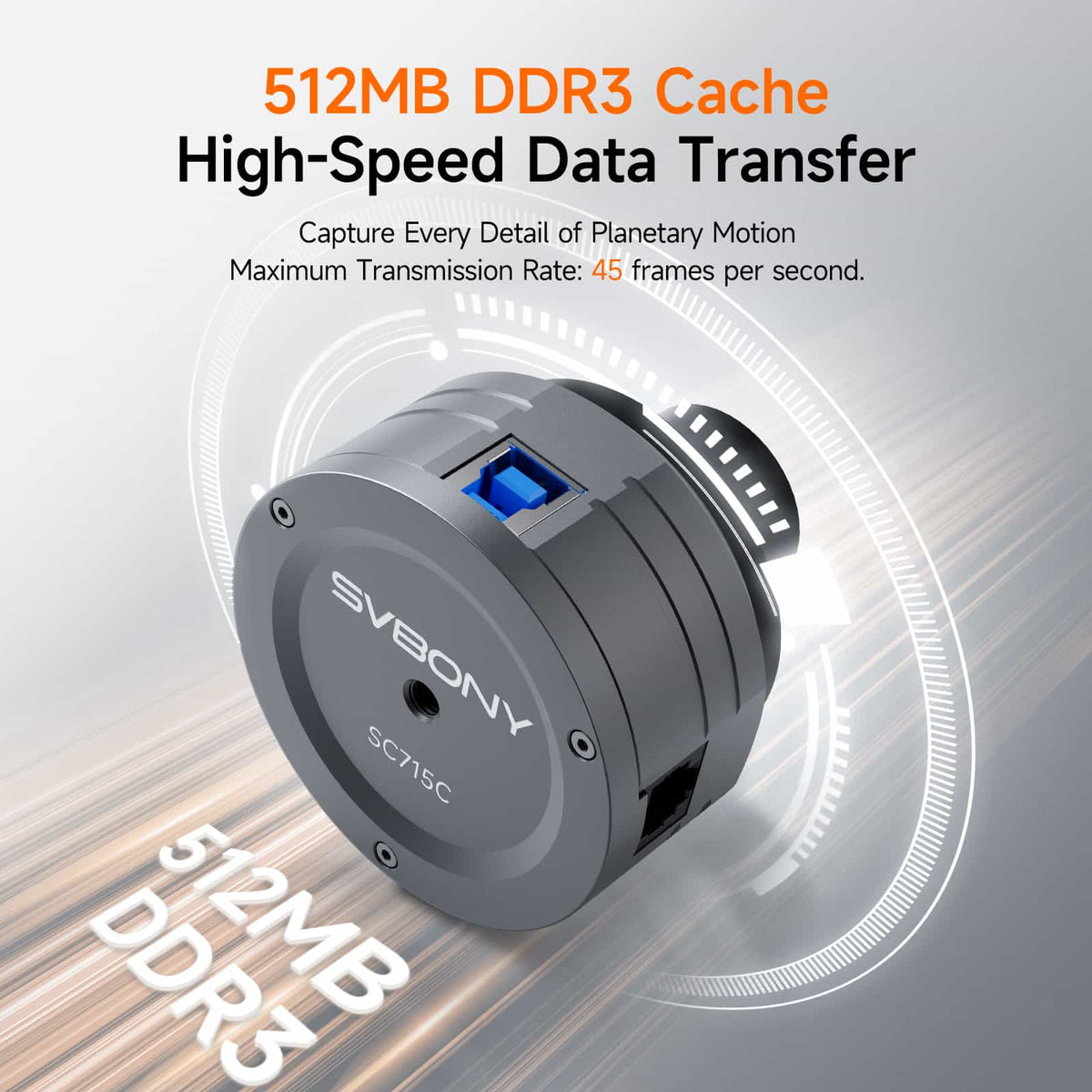
- USB 3.0 with FPGA processing: high frame rates for lucky imaging, with an onboard buffer to keep focusing and zooming responsive.
- ST4 autoguider port: drives mount corrections directly when used as a guide camera.
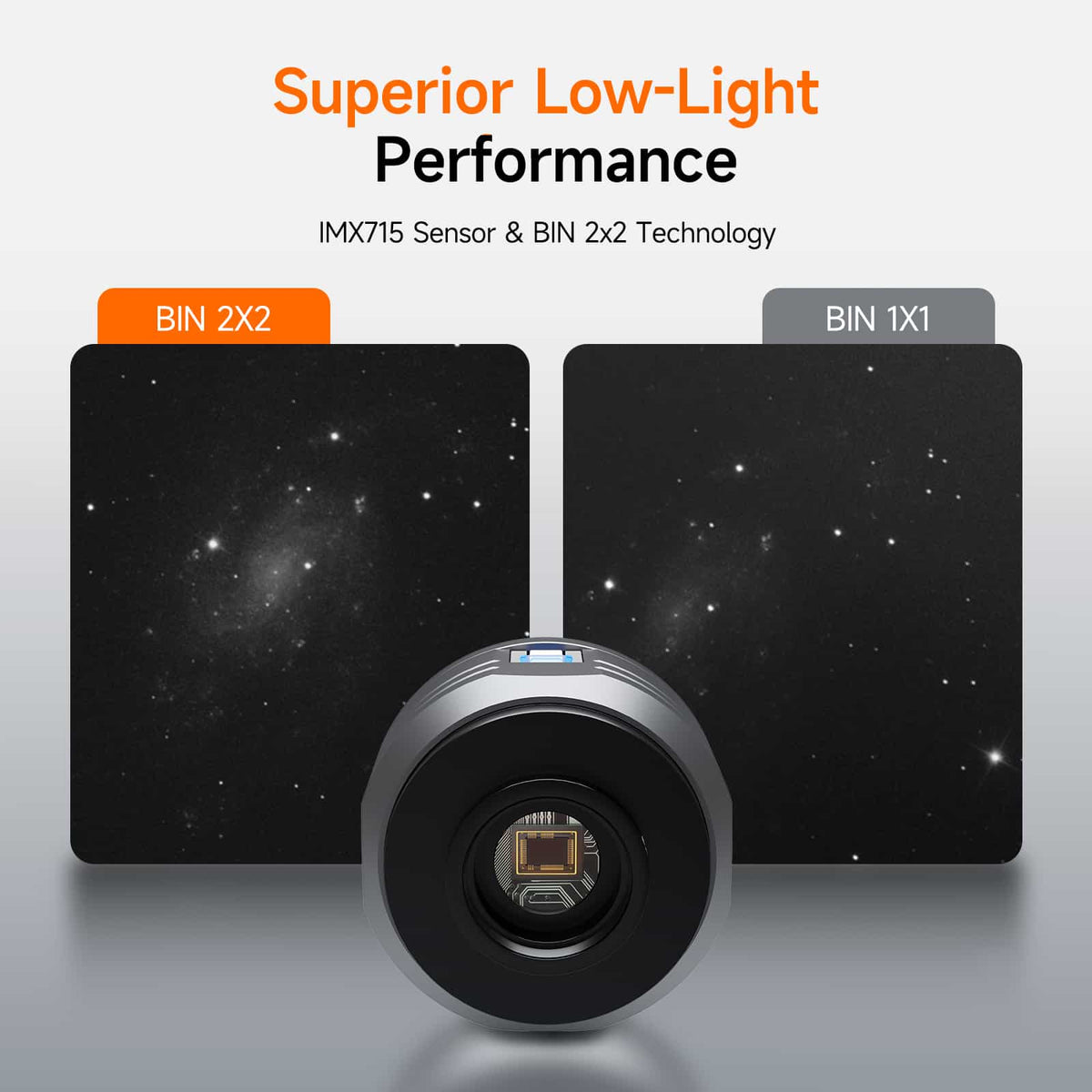
- Exposure range: 0.1 ms to 1000 s, with 1x1 and 2x2 binning.
- Sandblasted, anodized aluminium body: 147 g, with a rear 1/4″ tripod thread.
Camera Design
The IMX715 is a rolling-shutter colour CMOS sensor from Sony's STARVIS 2 line. Its 1.45 µm pixels sample finely, so at around 1500 mm focal length a planet's disk spans many pixels without extra amplification. Read noise as low as 0.41 e⁻ allows very short sub-exposures that freeze atmospheric seeing, which is the basis of lucky imaging: capture thousands of frames, then stack the sharpest. The camera has no cooling, which suits short planetary exposures, and it records 12-bit data.
Recommended Uses
- Planetary imaging: Jupiter, Saturn, Mars and Venus at high frame rates.
- Lunar imaging: close-up crater and terrain detail, or mosaics with a shorter scope.
- Solar imaging: with a proper full-aperture solar filter on the telescope.
- Autoguiding: via ST4 or software guiding through PHD2.
Compatibility and Accessory Notes
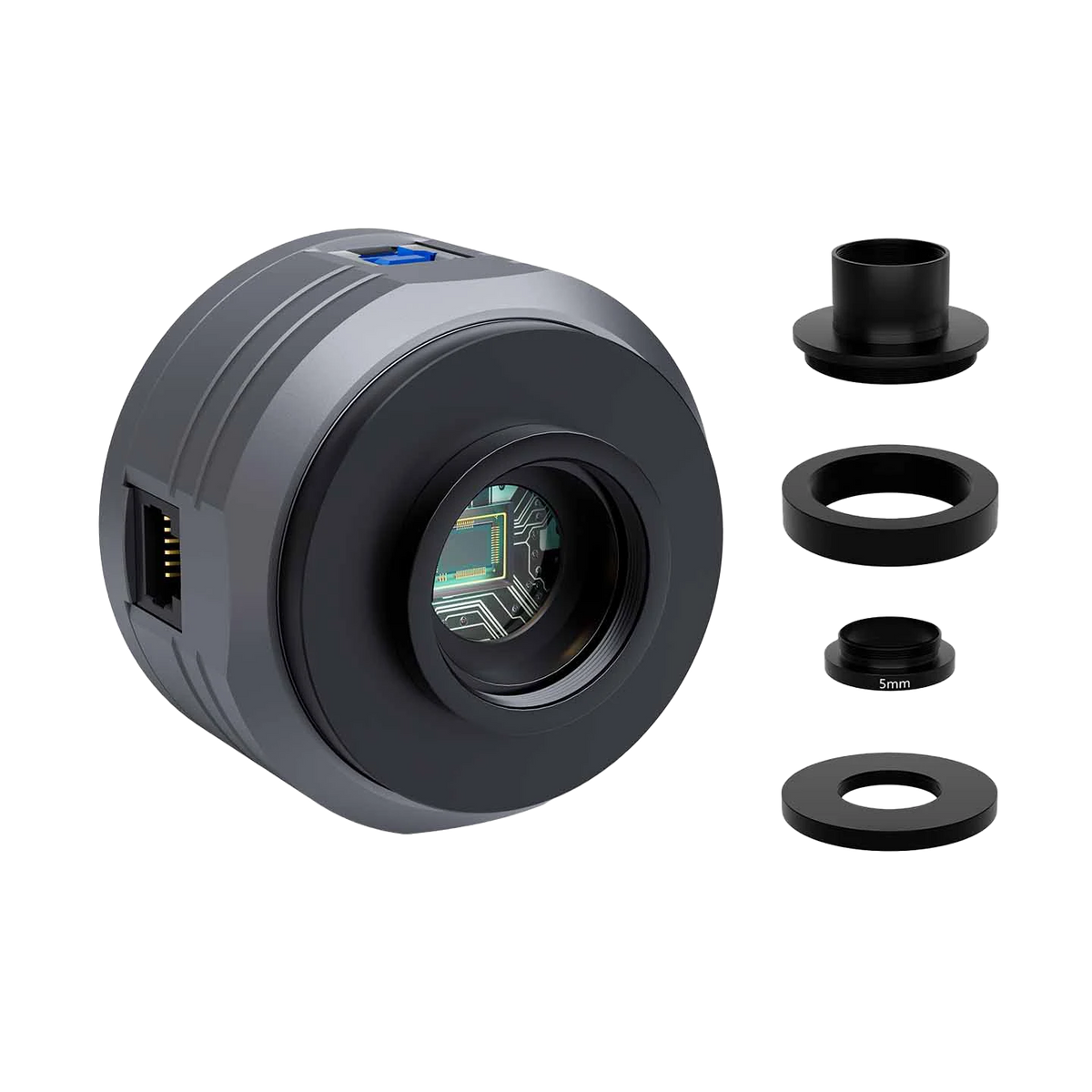
- Front connection: M42 x 0.75 male thread, with adapters for 1.25″ barrel, M42 female, CS and C mount included.
- Filters: the 1.25″ nosepiece takes standard 1.25″ filters such as the SVBONY 1.25″ UV/IR cut filter, which keeps infrared from softening colour images.
- Connection: USB 3.0 Type-B to a computer running capture software such as SharpCap or FireCapture; ST4 cable included for guiding.
- With the SVBONY MK127: thread the SCT-to-1.25″ adapter onto the telescope and slide the camera in on its 1.25″ nosepiece.
What's in the Box
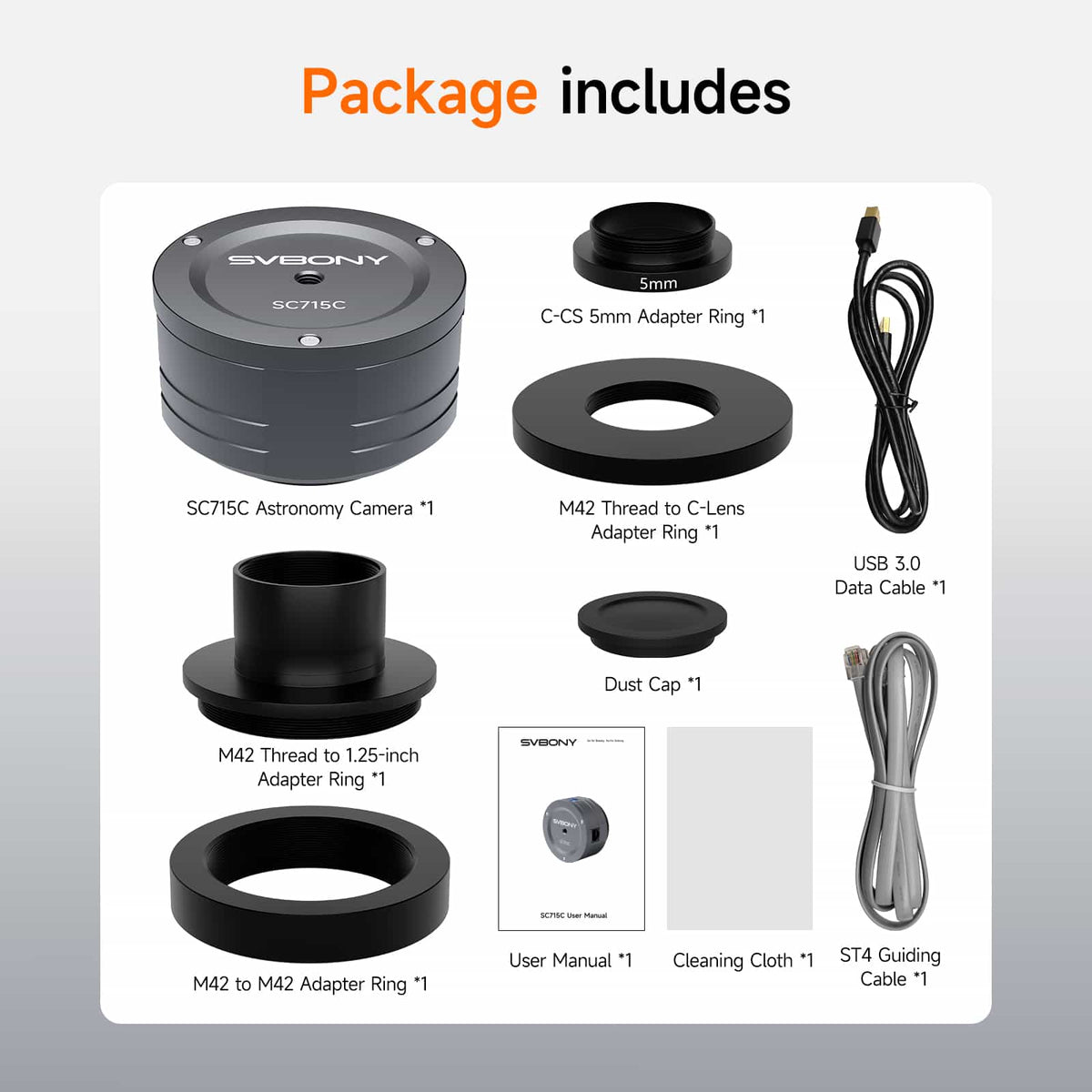
- SC715C camera
- M42 to 1.25″ adapter
- M42 to M42 adapter
- C-CS 5 mm adapter
- M42 to C-mount adapter
- Dust cap
- USB 3.0 cable
- ST4 guide cable
- Cleaning cloth
- User manual
Good to Know Before You Order
- Computer required: the camera runs from capture software on a laptop or PC over USB 3.0.
- Uncooled: it is optimized for short planetary and lunar exposures rather than long deep-sky integrations.
- Small sensor: the 1/2.8″ chip has a narrow field, which suits planets and lunar detail rather than wide nebula framing.
- Imaging only: it has no application for eyepiece viewing.
Frequently Asked Questions
Is it difficult to set up?
No. Install the capture software, connect the USB 3.0 cable, and slide the camera into the telescope on the included 1.25″ adapter.
Can it be used as a guide camera?
Yes. It has an ST4 port and works with guiding software such as PHD2.
Does it need a filter?
A UV/IR cut filter is a common pairing for colour planetary and lunar images, since it keeps infrared light out of the colour channels.
Will it fit a Maksutov or SCT?
Yes. Any telescope that accepts a 1.25″ barrel or an M42 thread can take it.
Bottom Line
In short: a compact colour planetary camera with a Sony IMX715 sensor, 1.45 µm pixels and sub-electron read noise, ready for high-frame-rate lunar and planetary work on a long-focal-length telescope and able to double as a guide camera.
| Sensor | Sony IMX715 colour CMOS (STARVIS 2) |
|---|---|
| Sensor size | 1/2.8″, 6.39 mm diagonal |
| Resolution | 8.4 MP (3840 x 2160) |
| Pixel size | 1.45 µm x 1.45 µm |
| ADC | 12-bit |
| Shutter | Electronic rolling shutter |
| Read noise | 0.41–2.29 e⁻ |
| Dynamic range | 72.8 dB |
| Exposure | 0.1 ms to 1000 s |
| Binning | 1x1, 2x2 |
| Processor | FPGA |
| Interfaces | USB 3.0 Type-B; ST4 guide port; rear 1/4″ tripod thread; front M42 male thread |
| Included adapters | M42 to 1.25″; M42 to M42; C-CS 5 mm; M42 to C-mount |
| Cooling | None |
| Body | Sandblasted, anodized aluminium alloy |
| Weight | 147 g (body only) |
| Recommended use | Lunar, planetary and solar imaging; autoguiding |
You may also like
Recently viewed
Recent Blog Posts
View all
Your Guide Graph Is Lying to You
Read More

D-Size vs V-Size: A Complete Guide to Telescope Dovetail Systems
Read More

What Is Back Focus in Astrophotography? Telescope Reducers, Flatteners, and Spacing Explained
Read More