


- Description
- Specifications

Product Overview
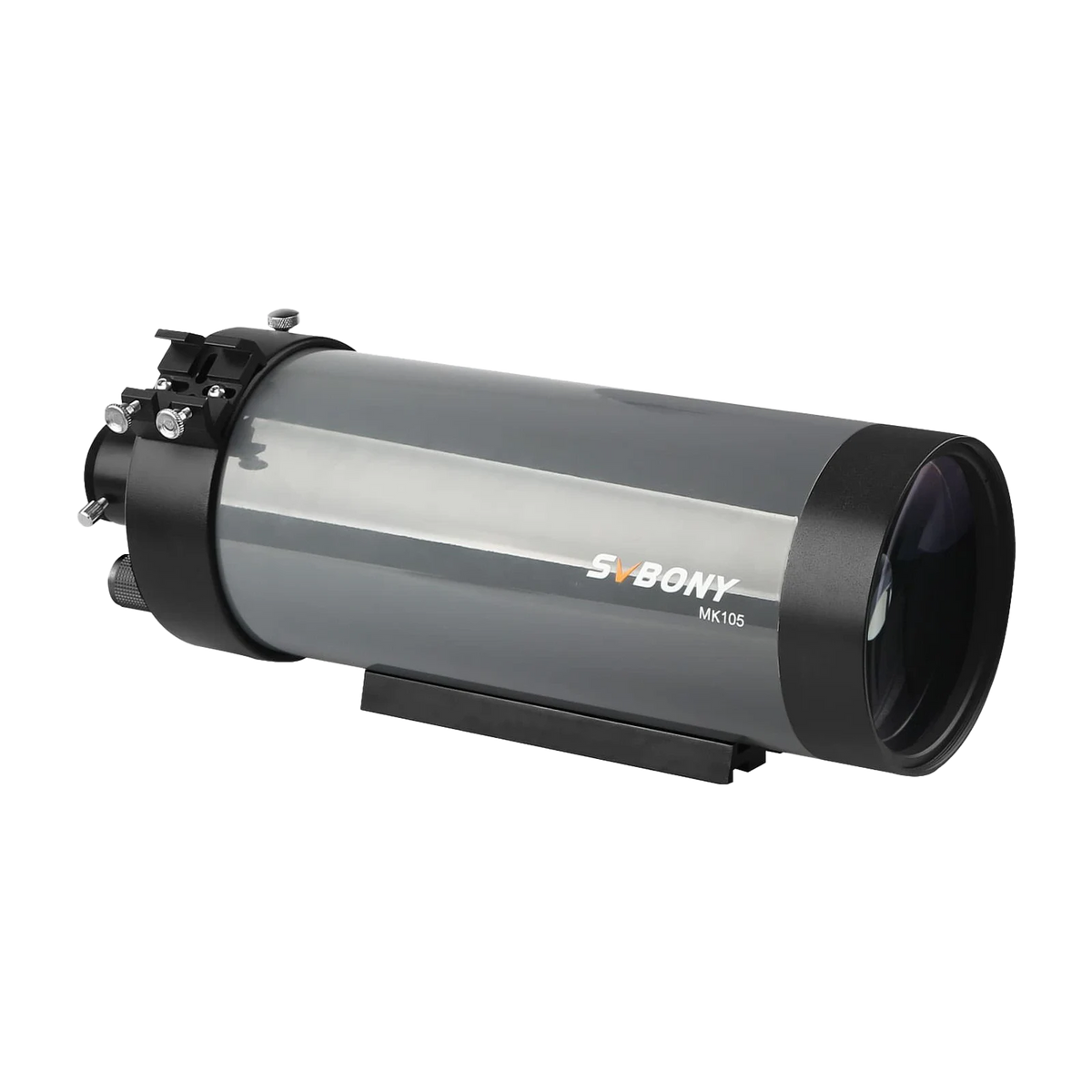
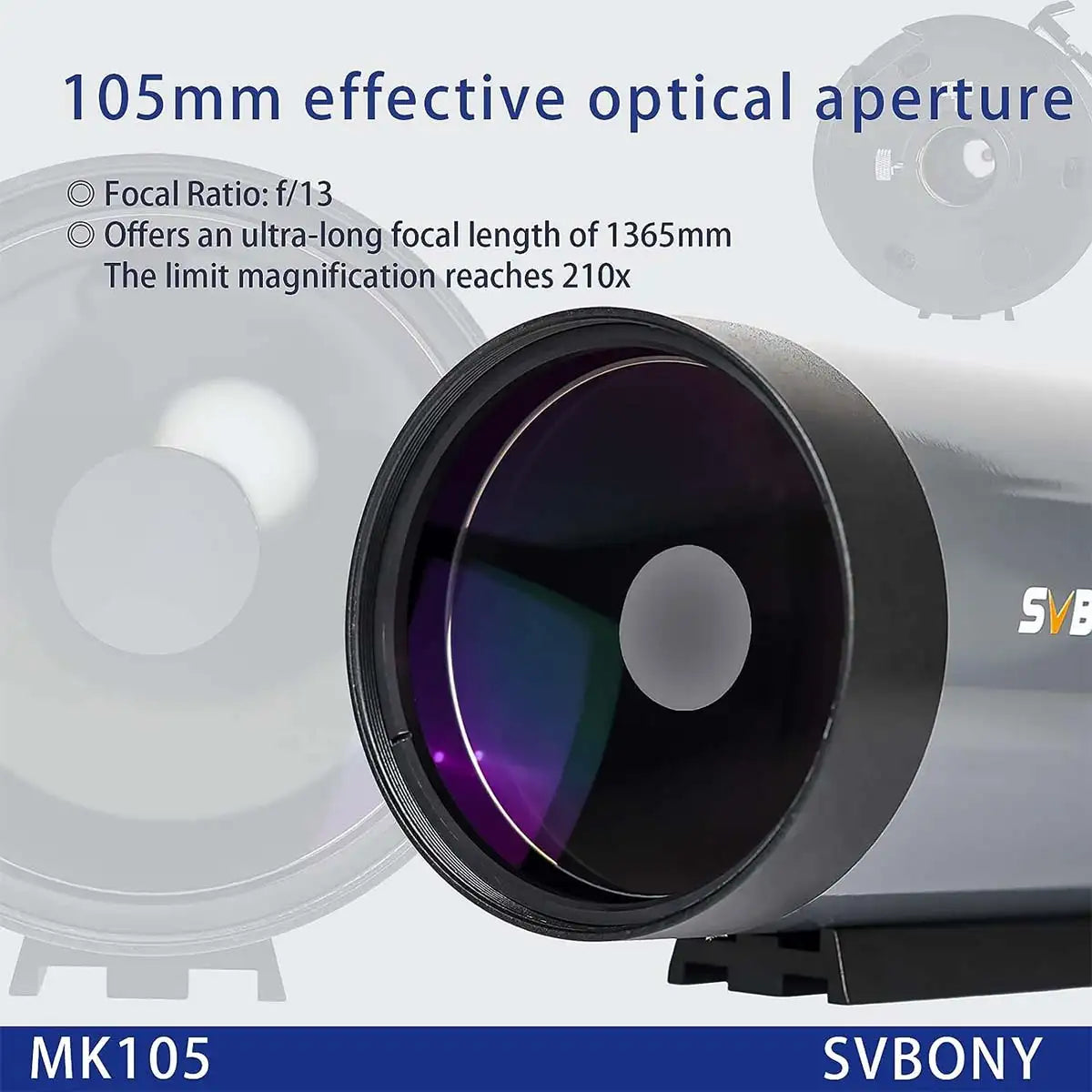
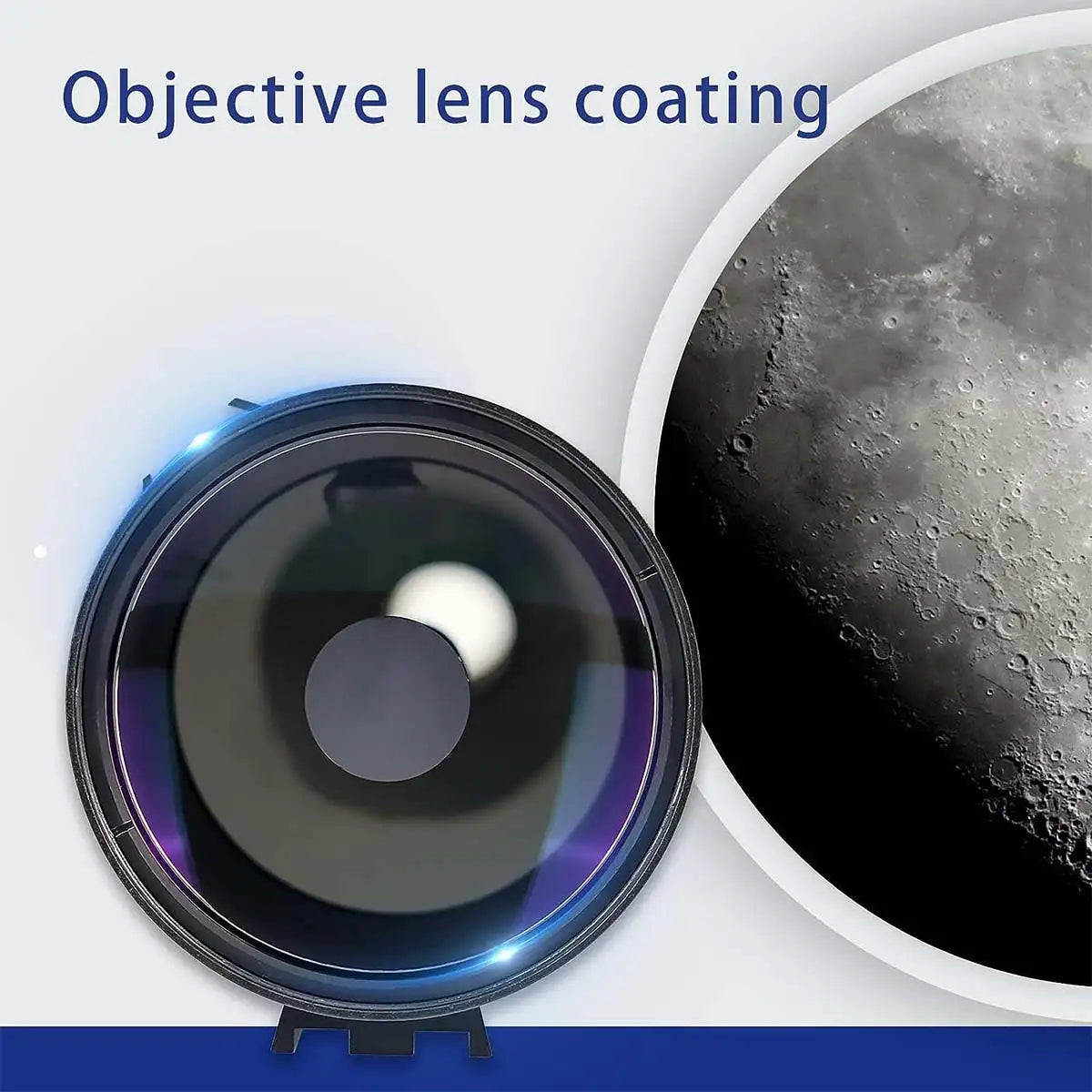
The SVBONY MK105 is a compact 105 mm Maksutov-Cassegrain optical tube with a 1365 mm focal length at f/13. A convex meniscus corrector and multi-coated precision aluminium primary fold that long focal length into a tube 377 mm long and 119 mm in diameter, weighing 2193 g (4.83 lb). Focus is internal, the rear accepts 1.25″ accessories and has an M42 x 0.75 thread for a T-ring, and the tube carries two finder bases and a 160 mm dovetail. SVBONY lists 1.1 arc-second resolution, limiting magnitude 12.1 and 210x as the upper magnification figure.

Who It's For
This is a good match if you:
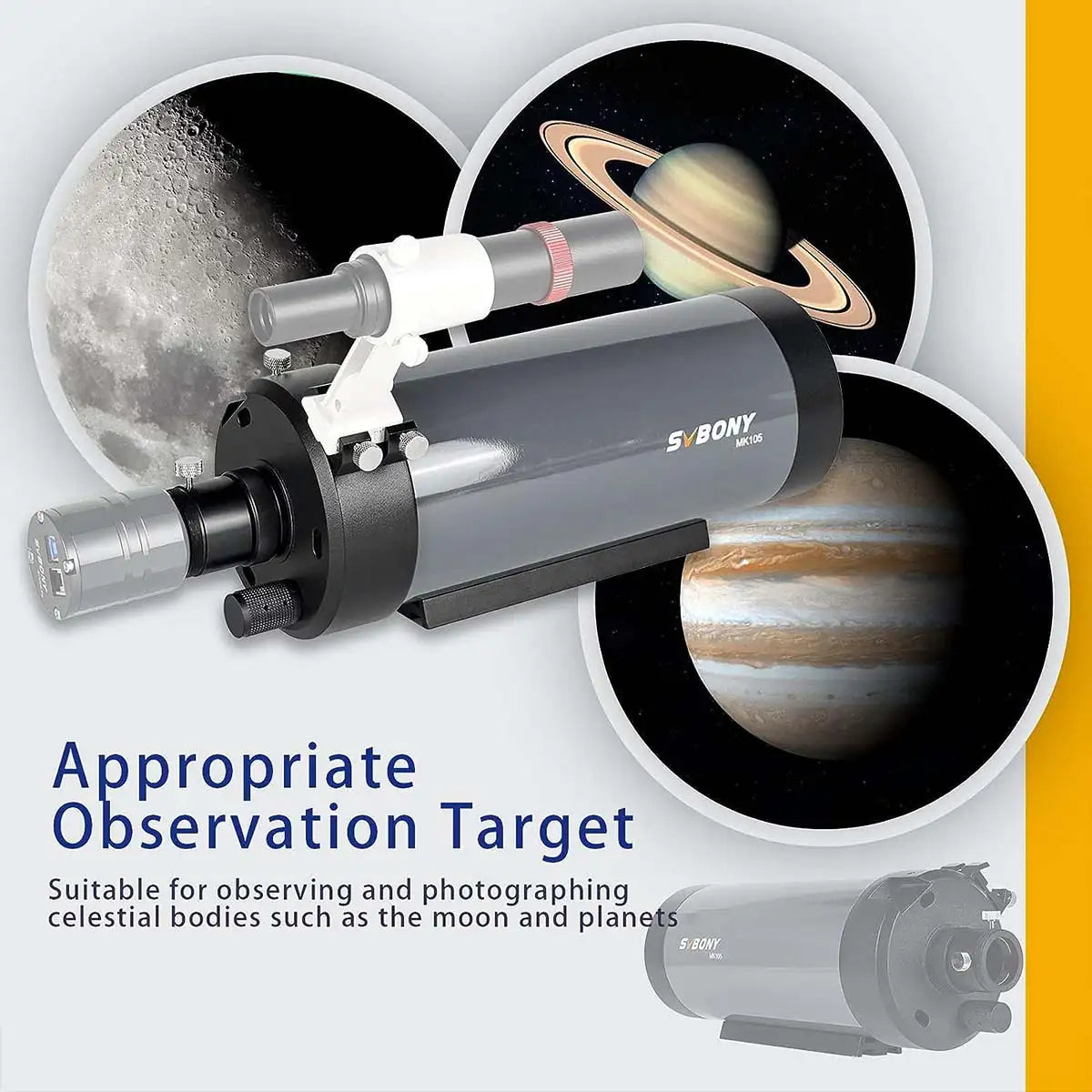
- Observe the Moon, planets and double stars: 1365 mm of focal length gives high magnification with ordinary eyepieces.
- Travel or want a grab-and-go scope: at 2193 g and under 38 cm long, SVBONY designs it as a carry-on telescope.
- Want to start planetary imaging: the long native focal length suits small-pixel planetary cameras.
It suits a first telescope for the Moon and planets as well as a compact second scope for an experienced observer.
Key Features & Design
- 105 mm aperture, f/13: 1365 mm focal length in a 377 mm tube.
- Metal construction: SVBONY uses a metal mirror structure to keep the optics stable through bumps in transport.
- No routine collimation: the closed Maksutov design holds alignment, and SVBONY notes the meniscus layout reduces obstruction for contrast.
- Dual dovetail finder bases: one integrated and one external, so two finders fit without drilling.
- 1.25″ interface: connects directly to star diagonals, eyepieces and cameras; the M42 x 0.75 thread takes a T-ring.
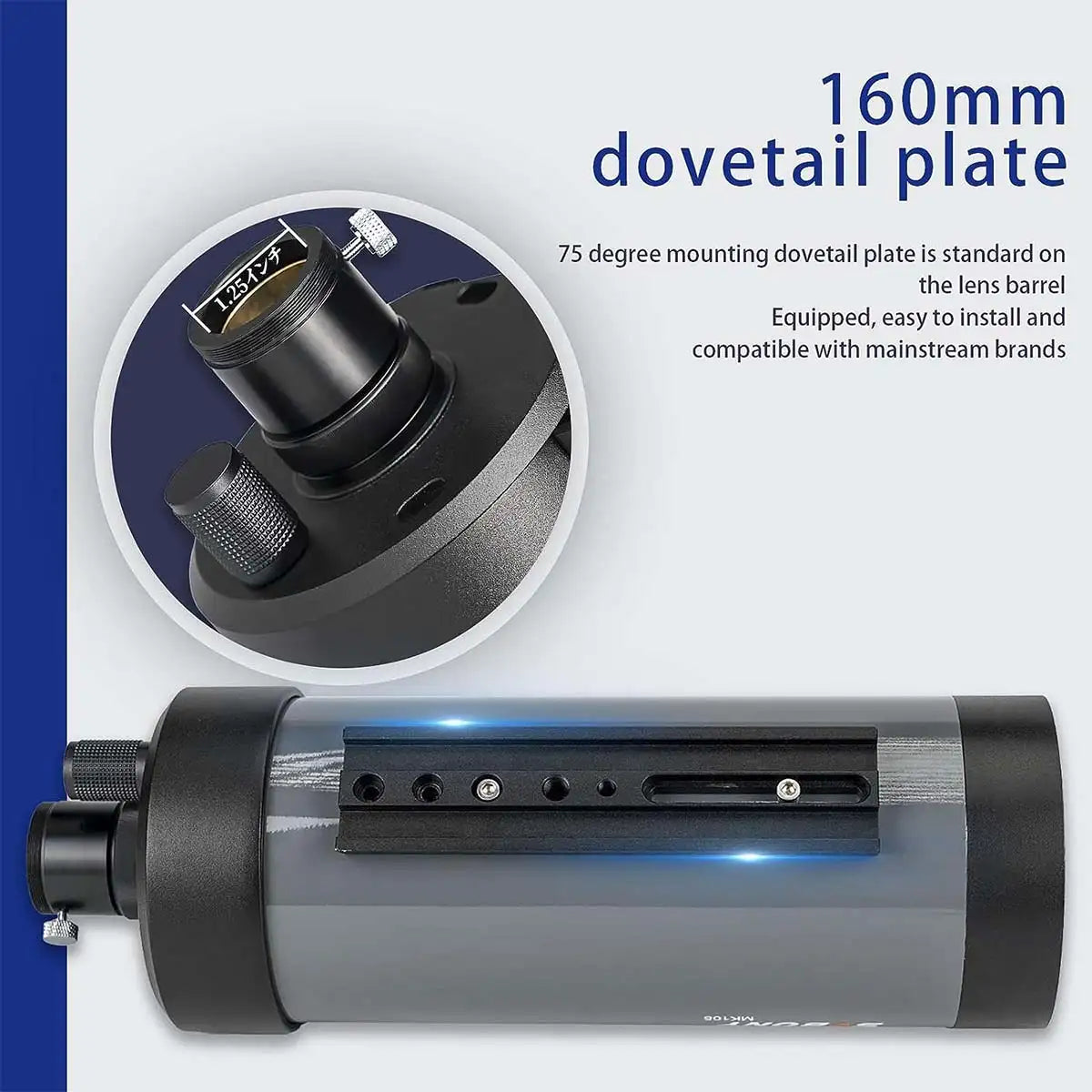
- 160 mm dovetail plate: standard 75° profile for equatorial mounts and tripods.


Optical Design
Light passes through the full-aperture meniscus corrector, reflects from the aluminised primary, and is returned through a central hole in the primary by the secondary. Because the image is formed by mirrors, all colours come to the same focus, so the lunar limb and bright planets are free of the colour fringing of an achromatic refractor. The f/13 ratio gives a high image scale for planetary detail and splitting close double stars, and the internal focuser moves the primary to reach focus without an external drawtube.
Recommended Uses
- Lunar and planetary observing: SVBONY positions the MK105 for the Moon and planets.
- Planetary and lunar imaging: with a planetary camera on the 1.25″ interface or a T-ring on the M42 thread.
- Double stars and bright clusters at high power.
- Travel and backyard sessions: a compact closed tube that is ready to use quickly.

Compatibility and Accessory Notes
- Rear interface: 1.25″ for diagonals and eyepieces, plus an M42 x 0.75 thread for a T-ring. A camera adapter is sold separately.
- Mounting: 160 mm, 75° dovetail plate on two mounting bases.
- Finders: two finder bases, one integrated and one external.
- Electronic focusing: SVBONY notes the MK105 is compatible with the ZWO EAF.
- Visual accessories: a 1.25″ star diagonal and eyepieces are needed for visual use.
What's in the Box
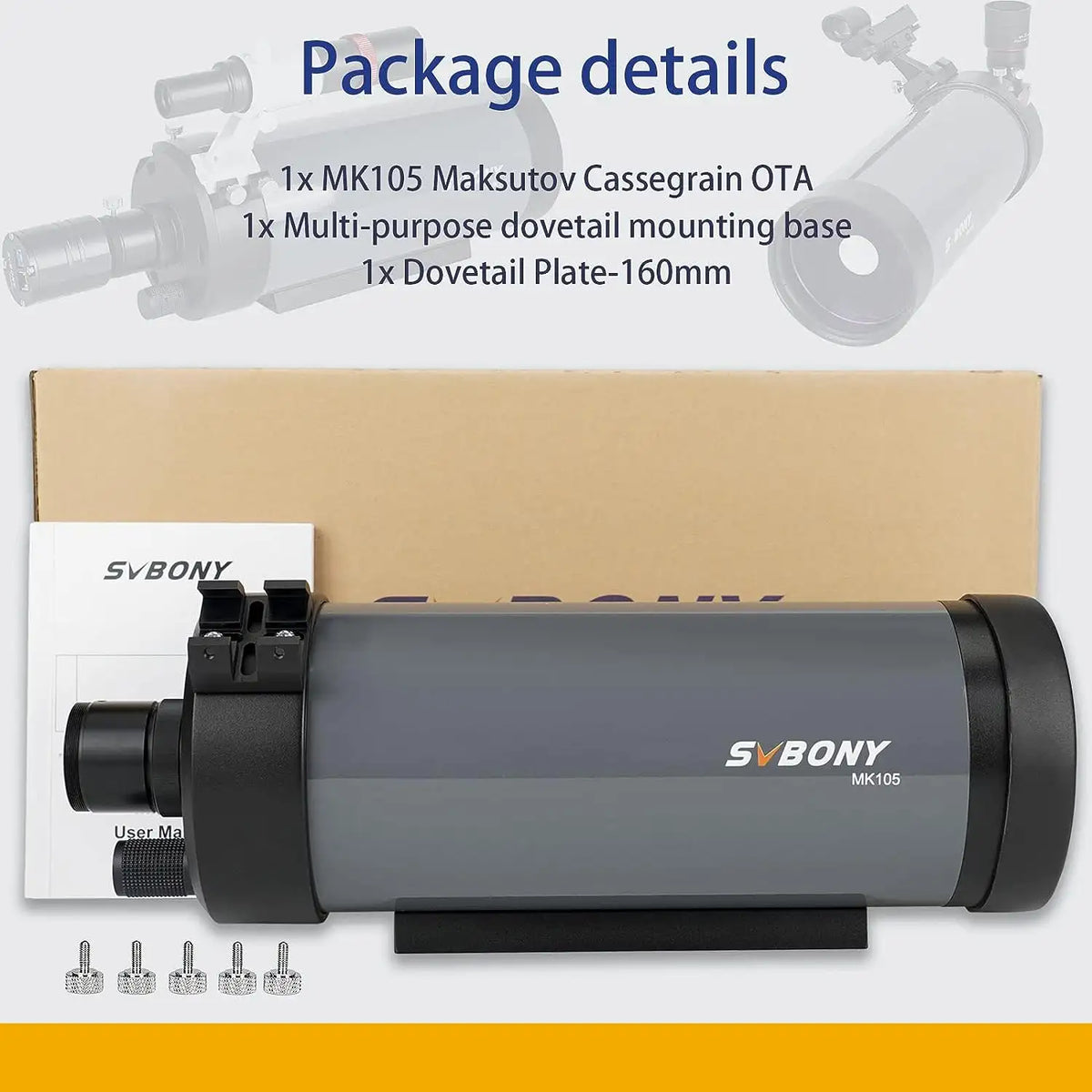
SVBONY shows the MK105 package contents in the graphic below. This listing is the optical tube; no mount, tripod, diagonal or eyepiece is listed for it.

Good to Know Before You Order
- Optical tube only: add a mount, a 1.25″ diagonal and eyepieces or a camera to complete it.
- Narrow field: at f/13 the field of view suits planets, the Moon and small objects rather than wide star fields.
- Cool-down: as with any closed-tube Maksutov, the sharpest views come once the optics reach outdoor temperature.
- Dew: the front corrector faces the sky, and a dew heater keeps it clear on humid nights.
Frequently Asked Questions
Is it difficult to set up?
No. Drop the dovetail into your mount's saddle, add a 1.25″ diagonal and eyepiece, and focus with the rear knob. There is no routine collimation.
What is the outer diameter of the tube?
119 mm, the figure to use when choosing a dew heater strip.
Can I use it for photography?
Yes. Attach a planetary camera at the 1.25″ interface or a camera body with a T-ring on the M42 x 0.75 thread.
Does it work with an electronic focuser?
SVBONY states the MK105 is compatible with the ZWO EAF.
How heavy is it?
2193 g (4.83 lb) for the tube.
Bottom Line
In short: a 105 mm, 1365 mm f/13 Maksutov-Cassegrain tube weighing 2193 g, with internal focusing, a 1.25″ and M42 rear and a 160 mm dovetail — built for the Moon, planets and travel. Add a mount, diagonal and eyepiece or camera to complete it.
| Type | Maksutov-Cassegrain |
|---|---|
| Mounting base number | 2 pcs |
| Aperture | 105 mm |
| Resolution | 1.1 arc second |
| Focal length | 1365 mm |
| Limiting magnitude | 12.1 |
| Focal ratio | f/13 |
| Light gathering power | 210x (as listed by SVBONY) |
| Primary mirror | Multi-coated precision aluminum coating |
| Optical tube length | 377 mm |
| Optical tube diameter | 119 mm |
| Focus | Internal |
| Rear interface | 1.25″ |
| Adapter thread | M42 x 0.75 for T-ring |
| Dovetail | 160 mm, 75° |
| Net weight | 2193 g / 4.83 lb |
| Recommended use | Lunar and planetary observing and imaging, travel |
You may also like
Recently viewed
Recent Blog Posts
View all
Your Guide Graph Is Lying to You
Read More

D-Size vs V-Size: A Complete Guide to Telescope Dovetail Systems
Read More

What Is Back Focus in Astrophotography? Telescope Reducers, Flatteners, and Spacing Explained
Read More