

- Description
- Specifications
Product Overview
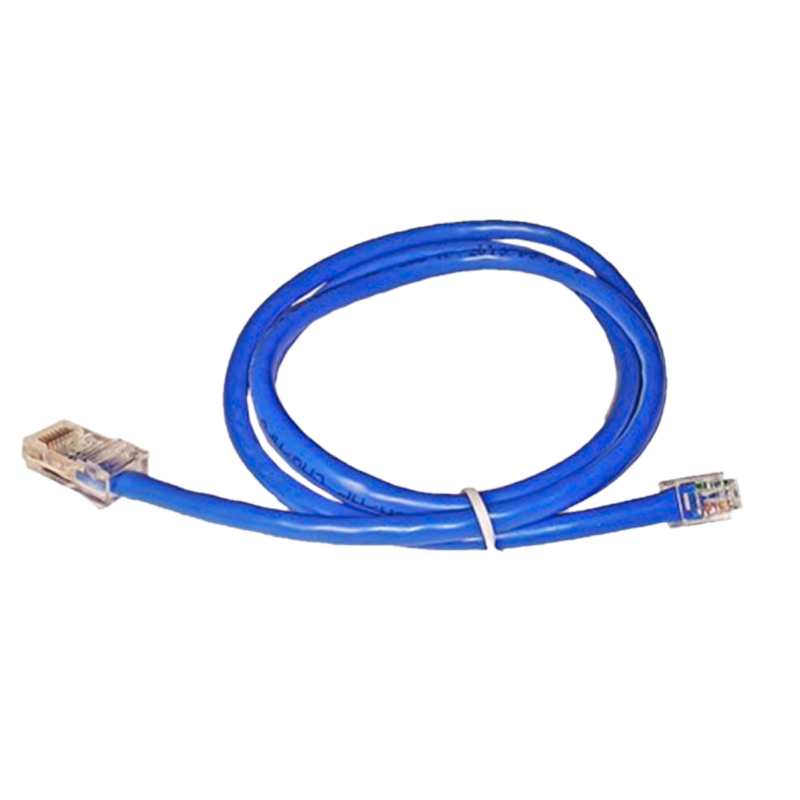
This is the Pegasus Astro adapter cable that connects a Starlight Instruments MSM or a Rigel nStep stepper motor to a Pegasus focus controller. It is an RJ45 to RJ11 lead on a custom pinout, one metre long — the specific wiring those motors need, rather than a generic network cable that happens to have the right plugs.
Pegasus Astro lists it as the cable for the Starlight MSM 25, 30 and 35 and for Rigel nStep motors.
Who It's For
This is a good match if you:
- Already own a Starlight Instruments MSM motor and want to drive it from a Pegasus Dual Motor Focus Controller or powerbox rather than replace it.
- Run a Rigel nStep motor and are moving to Pegasus control.
- Are consolidating onto one control platform and would rather keep the focus motor you have than buy another.
- Need a spare for a permanent observatory installation.
Key Features & Design
- RJ45 to RJ11 on a custom pinout: wired specifically for the MSM and nStep motors, which is what makes it work where an off-the-shelf lead does not.
- One metre length: sized for the run from a focuser-mounted motor to a controller on the same rig.
- RJ45 at the controller end: the motor connector used across the Pegasus focus controllers.
- Keeps existing motors in service: an adapter cable rather than a reason to replace working hardware.
Recommended Uses
- Driving a Starlight MSM 25, 30 or 35 from a Pegasus Dual Motor Focus Controller.
- Connecting a Rigel nStep motor to a Pegasus focus controller.
- Keeping a spare on hand in an observatory where a cable fault costs a night.
Compatibility and Accessory Notes
- Motors: Starlight Instruments MSM 25, MSM 30 and MSM 35, and Rigel nStep motors — the fitment Pegasus Astro publishes for this cable.
- Controller end: RJ45, the motor connector on the Pegasus Dual Motor Focus Controller and compatible units.
- Custom pinout matters. This is not interchangeable with a standard RJ45–RJ11 telephone or network adapter; the wiring order is specific to these motors.
- Different motor? Pegasus publishes other cables for other motors — tell us what you have and we will match it.
Good to Know Before You Order
- This is a cable, not a controller. It connects an existing motor to an existing controller; both are separate products.
- One metre. That covers a motor on the focuser to a controller on the same telescope. If your controller sits further away, let us know and we will look at the options with you.
- Pegasus Astro does not publish a weight for this cable. Our declared shipping weight of 1 lb is a carrier minimum, not the cable's true mass — worth knowing if you are ordering several small items together, since the declared weights add up rather than the real ones.
Frequently Asked Questions
Is it difficult to set up?
No. RJ45 into the controller's motor port, RJ11 into the motor. There is nothing to configure on the cable itself.
Can I use an ordinary RJ45 to RJ11 cable instead?
No. The pinout is custom to these motors, which is the whole reason this part exists.
Which motors does it fit?
Starlight Instruments MSM 25, 30 and 35, and Rigel nStep motors.
Does it work with the Ultimate Powerbox?
The powerboxes with a stepper motor port use the same RJ45 motor connector. Tell us which unit you have and we will confirm it for your setup.
Is a temperature probe included?
No. Temperature sensing comes from the controller and its own probe, which is a separate part.
Bottom Line
In short: the one-metre RJ45 to RJ11 custom-pinout lead that lets a Starlight MSM or Rigel nStep motor run from a Pegasus focus controller — so the motor you already own stays in service.
| Product type | Stepper motor adapter cable |
|---|---|
| Connectors | RJ45 to RJ11 (custom pinout) |
| Length | 1 m |
| Motor compatibility | Starlight Instruments MSM 25 / 30 / 35, Rigel nStep motors |
| Controller connection | RJ45 motor port (Dual Motor Focus Controller and compatible units) |
| Product weight | Not published by vendor |
| Shipping weight | 1 lb declared (carrier minimum) |
You may also like
Recently viewed
Recent Blog Posts
View all
Your Guide Graph Is Lying to You
Read More
D-Size vs V-Size: A Complete Guide to Telescope Dovetail Systems
Read More
What Is Back Focus in Astrophotography? Telescope Reducers, Flatteners, and Spacing Explained
Read More