


- Description
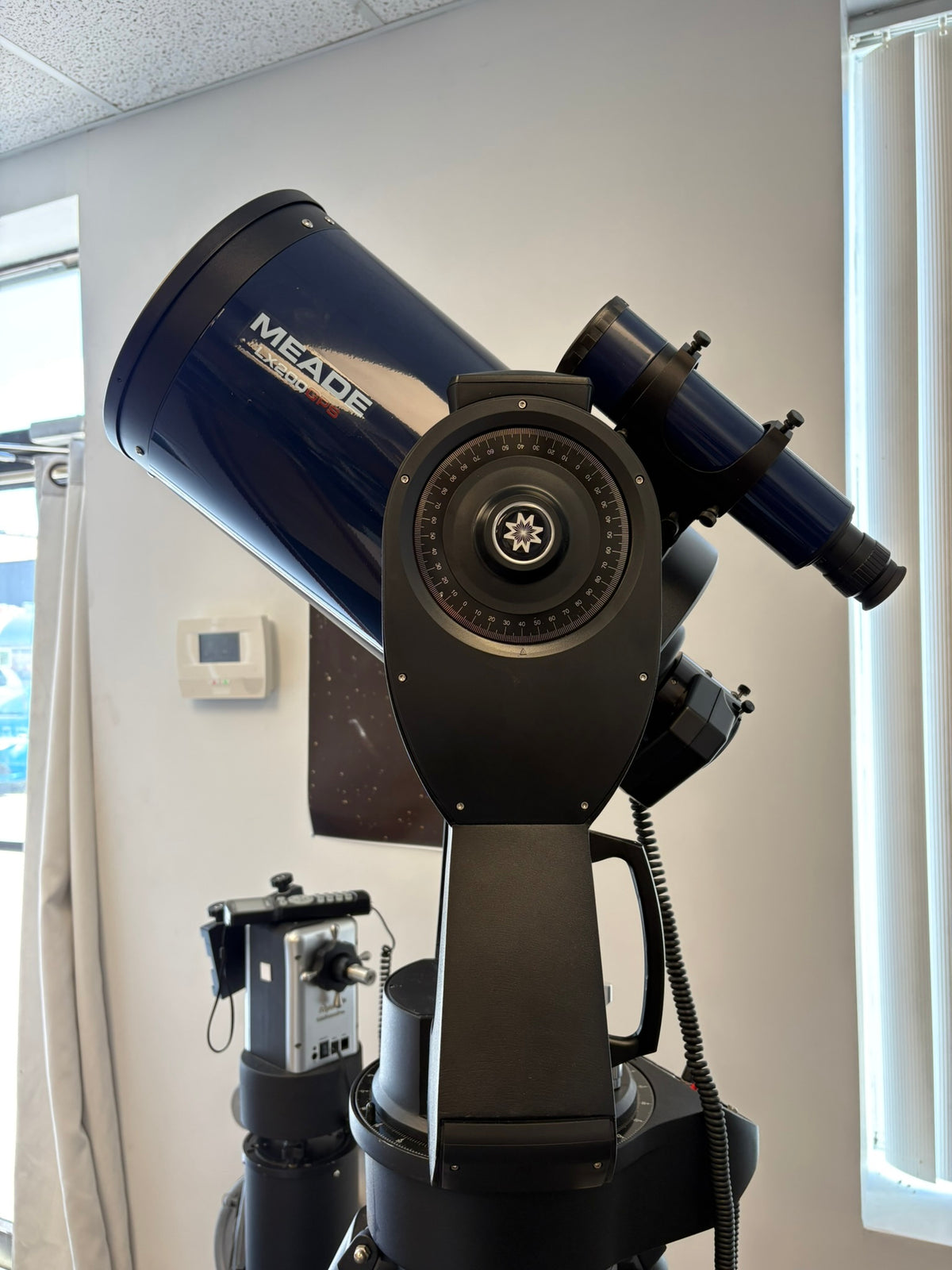
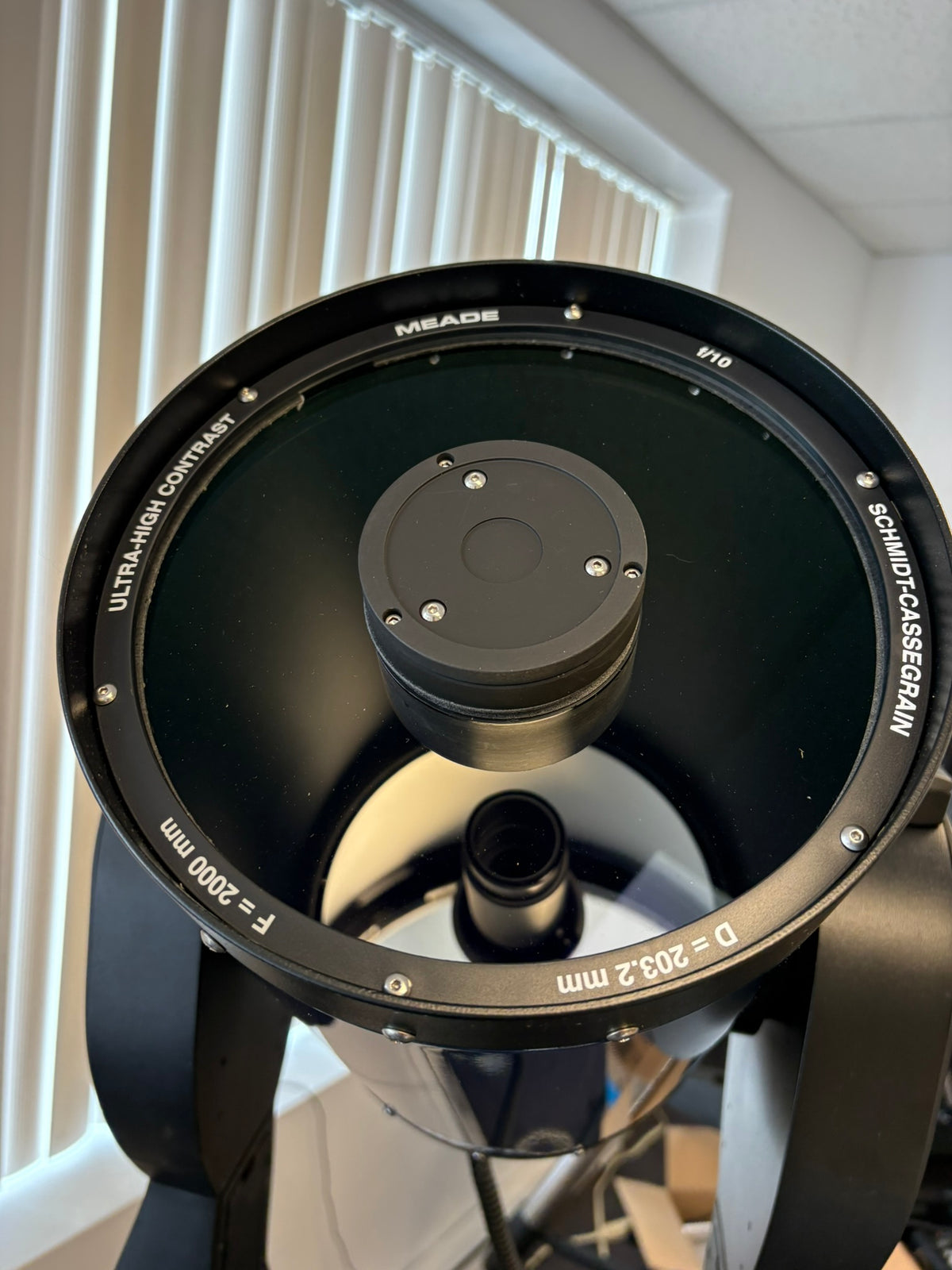
Used – Excellent Condition. A complete, fully tested Meade 8" LX200 GPS Schmidt-Cassegrain package with the premium UHTC optical coatings, pristine optics, and a generous set of accessories — including the sought-after Meade Zero Image-Shift Microfocuser and the Autostar Suite imaging camera. Everything you need for a night under the stars, ready to go.
What's Included
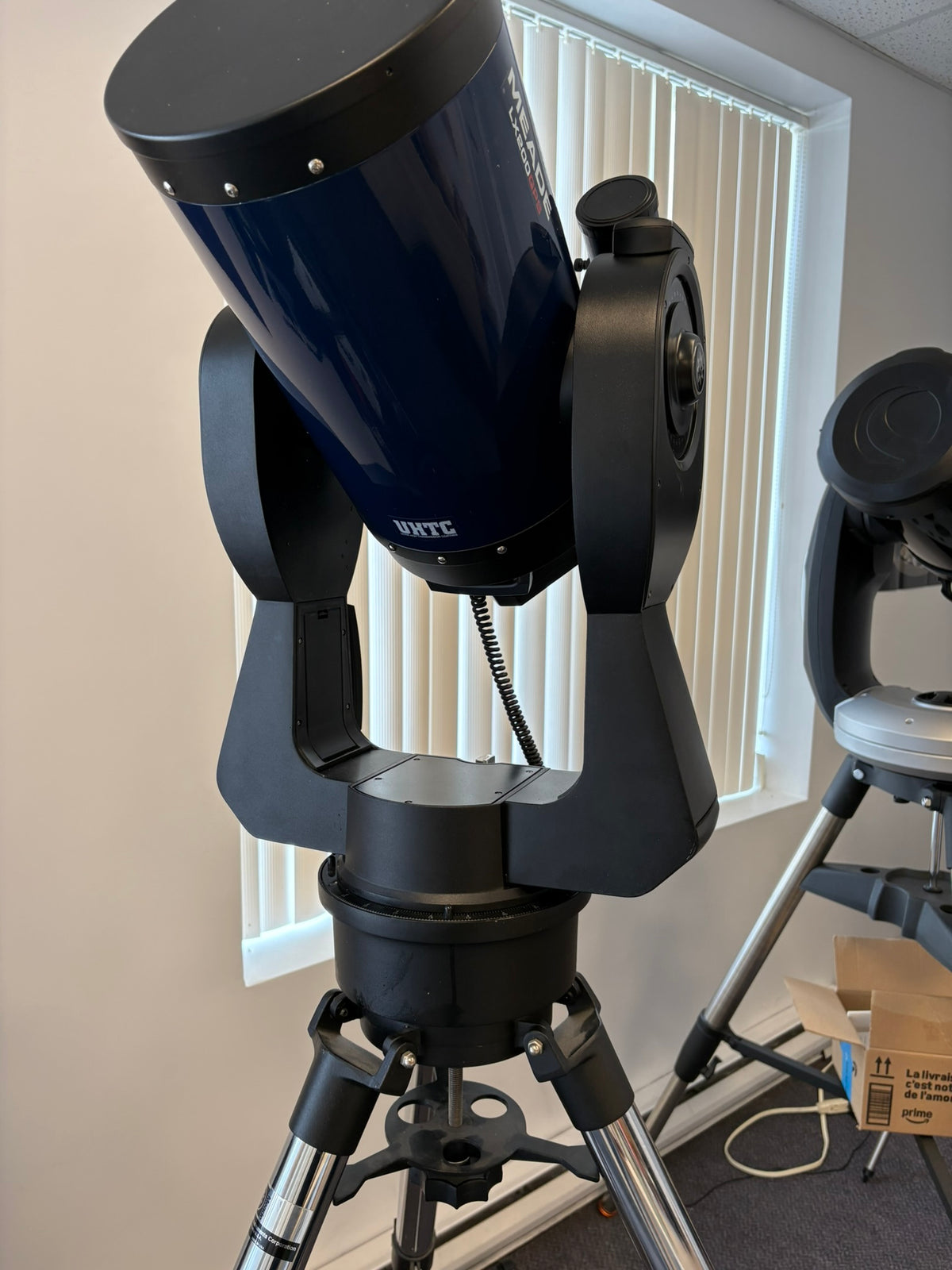
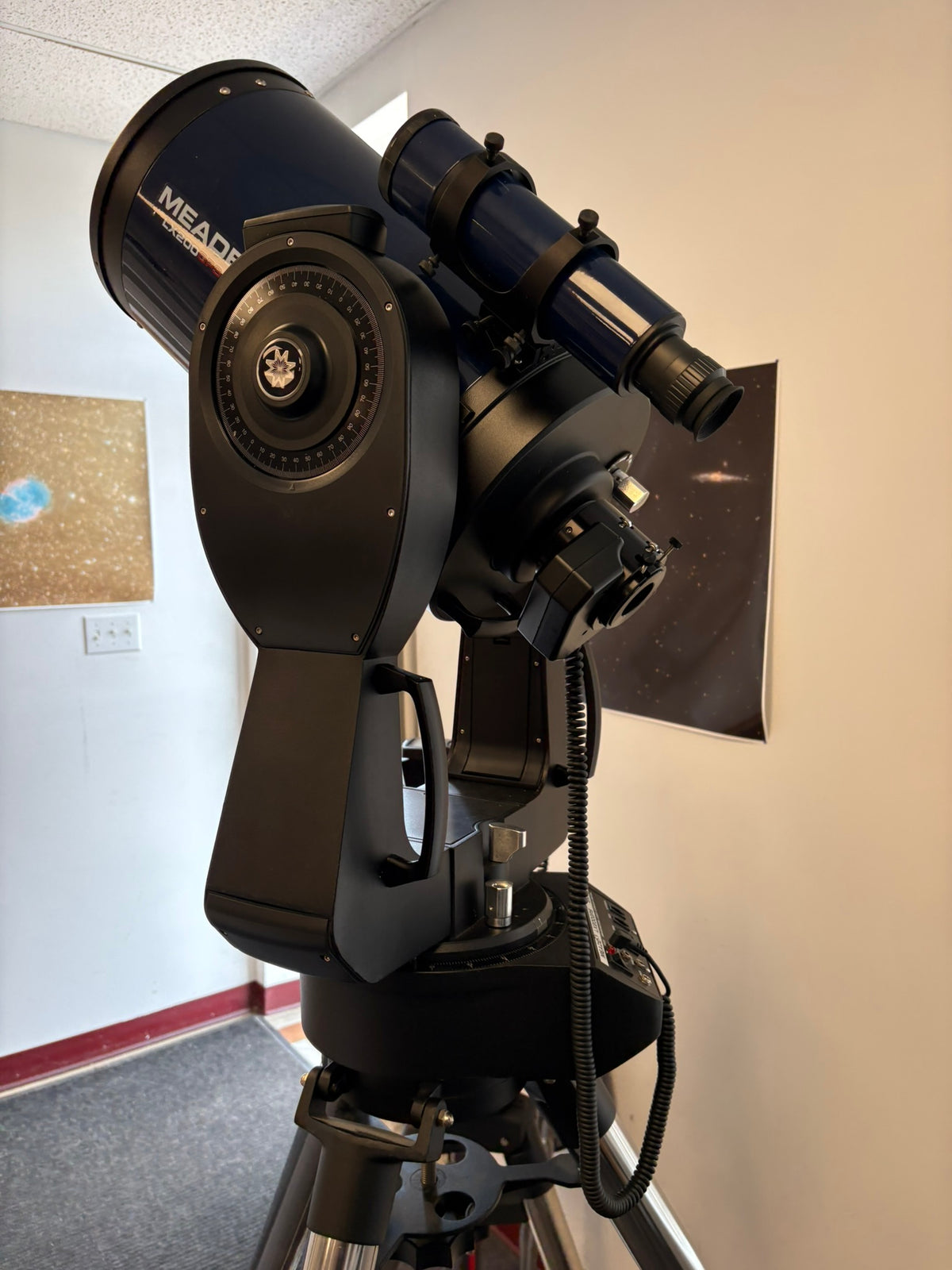
- Meade 8" f/10 LX200 GPS Schmidt-Cassegrain optical tube with UHTC coatings, on its fork mount
- Meade field tripod
- Autostar II hand controller
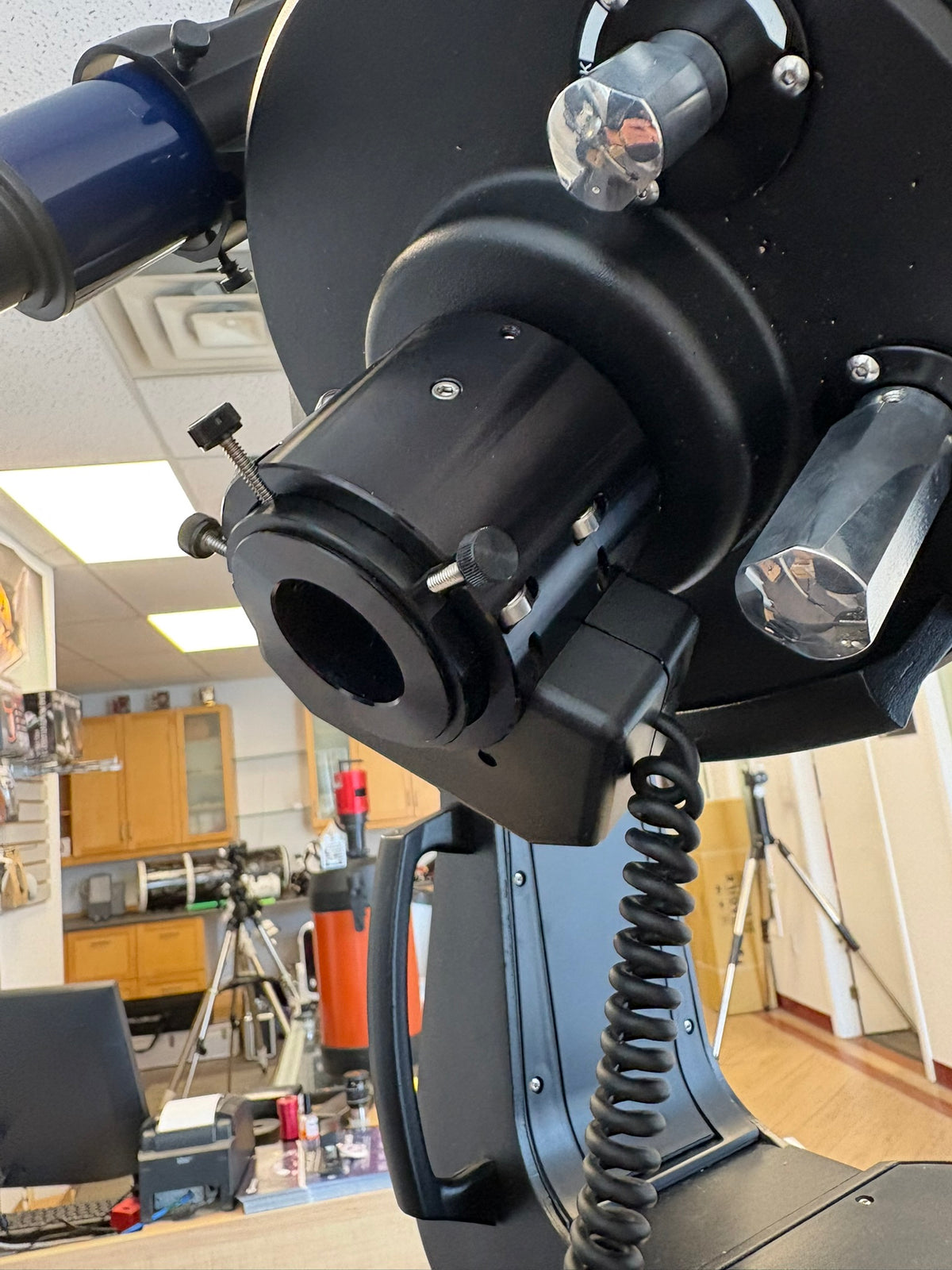
- Meade Zero Image-Shift Microfocuser
- 9.7mm, 26mm and 40mm Plössl eyepieces
- 1.25" star diagonal
- Celestron 2x Barlow lens
- 1.25" variable polarizing filter
- Meade Autostar Suite software with camera. Untested but complete in box.
Upgrades & Enhancements
- UHTC (Ultra-High Transmission Coatings) — Meade's premium coating package, a paid factory option on this model rather than the standard aluminum coatings
- Meade Zero Image-Shift Microfocuser — the upgrade most LX200 owners add first
Condition Notes
Optics are pristine — no marks, cleaning marring or coating defects. The scope has been fully tested and is working as it should. Cosmetically the tube, fork arms and accessories present as excellent, with no more than the slightest handling marks you would expect on a carefully kept instrument.
About the Meade 8" LX200 GPS
The LX200 GPS is one of Meade's most respected computerized Schmidt-Cassegrains, and it has been discontinued for years — making a clean, complete, UHTC-coated example like this one increasingly hard to find. The 8" f/10 optical system delivers 2000mm of focal length in a package that one person can still carry outside, and the heavy-duty fork mount rides on 5.75" worm gears on both axes with Smart Drive permanently programmable periodic error correction.
The UHTC coatings are the detail to note here. Offered by Meade as an extra-cost upgrade over the standard aluminum coatings, they raise light transmission across the corrector, primary and secondary — the practical result is a visibly brighter, higher-contrast image on faint deep-sky objects and shorter exposures when imaging. A used LX200 GPS with UHTC is meaningfully more desirable than one without.
Setup is genuinely quick: a 16-channel GPS receiver plus true-level and North sensors let the scope find its own time, date, location and orientation, and the Autostar II controller then drives it to any of tens of thousands of objects at 185 selectable slew speeds. With the microfocuser letting you nail focus without the target hopping across the field, and the Autostar Suite camera included, this package is ready for lunar, planetary and beginner deep-sky imaging right out of the box.
Final Sale
This item is sold as a Final Sale. All used equipment sales are final. Please review our Used Equipment Sale Policy before purchasing.
You may also like
Recently viewed
Recent Blog Posts
View all
Your Guide Graph Is Lying to You
Read More
D-Size vs V-Size: A Complete Guide to Telescope Dovetail Systems
Read More
What Is Back Focus in Astrophotography? Telescope Reducers, Flatteners, and Spacing Explained
Read More