


- Description
- Specifications
Product Overview
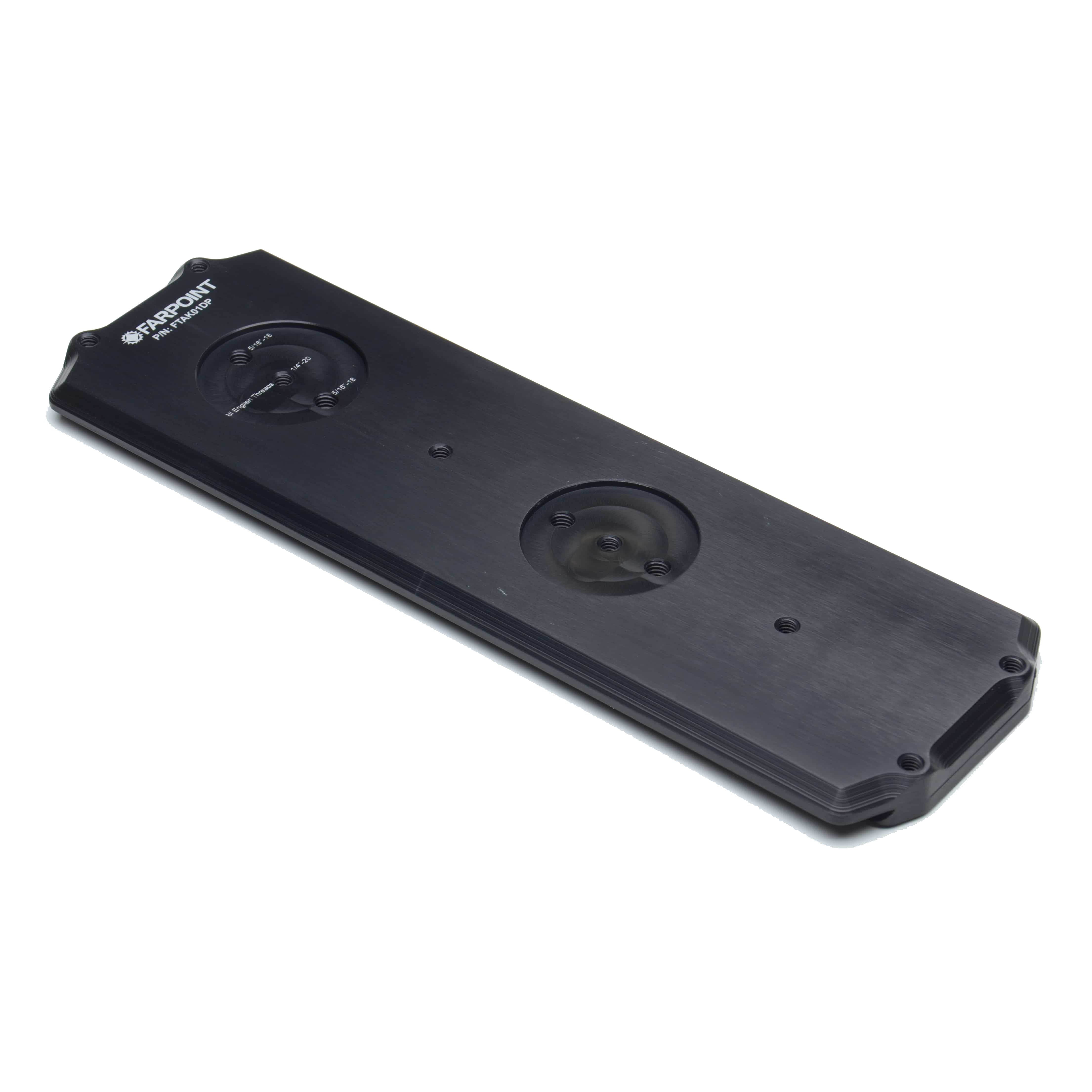
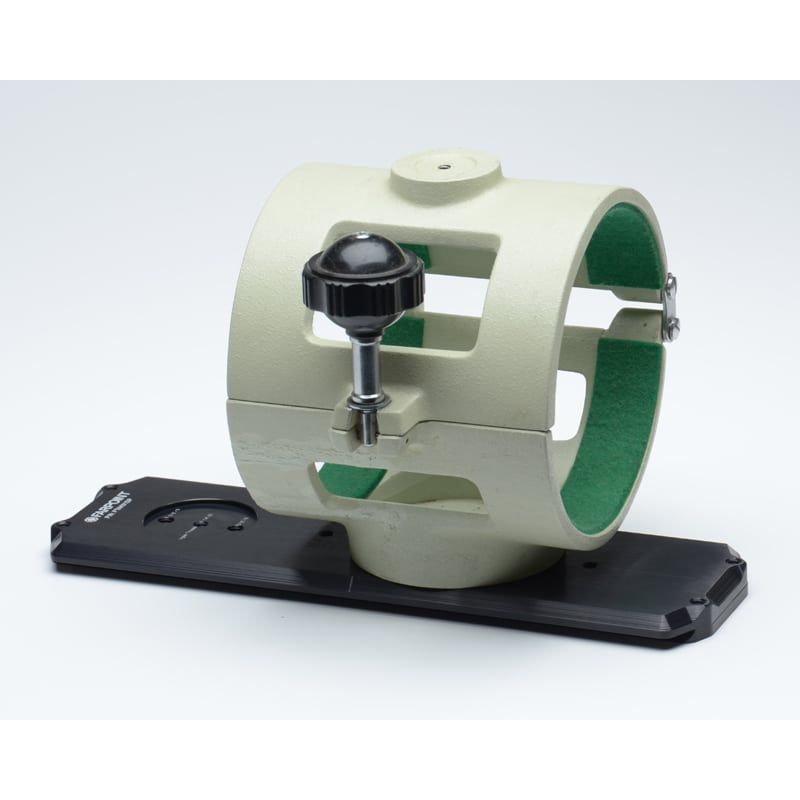
The Farpoint FTAK01DP is a 12″ D-size (Losmandy-style) dovetail bar for the Takahashi clamshell, machined with two clamshell mounting positions along its length. Bolting it to the base of the clamshell gives the whole tube-and-clamshell assembly a D-size interface, and the second mounting position allows the clamshell to be shifted along the bar to rebalance a rig whose centre of gravity has moved. It is CNC-machined in the USA from aluminum with a black anodized finish and has a published weight of 2.313 lb.
Who It's For
This is a good match if you carry a Takahashi refractor in a Takahashi clamshell on a mount with a Losmandy-style saddle, if your imaging train changes often enough that balance shifts between sessions, or if you want balance adjustment built into the bar rather than handled by sliding the clamshell on the tube.
Key Features & Design
- Two mounting positions: the clamshell bolts at either of two points along the bar, changing where the assembly sits relative to the saddle.
- 12″ bar length: a long clamping run, so the saddle jaws can grip well away from the clamshell itself.
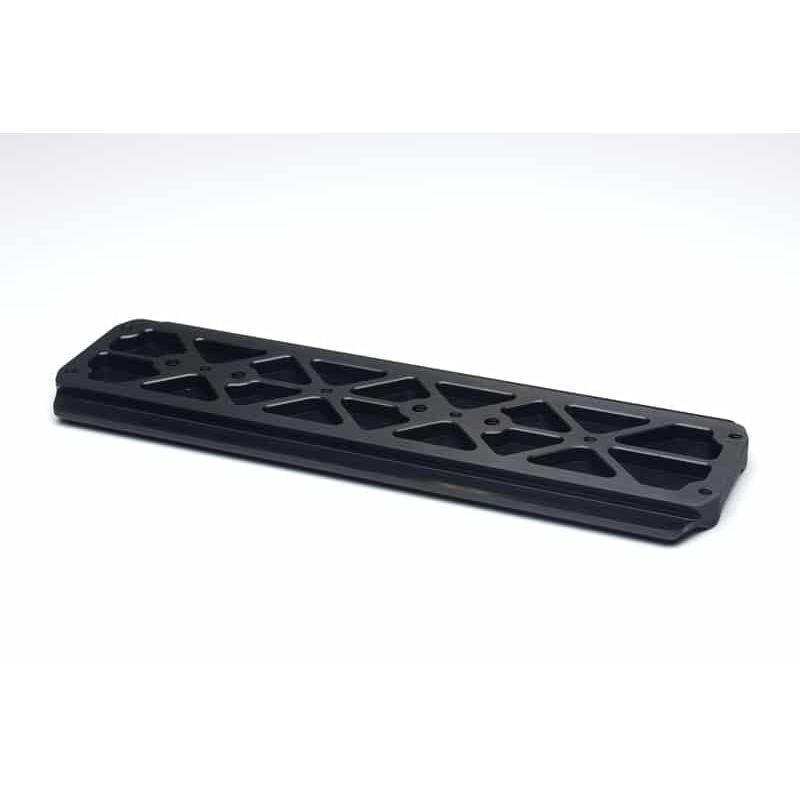
- D-size (Losmandy-style) profile: the wider of the two common dovetail standards, with a broader clamped face than V-size.
- Takahashi clamshell bolt pattern: the holes are cut for the Takahashi clamshell base.
- Black anodized aluminum, CNC-machined in the USA: the anodized layer protects the surfaces the saddle clamps on.
Mechanical Design
Two separate adjustments govern balance on a refractor rig: where the clamshell sits on the tube, and where the dovetail sits under the clamshell. Moving the clamshell on the tube changes the grip point on the optics, which is not always where you want it. The FTAK01DP handles the second adjustment instead — the clamshell stays where it belongs on the tube, and the assembly's position over the saddle changes by bolting the clamshell at the bar's other mounting point. Over a 12″ span that gives a usable shift in the declination balance, enough to absorb the added weight of a camera, filter wheel or heavier focuser without drilling new holes or buying a second plate.
Recommended Uses
- Mounting a Takahashi refractor and clamshell on a German equatorial with a D-size saddle.
- Rebalancing in declination after a camera, filter wheel or field flattener is added at the rear.
- Running the same tube in two configurations — visual one night, imaging the next — with a known balance point for each.
- Standardising a set of tubes on the Losmandy-style interface.
Compatibility and Accessory Notes
The bar is machined for the Takahashi clamshell and its base bolt pattern; a Tele Vue clamshell takes the separate Farpoint FDTV plate. The dovetail is D-size (Losmandy-style), so the assembly clamps into any mount with a D-size saddle, and into dual-profile saddles that accept both D-size and Vixen-style bars. A Vixen-only saddle takes a V-size bar or a saddle change instead. Farpoint also offers a single-position Takahashi clamshell plate for fixed setups where the balance point does not change. If you are unsure which clamshell you have or which profile your saddle takes, send us the model and we'll check the fit for you.
Good to Know Before You Order
- Clamshell not included. The bar attaches to a Takahashi clamshell you already own; it is not a tube ring set.
- Two discrete positions, not a slot. Balance adjustment comes from choosing between two machined mounting points rather than sliding continuously along the bar.
- Single mounting pattern. The hole pattern matches the Takahashi clamshell; other manufacturers' clamshells take their own plates.
- D-size only. The profile is Losmandy-style; a Vixen-only saddle takes a V-size bar.
- Published weight is 2.313 lb. Shipping weight is rounded up to 3 lb.
Frequently Asked Questions
Is it difficult to install?
The bar bolts to the clamshell's existing base holes with hex keys, and switching between the two mounting positions later is the same handful of screws. It is a short bench job.
What does this bar do?
It bolts to the base of a Takahashi clamshell and gives that clamshell a 12″ D-size (Losmandy-style) dovetail, so the whole assembly drops into a D-size saddle.
Why two mounting positions?
Cameras, focusers and accessories move a rig's centre of gravity. The second position shifts the clamshell along the bar to rebalance, without drilling or a second plate.
What mounts will this work with?
Any mount with a D-size (Losmandy-style) saddle, including dual-profile saddles that take both standards.
Bottom Line
In short: the FTAK01DP is a 12″ Losmandy-style bar for the Takahashi clamshell with balance adjustment machined in — 2.313 lb of USA-made anodized aluminum with two mounting positions instead of one.
| Designed for | Takahashi clamshell |
|---|---|
| Bar length | 12″ |
| Bar standard | D-size (Losmandy-style) |
| Mounting positions | Two |
| Finish | Black anodized aluminum |
| Construction | CNC-machined in the USA |
| Weight | 2.313 lb |
| Country of origin | United States |
You may also like
Recently viewed
Recent Blog Posts
View all
Your Guide Graph Is Lying to You
Read More

D-Size vs V-Size: A Complete Guide to Telescope Dovetail Systems
Read More

What Is Back Focus in Astrophotography? Telescope Reducers, Flatteners, and Spacing Explained
Read More