


- Description
Product Overview
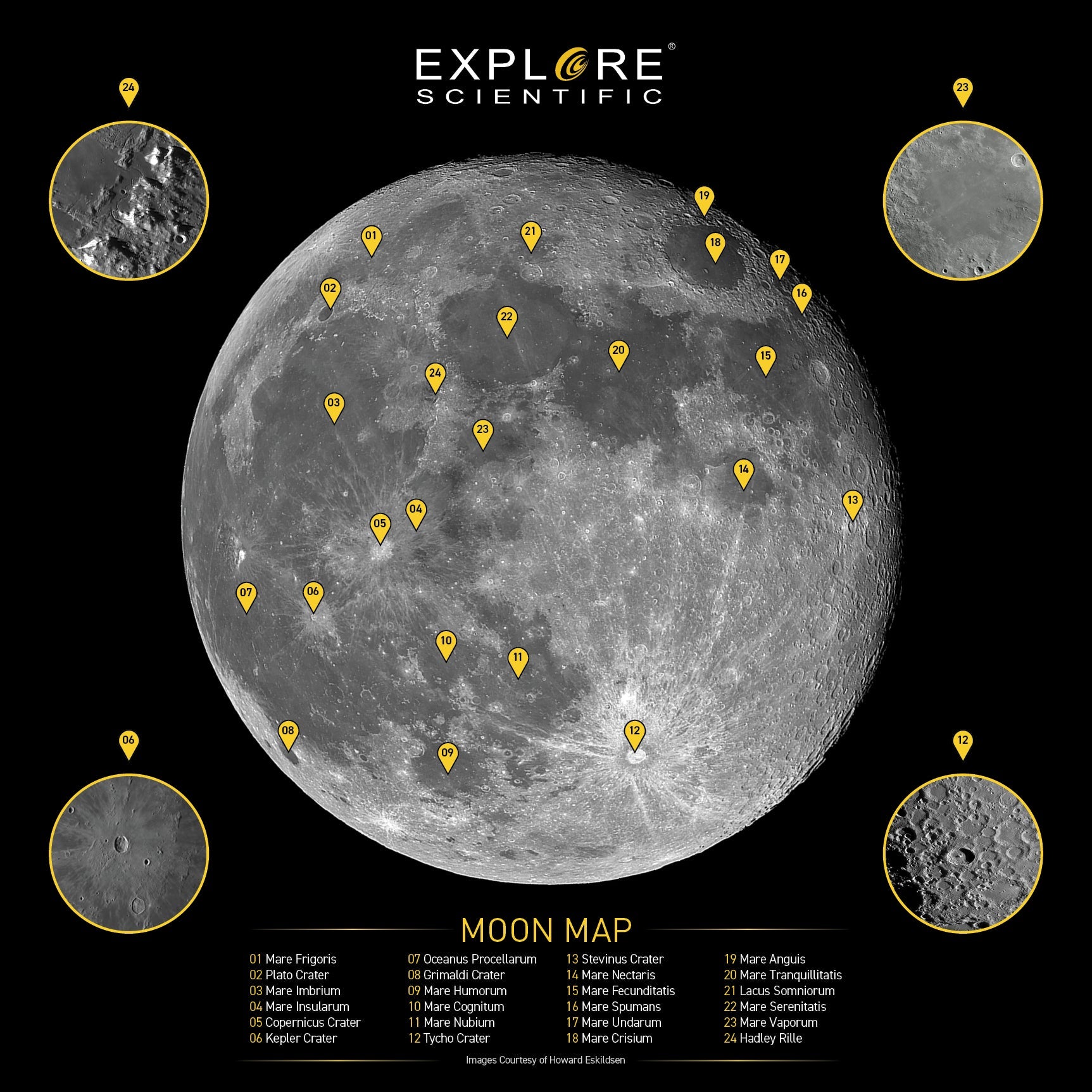
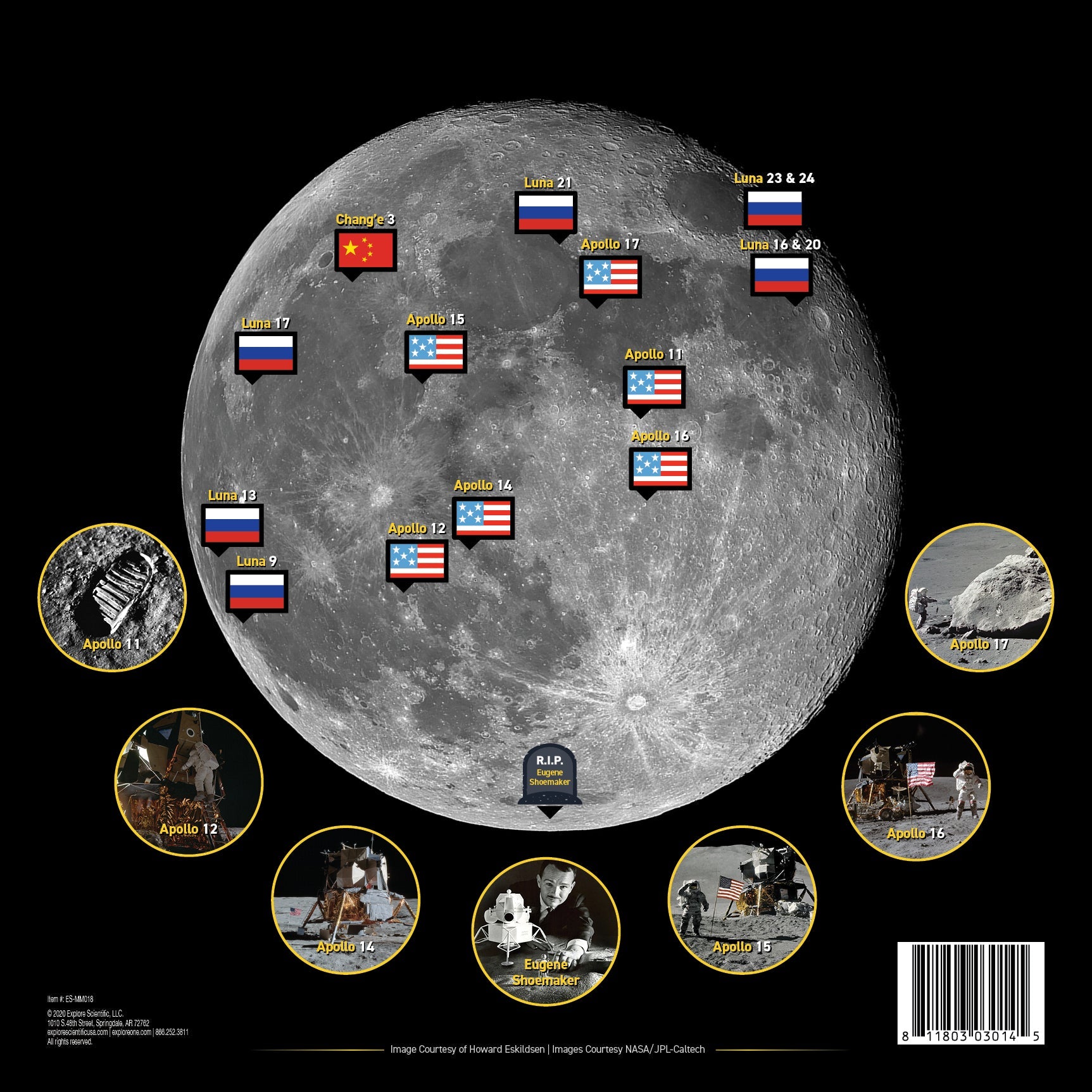
The Explore Scientific Moon Crater Map is a two-sided printed map of the near side of the Moon measuring 11.5 by 11.5 inches. The front pinpoints 24 features on the lunar surface that can be seen through a telescope, and the back marks the landing sites of spacecraft from the lunar programmes of the United States, Russia and China. The lunar image at its centre is a photograph by the astronomer and astrophotographer Dr Howard Eskildsen.
Who It's For
The Moon is the target everyone has and almost nobody learns properly. It is bright, it is up on nights when nothing else is, and it rewards a small telescope more generously than any other object in the sky. What most observers lack is not magnification but names. Once you can find Copernicus and follow its ray system, or watch the terminator creep across Clavius over the course of an evening, the Moon stops being a bright disc and becomes a landscape you can navigate.
This map is the piece that makes that switch happen, and it is genuinely good company at the eyepiece. It is also a fine thing to hand to a child or a new observer, because the back turns the same map into a record of where humans and their machines actually touched down.
Key Features and Design
- Two-sided printed map, 11.5 by 11.5 inches
- Front side identifies 24 lunar surface features that can be observed through a telescope
- Reverse side marks spacecraft landing sites from the United States, Russian and Chinese lunar programmes
- Central lunar image photographed by astronomer and astrophotographer Dr Howard Eskildsen
- Compact square format that sits easily on an observing table or in an accessory case
Map Design
A lunar map is a slightly odd object to design, because the thing it depicts changes appearance every night. The Moon always shows us the same face, so the geography on the map is fixed, but the lighting sweeps across it through the month and features that are unmistakable one evening are invisible the next. Craters show best near the terminator, the line between lunar day and night, where low sunlight throws long shadows across their walls and central peaks. At full Moon the same craters flatten into near-nothing while the bright ray systems radiating from Copernicus and Tycho suddenly dominate. Restricting the front side to 24 named features rather than several hundred is a deliberate choice that suits this: it gives you a set you can realistically learn over a few nights of observing instead of a dense reference sheet you stop consulting. The reverse side adds the other layer of lunar interest, which is that these are not just landforms but places, each with a date and a mission attached.
Recommended Uses
- Learning your way around the near side of the Moon with a small telescope or binoculars
- Following the terminator across the lunar month and watching features appear and disappear
- Public outreach and school sessions, where naming what people are looking at makes the view stick
- A first astronomy gift for a young or new observer
Compatibility and Accessory Notes
No equipment is required. The 24 features on the front are chosen as telescope-visible targets, and most are within reach of a modest refractor or reflector, with the larger craters and maria showing well in binoculars. A red torch is the natural companion so you can read the map without losing your dark adaptation, though lunar observing is forgiving on that count since the Moon ruins your night vision anyway. Note that the map shows the near side in a fixed orientation, so if your telescope gives a mirrored or inverted view through a star diagonal you may need to turn the map to match what you see.
Good to Know Before You Order
This is a printed map and nothing else. Explore Scientific does not publish the paper stock, whether it is laminated, or a packing list for this item, so we are not going to claim any of that here. If lamination or a specific finish matters to you, ask us and we will look at the stock we have on the shelf in Bolton. Explore Scientific publishes no shipping weight for this item, so we are confirming it on our own scales before the listing goes live. That is why it is currently unpublished. Contact us and we will give you a shipping figure for your address.
Frequently Asked Questions
How many features are labelled? Twenty-four on the front side, all chosen as features observable through a telescope. The back side marks spacecraft landing sites rather than adding more craters.
Do I need a large telescope to use it? No. The features are selected for telescope visibility, and the biggest of them are easy in binoculars. A 60 to 80mm telescope will show the great majority of them comfortably.
Whose photograph is on the map? The lunar image is by Dr Howard Eskildsen, an astronomer and astrophotographer, which is why the map reads as a photograph of the real Moon rather than a diagram of it.
Bottom Line
Twenty-four named craters on one side, the landing sites of three nations' lunar programmes on the other, and a good photograph of the Moon holding it all together at 11.5 inches square. It is an inexpensive thing that changes how much you get out of the most accessible object in the sky. Contact our team in Bolton if you have any questions about it.
You may also like
Recently viewed
Recent Blog Posts
View all
Your Guide Graph Is Lying to You
Read More
D-Size vs V-Size: A Complete Guide to Telescope Dovetail Systems
Read More
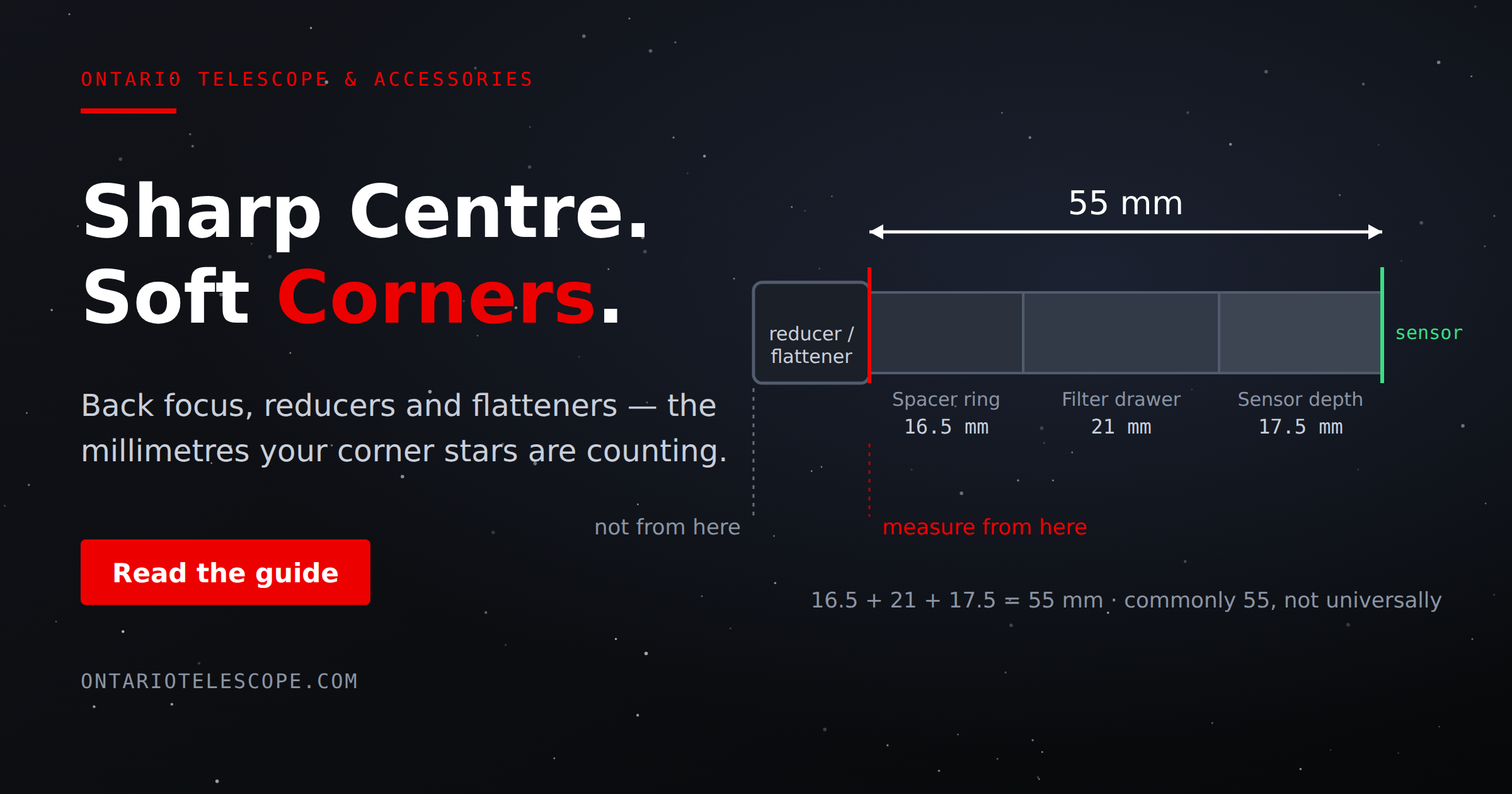
What Is Back Focus in Astrophotography? Telescope Reducers, Flatteners, and Spacing Explained
Read More