


- Description
Product Overview
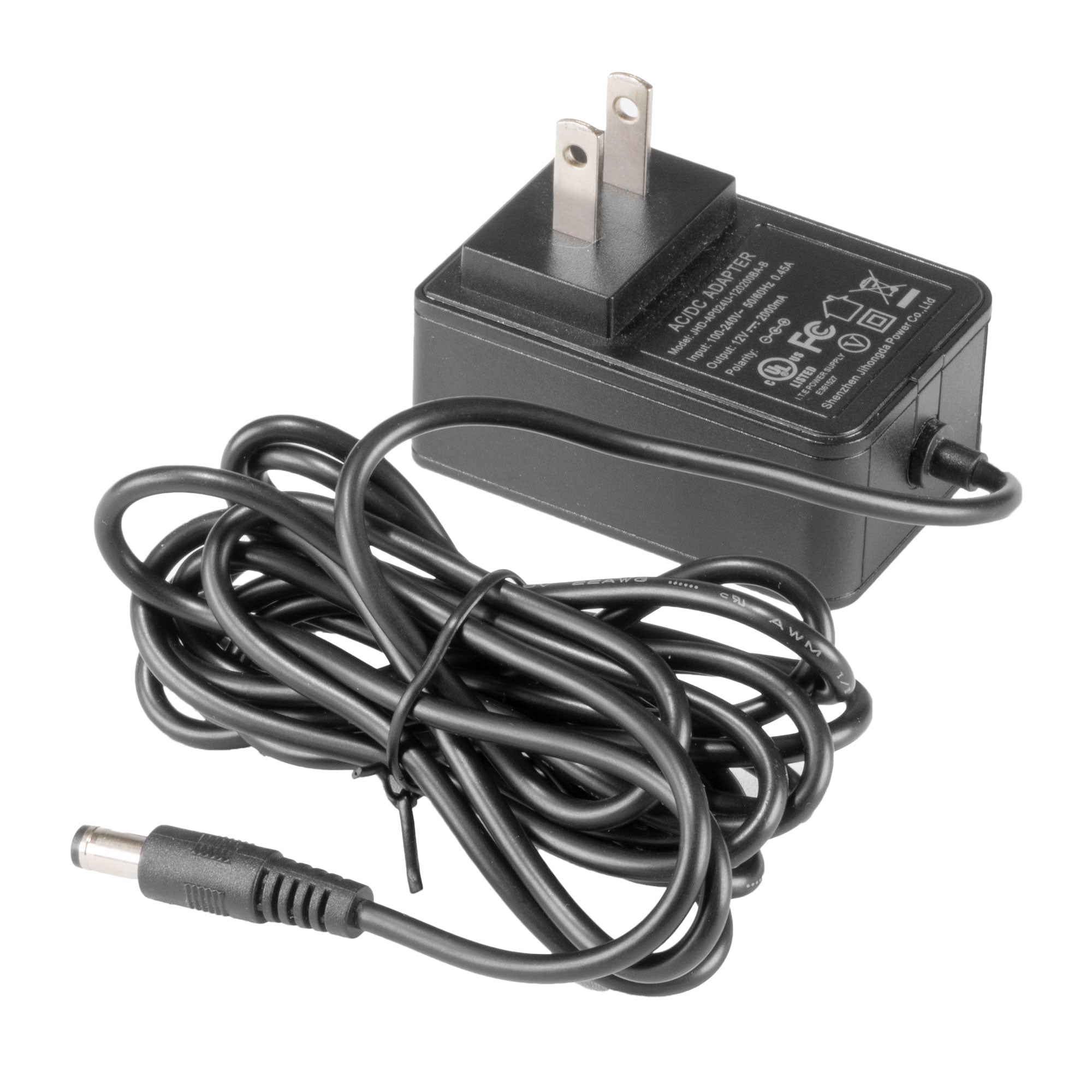
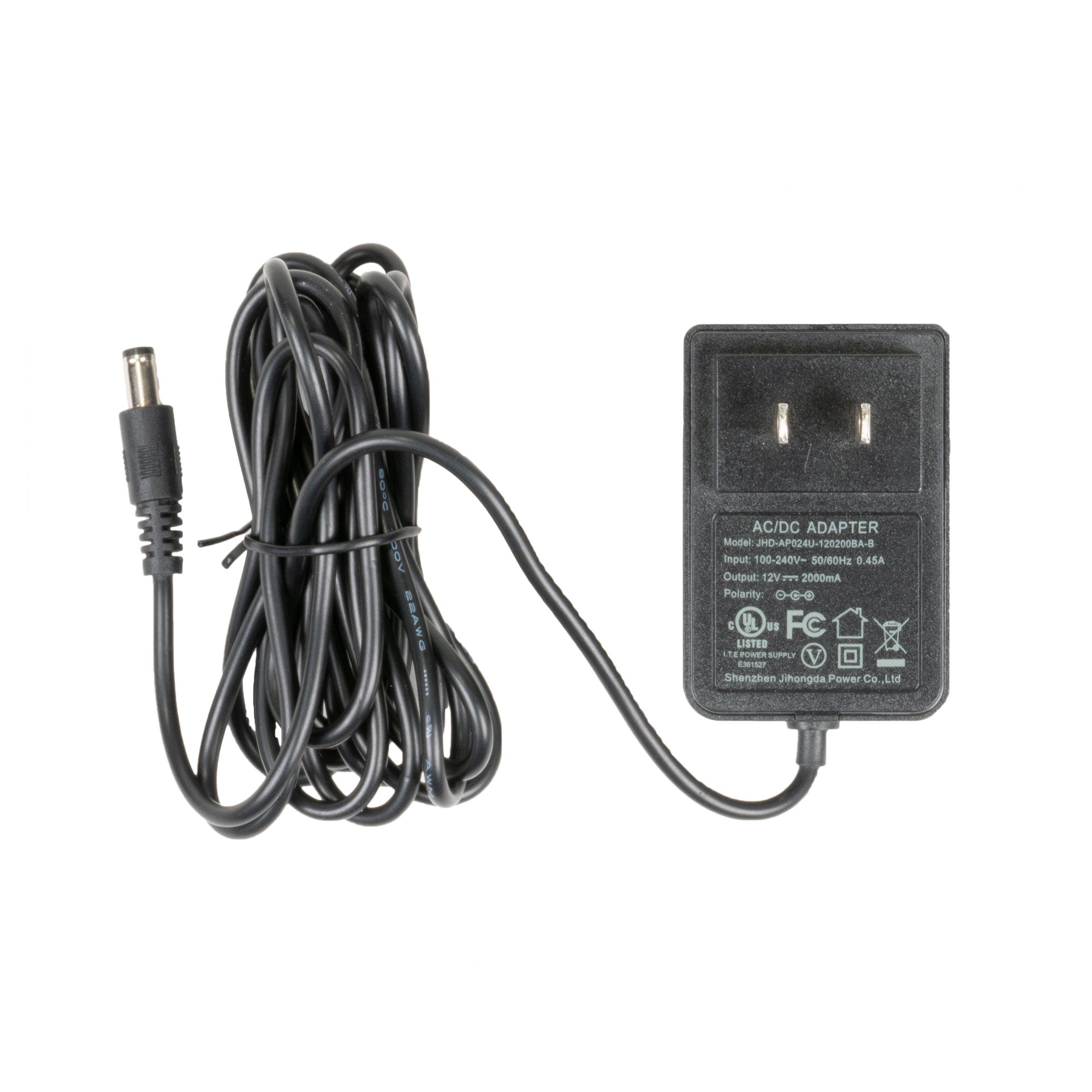
The Explore Scientific ES-PS12V2A is a 12 volt DC power supply rated at 2 amps, made to run PMC-Eight equipped mounts from household mains power. Explore Scientific specifies a 110 volt input, a 5.5 mm by 2.1 mm barrel plug with positive polarity on the inside pin, and an eight-foot cable. It is the adapter Explore Scientific lists for the EXOS2GT-PMC-Eight and the iEXOS-100, and it does one job well: keep the mount fed with clean, steady current for as long as you are plugged in.
Who It's For
If you observe or image from a driveway, a backyard, or an observatory where an outlet is within reach, running your mount from mains power removes a whole category of problem. Battery packs sag as they discharge, and a PMC-Eight mount that browns out mid-slew does not simply pause — it can lose its alignment and cost you the rest of the session's framing. A dedicated 2 amp supply holds voltage steady through slews, tracking, and guiding corrections, which is precisely when current draw spikes.
It also makes sense as a spare. Most people who own one end up with a second, so there is one permanently coiled in the observatory or on the imaging cart and one that lives in the travel case. Power cables are the first thing to go missing on a cold night, and the barrel size and polarity here are specific enough that a random adapter out of a drawer is as likely to damage the mount as to run it.
Key Features & Design
- Regulated 12 volt DC output at 2 amps, covering PMC-Eight mount electronics, motors, and hand-control draw
- 110 volt AC input for standard North American household outlets
- 5.5 mm by 2.1 mm barrel connector, the standard PMC-Eight power inlet size
- Positive polarity on the centre pin, matching Explore Scientific's published requirement for these mounts
- Eight-foot cable, long enough to reach a tripod or pier from a nearby outlet without an extension
- Specified by Explore Scientific for the EXOS2GT-PMC-Eight and iEXOS-100 mounts
- Supplied as item ES-PS12V2A, the direct replacement for the adapter packed with those mounts
Electrical Design
Mount electronics tolerate a slightly low steady voltage far better than they tolerate voltage sag. A PMC-Eight board runs its stepper drivers, its wireless module, and its control logic from the same 12 volt rail, and instantaneous draw when both axes slew at speed is several times the quiet tracking draw. A supply rated at 2 amps leaves headroom above that peak so the rail does not dip when the motors load up. Polarity matters as much as the rating: with 5.5 mm by 2.1 mm barrel plugs, centre-positive and centre-negative connectors are physically identical, so a mismatched adapter will seat perfectly and then feed reverse voltage into the mount. This supply is centre-positive, as Explore Scientific specifies, which is the reason using the correct part rather than a generic one is worth the trouble.
Recommended Uses
- Powering an iEXOS-100 PMC-Eight mount from a household outlet
- Powering an EXOS2GT-PMC-Eight mount through long visual or imaging sessions
- Permanent observatory and fixed-pier installations where mains power is available
- Backyard and driveway sessions where a battery pack is unnecessary weight
- A spare adapter kept in the travel case or observatory as a backup
Compatibility and Accessory Notes
This adapter is intended for Explore Scientific PMC-Eight systems — the iEXOS-100 and the EXOS2GT-PMC-Eight — and will suit any 12 volt device that takes a 5.5 mm by 2.1 mm centre-positive plug and draws no more than 2 amps. It is a 110 volt unit, so it is at home on Canadian and US mains but not on 220 to 240 volt supplies without a proper converter. If you are running from a battery in the field instead, you want a cigarette-lighter or Powerpole DC cable rather than this adapter. Connector sizing on older or third-party mounts is genuinely model-dependent, so contact us and we will confirm the plug and current requirement of your particular mount before you order.
Good to Know Before You Order
This is the AC adapter on its own. No battery, no extension cord, and no DC field cable are included, and it does not convert your mount to any other voltage. The eight-foot cable is generous but not unlimited — if your pier sits well away from the nearest outlet, plan on a proper outdoor-rated extension cord rather than daisy-chaining adapters. Explore Scientific publishes no shipping weight for this item, so we are confirming it on our own scales before the listing goes live. That is why it is currently unpublished. Contact us and we will give you a shipping figure for your address.
Frequently Asked Questions
Will this run my iEXOS-100? Yes. Explore Scientific lists this adapter for both the iEXOS-100 and the EXOS2GT-PMC-Eight, and the 2 amp rating covers the draw of those mounts including slewing.
What is the plug size and polarity? The tip is 5.5 mm by 2.1 mm with positive polarity on the inside pin. That is Explore Scientific's published specification for this supply.
Can I use it in the field away from an outlet? Not on its own. It is a mains adapter and needs 110 volt AC. For battery operation you need a DC power cable matched to your battery's output connector.
Is this the same adapter that came with my mount? It is the direct replacement part, item ES-PS12V2A, and matches the mains adapter Explore Scientific supplies with its PMC-Eight mounts.
Bottom Line
A mount that browns out at the wrong moment costs you more than the price of a proper power supply. This is the adapter Explore Scientific specifies for PMC-Eight systems, with the right voltage, the right connector, and the right polarity. If you are not certain which supply your mount takes, contact our team in Bolton and we will confirm it for you.
You may also like
Recently viewed
Recent Blog Posts
View all
Your Guide Graph Is Lying to You
Read More

D-Size vs V-Size: A Complete Guide to Telescope Dovetail Systems
Read More
What Is Back Focus in Astrophotography? Telescope Reducers, Flatteners, and Spacing Explained
Read More