


- Description
- Specifications
Product Overview
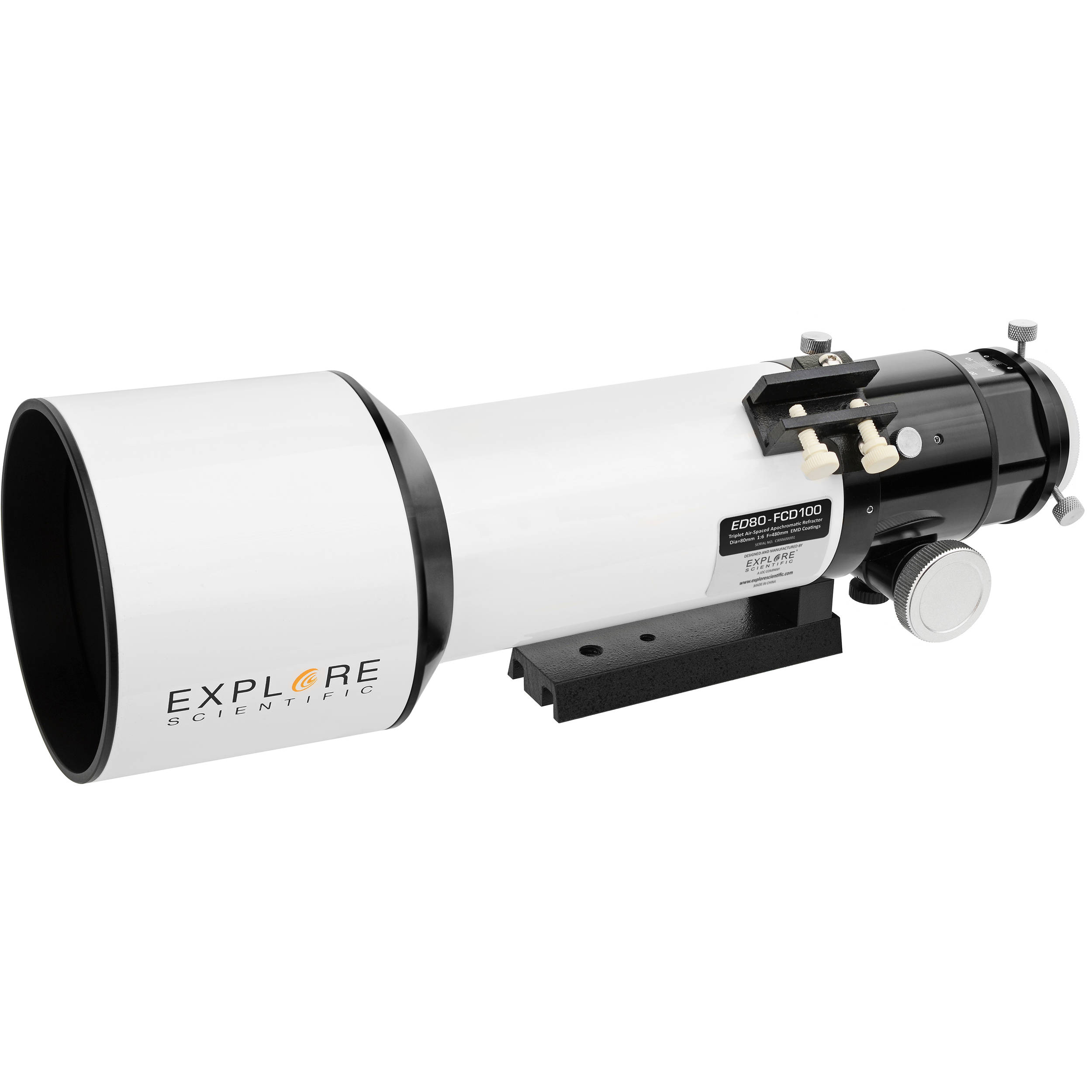
The Explore Scientific ED80-FCD100 is an 80mm air-spaced apochromatic triplet refractor with a native focal length of 480mm at f/6, supplied here together with the ES-FR0.8x focal reducer. The centre element is HOYA FCD100 extra-low-dispersion glass, and the tube carries a 2.5-inch hexagonal focuser sized around camera loads rather than eyepieces alone.
Explore Scientific publishes a limiting magnitude of 12 and a resolution of 1.45 arcsec for the 80mm objective. The tube is 18.5″ (475mm) long with the dew shield extended and 15″ (381mm) with it retracted, 85mm in outside diameter, and 7.5 lb (3.4 kg) on its own. A Vixen-pattern dovetail is fitted.
With the two-element 0.8x reducer in the train, the published 480mm becomes 384mm and f/6 becomes f/4.8 — a short, fast imaging system that reverts to a 480mm f/6 visual refractor when the reducer comes out.
Who It's For
- Wide-field deep-sky imagers: 384mm at f/4.8 with the reducer fitted frames large emission regions and open clusters that a longer instrument crops.
- Observers who value colour correction: an air-spaced triplet using FCD100 ED glass is aimed at bringing three wavelengths to a common focus rather than two.
- Anyone with a modest mount: at 7.5 lb (3.4 kg) bare, this tube asks far less of a mount than a six-inch refractor does. This is a good match if you already own a mount in the 20–30 lb class and want to use most of its capacity on payload rather than on the tube itself.
Key Features & Design
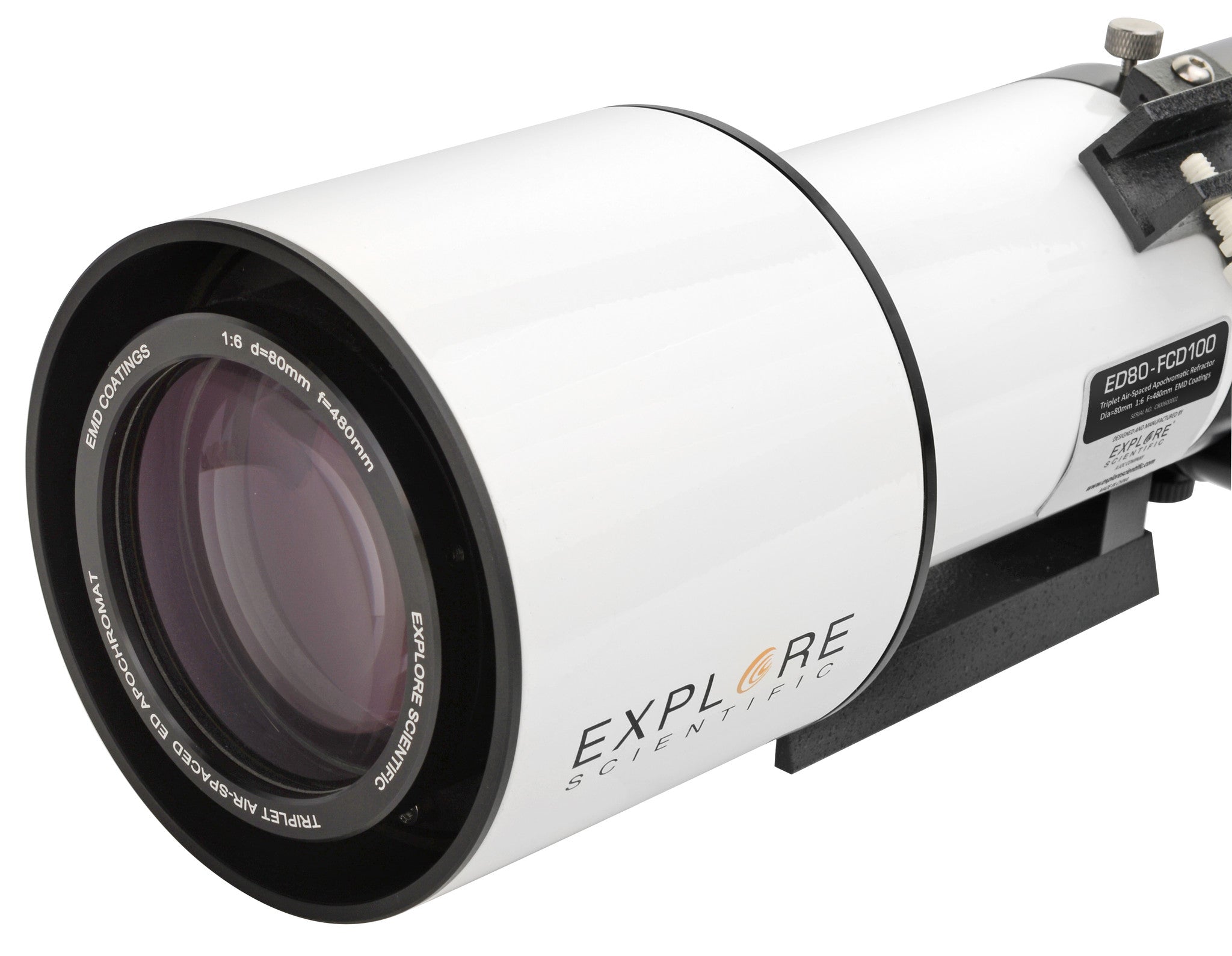
- 80mm air-spaced triplet objective: three elements with air gaps between them, one of them HOYA FCD100 extra-low-dispersion glass.
- 480mm focal length at f/6: short enough for wide fields, long enough that a 6mm eyepiece still reaches 80x.
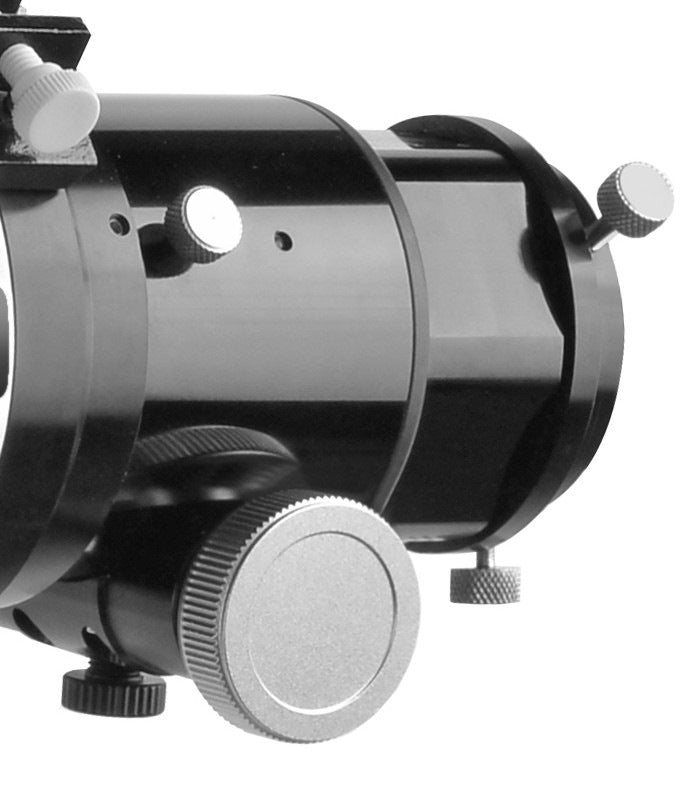
- 2.5-inch hexagonal focuser: the hexagonal drawtube form is used to resist the rotational flex that a heavy camera train imposes on a round drawtube.
- ES-FR0.8x focal reducer included: two elements, 2-inch diameter, 0.8x reduction, with a 42mm T2 camera adapter plate and a barrel threaded for standard 2-inch filters.
- Retractable dew shield: 18.5″ (475mm) extended, 15″ (381mm) retracted.
- 85mm tube diameter and 7.5 lb (3.4 kg) tube weight, on a Vixen-pattern dovetail.
- Supplied package: Explore Scientific lists the refractor, the 0.8x focal reducer, a 2-inch diagonal, extension tubes, a finder scope base, the dew shield and a dust cover.
Optical Design
A doublet achromat brings two wavelengths to a common focus. A triplet adds a third element and, with the right glass, brings a third wavelength in as well — which is what shortens the residual colour error that shows as a violet halo around bright stars and along the lunar limb. The FCD100 element is the one doing that work: extra-low-dispersion glass spreads wavelengths less as they pass through it, so the design has less colour to correct in the first place.
Air spacing matters here as much as glass choice. Cementing elements together saves two optical surfaces but locks the spacing to whatever the cement layer does under temperature change, and it puts an adhesive in the light path of the objective. An air-spaced triplet gives the designer six surfaces to shape instead of four and leaves the spacings mechanical rather than chemical. The cost is one more pair of surfaces to coat and a slightly longer thermal settling time at the start of a session.
The 0.8x reducer is a two-element group that shortens the effective focal length from 480mm to 384mm and, because aperture is unchanged at 80mm, drops the focal ratio from f/6 to f/4.8. Faster focal ratio means more signal per pixel per unit time, a wider field on the same sensor, and tighter tolerance on the spacing between the reducer and the sensor. Explore Scientific publishes the reducer's element count, diameter, reduction factor and its 42mm T2 thread, and specifies a 2-inch filter thread in the barrel; they do not publish a backfocus distance or a corrected image circle for this combination, so neither figure appears in the table below.
Recommended Uses
- Wide-field deep-sky imaging at 384mm f/4.8 with the reducer in place.
- Visual observing at 480mm f/6 — open clusters, large nebulae, the Milky Way star fields, lunar and planetary at moderate power.
- Travel and dark-site trips, where 15″ retracted and 7.5 lb make the difference between packing it and leaving it.
Compatibility and Accessory Notes
- Mount: not included. The 7.5 lb (3.4 kg) tube weight is before the diagonal, finder, camera and any guiding hardware, so the loaded figure runs higher — a mount rated at 20 lb or more leaves useful headroom for imaging.
- Dovetail: the Vixen-pattern bar drops into any Vixen saddle, and into dual-fit saddles that take both Vixen and Losmandy plates.
- Camera attachment: the reducer's adapter plate carries a 42mm thread for a T2 ring, so a T-ring for your camera body completes the connection.
- Filters: the reducer barrel is threaded for standard 2-inch filters, which places light-pollution and narrowband filters ahead of the camera.
- Eyepieces: none supplied. At 480mm a 40mm eyepiece gives 12x, a 20mm gives 24x, a 14mm gives 34x and a 5.5mm gives 87x.
- Spacing for imaging: Explore Scientific does not publish the reducer-to-sensor distance, so we are not going to quote one. Send us the camera and any filter drawer you plan to use and we will work the spacing out with you before you order.
Good to Know Before You Order
- This is an optical tube with a reducer, not a complete telescope. A mount, a tripod and at least one eyepiece or a camera are needed to put it to work. We can quote the whole package in one go if that is easier.
- Explore Scientific publishes no backfocus or corrected image circle for the ES-FR0.8x on this tube. Those rows are absent from the specifications rather than estimated. If you are building an imaging train, tell us the camera and we will put the question to our Explore Scientific rep.
- An 80mm aperture has a ceiling. The published resolution is 1.45 arcsec and the limiting magnitude is 12; high-power planetary detail is not what an 80mm f/6 is optimised for. It earns its keep across wide fields.
Frequently Asked Questions
Is it difficult to set up?
The telescope itself is straightforward. A refractor holds its alignment, so there is no collimation to perform — it is ready as soon as it is on the mount and the dew shield is extended. The part that takes thought is the imaging train: the reducer, any filter drawer and the camera need to sit at the correct spacing from one another, and that is a one-time measurement rather than a nightly task. At 7.5 lb it is a one-handed lift onto a saddle.
What does the 0.8x reducer actually change?
It takes the native 480mm f/6 down to 384mm f/4.8. The field on a given sensor gets wider and the system collects more signal per pixel in the same exposure time. For visual use the reducer comes out and the scope runs at its native 480mm.
What mount does it need?
One rated comfortably above the loaded weight. The tube is 7.5 lb bare, and a camera, guide scope and diagonal push that up. For imaging, a mount in the 20–30 lb class gives the settling behaviour that short exposures depend on. Tell us what you have and we will give you a straight answer about whether it will carry this.
Does it come with eyepieces?
No. A 2-inch diagonal, extension tubes, a finder base, the dew shield and a dust cover are included; eyepieces are chosen to suit the observing you do.
Bottom Line
In short: an 80mm f/6 air-spaced triplet with HOYA FCD100 glass, a 2.5-inch hexagonal focuser and a Vixen dovetail, bundled with the two-element ES-FR0.8x reducer that turns 480mm f/6 into 384mm f/4.8 — a 7.5 lb tube that images wide and observes cleanly. If you are matching it to a mount or a camera you already own, send us the models and we will map out the spacing and the fit with you.
| Description | ED80mm FCD100 Aluminum Air-Spaced Triplet Refractor |
|---|---|
| Item Number | FCD100-0806-02 |
| Aperture | 80mm |
| Focal Length | 480mm |
| Focal Ratio | f/6 |
| Limiting Magnitude | 12 |
| Resolution | 1.45 arcsec |
| Tube Length w/ Dew Shield | 18.5"; 475mm |
| Tube Length w/out Dew Shield | 15"; 381mm |
| Diameter | 85mm |
| Weight | 7.5lb; 3.4kg |
| Dovetail | Vixen |
| Focuser | 2.5-inch hexagonal |
| Focal Reducer Item Number | ES-FR0.8x |
| Focal Reducer Elements | 2 |
| Focal Reducer Diameter | 2 Inches |
| Reduction Factor | 0.8x |
| Reduced Focal Length / Ratio | 384mm at f/4.8 (calculated from published 480mm and 0.8x) |
| Camera Adapter Plate | 42 mm thread for T2 ring |
| Filter | Barrel threaded with standard 2-inch filter thread |
| Supplied With | Refractor, 0.8x focal reducer, 2-inch diagonal, extension tubes, finder scope base, dew shield, dust cover |
| Backfocus | Not published by vendor |
| Corrected Image Circle | Not published by vendor |
| Mount | Not included |
| Eyepieces | Not included |
You may also like
Recently viewed
Recent Blog Posts
View all
Your Guide Graph Is Lying to You
Read More
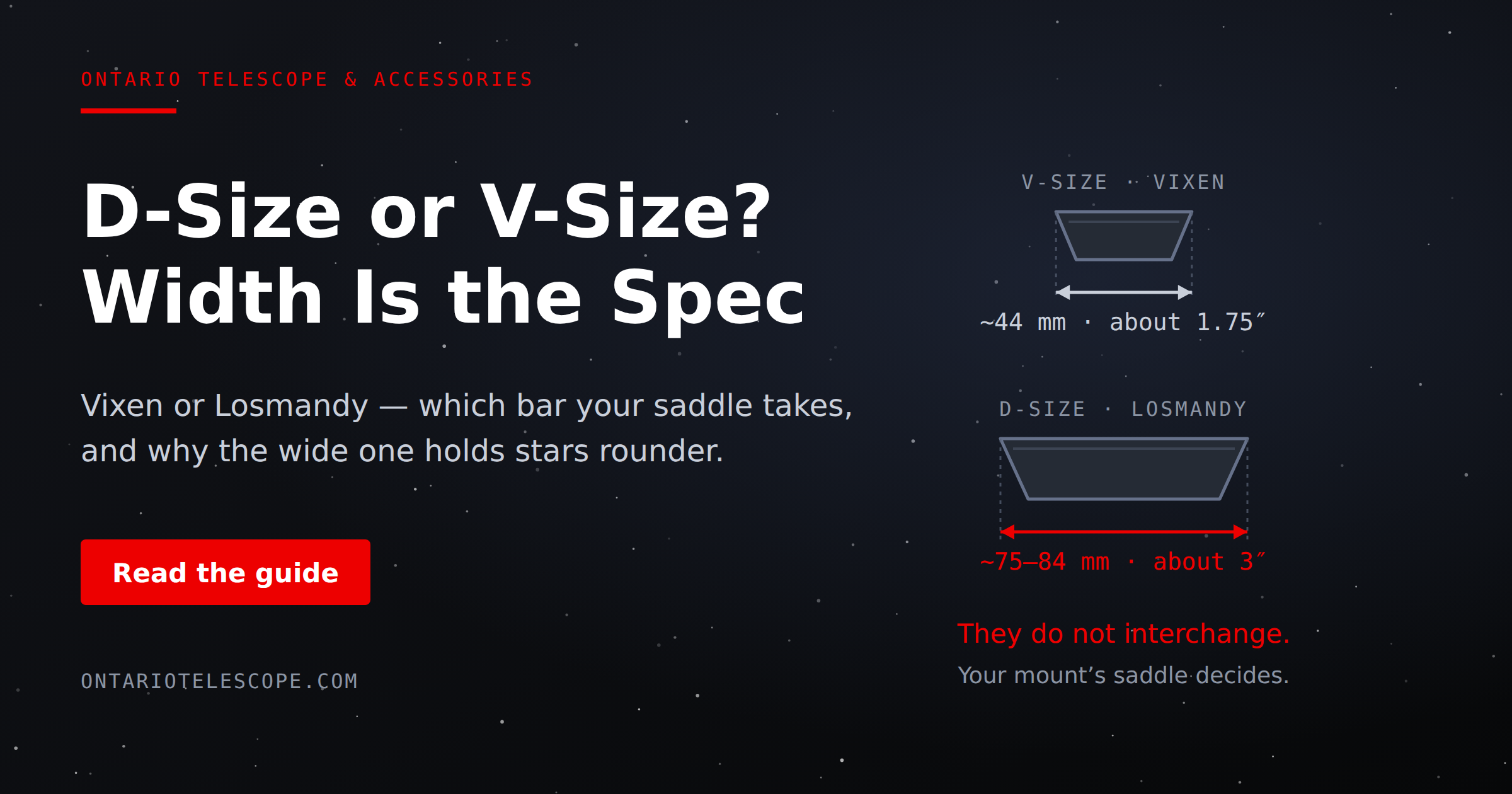
D-Size vs V-Size: A Complete Guide to Telescope Dovetail Systems
Read More
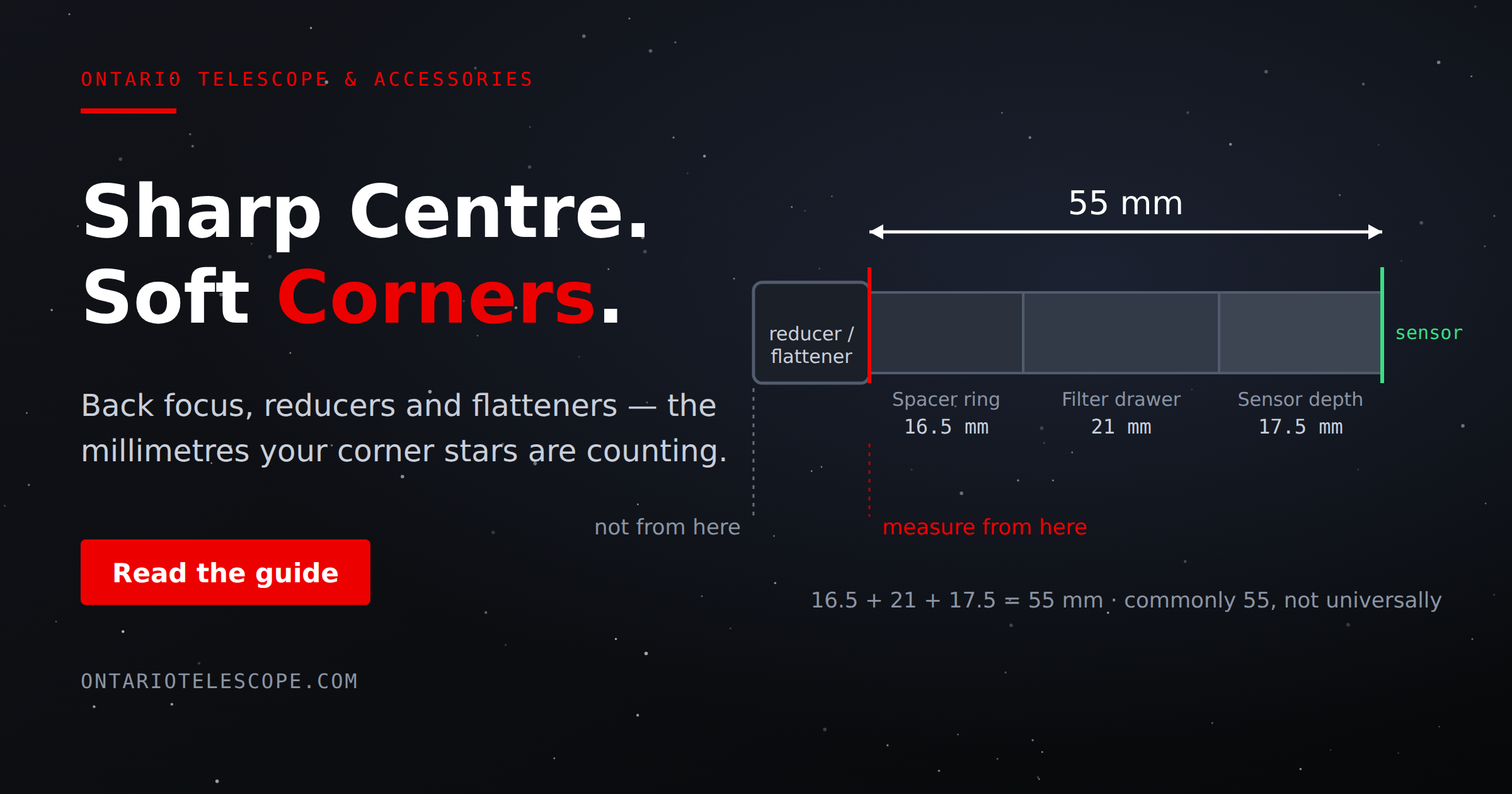
What Is Back Focus in Astrophotography? Telescope Reducers, Flatteners, and Spacing Explained
Read More