


- Description
- Specifications
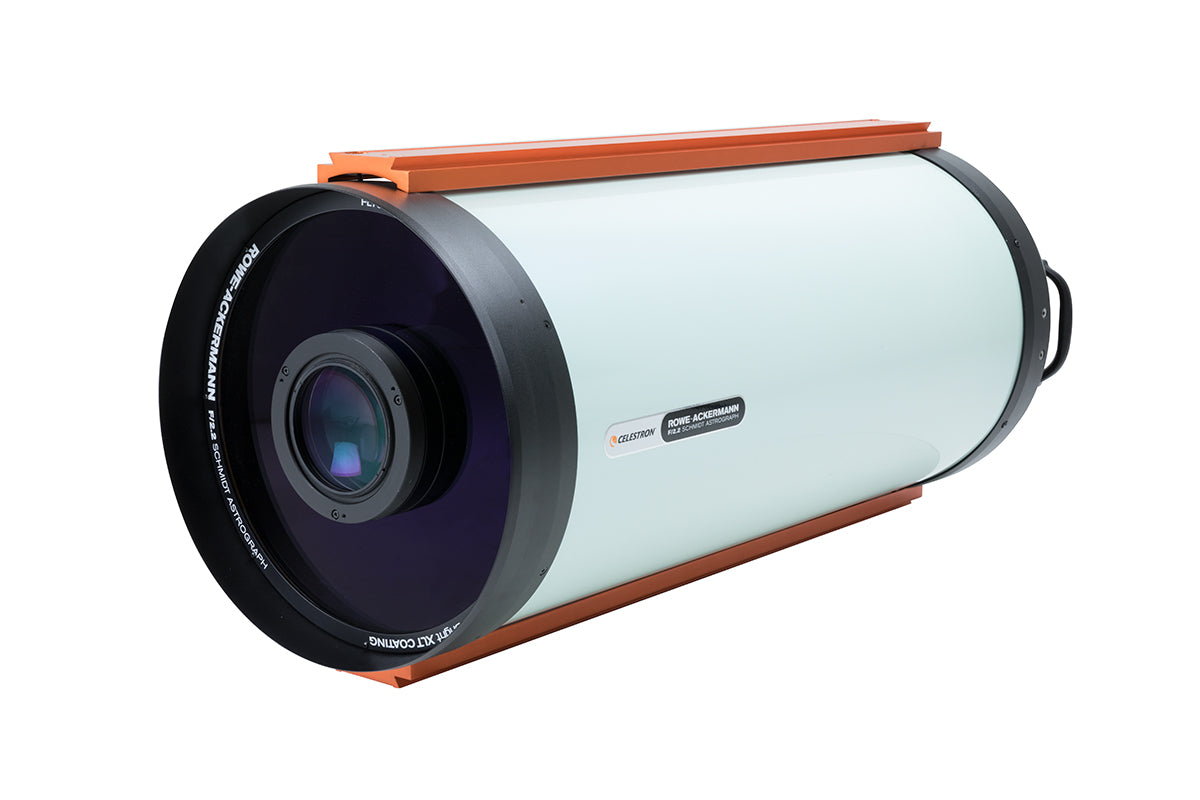
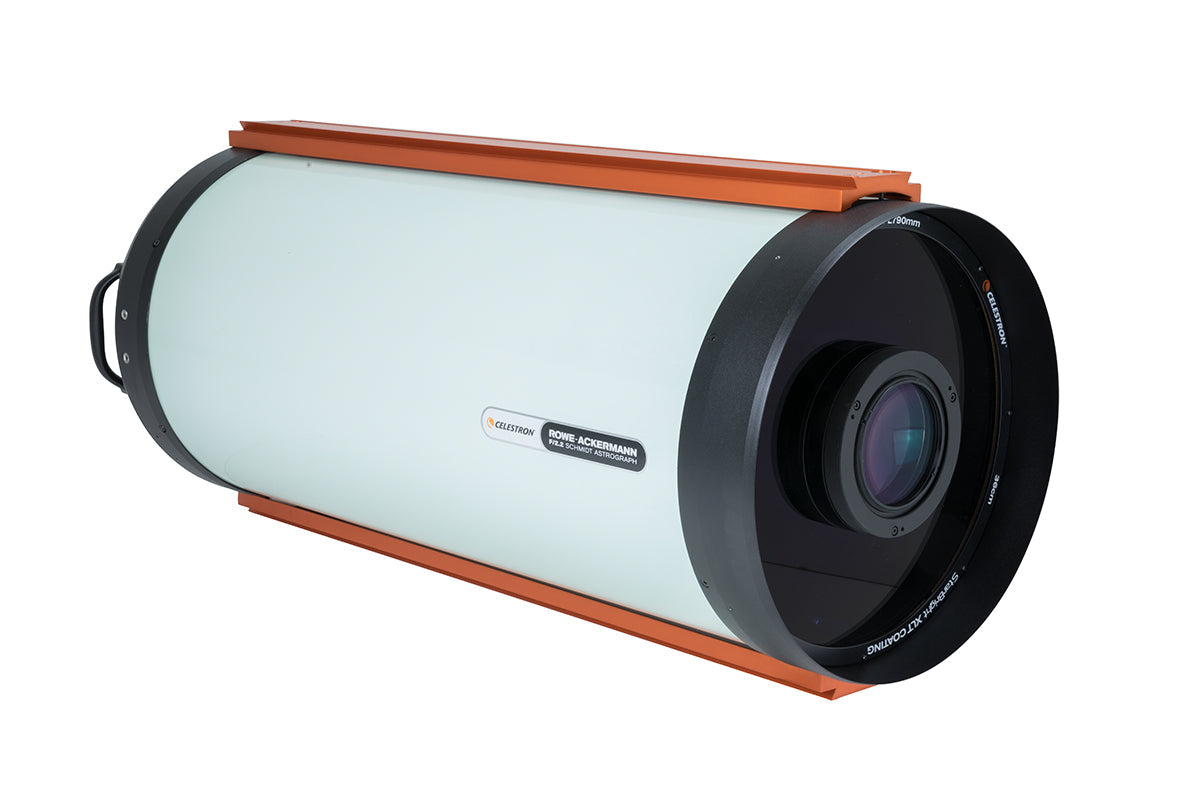
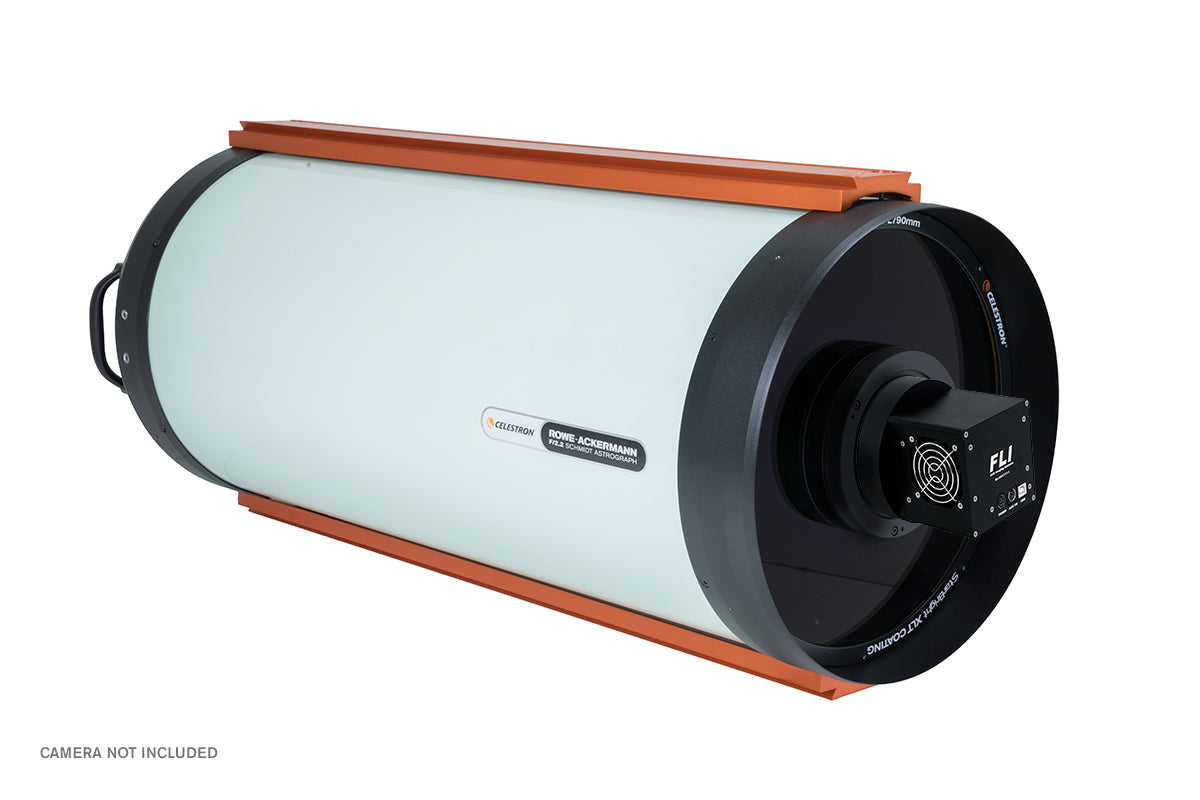
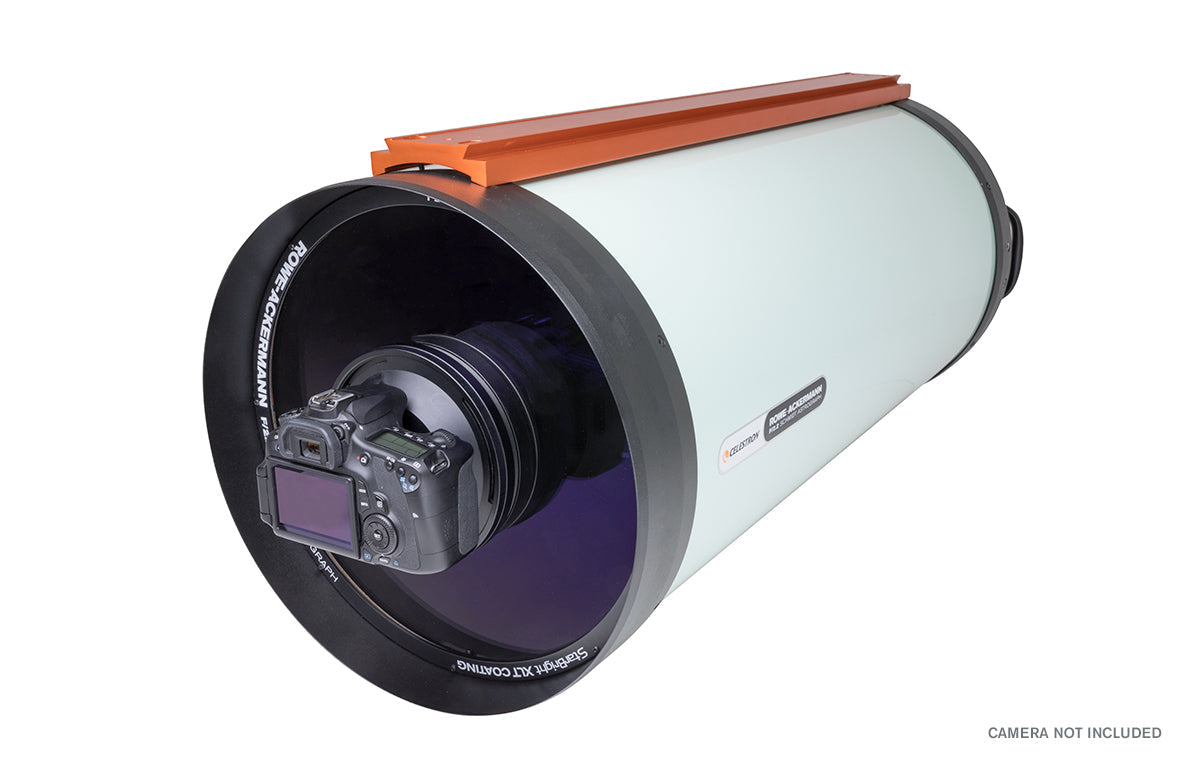
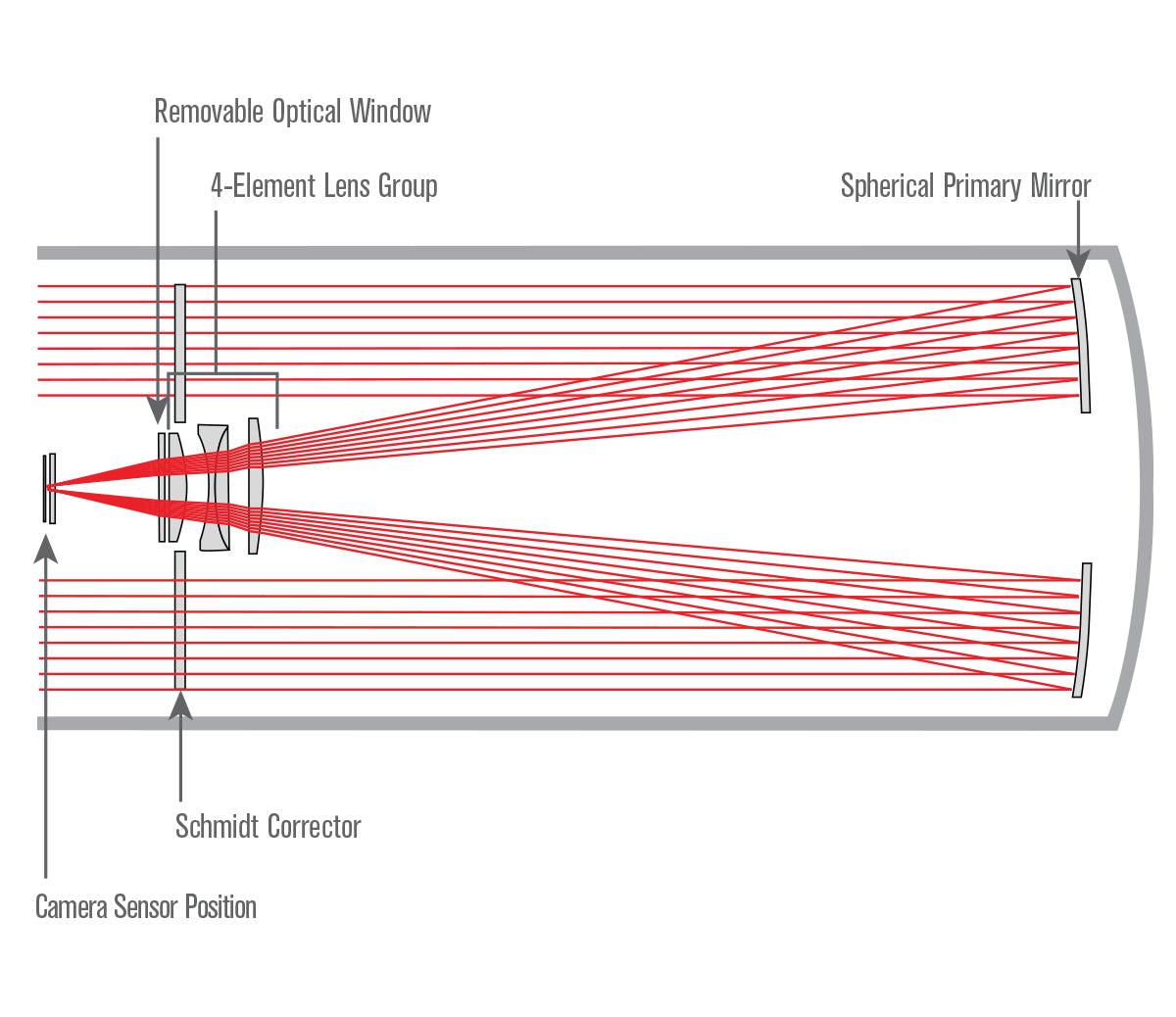
The Celestron RASA 36 V2 Optical Tube Assembly (CGE Dovetail) is the flagship of Celestron's Rowe-Ackermann Schmidt Astrograph line — a 36 cm (14", 355.6 mm) aperture optical system operating at an extraordinarily fast f/2.2 with a 790 mm focal length. Built around a 4-element lens group using extra-low dispersion (ED) glass, it delivers a flat, coma- and astigmatism-free field across a huge 60 mm image circle. With an extended 400–900 nm spectral range, the new Ultra-Stable Focus System (USFS), and StarBright XLT coatings, the RASA 36 V2 is the largest and fastest off-the-shelf astrograph Celestron makes — engineered for professional scientific imaging and the most demanding wide-field astrophotography.
Who Is This Product Best For?
The RASA 36 V2 is built for advanced and professional astrophotographers, observatory and research installations, and scientific/space-surveillance users. It suits imagers who want to capture faint, wide-field deep-sky targets in very short exposures, as well as institutions performing Space Situational Awareness (SSA), near-Earth object tracking, and sky surveys. It is a camera-only instrument for serious, well-funded imaging programs — not a visual telescope and not a beginner or casual setup.
Why Choose This Product?
- Blistering f/2.2 speed — capture faint, low-surface-brightness deep-sky objects in a fraction of the exposure time of slower systems.
- 14" / 36 cm aperture — the largest RASA Celestron manufactures, with ~2581× the light-gathering power of the human eye.
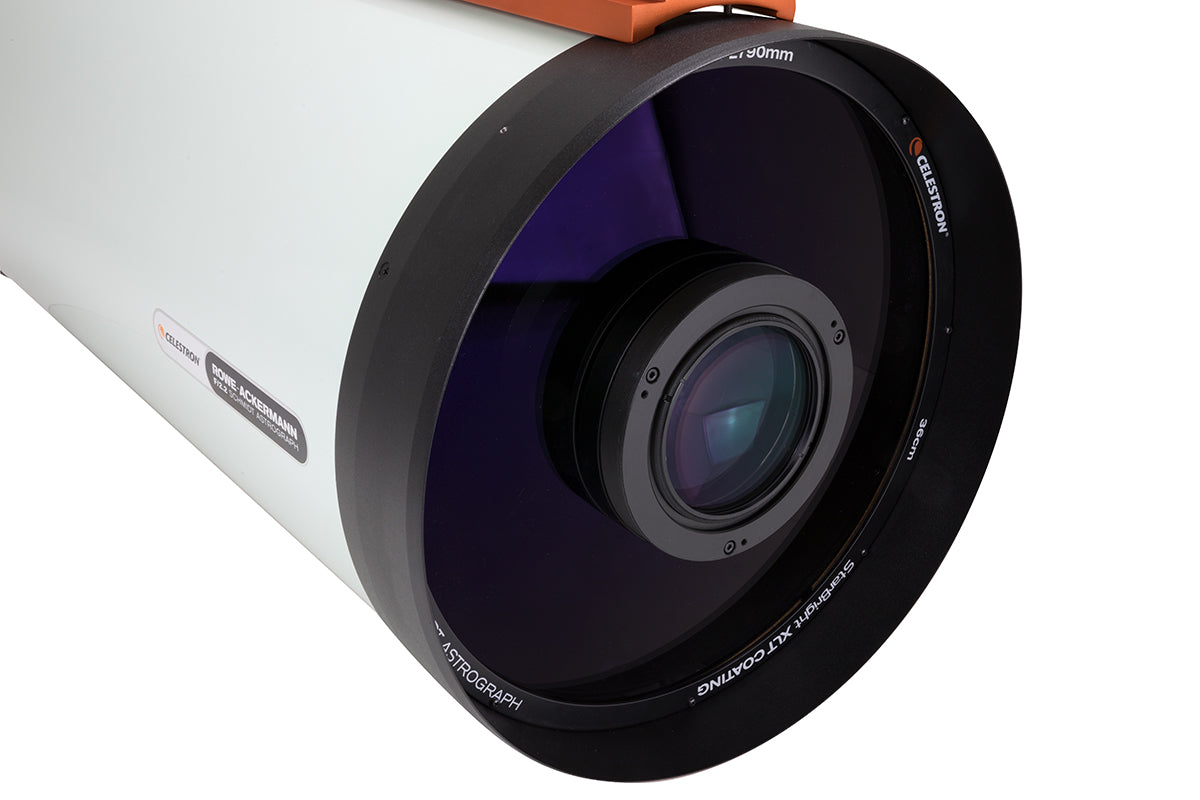
- 4-element ED lens group — pinpoint stars free of false color, coma, and field curvature across a 60 mm image circle.
- Ultra-Stable Focus System (USFS) — a precision linear ball bearing minimizes image shift and mirror flop for locked-in focus from zenith to horizon.
- Extended 400–900 nm spectral range — captures near-IR signal most telescopes can't, for brighter overall detection.
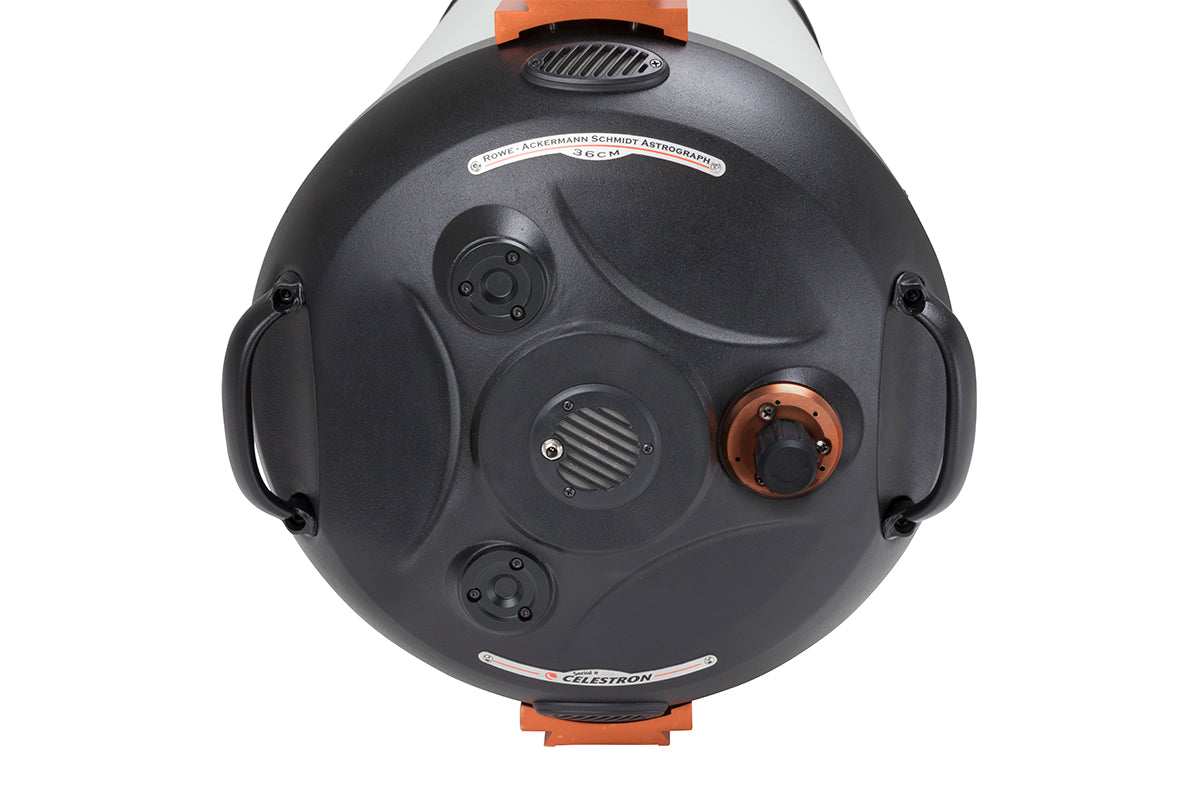
- Built-in cooling — 12V MagLev fan with dust-filtered vents speeds thermal equilibrium.
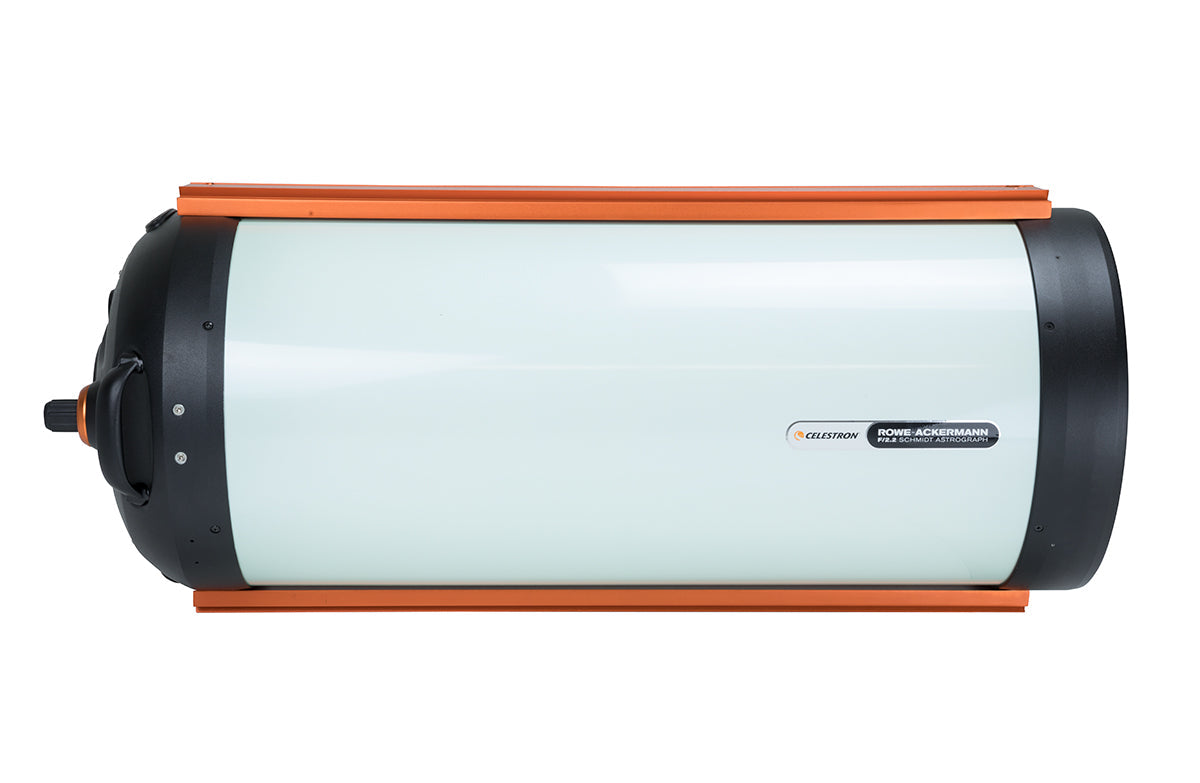
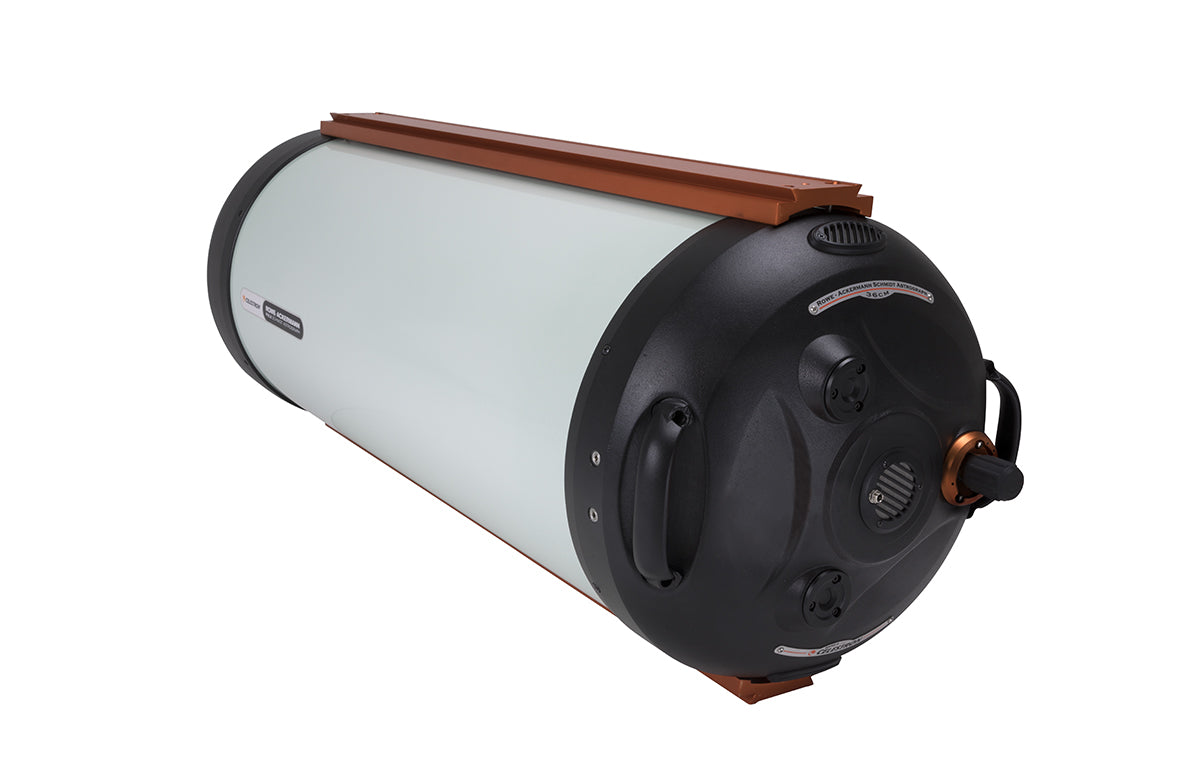
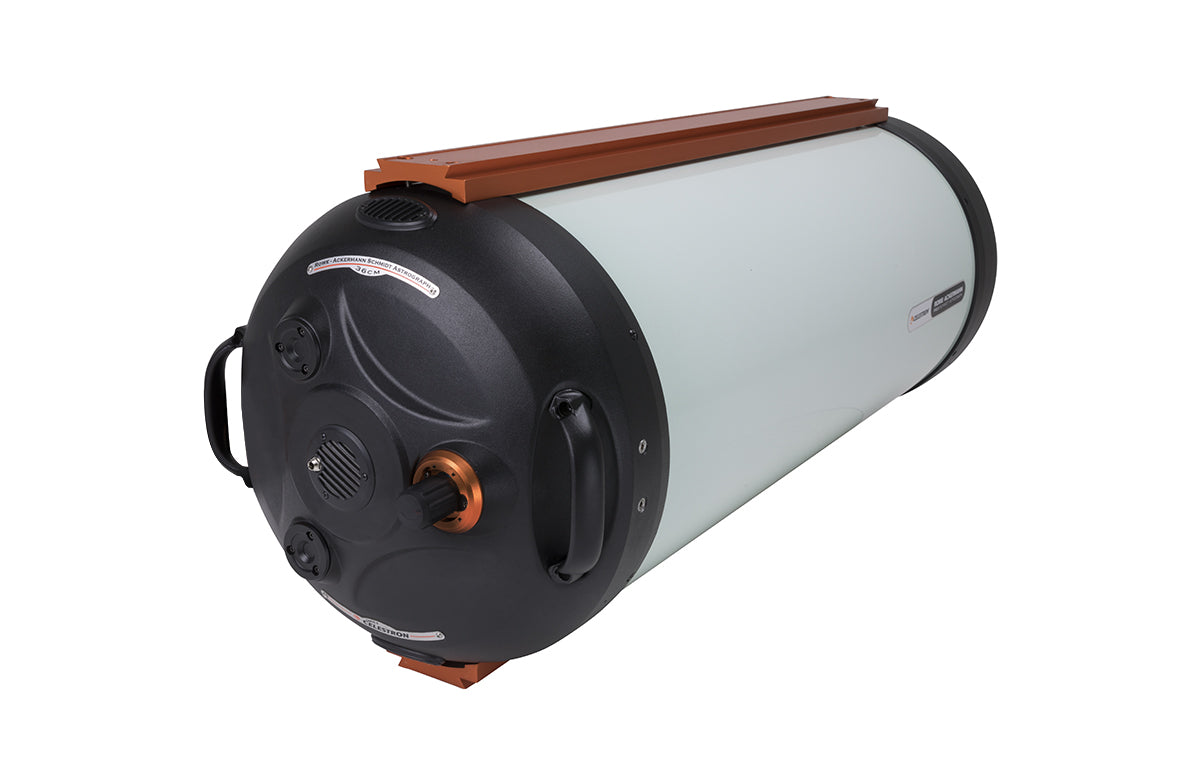
- Flexible mounting — dual CGE / Losmandy-D dovetail bars and rear-cell accessory holes.
Recommended Uses
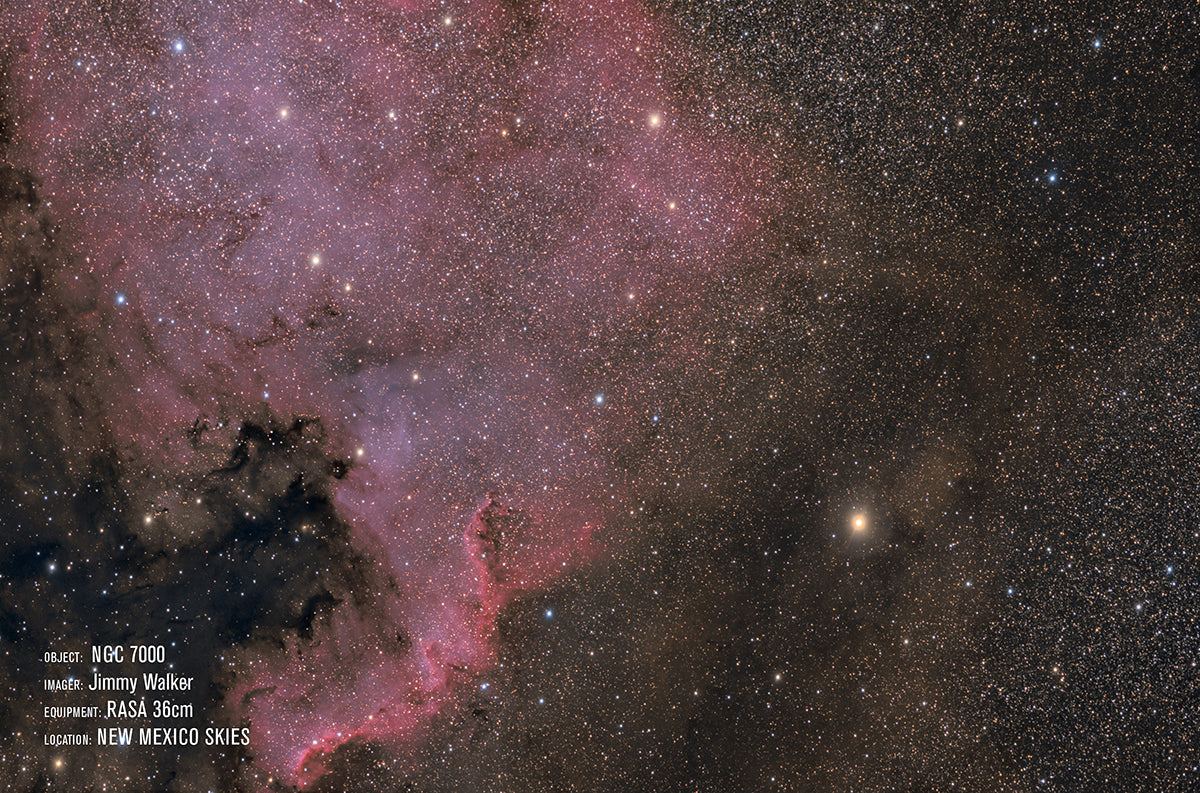
- Wide-field deep-sky astrophotography of nebulae, galaxies, and large emission regions
- Fast, short-exposure imaging of faint, low-surface-brightness targets
- Space surveillance and Space Situational Awareness (SSA)
- Near-Earth object tracking and wide-field sky surveys
- Observatory-class and permanent-pier scientific imaging programs
- Multi-system professional RASA deployments
Compatibility and Accessory Notes
- Camera mounting: Imaging sensor mounts at the front prime-focus location. Includes a 48 mm (M48) camera adapter; custom adapters allow a field of view up to 4.4°.
- Back focus: 55 mm with the included camera adapter; 77.5 mm from the top of the threaded collar — accommodates a wide range of imaging sensors.
- Front-end load limit: Celestron recommends no more than ~38 lbs of camera/accessory load at 5.6" from the corrector.
- Mount: Dual CGE / Losmandy-D dovetail bars. At ~34 kg (75 lb) tube weight, a high-capacity mount well above that figure is required.
- Focus motor: Compatible with the optional Celestron Focus Motor (#94155-A) for motorized, backlash-free focusing.
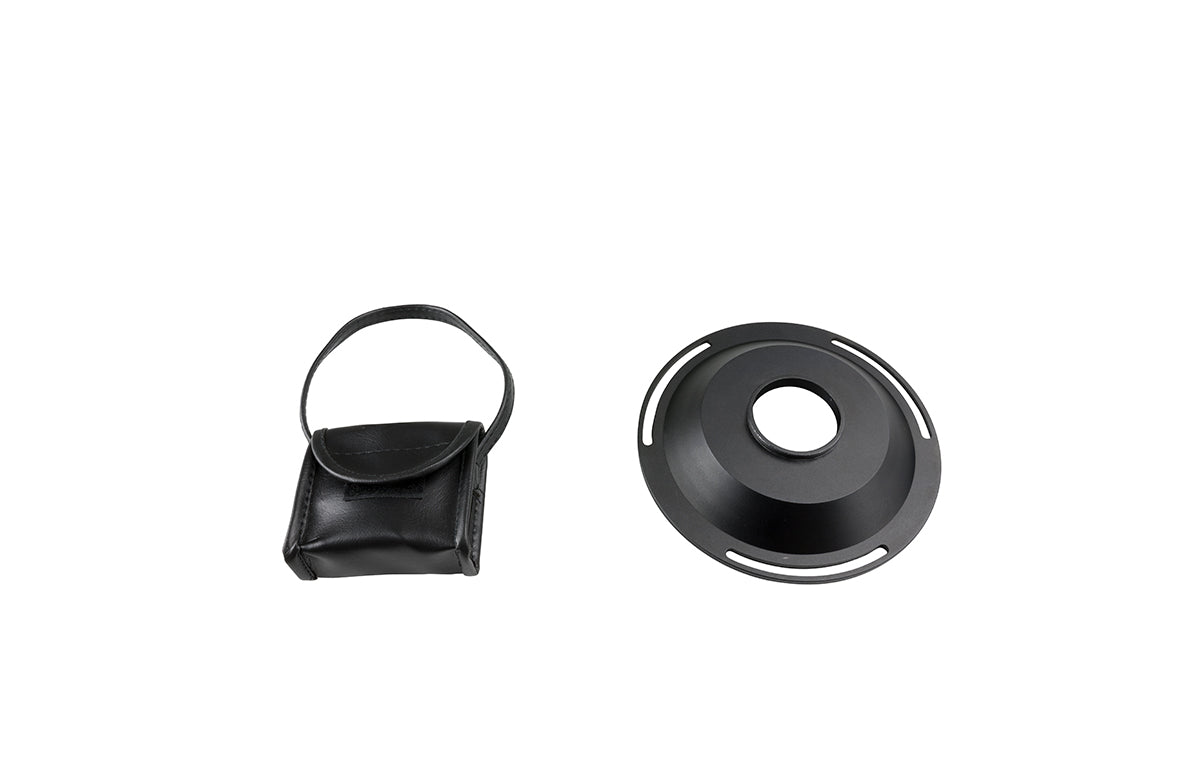
- Included: M48 camera adapter and fan battery pack. Finderscope is not included.
Important Limitations
- Camera-only — not for visual observing. The RASA design places the sensor at the front of the tube; it cannot be used with eyepieces.
- Not a beginner instrument. It requires imaging experience, a capable mount, and appropriate camera/adapter selection.
- Large and heavy — ~34 kg (75 lb), 42.5" long, 16" diameter. A two-person lift is required to mount it.
- No finderscope included.
- Freight-only shipping. Due to its size, weight, and precision alignment, it ships via palletized LTL truck freight; freight is billed separately.
- Front-end accessory load is limited — oversized camera trains can affect performance and balance.
Frequently Asked Questions
Is this good for beginners? No. The RASA 36 V2 is a professional-grade astrograph for experienced imagers and institutions.
What is it best used for? Fast, wide-field deep-sky astrophotography and scientific applications such as space surveillance and sky surveys.
Is it for visual observing or astrophotography? Astrophotography only — it is a camera-based astrograph and cannot be used visually.
What cameras and adapters does it work with? It ships with a 48 mm (M48) camera adapter and accommodates a wide range of imaging sensors within its 55–77.5 mm back-focus range; custom adapters extend the usable field up to 4.4°.
Does it require additional accessories? Yes — a high-capacity mount, an imaging camera with the correct adapter, and typically a guiding solution. A focus motor (#94155-A) is optional but recommended.
What makes it different from other astrographs? Its combination of 36 cm aperture, f/2.2 speed, flat 60 mm image circle, extended 400–900 nm range, and the Ultra-Stable Focus System makes it the fastest large-aperture astrograph available off-the-shelf.
When should it not be recommended? For visual observers, beginners, portable/travel setups, light or budget mounts, or anyone who can't accommodate freight delivery and a two-person installation.
Our Recommendation
At Ontario Telescope and Accessories, we recommend the Celestron RASA 36 V2 for the advanced imager, observatory, or research program that needs maximum aperture and speed for wide-field deep-sky or scientific imaging. It solves the problem of capturing faint, expansive targets quickly and with pinpoint star quality edge-to-edge. It is not the right choice for visual observers, beginners, or portable setups — but for serious camera-based imaging at scale, the RASA 36 V2 is in a class of its own. Note that this is a freight-shipped, two-person-install instrument; plan your mount and observing site accordingly.
Shipping - Shipping will be quoted separately. This ships on a pallet and direct from Celestron.
| Optical Design | Rowe-Ackermann Schmidt Astrograph (RASA) |
|---|---|
| Aperture | 355.6 mm (14") |
| Focal Length | 790 mm (31.1") |
| Focal Ratio | f/2.2 |
| Central Obstruction | 158 mm (6.22") — 44% of aperture diameter |
| Light Gathering Power | 2581× (compared to human eye) |
| Resolution (Rayleigh / Dawes) | 0.39" / 0.36" |
| Image Circle | 60.1 mm (2.36") Ø, 4.4° |
| Useable Field | 70 mm (2.75") Ø, 5.1° |
| Wavelength Range | 400 – 900 nm |
| Spot Size | < 6.3 µm RMS across FOV |
| Optical Coatings | Enhanced aluminum, StarBright XLT multi-coated throughout |
| Off-Axis Illumination | 83% at 30 mm off-axis |
| Optical Window | 104 mm (4.09") Ø |
| Back Focus | 55 mm with included adapter; 77.5 mm from threaded collar |
| Focuser | Ultra-Stable Focus System (USFS) |
| Optical Tube | Aluminum — 1079.5 mm (42.5") long, 406.4 mm (16") diameter |
| Weight | 34.02 kg (75 lb) |
| Mounting | Dual CGE / Losmandy-D dovetail bars |
| Finderscope | Not included |
| Included Items | 48 mm (M48) camera adapter, fan battery pack |
| Other Features | 12V MagLev ventilation fan, dust-filtered vents |
| Primary Use | Camera-only wide-field astrophotography & scientific imaging (not for visual) |
You may also like
Recently viewed
Recent Blog Posts
View all
Your Guide Graph Is Lying to You
Read More

D-Size vs V-Size: A Complete Guide to Telescope Dovetail Systems
Read More

What Is Back Focus in Astrophotography? Telescope Reducers, Flatteners, and Spacing Explained
Read More