


- Description
- Specifications
Product overview
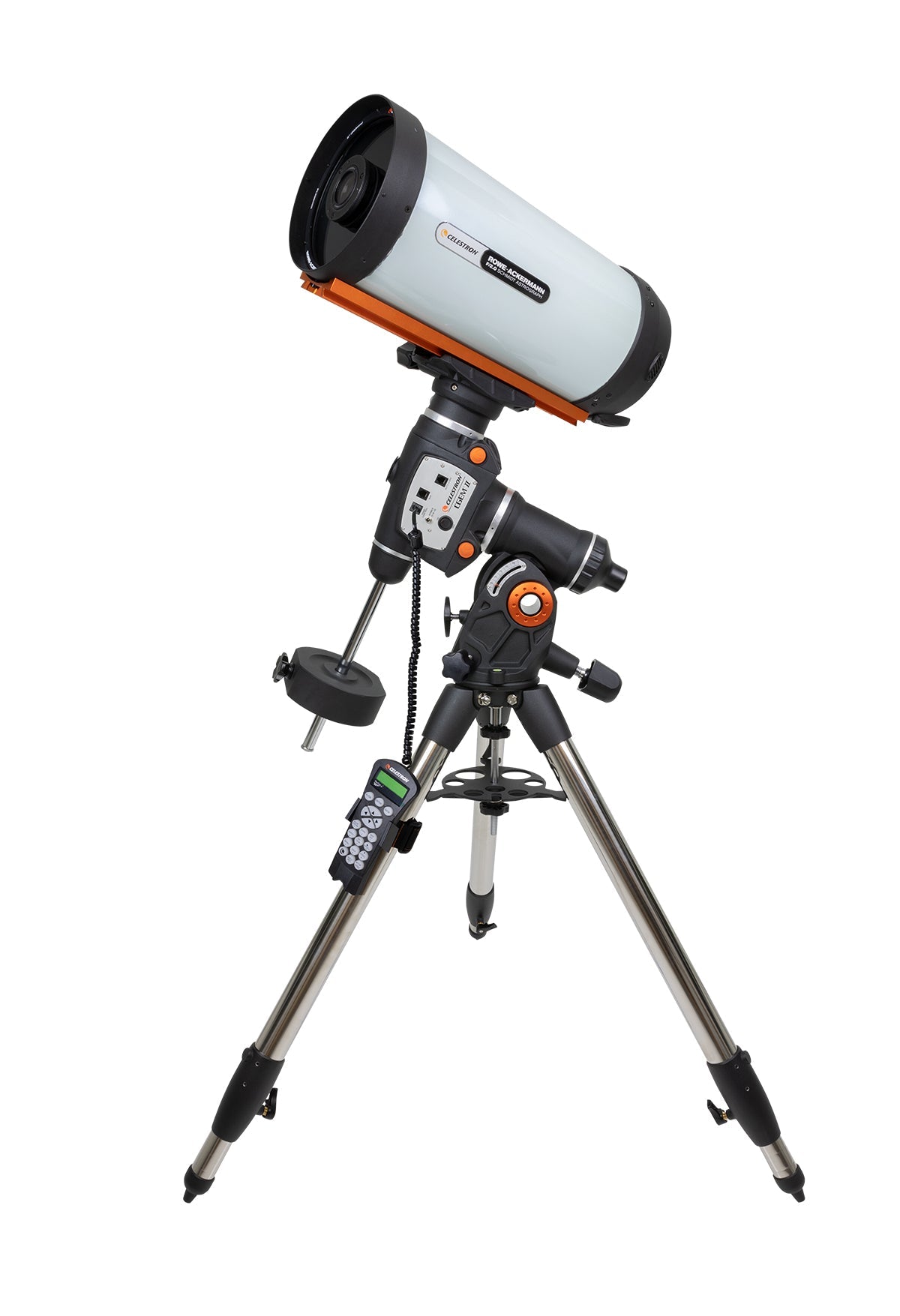
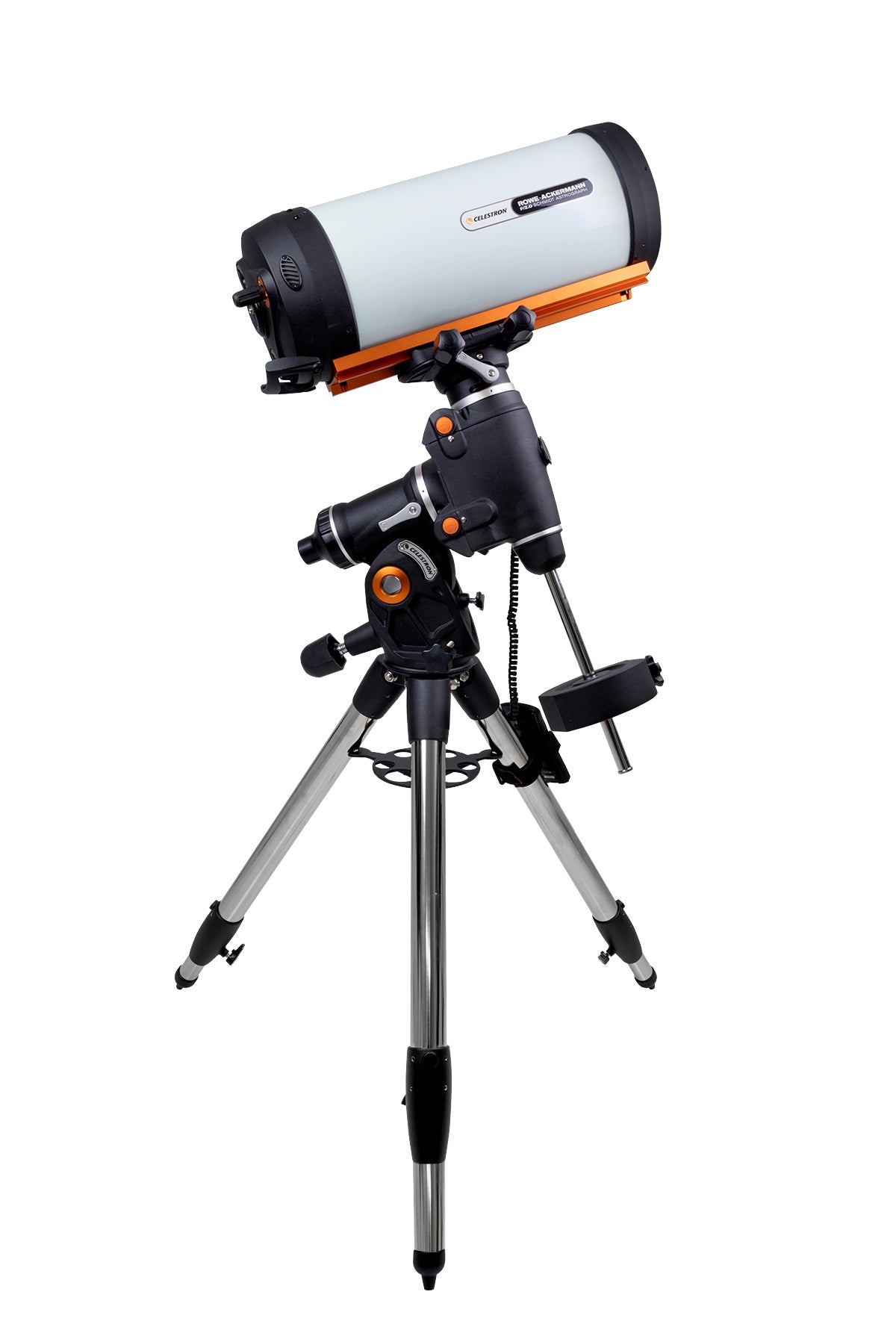
The Celestron CGEM II 800 Rowe-Ackermann Schmidt Astrograph RASA Telescope combines Celestron’s ultra-fast 8" Rowe-Ackermann Schmidt Astrograph optical tube with the CGEM II computerized equatorial mount. It is a dedicated deep-sky imaging system designed for fast, wide-field astrophotography with compatible astronomy cameras.
Who Is This Product Best For?
This package is best for intermediate to advanced astrophotographers who want a fast imaging platform for nebulae, large galaxies, star fields, and comet imaging. It is not intended as a general visual-observing telescope; it is an astrograph-first system for camera-based imaging.
Why Choose This Product?
- Fast f/2 optical design dramatically reduces exposure time compared with traditional f/8 to f/10 telescopes.
- 8" RASA optical tube is optimized for wide-field deep-sky imaging.
- CGEM II equatorial mount provides computerized GoTo tracking and support for imaging payloads.
- Ideal for one-shot colour cameras and compact cooled astronomy cameras that fit the front-cell imaging configuration.
- Excellent choice for capturing large emission nebulae, open clusters, and wide-field Milky Way targets.
Recommended Uses
- Fast deep-sky astrophotography
- Wide-field nebula imaging
- One-shot colour camera imaging
- Portable or semi-permanent imaging rigs
- Large field-of-view imaging where short exposures are useful
Compatibility and Accessory Notes
The RASA 8 is a dedicated imaging optical tube and places the camera at the front of the telescope. Camera size, cable routing, backfocus spacing, and filter compatibility are important. Use a camera and adapters that maintain the required spacing and avoid excessive central obstruction. A dew-heater or dew-control system is strongly recommended for front-cell imaging.
Important Limitations
This is not a visual-observing telescope. The RASA optical configuration is designed for cameras, not eyepieces. It is also not ideal for planetary imaging or small galaxies because the focal length is short and the field is wide. Precise spacing and careful cable management are essential for best results.
Frequently Asked Questions
Is this good for beginners?
It is better for intermediate or advanced imagers. The fast optical system is powerful, but camera spacing, focus, and cable routing need care.
What is it best used for?
It is best for fast wide-field deep-sky imaging, especially large nebulae, star fields, open clusters, and wide-field galaxy groupings.
Is it for visual observing or astrophotography?
Astrophotography. The RASA is not designed for eyepiece-based visual observing.
Does it require additional accessories?
Yes. You will need a compatible imaging camera, adapters, power, likely dew control, and filters or filter solutions that work with the RASA optical path.
When should it not be recommended?
Do not choose this for visual observing, lunar/planetary imaging as a main goal, or small-target long-focal-length imaging.
Our Recommendation
Ontario Telescope recommends the CGEM II 800 RASA package for imagers who want a fast, dedicated wide-field deep-sky system. Choose it when exposure speed and broad fields matter; choose an SCT, EdgeHD, or Maksutov system if your priority is visual observing, planets, or small deep-sky objects.
| Product Type | Dedicated astrograph telescope package |
|---|---|
| SKU | 12020 |
| Aperture | 203 mm / 8 in |
| Focal Length | 400 mm |
| Focal Ratio | f/2 |
| Optical Design | Rowe-Ackermann Schmidt Astrograph |
| Mount | CGEM II computerized German equatorial mount |
| Primary Use | Fast wide-field deep-sky astrophotography |
| Visual Use | Not for visual observing |
| Important Note | Requires compatible camera, correct backfocus spacing, dew control, and careful cable routing. |
You may also like
Recently viewed
Recent Blog Posts
View all
Your Guide Graph Is Lying to You
Read More

D-Size vs V-Size: A Complete Guide to Telescope Dovetail Systems
Read More

What Is Back Focus in Astrophotography? Telescope Reducers, Flatteners, and Spacing Explained
Read More