
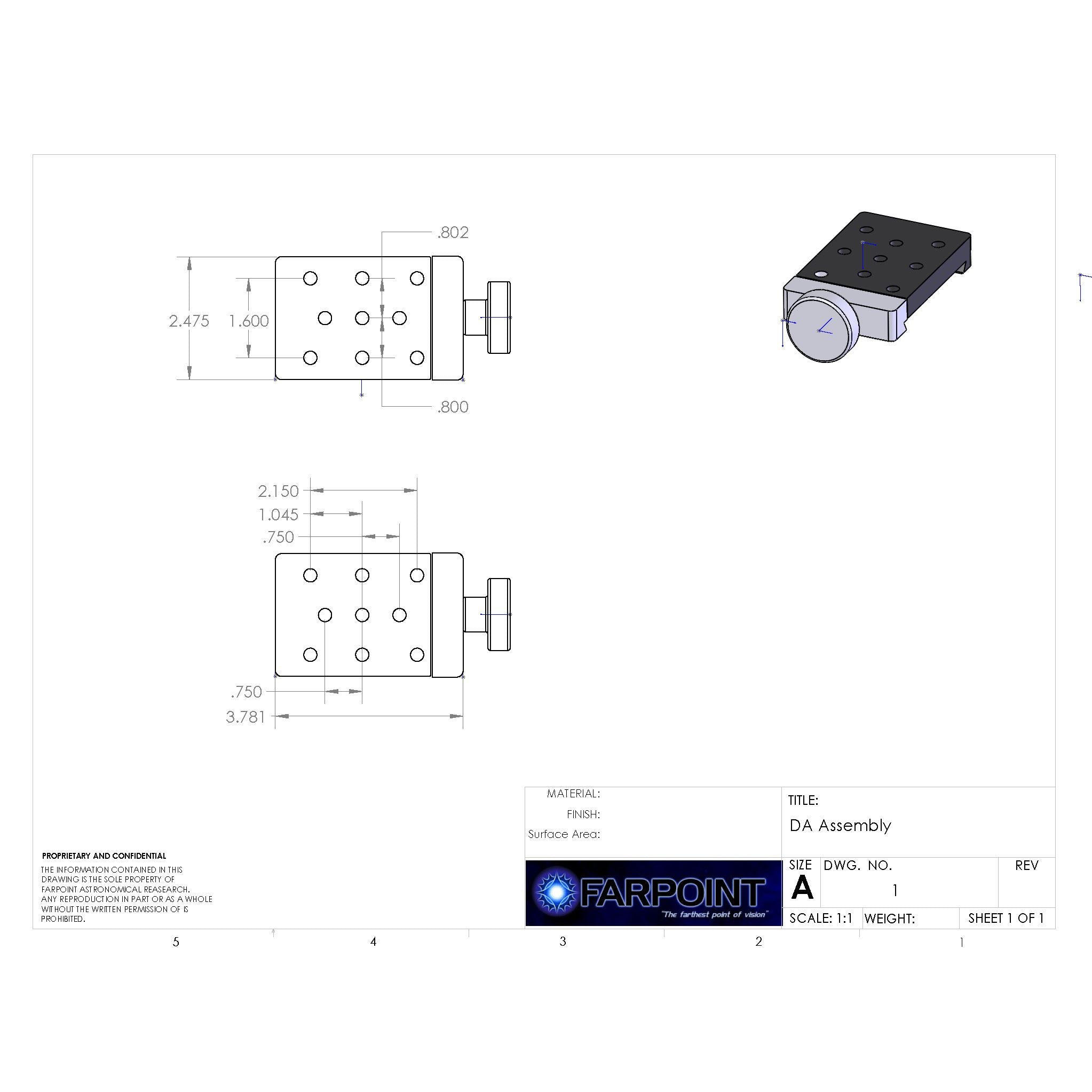


- Description
- Specifications
Product Overview
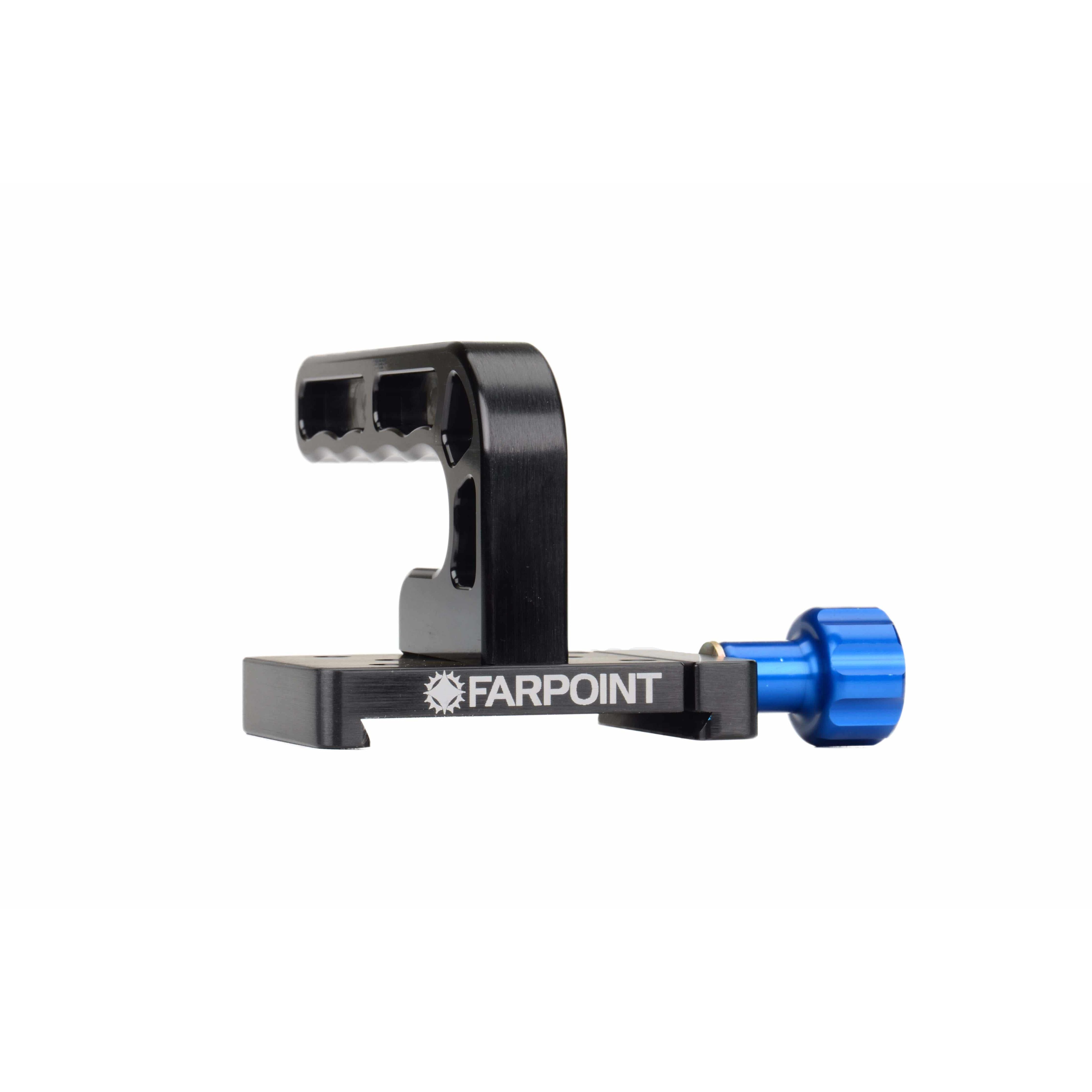
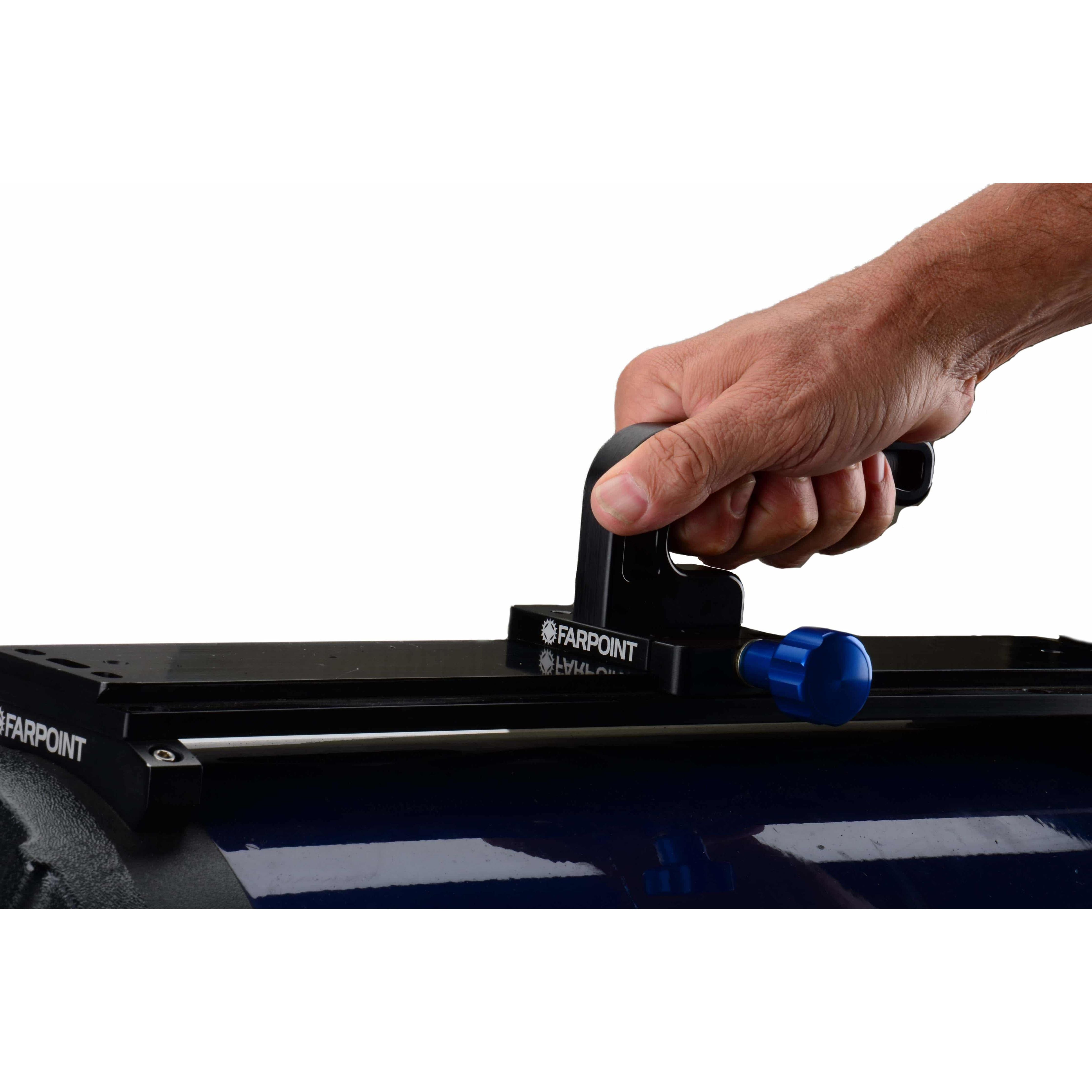
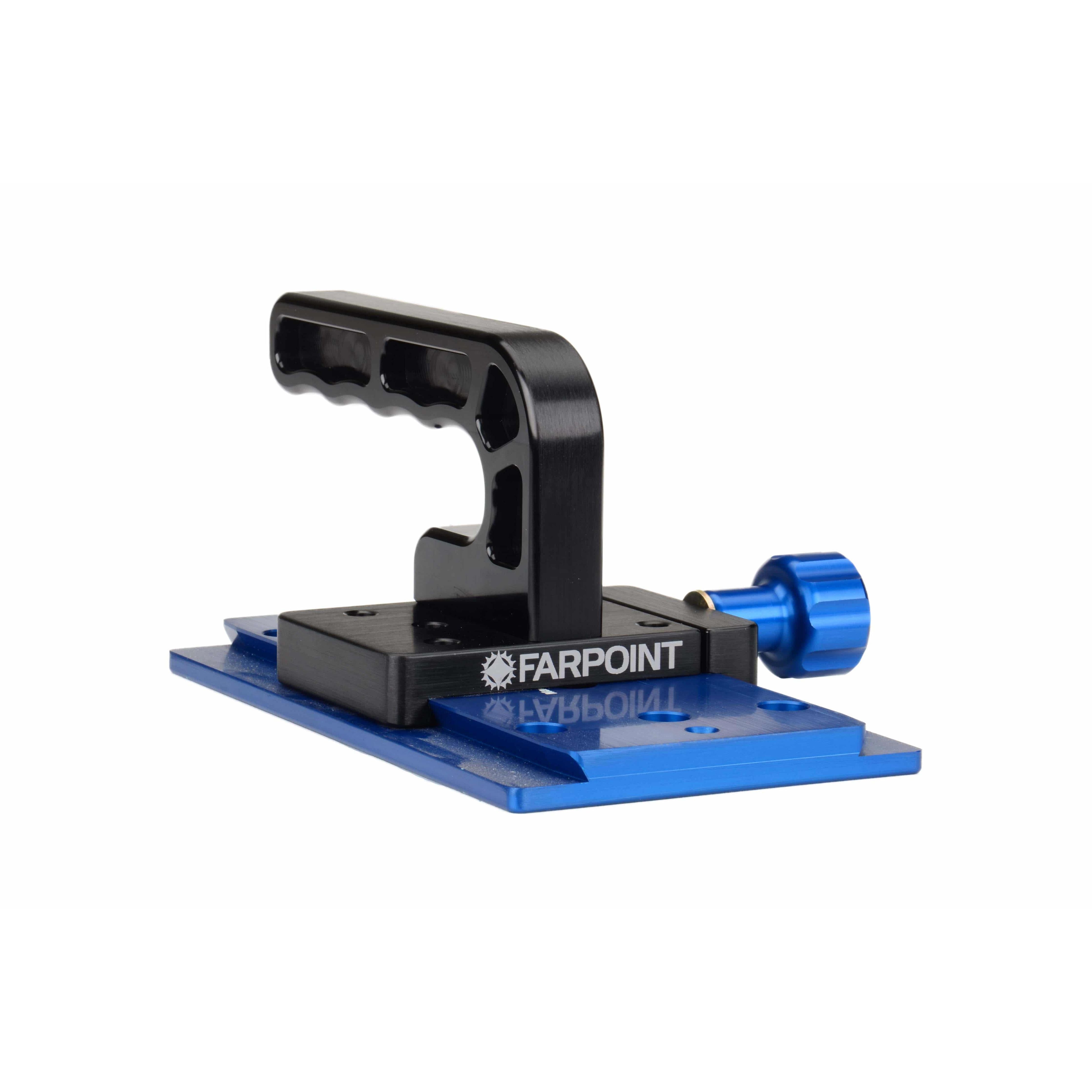
This kit pairs an open L-shaped carry handle with the Farpoint Dovetail Accessory Adapter (FDA), the quick-release base that clamps onto a D-size (Losmandy-style) dovetail bar. Together they give a telescope a proper handhold, so the tube is lifted by the bar rather than by the focuser, the corrector plate or whatever else offers a grip. The clamp tightens with a knob, so the handle goes on and comes off without tools and sits anywhere along the bar. CNC-machined in the USA; the complete kit weighs 0.688 lb (312 g).
Who It’s For
This is a good match if you…
- Carry a tube to and from a setup spot and want a handle placed at its balance point.
- Run a D-size (Losmandy-style) dovetail and have no FDA base yet.
- Prefer an open hook-style grip that the hand drops into from above.
- Want a handle that comes off in seconds so it does not foul the saddle when the tube is mounted.
Key Features & Design
- Complete kit: both the L-handle and the FDA quick-release adapter are included.
- Quick-release knob: tool-free on and off, with no hex keys involved in fitting or removing the handle.
- Positions anywhere along the bar: the clamp is not tied to a hole pattern, so the handle can be set over the balance point.
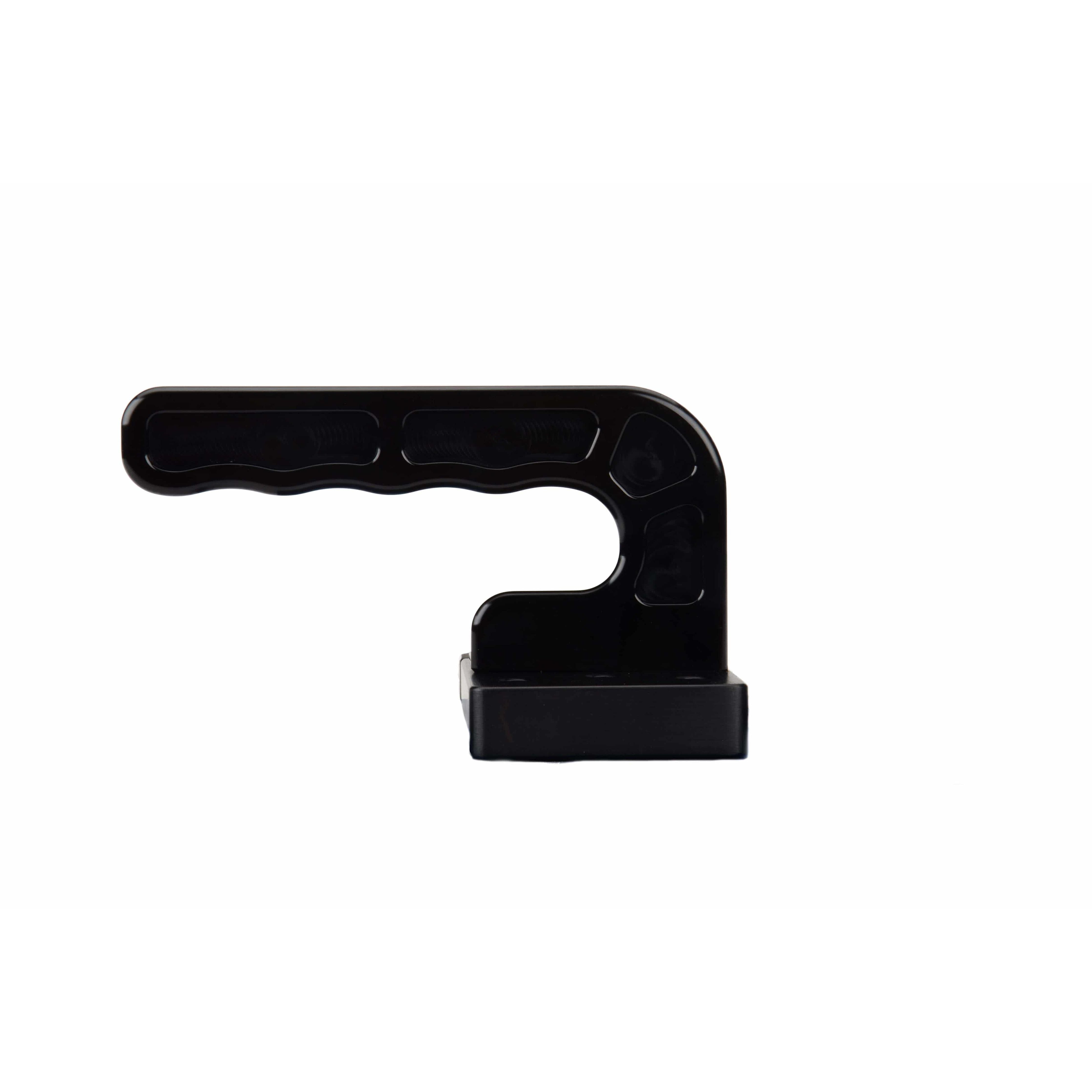
- Open L-shaped grip: a hook profile that the hand enters from the side rather than through a closed loop.
- 0.688 lb complete: light enough to leave fitted during transport without changing the load picture.
- CNC-machined in the USA: aluminum construction cut to a repeatable profile.
Mechanical Design
The FDA is the working part of this kit. Its body straddles a D-size bar and a knob draws a clamping jaw up against the dovetail’s angled edges, so the adapter grips the taper of the bar rather than relying on a set screw pressed into one face. Because the grip comes from the dovetail profile itself, the adapter holds anywhere along the bar’s length and can be slid to the tube’s balance point by feel. The L-handle then bolts to the FDA’s accessory face, and that same face accepts the other FDA accessories — the D-handle, or a ball head camera adapter for piggyback work — so the base carries over if the accessory on top changes later.
Recommended Uses
- Lifting an SCT or refractor tube out of a case and onto the mount saddle.
- Carrying a tube across a field or down stairs with one hand free for a light.
- Moving a tube between a garage and an observing pad at the start and end of a session.
- Keeping an FDA base on the bar permanently and swapping between a handle and a ball head camera adapter.
Compatibility and Accessory Notes
The FDA base clamps to D-size (Losmandy-style) dovetail bars only; the narrower V-size (Vixen-style) bar is a different profile and the adapter does not span it. The handle attaches to the FDA accessory face, which is shared across the Farpoint FDA range — the D-handle kit is the closed suitcase-style equivalent of this one, and the L-handle is also sold on its own for anyone who already owns an FDA. Tell us your telescope and the dovetail bar on it and we’ll confirm the fit.
Good to Know Before You Order
- D-size bars only. The FDA base spans the D (Losmandy-style) profile and does not clamp the narrower V-size Vixen bar.
- The FDA is included here. Owners of an existing FDA generally buy the L-handle on its own instead of this kit.
- The handle occupies space on the bar. Where the saddle clamps over the same stretch of bar, the handle is removed by the knob and refitted afterwards.
- L-grip or D-grip. This is the open L profile; the closed suitcase-style loop is the D-handle version of the same kit.
- Kit weight is 0.688 lb (312 g). Left fitted, that weight rides on the tube.
Frequently Asked Questions
Is it difficult to install?
The FDA clamps over the dovetail bar and tightens with a knob, so fitting takes seconds and needs no tools. The handle arrives bolted to the adapter, or attaches to its accessory face with the supplied hardware.
Is the dovetail adapter included?
Yes. This kit includes both the L-handle and the Farpoint Dovetail Accessory Adapter.
Will it fit my dovetail bar?
The FDA base clamps to D-size (Losmandy-style) bars. Narrower V-size (Vixen-style) bars use a different profile.
L-handle or D-handle — what is the difference?
Both attach to the FDA. The L-handle is an open hook that the hand enters from the side; the D-handle is a closed loop, like a suitcase handle.
Can the handle be moved along the bar?
Yes. The clamp holds on the dovetail taper rather than in a hole, so the handle can sit anywhere along the bar, including over the balance point.
Bottom Line
In short: an open L-grip carry handle and the FDA quick-release adapter in one 0.688 lb kit, clamping anywhere along a D-size dovetail bar and coming off without tools.
| Includes | L-shaped carry handle + FDA quick-release adapter — complete kit |
|---|---|
| Fits | D-size (Losmandy-style) dovetail bars |
| Clamping | Quick-release knob — tool-free on and off, clamps anywhere along the bar |
| Grip style | Open L-shaped handle |
| Construction | CNC-machined in the USA |
| Weight | 0.688 lb (312 g) |
| Country of origin | United States |
You may also like
Recently viewed
Recent Blog Posts
View all
Your Guide Graph Is Lying to You
Read More

D-Size vs V-Size: A Complete Guide to Telescope Dovetail Systems
Read More

What Is Back Focus in Astrophotography? Telescope Reducers, Flatteners, and Spacing Explained
Read More