
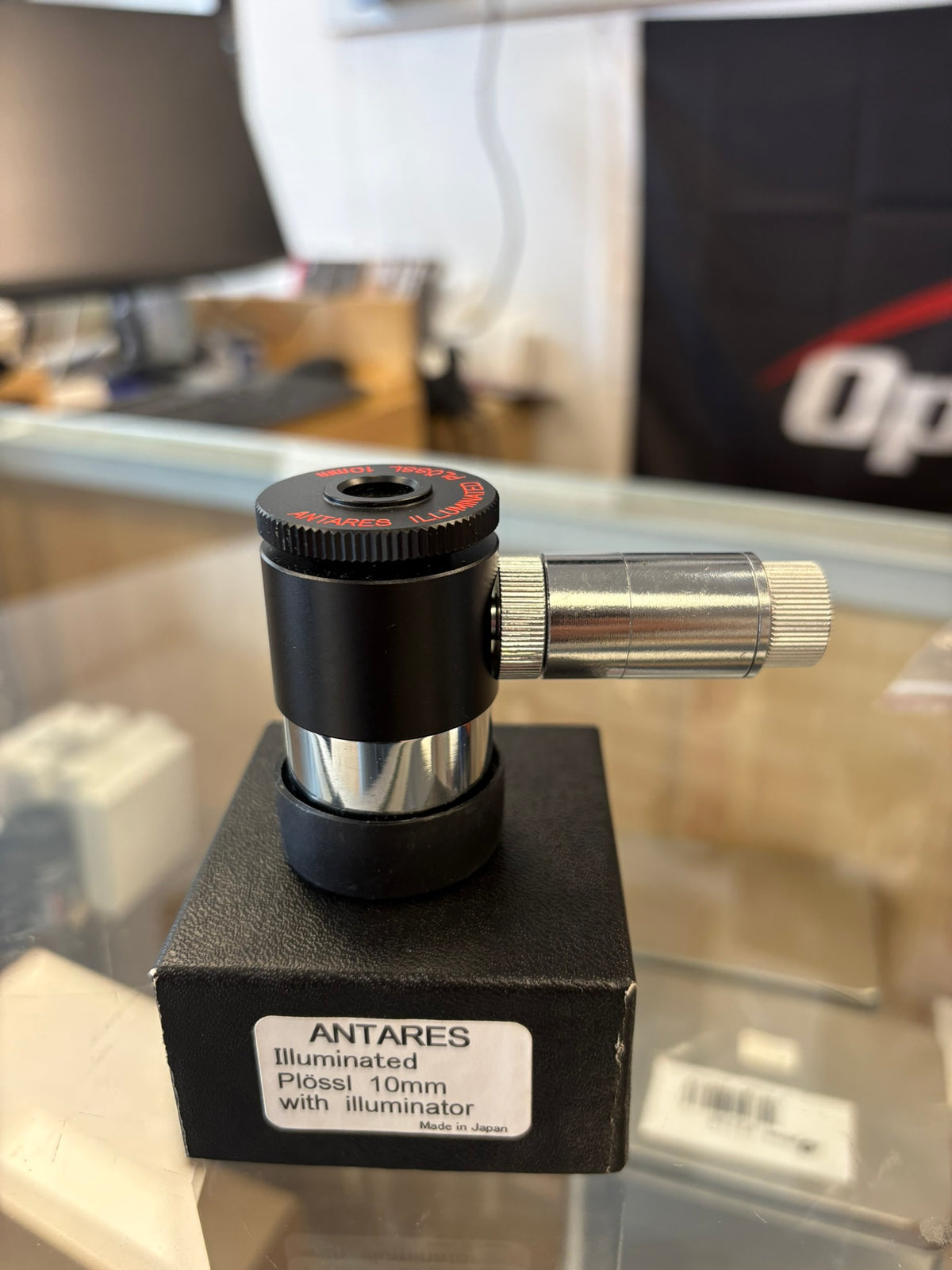
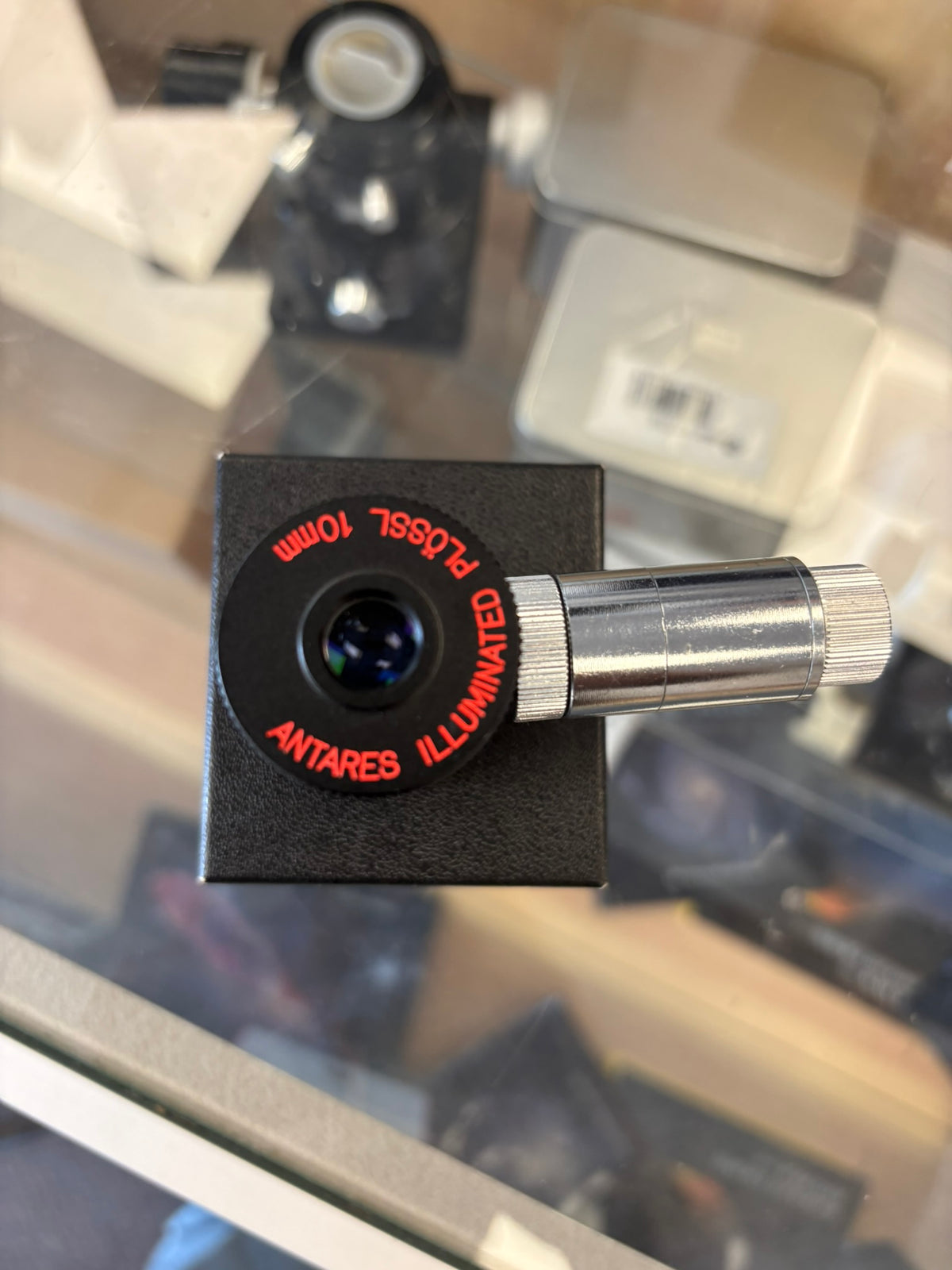


- Description
Used – Excellent Condition. An older, Japanese-made Antares 10 mm illuminated reticle Plössl eyepiece, complete in its original box. It has been fully tested: the illuminator works and a working battery is fitted.
What's Included
- Antares 10 mm illuminated reticle Plössl eyepiece, 1.25" barrel
- Reticle illuminator with working battery installed
- Eyepiece caps
- Original box
About the Antares 10mm Illuminated Reticle Eyepiece
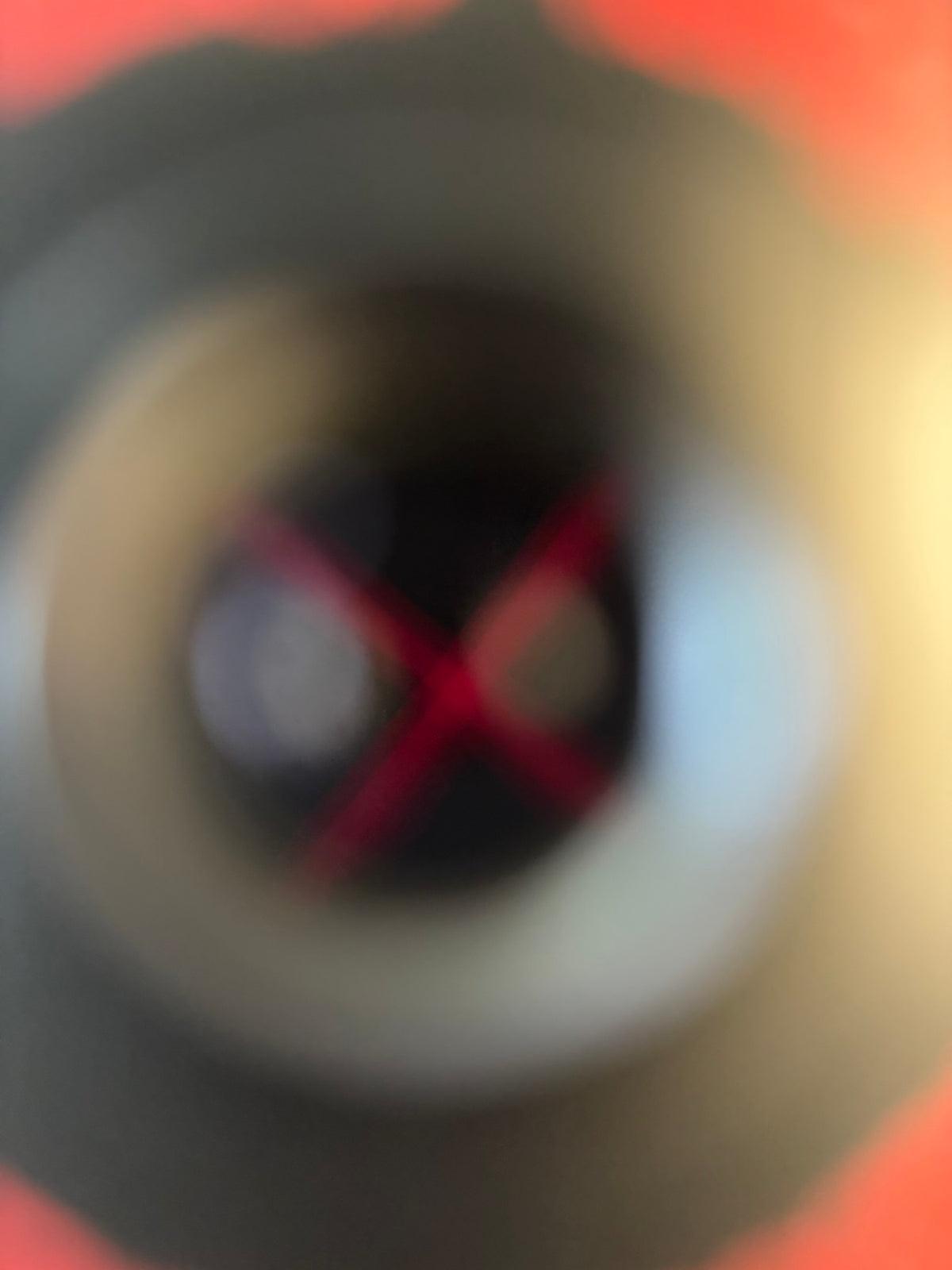
A reticle eyepiece puts a lit crosshair in the field of view, so a star can be held precisely centred. That makes it useful for manual guiding during long-exposure photography, for polar alignment and drift alignment, and for centring objects when aligning a GoTo mount or a finder. This one has a double-crosshair reticle, with two parallel lines in each direction, so the guide star sits in a small box rather than being hidden behind a single line.
This eyepiece is a Japanese-made example from Antares' earlier range and is no longer part of Antares' current line-up.
Final Sale
This item is sold as a Final Sale. All used equipment sales are final. Please review our Used Equipment Sale Policy before purchasing.
You may also like
Recently viewed
Recent Blog Posts
View all
Your Guide Graph Is Lying to You
Read More

D-Size vs V-Size: A Complete Guide to Telescope Dovetail Systems
Read More

What Is Back Focus in Astrophotography? Telescope Reducers, Flatteners, and Spacing Explained
Read More