


- Description
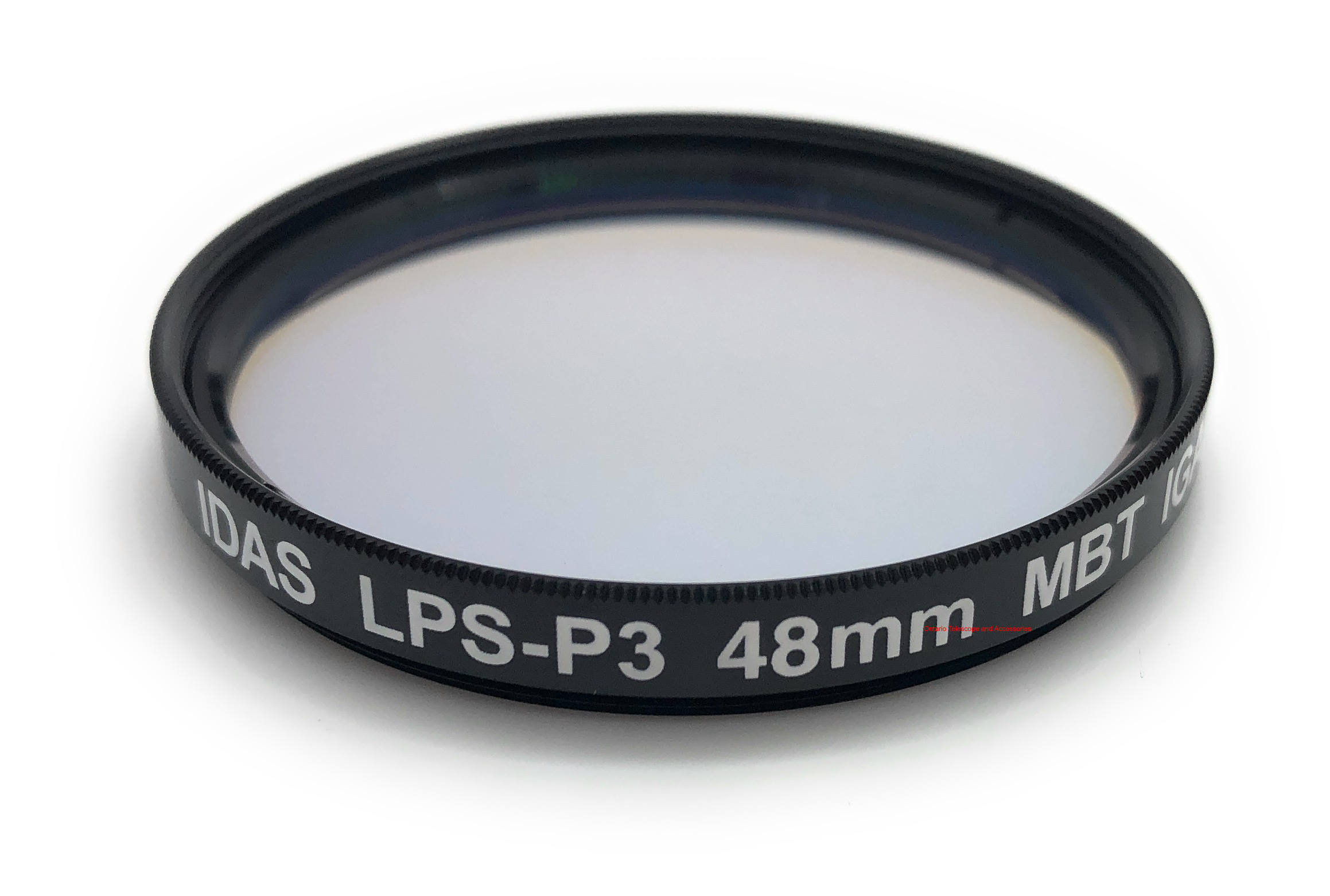
The Japanese-made IDAS P3 LPS is in our opinion the BEST Light Pollution Suppression filter for astro photography with DSLR, colour and mono CCD cameras.
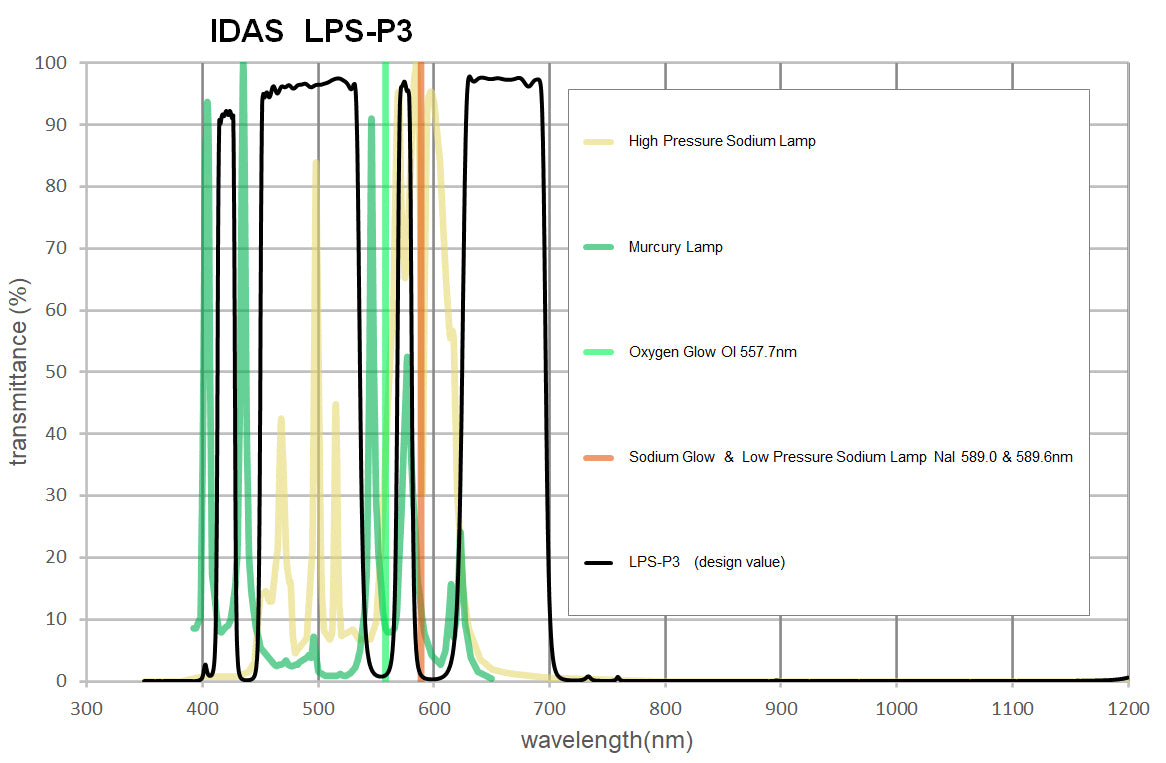
Light pollution suppression (LPS) filters are designed to suppress the common emission lines generated by artificial lighting, yet allow the important nebula emission lines to pass, thus enhancing the contrast of astronomical objects, particularly emission nebulae (see filter plots).
Unlike other light pollution suppression filters, IDAS filters are specifically designed for balanced colour transmission using the IDAS unique Multi-Bandpass Technology (MBT) process. The balanced transmission allows colour photographs to be taken with minimal colour cast to broadband emission objects such as stars, galaxies and globular clusters.
IDAS LPS filters utilize the unique IDAS Ion Gun Assisted Deposition (IGAD) coating technology for superior coating durability (quartz hardness) and safer cleaning. IGAD coatings also improve temperature and humidity stability, reducing spectrum shifts down to +/-1nm from the +/-3 or 4nm shift of standard coatings.
Features for LPS-P3 are
- Primary target light pollution to be suppressed are mercury and high/low sodium vapor lines. So different concept from LPS-D2 and NGS1
- More strongly blocking UV and NIR until 1200nm than previous models.
- Color balance is more tweaked for astro one-shot color cameras.
- Higher and flatter transmission peaks while deeper optical density for blocking sections – higher image contrast and less reflections possible
You may also like
Recently viewed
Recent Blog Posts
View all
Your Guide Graph Is Lying to You
Read More

D-Size vs V-Size: A Complete Guide to Telescope Dovetail Systems
Read More

What Is Back Focus in Astrophotography? Telescope Reducers, Flatteners, and Spacing Explained
Read More