
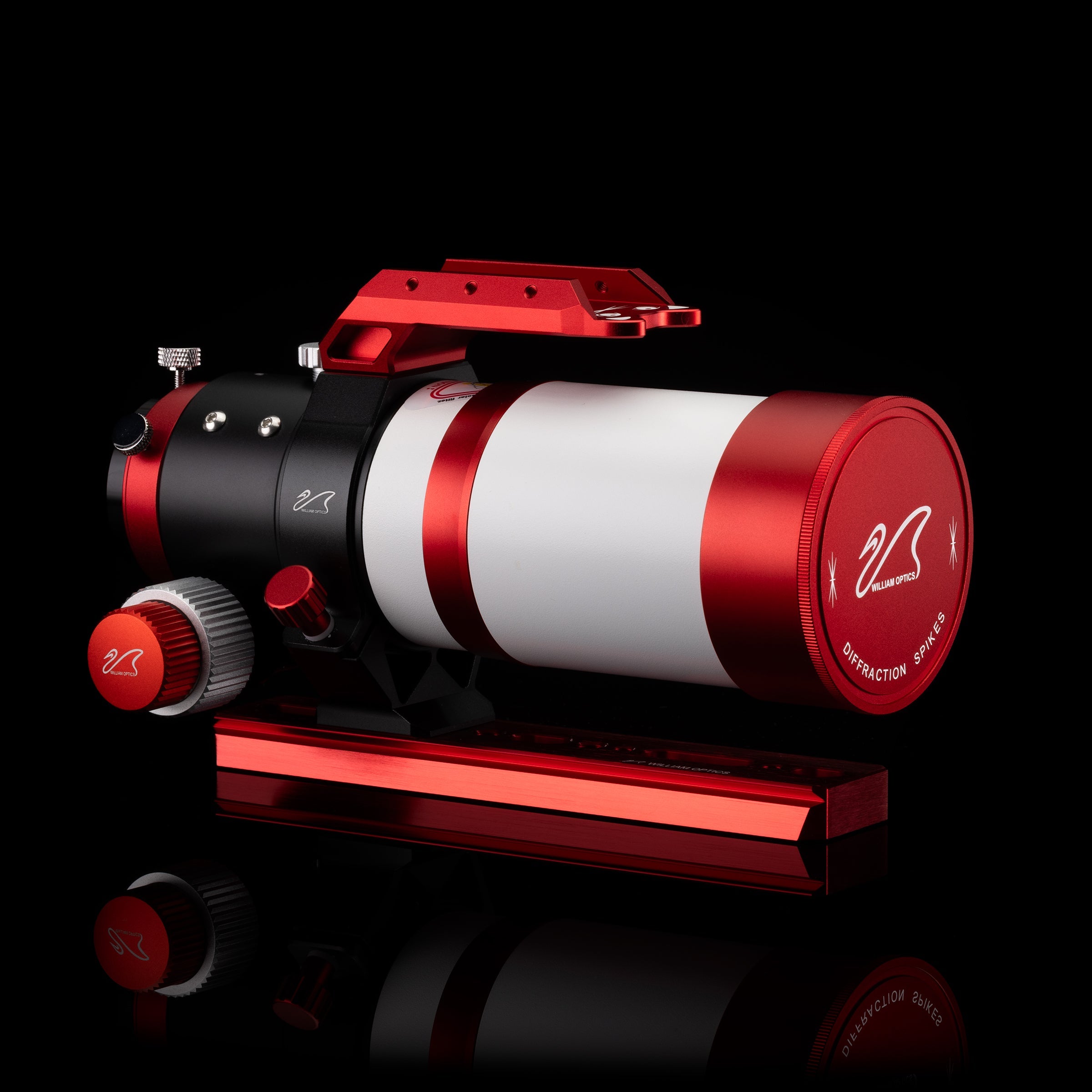
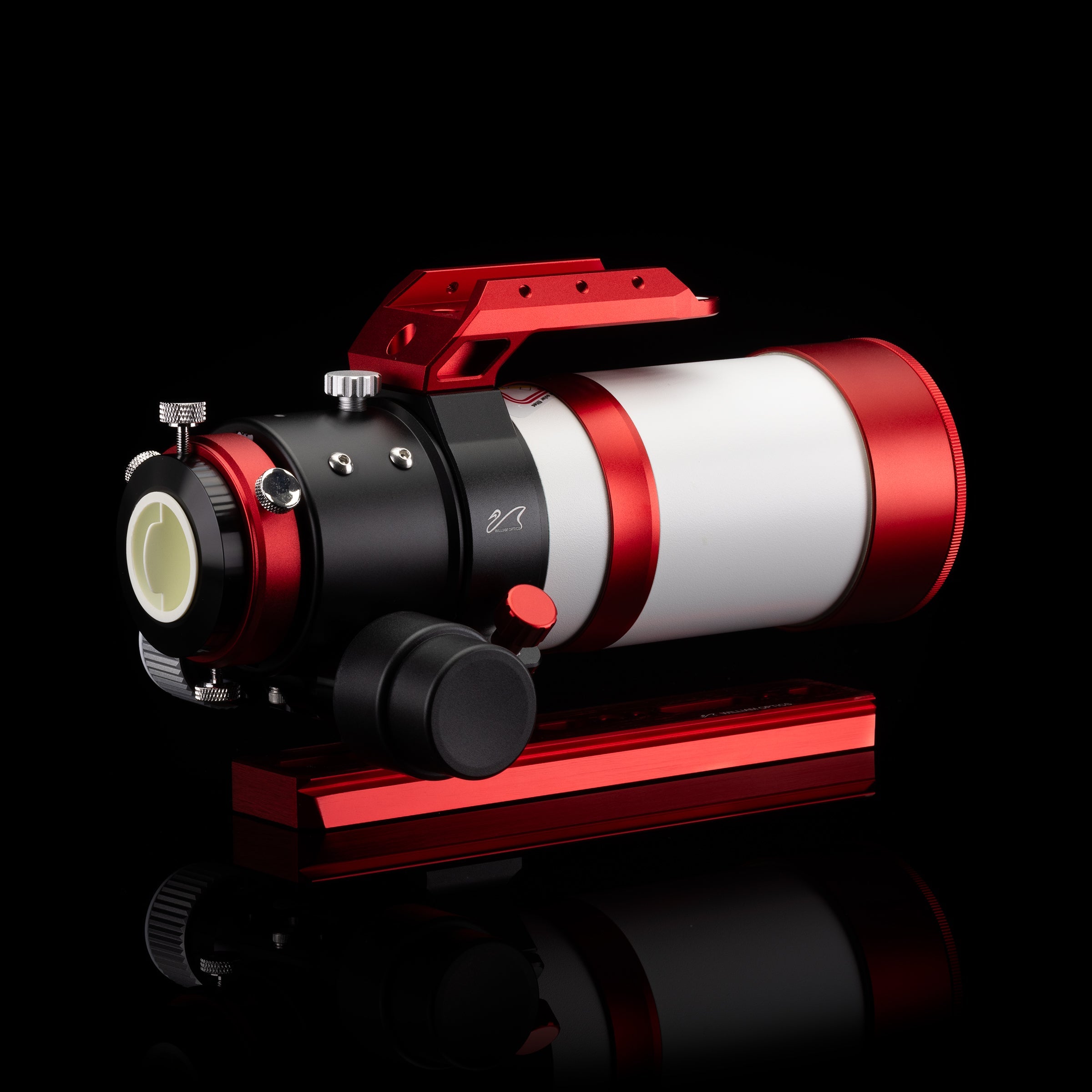


- Description
- Specifications
The William Optics Zenithstar 61 II APO is a compact 61mm f/5.9 refractor designed for visual astronomy, travel, wildlife viewing, and wide-field astrophotography. With FPL-53 ED glass, a 360mm focal length, and a 2-inch rack-and-pinion focuser, it is a versatile small telescope for customers who want premium optics in a portable package.
Who Is This Product Best For?
The Zenithstar 61 II is best for beginners, travelling observers, visual astronomers, and astrophotographers who want one compact APO refractor that can serve multiple roles. It is especially useful for wide-field imaging, grab-and-go observing, and lightweight mount setups.
Why Choose This Product?
- 61mm FPL-53 APO optics: Sharp, high-contrast views with strong colour correction.
- 360mm focal length: Excellent for wide-field observing and imaging.
- f/5.9 focal ratio: Flexible for both visual use and camera-based imaging.
- 2-inch focuser: Supports common visual and imaging accessories.
- Portable design: Easy to transport for travel and quick observing sessions.
Recommended Uses
- Beginner visual astronomy
- Wide-field astrophotography
- Wildlife and terrestrial viewing
- Travel telescope setups
- Grab-and-go observing
Compatibility and Accessory Notes
The Zenithstar 61 II supports 2-inch accessories and can be paired with William Optics Flat61A or Flat61R optics for astrophotography. Customers using cameras should confirm adapter spacing, flattener/reducer choice, mount capacity, and focusing accessories before purchase.
Important Limitations
For best astrophotography results across larger sensors, use a suitable field flattener or reducer. Customers looking for high-magnification planetary imaging or small galaxy imaging may prefer a larger aperture or longer focal length telescope.
Frequently Asked Questions
Is the Zenithstar 61 II good for beginners?
Yes. It is compact, portable, and useful for both visual astronomy and learning wide-field astrophotography.
Can it be used visually?
Yes. It can be used for visual observing with compatible diagonals and eyepieces.
Can it be used for astrophotography?
Yes. It is well suited to wide-field astrophotography when paired with the correct flattener or reducer and a tracking mount.
Our Recommendation
The William Optics Zenithstar 61 II APO is a strong choice for customers who want a premium compact refractor for travel, visual observing, and wide-field imaging. Choose it for portability and versatility.
Optical Diagram Reports
The following optical report graphics are included for customers who want to review compatible imaging performance.


| Lens Type | Doublet air-spaced APO |
|---|---|
| Glass | FPL-53 ED glass |
| Aperture | 61 mm |
| Focal Length | 360 mm |
| Focal Ratio | f/5.9 |
| Focuser | 2-inch rack-and-pinion focuser |
| Primary Use | Visual observing, travel, wildlife viewing, and wide-field astrophotography |
| Recommended Imaging Accessory | Flat61A or Flat61R |
You may also like
Recently viewed
Recent Blog Posts
View all
Your Guide Graph Is Lying to You
Read More

D-Size vs V-Size: A Complete Guide to Telescope Dovetail Systems
Read More

What Is Back Focus in Astrophotography? Telescope Reducers, Flatteners, and Spacing Explained
Read More