
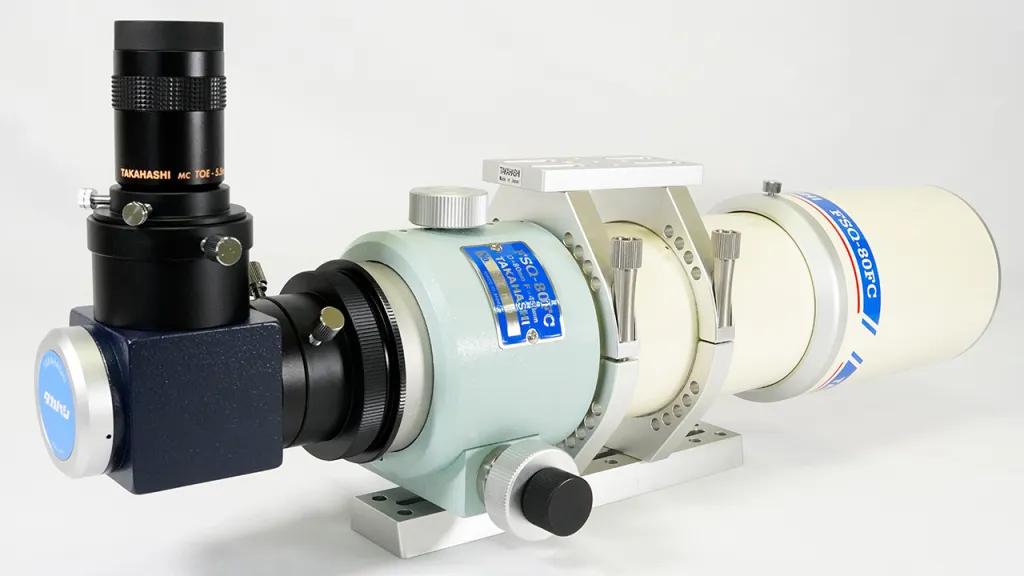
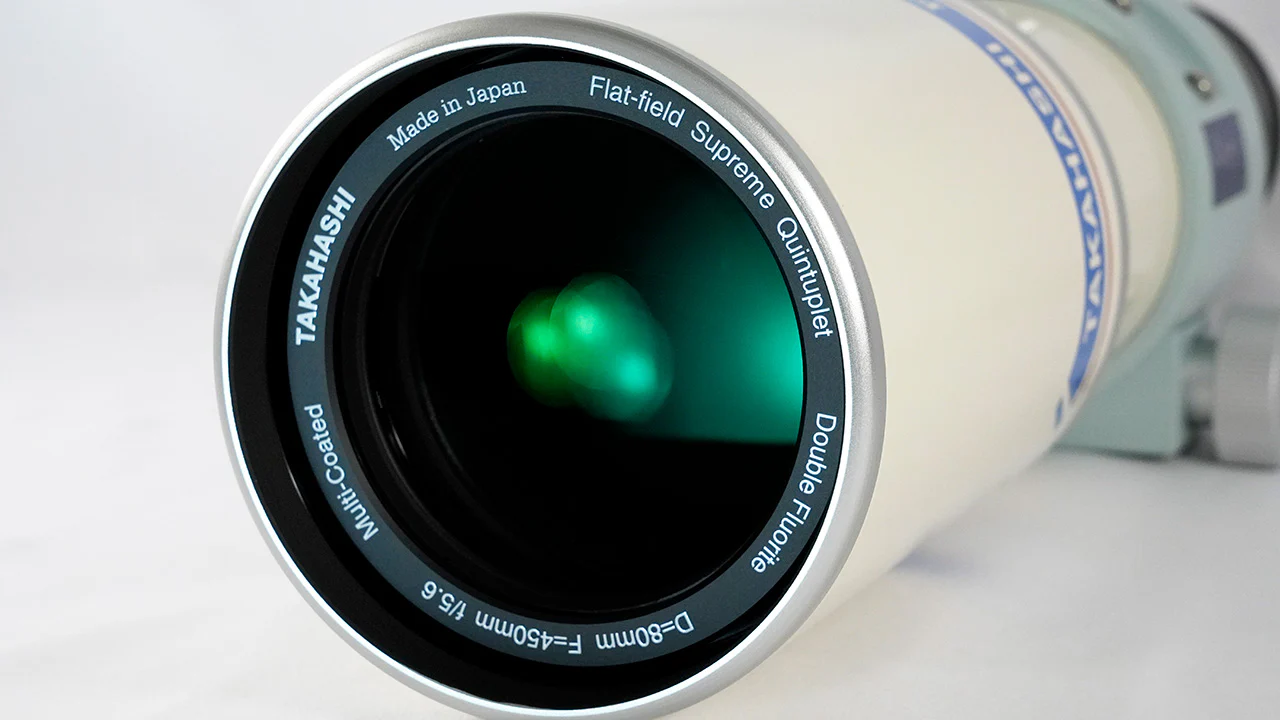
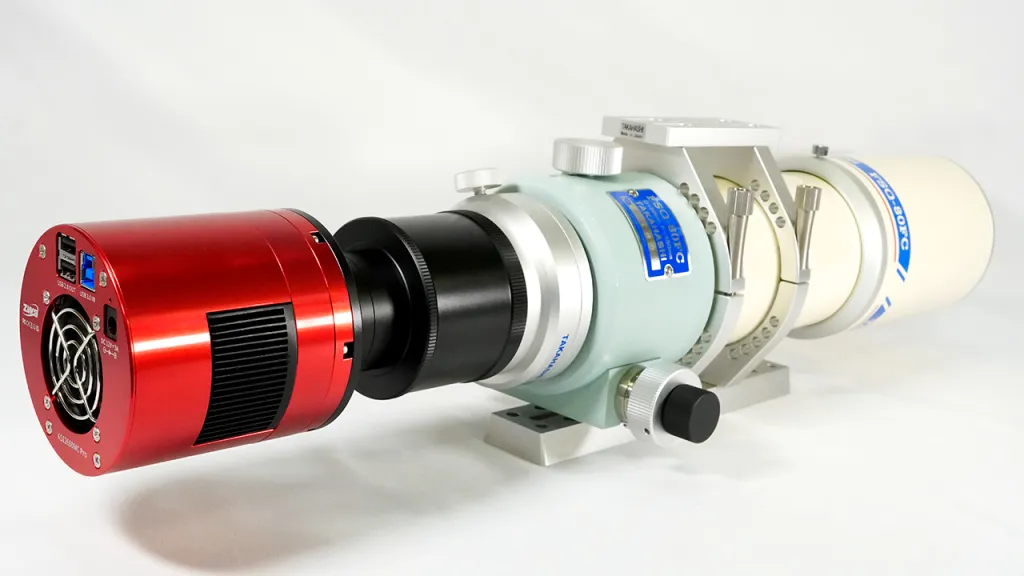
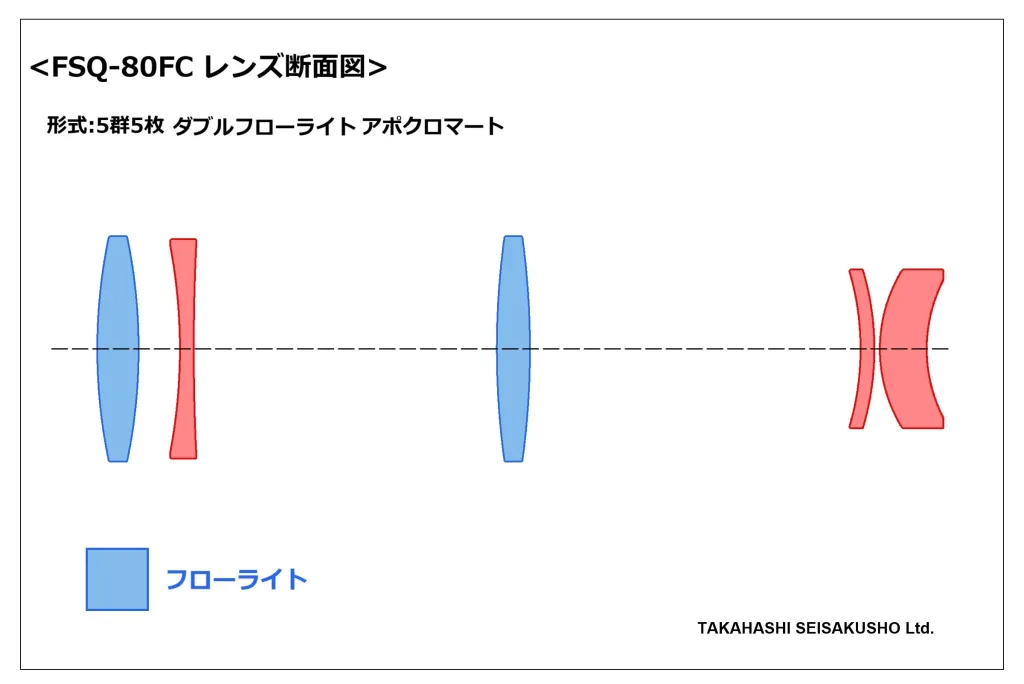


- Description
- Specifications
- Downloads
Product Overview
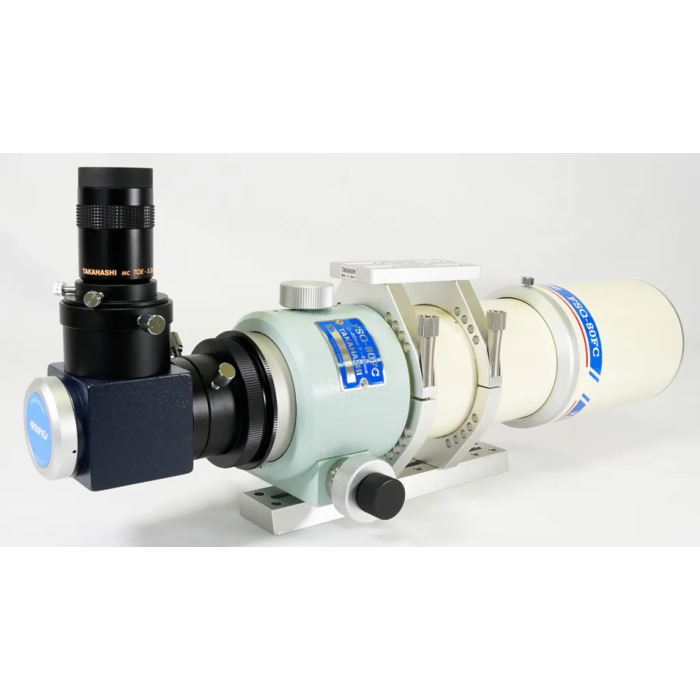
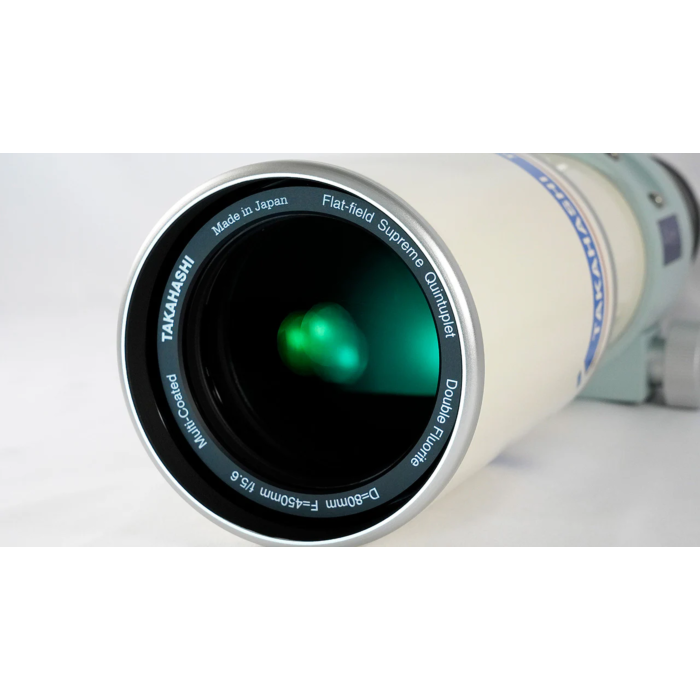
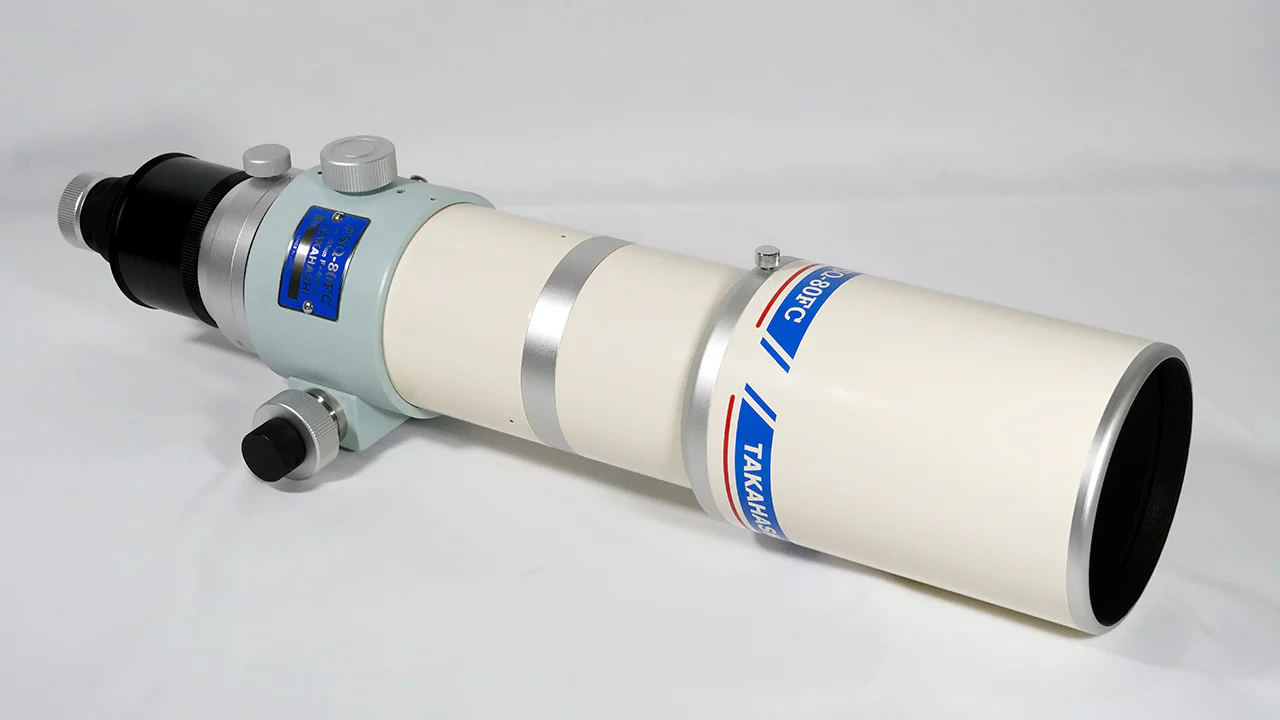
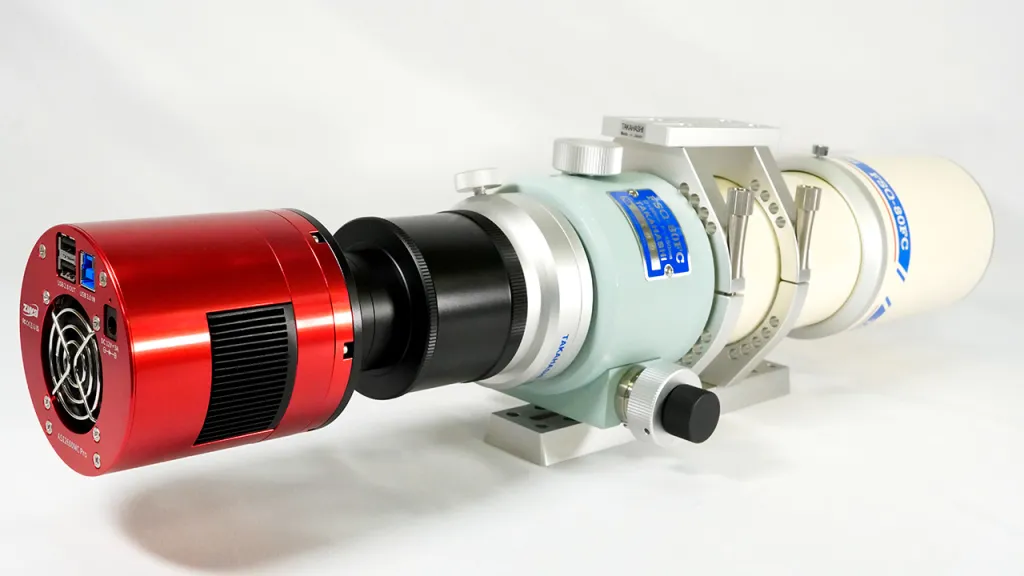
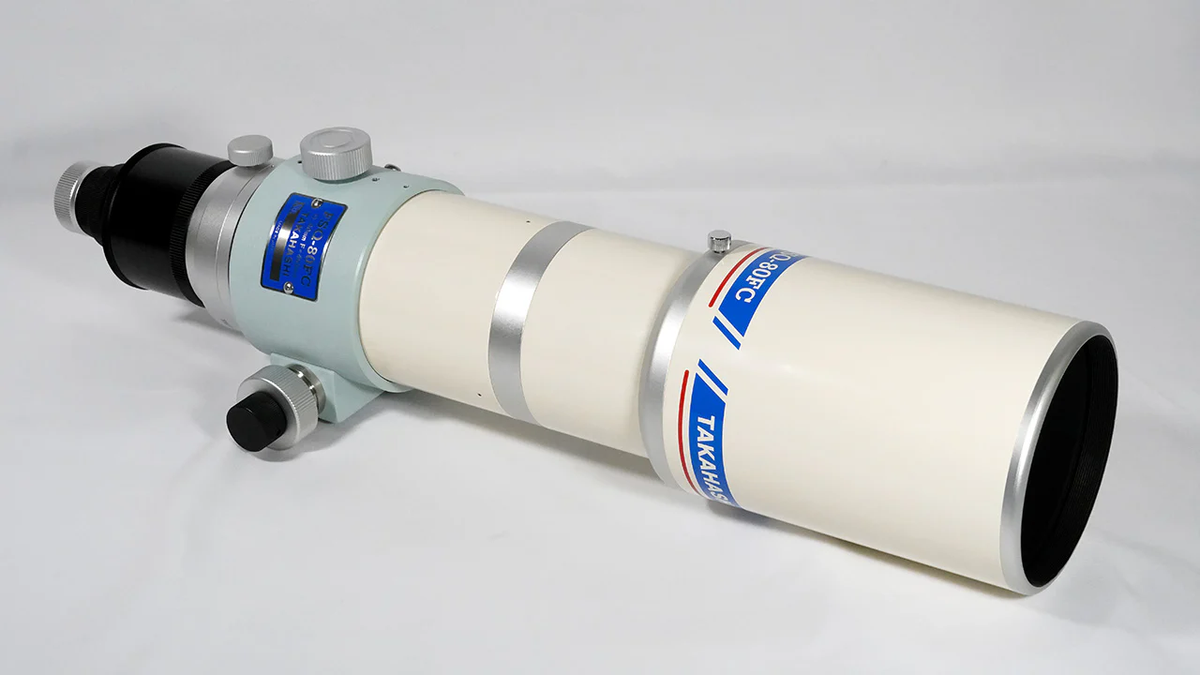
The FSQ-80FC is Takahashi's compact 80 mm imaging refractor, built around a 5-element optical design with dual fluorite elements. At a native 450 mm focal length and f/5.6, it is intended as a wide-field astrograph rather than a visual scope — the flat field and 50 mm image circle cover a full-frame sensor without a separate flattener. Takahashi lists a tube weight of approximately 4.1 kg.
Who It's For
This is a good match if you want a wide-field, grab-and-go imaging refractor that travels light — the compact tube and roughly 4.1 kg weight suit a smaller equatorial mount or a travel setup, and the flat 50 mm image circle covers full-frame sensors without an accessory flattener to buy separately.
Key Features & Design
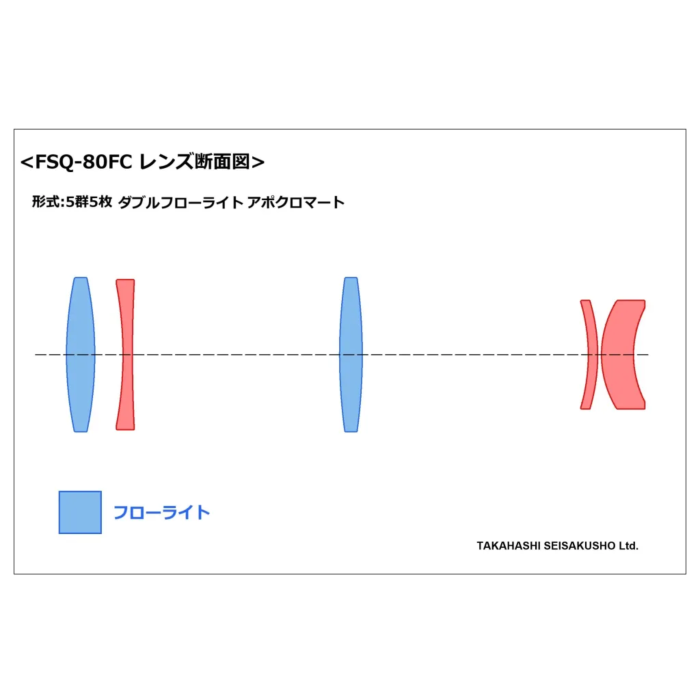
- 5-element optical design with dual fluorite elements: corrects chromatic aberration and field curvature within the tube, without a separate corrector.
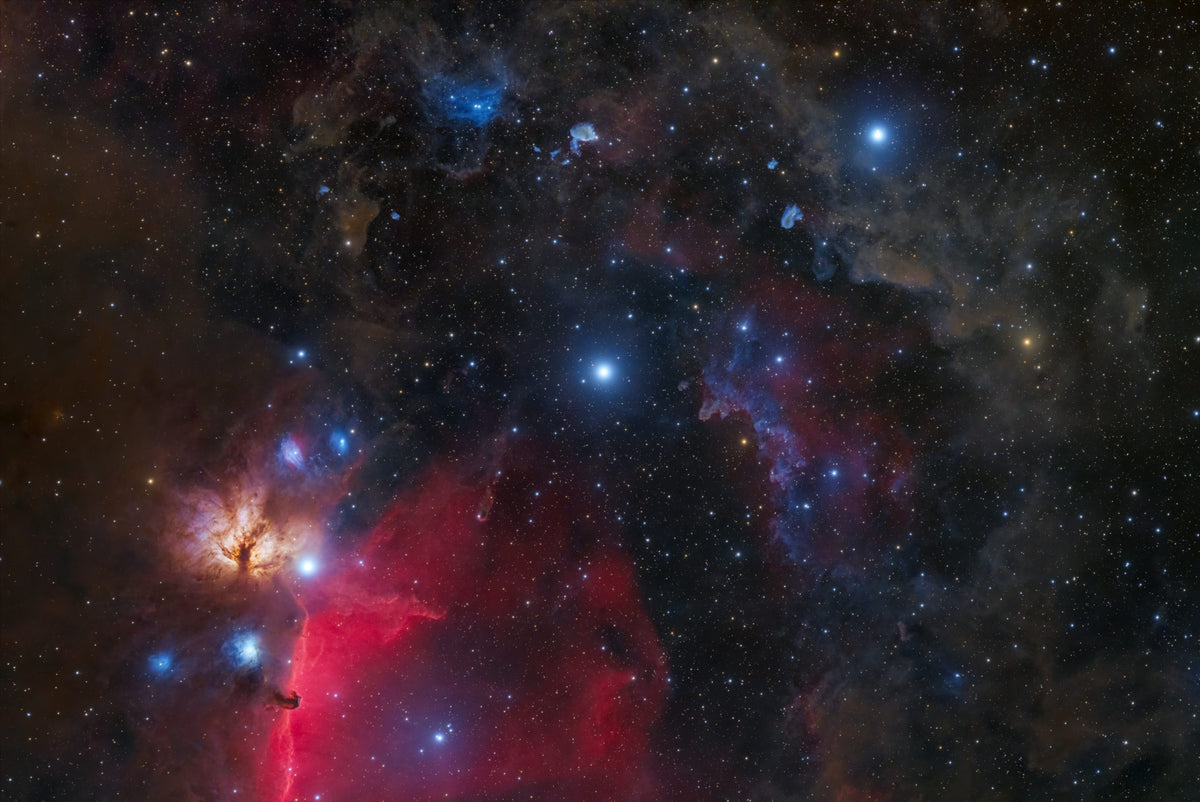
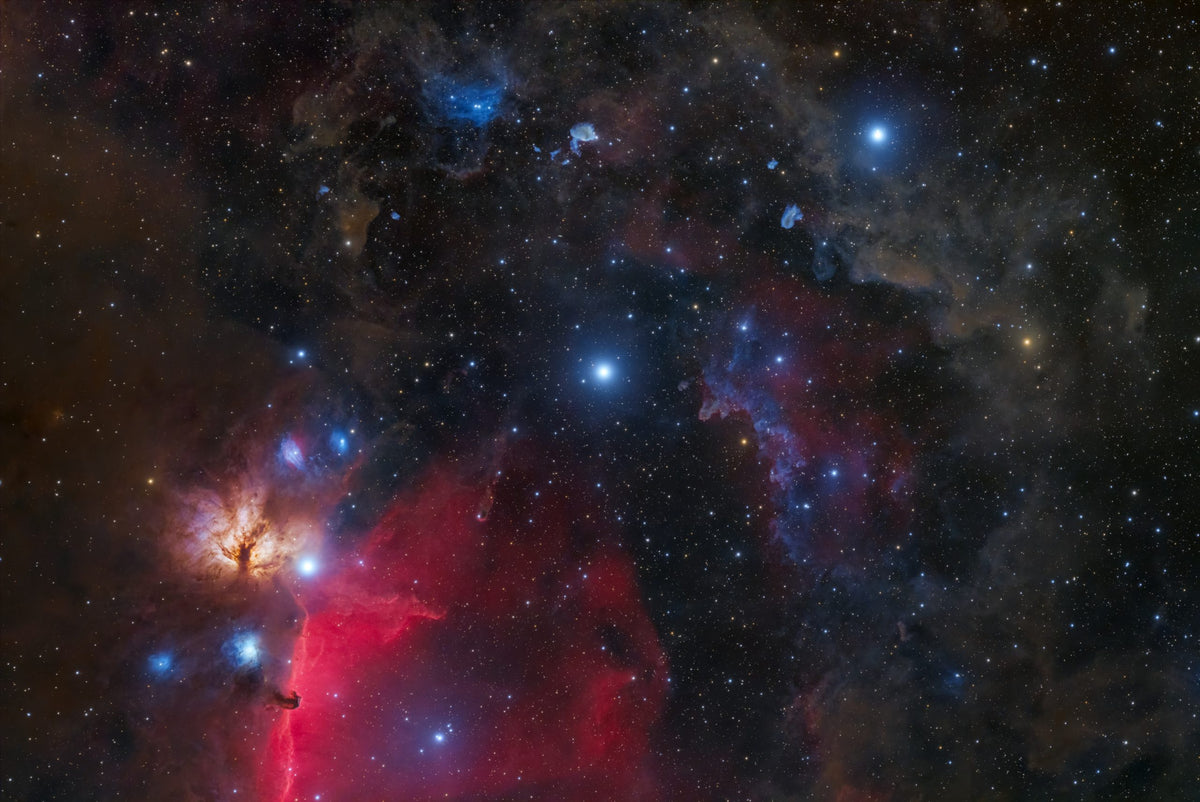
- 450 mm focal length at f/5.6: a fast, wide field of view suited to nebulae, star clusters and large-scale mosaic targets.
- 50 mm image circle: covers full-frame sensors with a flat field, as published by Takahashi.
- Native M48 interface with 55 mm back focus: supports direct camera attachment with minimal adapter stacking, reducing flexure in the imaging train.
- Retracting dew shield: tube length runs 486 mm retracted to 559 mm extended for storage and transport.
- Rack-and-pinion focuser: holds a full imaging train of camera, filter wheel and guider.
Optical / Mechanical Design
The FSQ-80FC carries Takahashi's quintuplet Petzval-derived design — five elements including two fluorite lenses — aimed at flattening the field and correcting color across the frame without a separate flattener accessory. At f/5.6 and 450 mm focal length it trades focal length for field width and speed, the combination astrographs are built around. The aluminum tube and fully multi-coated optics are typical of the FSQ line's imaging-first design; where Takahashi's other refractors are sold as visual-capable OTAs with an optional flattener, the FSQ-80FC's flattening is built into the base optical prescription.
Recommended Uses
Wide-field deep-sky astrophotography of nebulae, large star clusters and galaxy fields; full-frame mosaic imaging; travel and portable imaging rigs where tube weight and length matter.
Compatibility and Accessory Notes
Takahashi publishes a 55 mm back focus from the native M48 interface, which is enough to seat most cooled cameras directly or with a thin adapter stack — filter wheels and off-axis guiders add up quickly against that figure, so it is worth checking your full imaging train before ordering.
Good to Know Before You Order
Published weight is approximate: Takahashi's own listing states "approx. 4.1 kg" rather than an exact figure.
Mount and tripod are not included: this listing is the optical tube assembly only.
Frequently Asked Questions
Is it difficult to set up?
No — the flattening is built into the optics, so there is no separate corrector to thread on and space out. The M48 interface accepts a camera directly once your adapter stack is sorted.
What is it best used for?
Wide-field deep-sky astrophotography where a fast, short-focal-length refractor covers more sky per frame than a longer telescope.
Can I use it for visual observing?
It is built and marketed as an imaging astrograph; its native interface and back focus are set for a camera, not an eyepiece.
What cameras does it fit?
Any camera that reaches the 55 mm back focus through the M48 interface, including full-frame cooled CMOS and CCD cameras — send us your camera and filter setup and we will work it out with you.
How is this different from the FSQ-85EDX?
They are separate optical designs, each on its own specification sheet — figures for one do not describe the other.
Bottom Line
In short: a compact 80 mm f/5.6 quintuplet astrograph with a built-in flattener, a 50 mm image circle, and roughly 4.1 kg of travel-friendly weight, built for wide-field imaging over visual use.
| Optical design | 5-element quintuplet with dual fluorite elements |
|---|---|
| Aperture | 80 mm |
| Focal length | 450 mm |
| Focal ratio | f/5.6 |
| Image circle | 50 mm |
| Back focus | 55 mm (native M48 interface) |
| Tube diameter | 95 mm |
| Tube length | 486 mm retracted / 559 mm extended |
| Tube material | Aluminum |
| Optical coatings | Fully multi-coated |
| Focuser | Rack-and-pinion |
| Weight | Approx. 4.1 kg (published as an approximate figure, not a precise spec-table weight) |
Shopping Guide
- Takahashi English Catalog 2025 — PDF, 8.63 MB
System Charts, Diagrams and Adapter Guides
- Takahashi Telescope Backfocus Table — PDF, 71 kB (FSQ-80FC not listed in this table)
You may also like
Recently viewed
Recent Blog Posts
View all
Your Guide Graph Is Lying to You
Read More

D-Size vs V-Size: A Complete Guide to Telescope Dovetail Systems
Read More

What Is Back Focus in Astrophotography? Telescope Reducers, Flatteners, and Spacing Explained
Read More