


- Description
- Specifications
Product Overview
The Explore Scientific DD02-00CF is a 2-inch star diagonal with a dielectric-coated first-surface mirror rated at 99% reflectivity. Published dimensions are 104.8 mm long, 60.9 mm wide and 127.0 mm high, at 1.0 lb; 0.45 kg. It ships with a 1.25-inch adapter and dust covers.
A star diagonal turns the light path through 90 degrees so the eyepiece points upward rather than straight back along the tube. On a refractor or a Cassegrain that is the difference between observing comfortably and lying under the telescope to reach the eyepiece at high elevation. The image is presented right way up but reversed left to right, which is normal for a mirror diagonal.
The mechanical detail here is the insertion system: a double-taper insert barrel at the telescope end and compression ring locks on both eyepiece holders. A compression ring spreads the clamping force around a barrel instead of driving a thumbscrew point into it, so eyepiece and adapter barrels come out unmarked.
Who It's For
- Refractor owners: a straight-through refractor puts the eyepiece at the low end of the tube, which is where a diagonal earns its place immediately.
- Cassegrain and SCT owners: the 2-inch fitting is the standard path for these telescopes to reach wide-field eyepieces.
- Observers running mixed eyepiece sets: the supplied 1.25-inch adapter means both barrel sizes work through the same diagonal.
- Anyone whose eyepiece barrels have been scarred by set screws: compression rings on both holders exist specifically to stop that.
- Observers who want light throughput preserved: at 99% reflectivity, a dielectric coating gives up substantially less than an aluminised mirror does.
Key Features & Design
- 99% reflective dielectric coating: dielectric mirrors work by stacking many thin transparent layers whose reflections reinforce one another, rather than by depositing metal. The result is higher reflectivity than aluminium and no metal layer to tarnish over time.
- First-surface mirror: the coating sits on the front face of the glass, so light never passes through the substrate. That removes the ghost image a second-surface mirror produces.
- Double-taper insert barrel: the taper resists the diagonal being pulled out of a focuser by a loosening thumbscrew.
- Compression ring locks on both eyepiece holders: both the 2-inch holder and the 1.25-inch adapter clamp without marking accessory barrels.
- 1.25-inch adapter included, so 1.25-inch eyepieces work without a separate purchase.
- Dust covers included.
- Published dimensions: 104.8 mm long, 60.9 mm wide, 127.0 mm high, 1.0 lb; 0.45 kg.
Recommended Uses
- Visual observing through refractors, SCTs and Maksutov-Cassegrains with 2-inch focusers.
- Wide-field observing with 2-inch eyepieces, which need a 2-inch light path to show their full field.
- High-elevation and near-zenith observing, where a straight-through view becomes awkward.
- Outreach sessions, where a comfortable eyepiece position keeps a queue moving.
- Mixed 2-inch and 1.25-inch eyepiece sets, using the supplied adapter.
Compatibility and Accessory Notes
- Focuser: fits 2-inch focusers and 2-inch visual backs. Telescopes with 1.25-inch focusers need a 1.25-inch diagonal instead, and we stock those.
- Eyepieces: takes 2-inch eyepieces directly and 1.25-inch eyepieces through the included adapter, both held by compression rings.
- Filters: 2-inch threaded filters are normally fitted to the eyepiece or to the diagonal's nosepiece. Explore Scientific does not publish a filter thread specification for this diagonal, so that row is absent from the table below rather than estimated.
- Image orientation: a mirror diagonal gives an upright but left-right reversed image. For terrestrial use where correct orientation matters, an erecting prism is the alternative.
- Weight: 1.0 lb; 0.45 kg, plus whatever eyepiece follows it. On a small refractor that combination sits well behind the balance point.
- Astrophotography: a diagonal adds length to the light path and a reflection to the optical train. Most imaging is done straight through, with the diagonal removed.
Good to Know Before You Order
- Explore Scientific does not publish an optical path length or a clear aperture figure for this diagonal, so those rows are absent below rather than estimated. Path length is the figure that matters when a telescope is close to running out of focuser travel — if you are working out a train, send us the details and we will look at it with you.
- It needs a 2-inch focuser. There is no way to fit a 2-inch diagonal to a 1.25-inch focuser, and a 1.25-inch diagonal is the right part in that case.
- The view is mirror-reversed left to right. That is inherent to a single-mirror diagonal and is of no consequence for astronomy, where there is no correct orientation. For daytime and terrestrial viewing, an erecting prism gives a fully correct image and we stock those.
- Adding a diagonal changes where focus falls. A telescope that focused straight through will need the focuser moved inward once the diagonal is in place, since the diagonal contributes its own path length. Almost every telescope designed for visual use has the range for this built in.
- Together with a heavy 2-inch eyepiece it forms a substantial tail load. At 1.0 lb; 0.45 kg the diagonal is modest, but a 600g eyepiece behind it shifts balance on a light tube — a counterweight or a tube-ring adjustment settles it.
Frequently Asked Questions
Is it difficult to set up?
No — the barrel goes into the 2-inch focuser, the eyepiece goes into the diagonal, and the compression rings hold both. Refocusing after fitting it is the only step, and there is nothing to align or adjust.
What does the dielectric coating actually do?
It reflects 99% of the light using stacked thin transparent layers rather than a metal film. That means more light reaching the eyepiece than an aluminised mirror delivers, and no metal coating to degrade over the years.
Does it come with a 1.25-inch adapter?
Yes, along with dust covers, so both eyepiece barrel sizes work straight away.
Will it mark my eyepiece barrels?
Both holders use compression ring locks, which press a split ring evenly around the barrel rather than driving a screw into it. That is the design specifically intended to leave barrels unmarked.
Can I use it for photography?
It is built for visual observing. Imaging is usually done with the diagonal removed, since a straight path is shorter and has one fewer reflection in it.
Why is the image flipped left to right?
A single mirror reverses handedness. Every star diagonal of this type does it, and for astronomy it makes no practical difference. If you want a correctly oriented daytime image, an erecting prism is the part to look at and we can suggest one.
Bottom Line
In short: a 2-inch star diagonal with a 99% reflective dielectric first-surface mirror, a double-taper insert barrel, compression ring locks on both holders, and a 1.25-inch adapter and dust covers in the box, at 1.0 lb; 0.45 kg. If you would like us to check that it suits your focuser and the eyepieces you already own, send us the telescope model and we will look at it with you.
| Description | ES 2" Dielectric-Coated Diagonal Mirror with 1.25" Adapter |
|---|---|
| Item Number | DD02–00CF |
| Reflectivity | 99% dielectric-coated first-surface mirror |
| Weight | 1.0 lb; 0.45 kg |
| Length | 104.8 mm |
| Width | 60.9 mm |
| Height | 127.0 mm |
| Insert Barrel | Double-taper |
| Locking | Compression ring locks on both eyepiece holders |
| Included | 1.25-inch adapter and dust covers |
| Optical Path Length | Not published by vendor |
| Clear Aperture | Not published by vendor |
| Filter Thread | Not published by vendor |
You may also like
Recently viewed
Recent Blog Posts
View all
Your Guide Graph Is Lying to You
Read More
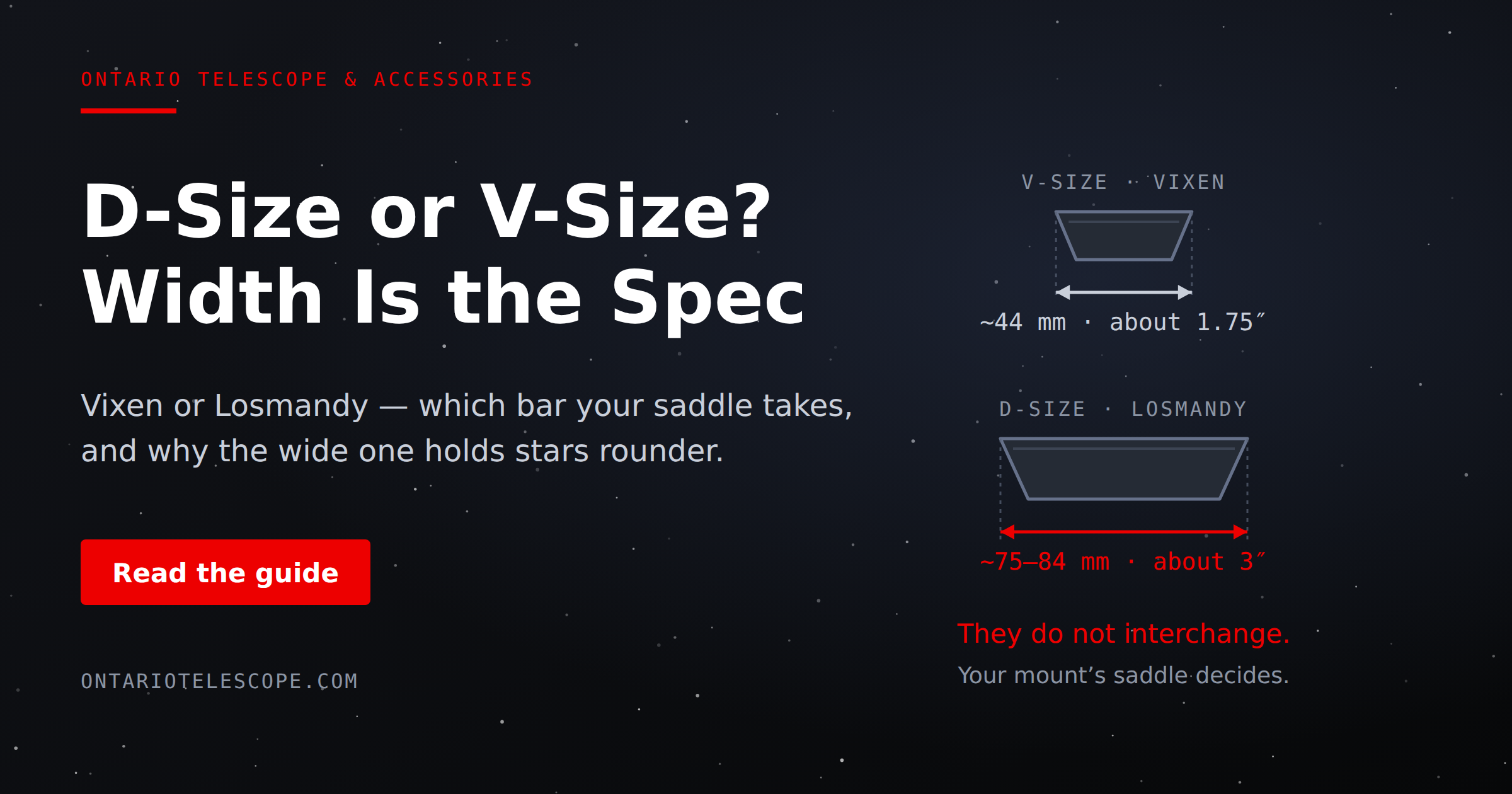
D-Size vs V-Size: A Complete Guide to Telescope Dovetail Systems
Read More
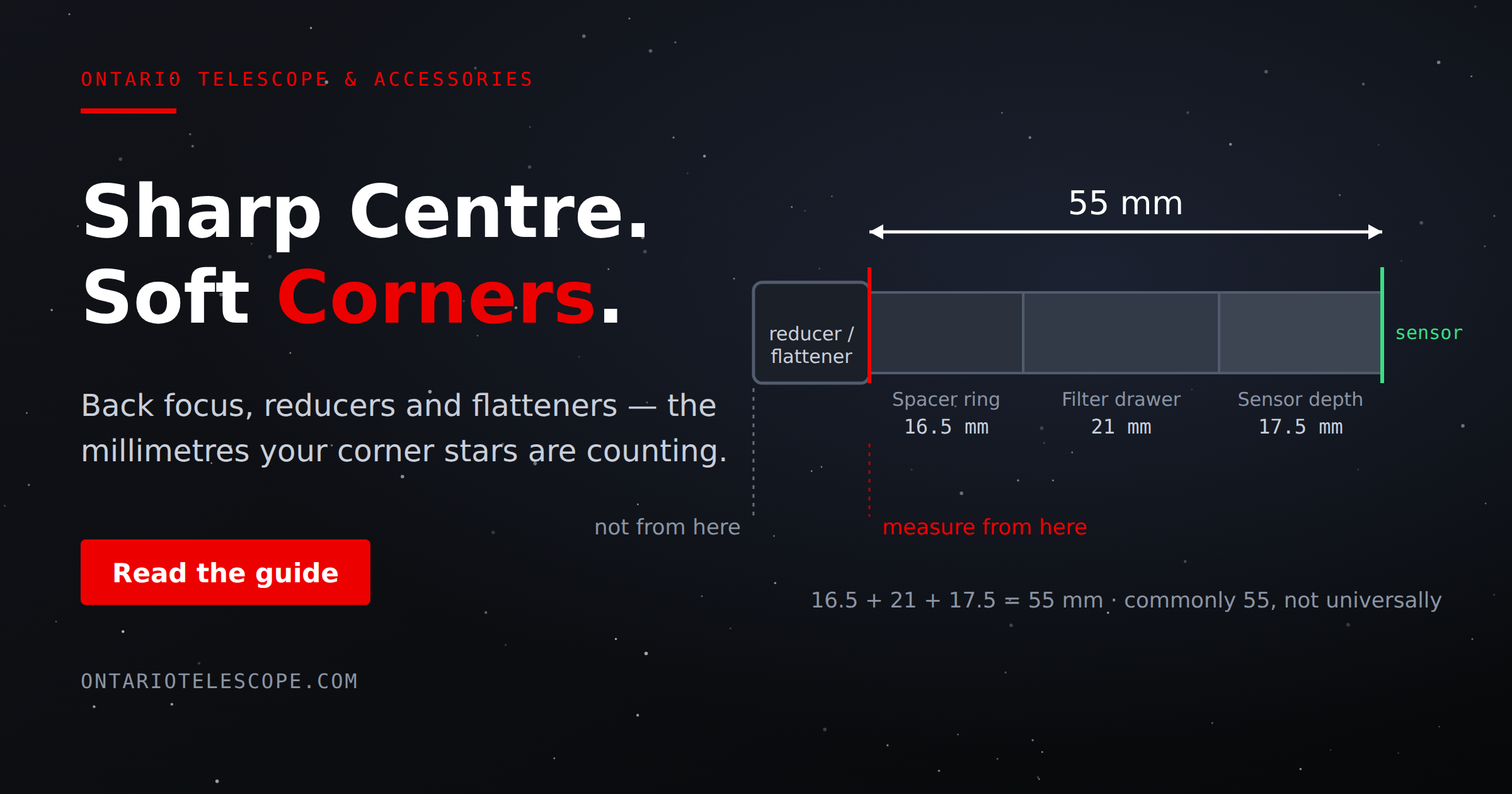
What Is Back Focus in Astrophotography? Telescope Reducers, Flatteners, and Spacing Explained
Read More