


- Description
- Specifications
Product Overview
The Event Horizon EVRZ is a friction-drive Crayford focuser built around a ZWO EAF mounting, made for Newtonians that use the 2.75″ GSO bolt pattern. The 3.5″ base drops onto the existing focuser board of an Apertura, Zhumell, GSO or Astro-Tech tube without new holes, and the EAF drives the 2″ drawtube at a calibrated 2.54 µm of travel per motor step. The focuser itself weighs 1.4 lb and carries 8 lb of imaging train. It is CNC-machined, assembled and tested in the USA. The ZWO EAF motor is sold separately.
Who It’s For
This is a good match if you…
- image with a GSO-pattern Newtonian and want autofocus running under N.I.N.A., Sequence Generator Pro or Ekos
- already own a ZWO EAF, or run an ASIAIR and want the focuser on the same controller
- are chasing the last of the focus tolerance on a fast f/4 or f/5 Newtonian where the critical focus zone is narrow
- want a bolt-on swap rather than a project involving a drill and a focuser board
- carry an imaging train under 8 lb — camera, filter wheel, off-axis guider and coma corrector
Key Features & Design
- 2.54 µm per step: the drive ratio is calibrated to the ZWO EAF, so one motor step moves the drawtube 2.54 microns — fine enough to sit inside the critical focus zone of a fast Newtonian.
- Zero image shift, zero backlash: the friction-drive Crayford design has no gear lash to compensate, so a focus run returns to the same position from either direction.
- 2.75″ GSO bolt pattern: 69.85 mm hole spacing on a 3.5″ base, which is the layout used across the GSO-built Newtonian line.
- 8 lb load capacity: sized for a full imaging train rather than an eyepiece alone.
- Configurable drawtube travel: 0.565″ is standard, with 1.06″, 1.76″ and 2.437″ available for tubes that need more range.
- Clamp screw side: right, left or both, so the clamp falls where your hand and cabling want it.
- 1.4 lb: light enough that it changes little about the balance of the tube on the altitude bearings.
Mechanical Design
A Crayford focuser moves its drawtube by friction between a hardened shaft and the tube itself, with no rack, no pinion and therefore no gear lash. That is the property that matters when a motor is driving it: an autofocus routine steps out past focus and back, and any backlash in the drive shows up as hysteresis between the two directions that the software then has to model out. With a friction drive there is nothing to model. The EVRZ carries that through to the motor coupling, where the EAF mounts directly to the focuser shaft rather than through a belt or a reduction stage, which is what fixes the 2.54 µm per step figure. Zero image shift is the other half of the design: the drawtube is constrained so that it translates along the optical axis without tilting, so a star stays on the same pixel through a focus sweep and the autofocus curve stays clean. Travel is deliberately short in the standard configuration — 0.565″ is enough to cover the range a fixed imaging train needs while keeping the drawtube stiff under an 8 lb load.
Recommended Uses
- Automated focus runs between filters on a GSO or Apertura imaging Newtonian
- Overnight sequences where focus is re-run on a temperature delta without anyone at the scope
- Remote or backyard-observatory setups driven entirely through ASCOM or an ASIAIR
- Fast f/4 Newtonians where manual focus at the critical focus zone is difficult to hold
- Replacing a stock single-speed focuser on a Zhumell Z8, Z10 or Z12 used for imaging
Compatibility and Accessory Notes
The EVRZ is cut for the 2.75″ (69.85 mm) GSO mounting-hole spacing on a 3.5″ base. Confirmed drop-in fits include the Apertura AD series Dobsonians, Zhumell Z8, Z10 and Z12, the GSO imaging Newtonians in 6″, 8″, 10″ and 12″ at f/4 and f/5, and the Astro-Tech AT series tubes. The tube needs to be 7.25″ in diameter or larger for the base to sit correctly on its curvature. Newtonians outside the GSO pattern can take the focuser, with additional mounting holes drilled in the tube or focuser board to suit. The drawtube is 2″, so 2″ coma correctors, field flatteners and camera adapters thread or clamp in as usual, and 1.25″ accessories need the usual adapter. The ZWO EAF motor is a separate purchase, as is any ASIAIR or ASCOM-side controller. If you would like to know how the EVRZ sits on your particular tube, send us the make and model and we will check it for you.
Good to Know Before You Order
- The ZWO EAF motor is not included. The EVRZ ships as the focuser mechanics with the EAF mounting adaptation; the motor is bought separately.
- Standard drawtube travel is 0.565″. Longer travels of 1.06″, 1.76″ and 2.437″ are configured at order time, so let us know if your imaging train needs more range than the standard.
- Load capacity is 8 lb. That is the figure for the whole imaging train hanging off the drawtube.
- The tube needs to be at least 7.25″ in diameter. Below that the 3.5″ base does not seat against the tube curvature.
- A non-GSO Newtonian needs new holes. On the GSO pattern it is a bolt-on swap; on any other tube the installation involves drilling mounting holes in the tube or focuser board.
- Shipping weight is 1.4 lb for the focuser itself. The packaged carton ships at 2 lb.
Frequently Asked Questions
Is it difficult to install?
On a GSO-pattern Newtonian it is a bolt-on swap — the old focuser comes off, the EVRZ goes onto the same 2.75″ hole spacing, and no drilling is involved. On a tube with a different pattern the job includes drilling mounting holes in the tube or focuser board, which is a more involved afternoon.
Does it include the ZWO EAF?
No. The EVRZ is the focuser with the EAF mounting adaptation. The motor is purchased separately, which suits imagers who already own one.
How fine is the focus adjustment?
2.54 microns of drawtube travel per EAF motor step. On a fast Newtonian that puts several steps inside the critical focus zone, which is what an autofocus routine needs in order to fit a curve.
What software drives it?
It presents through ASCOM and works with an ASIAIR. Autofocus is supported under N.I.N.A., Sequence Generator Pro and Ekos.
How much can the drawtube carry?
8 lb, which covers a typical camera, filter wheel, off-axis guider and coma corrector stack.
Why a Crayford rather than a rack-and-pinion?
The friction drive has no gear teeth and therefore no backlash, so focus returns to the same place whichever direction the motor approaches from. Under an automated focus routine that removes a source of hysteresis the software would otherwise have to compensate for.
Bottom Line
In short: a 1.4 lb zero-backlash Crayford focuser that bolts onto the 2.75″ GSO pattern, carries 8 lb of imaging train, and gives a ZWO EAF 2.54 microns of drawtube travel per step for autofocus under ASCOM, ASIAIR, N.I.N.A., SGP or Ekos.
| Weight | 1.4 lb (focuser) |
|---|---|
| Type | Friction-drive Crayford focuser with ZWO EAF motor adaptation |
| Base diameter | 3.5″ (88.9 mm) |
| Mounting-hole spacing | 2.75″ (69.85 mm) — GSO bolt pattern |
| Drawtube diameter | 2″ |
| Drawtube travel | 0.565″ standard; 1.06″, 1.76″ and 2.437″ also available |
| Resolution | 2.54 µm of drawtube travel per ZWO EAF motor step |
| Load capacity | 8 lb |
| Minimum tube diameter | 7.25″ |
| Clamp screw position | Right, left or both sides |
| Control | ASCOM and ASIAIR; autofocus under N.I.N.A., Sequence Generator Pro and Ekos |
| Motor | ZWO EAF sold separately |
| Manufacturing | CNC-machined, assembled and tested in the USA |
| Country of origin | United States |
You may also like
Recently viewed
Recent Blog Posts
View all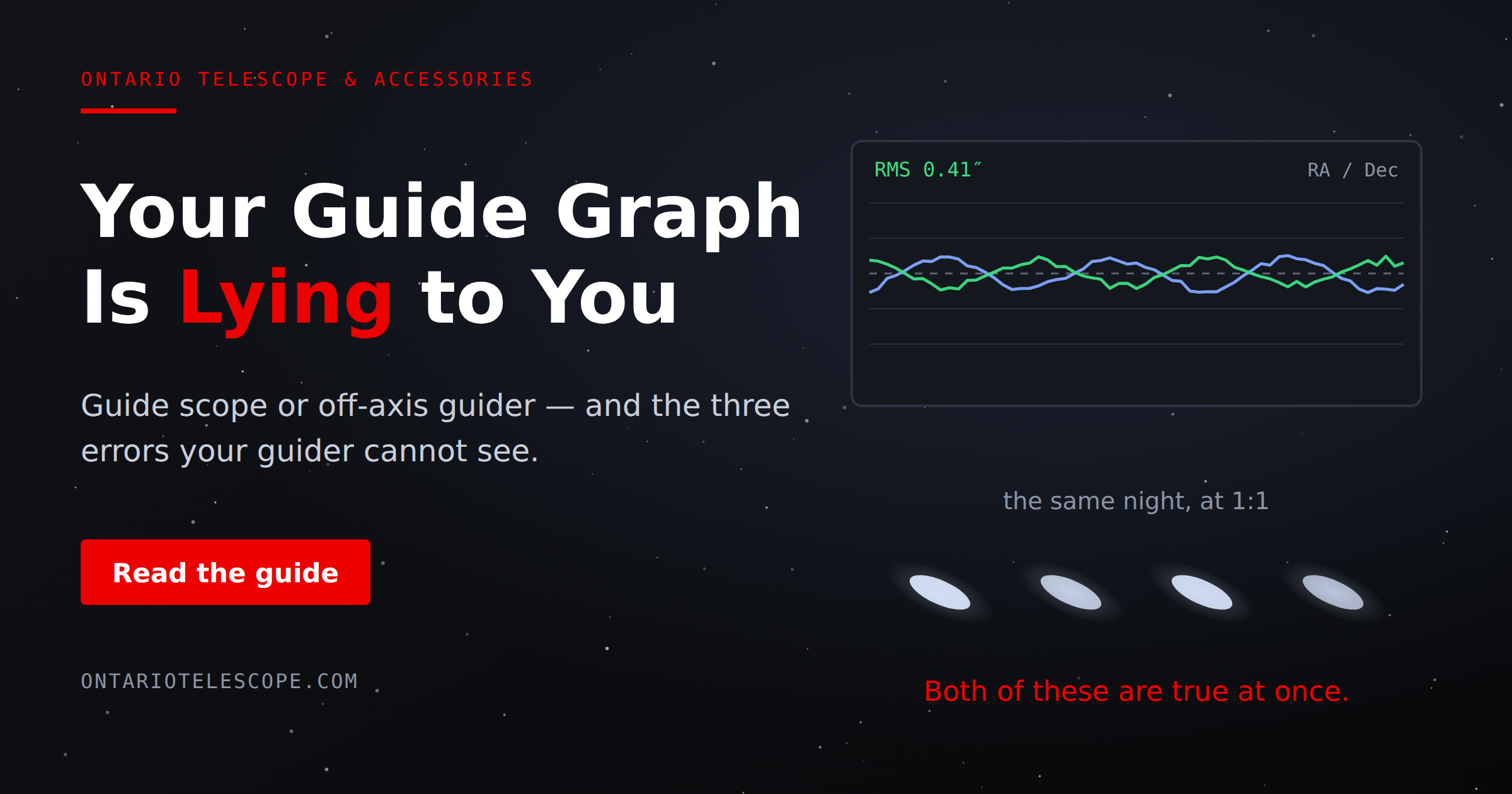
Your Guide Graph Is Lying to You
Read More
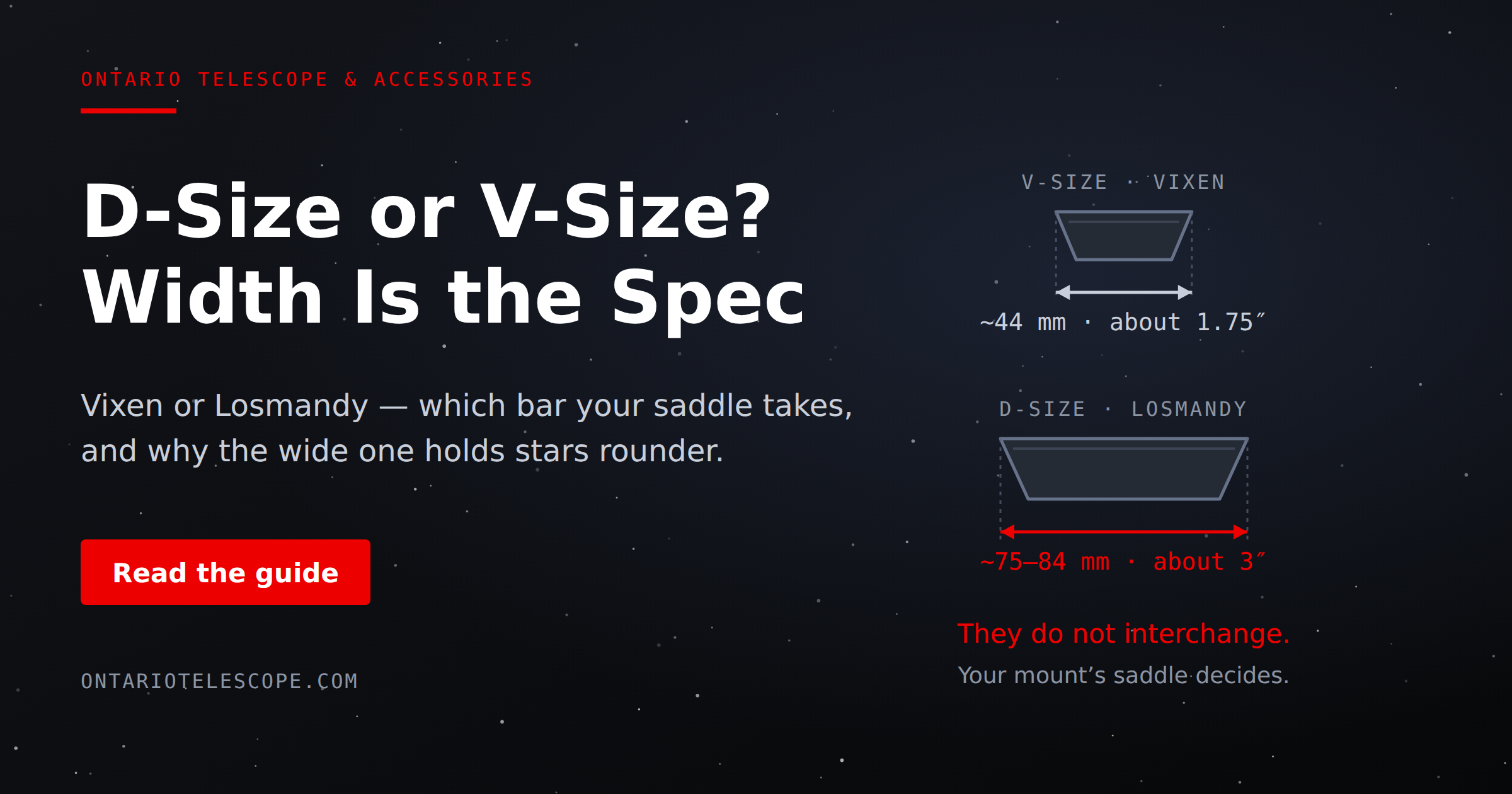
D-Size vs V-Size: A Complete Guide to Telescope Dovetail Systems
Read More
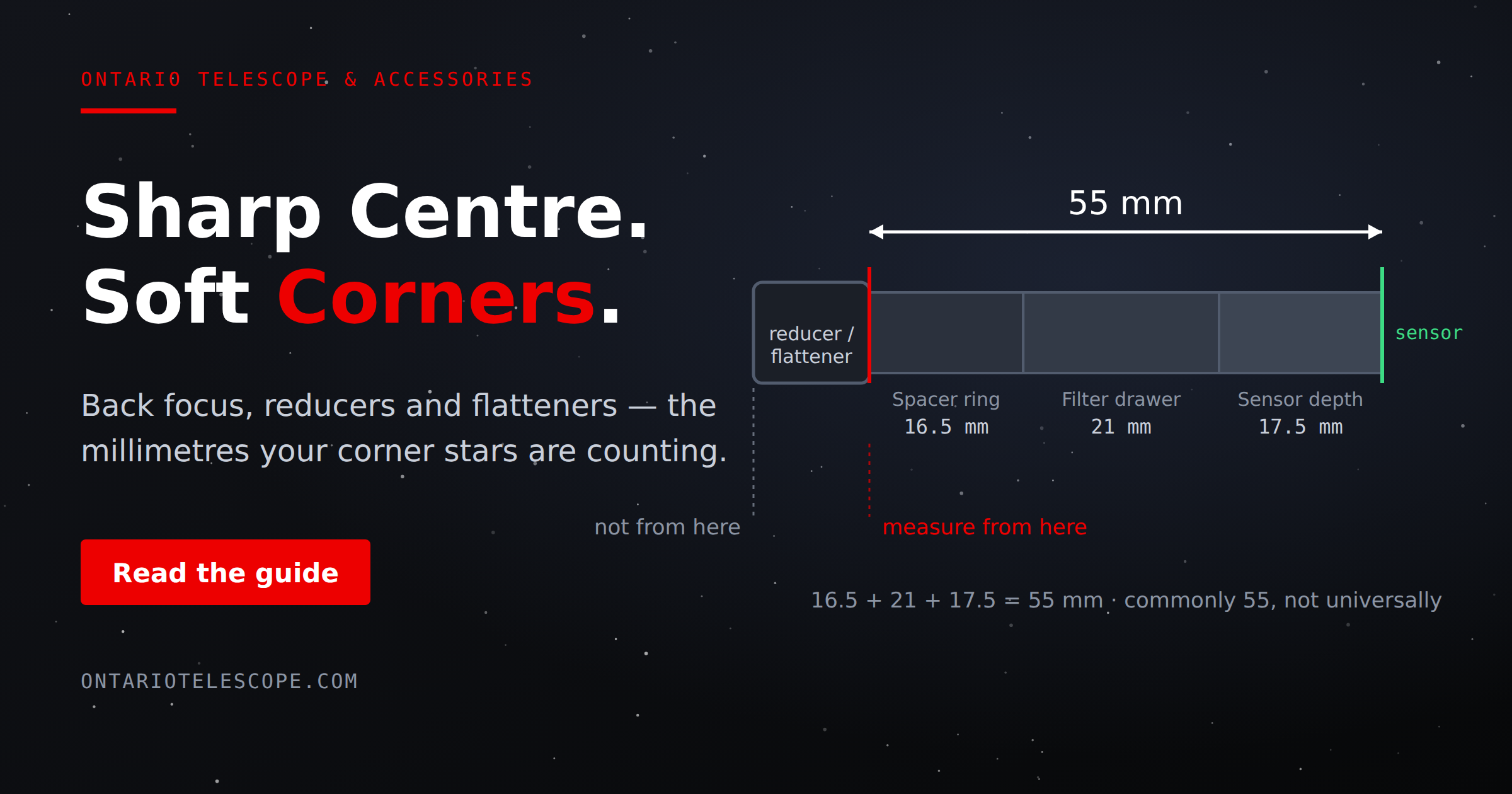
What Is Back Focus in Astrophotography? Telescope Reducers, Flatteners, and Spacing Explained
Read More