


- Description
- Specifications
Product Overview
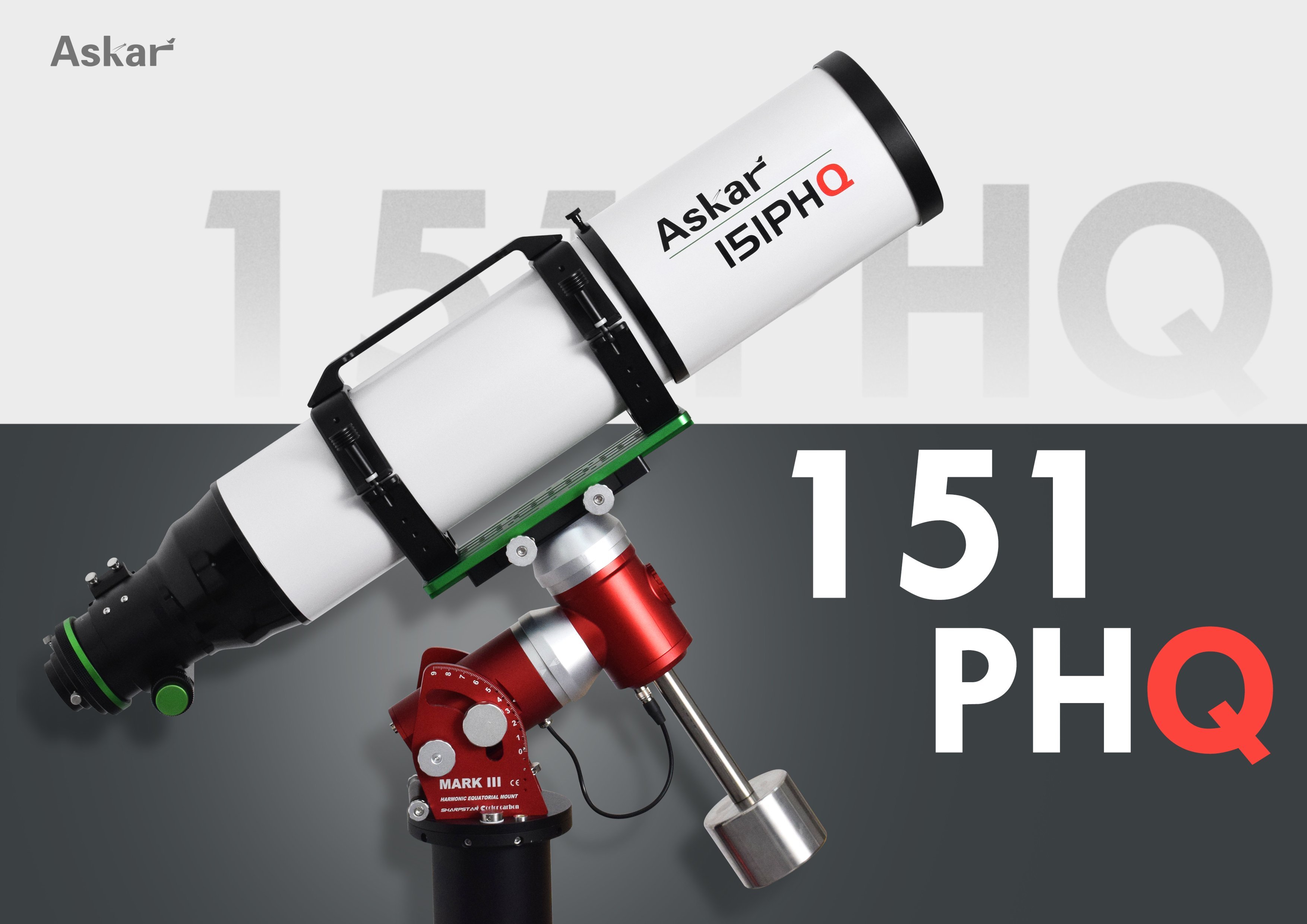
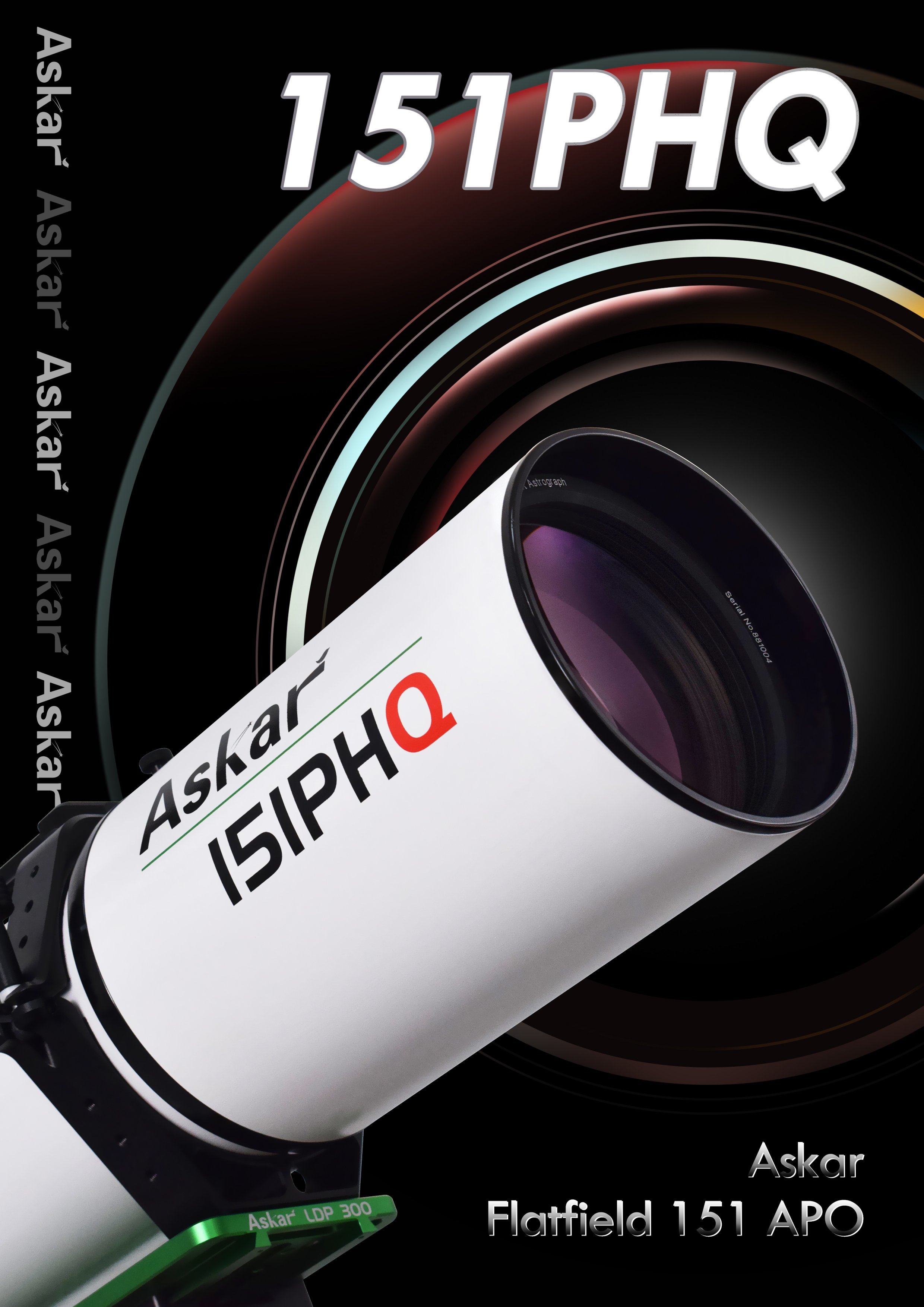
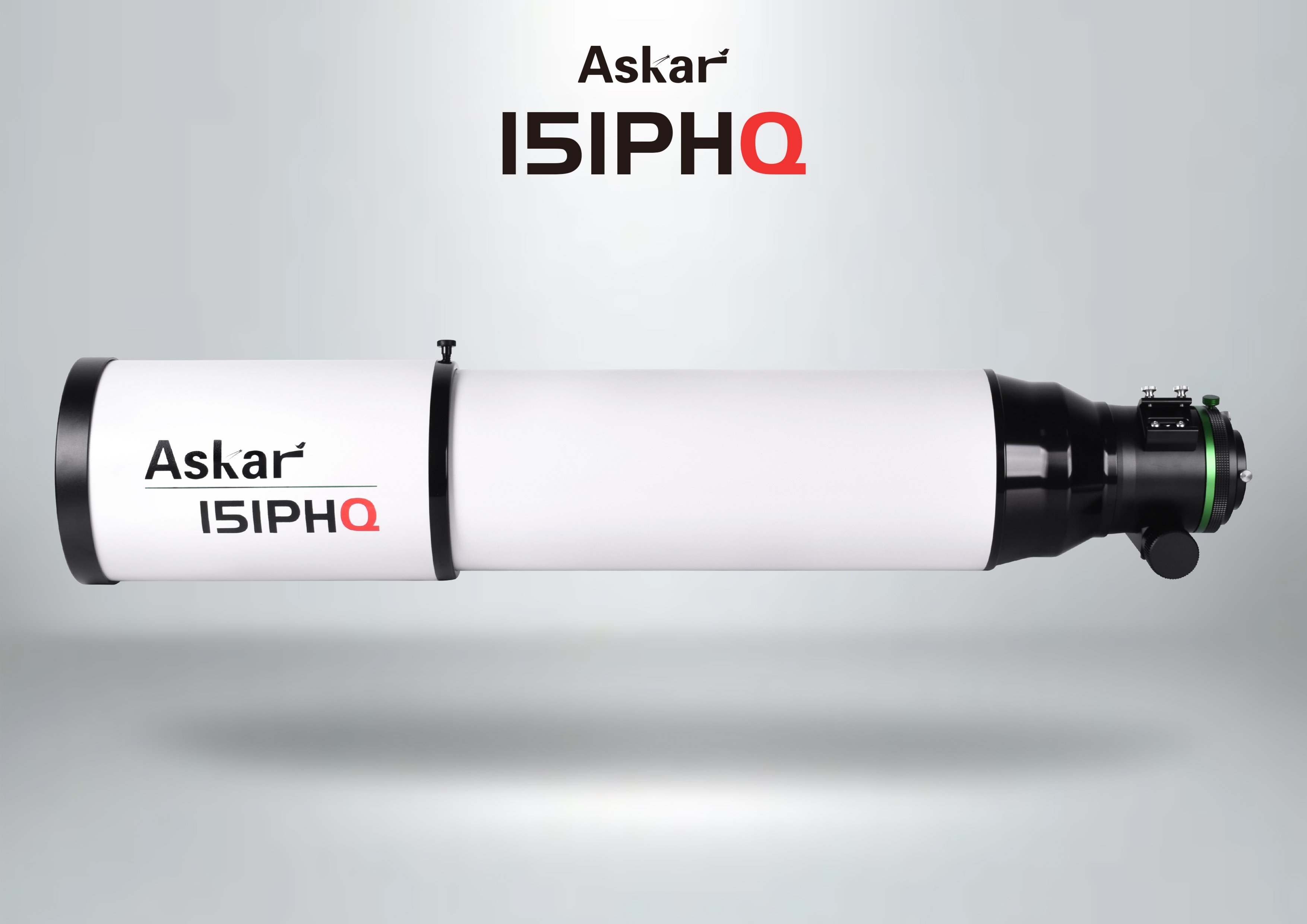
The Askar 151PHQ is a premium 151mm f/7 flatfield quadruplet APO astrograph designed for serious deep-sky imaging and high-end visual observing. With a 1057mm focal length, two ED glass elements, and a self-flattening optical design, it delivers a large corrected field without requiring a separate field flattener for native imaging.
The 151PHQ is the largest model in Askar’s PHQ series and is built for astrophotographers who want refractor contrast, large-aperture light gathering, and a 60mm image circle for modern large-sensor cameras. Its longer focal length makes it especially useful for galaxies, nebula details, star clusters, and high-resolution deep-sky targets where smaller wide-field refractors may not provide enough scale.
Who Is This Product Best For?
The Askar 151PHQ is best for intermediate to advanced astrophotographers, observatory users, and experienced visual observers who have a mount capable of carrying a large refractor. It is a strong choice for users moving beyond small portable refractors and into a more serious imaging platform with a large corrected field and premium mechanical construction.
Why Choose This Product?
- 151mm aperture provides strong light-gathering performance for deep-sky imaging.
- 1057mm focal length offers useful image scale for galaxies, nebula structure, clusters, and smaller targets.
- Native f/7 focal ratio balances optical correction, contrast, and long-focal-length performance.
- Quadruplet air-spaced APO design includes two ED glass elements for excellent colour correction.
- Self-flattening design reduces the need for a separate field flattener in native imaging mode.
- 60mm image circle supports large imaging sensors, including full-frame and larger-format camera setups.
- 3.4-inch rack-and-pinion focuser includes M68, M54, and M48 adapter support, a 360-degree rotator, and a finder base.
- Optional 3-inch 0.7x reducer can bring the system to approximately 740mm at f/4.9 for faster imaging.
Recommended Uses
- High-resolution deep-sky astrophotography
- Galaxy and nebula detail imaging
- Full-frame and larger-format astronomy camera setups
- Permanent or semi-permanent observatory systems
- Premium refractor-based visual observing
- Longer focal length imaging where a small wide-field refractor is not enough
Compatibility and Accessory Notes
The 151PHQ includes a 3.4-inch rack-and-pinion focuser with a 360-degree rotator, finder base, and rear adapter support for M68, M54, and M48 camera connections. The four-piece photographic adapter set steps the rear connection down to M48×0.75 and includes a built-in M48×0.75 filter thread. The optical system supports a 60mm image circle and is well suited to large sensors when paired with appropriate camera adapters.
The standard package includes the 151PHQ OTA, a pair of tube rings, a handle, an Askar 300mm Losmandy dovetail plate, a set of four photographic adapters, an aluminum case, and a manual. The optional 3-inch 0.7x flatfield reducer is not included, but can be used to reduce the system to approximately 740mm focal length at f/4.9.
Important Limitations
- This is a large refractor; the OTA weighs approximately 11.6kg, and the total weight with tube rings and dovetail is approximately 13.7kg.
- A capable equatorial mount is required. This telescope is not appropriate for light travel mounts or entry-level mounts.
- Native f/7 imaging is excellent for image scale and correction, but exposure times will be longer than with faster astrographs unless the optional reducer is used.
- The 3-inch 0.7x reducer is optional and sold separately unless specifically bundled.
- Although the native optical design is self-flattening, users still need the correct mechanical adapters, secure camera connection, and accurate focus for best results.
- This is not the best first telescope for a beginner unless they already have a suitable mount and imaging experience.
Frequently Asked Questions
Is the Askar 151PHQ good for beginners?
It is not usually the best first astrophotography telescope. The optics are straightforward to use because the field is corrected natively, but the telescope is large and heavy and needs a capable mount, good balancing, and careful imaging setup.
What is the Askar 151PHQ best used for?
It is best used for high-quality deep-sky astrophotography with large sensors, especially when you want more focal length than a compact wide-field refractor can provide.
Is it for visual observing or astrophotography?
It is primarily an astrograph for imaging, but it can also be used for premium visual observing with the appropriate accessories. Astrophotography is the main reason to choose the 151PHQ.
Does it require a separate field flattener?
No separate flattener is required for native imaging. The PHQ optical design is self-flattening, which simplifies setup compared with refractors that require a dedicated flattener and strict flattener spacing.
What cameras is it compatible with?
The 60mm image circle makes it suitable for full-frame astronomy cameras and larger-format imaging setups, provided the correct mechanical adapters and spacing are used for the camera system.
Can it be made faster for imaging?
Yes. The optional 3-inch 0.7x flatfield reducer can reduce the system to approximately 740mm focal length at f/4.9, which shortens exposure time and provides a wider field of view.
What kind of mount does it need?
Because the complete setup with tube rings and dovetail is approximately 13.7kg before adding a camera, guide scope, focuser, and accessories, it should be paired with a mount that has a comfortable imaging payload margin.
When should it not be recommended?
Do not recommend this telescope for lightweight travel rigs, very small mounts, casual grab-and-go observing, or beginners who do not yet have a suitable equatorial mount and imaging workflow.
Our Recommendation
Ontario Telescope recommends the Askar 151PHQ for astrophotographers who want a premium large-aperture refractor with a long native focal length, flat imaging field, and large sensor support. It solves the problem of getting refractor-quality deep-sky images without adding a separate native field flattener. Choose a smaller PHQ or SQA model if portability, beginner friendliness, or a lighter mount requirement is more important.
Optical Diagram Reports
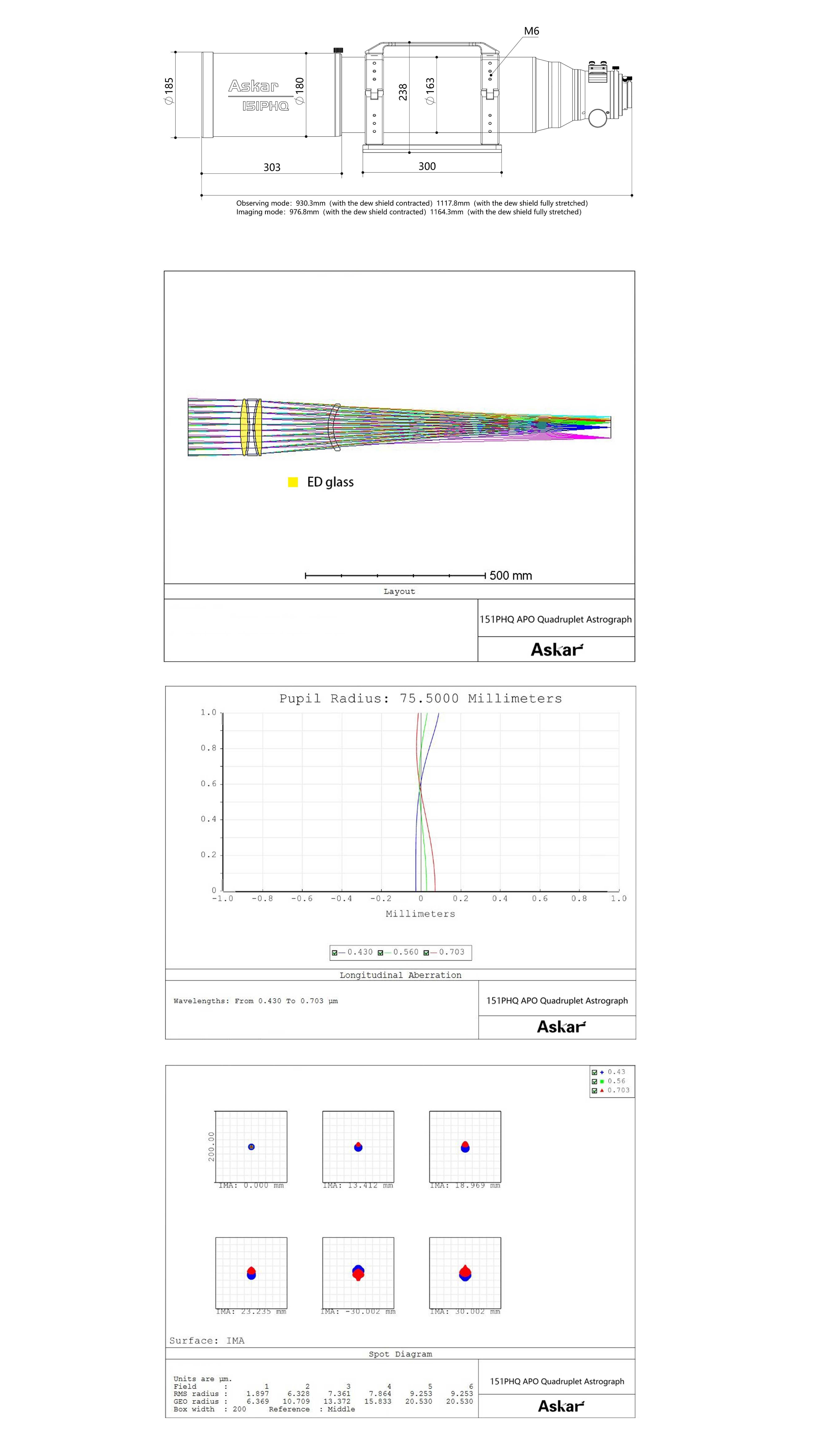
The following vendor-supplied graphics help show the 151PHQ optical and mechanical layout, native imaging configuration, adapter arrangement, and field performance.
| Product Type | Flatfield quadruplet APO astrograph |
|---|---|
| Aperture | 151mm |
| Focal Length | 1057mm |
| Focal Ratio | f/7 |
| Objective Lens | Quadruplet air-spaced APO, including two ED glass elements |
| Image Circle | 60mm |
| Focuser | 3.4-inch rack-and-pinion focuser with 360-degree rotator and finder base |
| Maximum Accessory Connection - Imaging Mode | 78mm from the base of the M48×0.75 male thread, with focuser fully retracted |
| Maximum Accessory Connection - Observing Mode | 119mm from the end of the 1.25-inch eyepiece holder, with focuser fully retracted |
| Total Length - Observing Mode | 930.3mm with dew shield retracted; 1117.8mm with dew shield extended |
| Total Length - Imaging Mode | 976.8mm with dew shield retracted; 1164.3mm with dew shield extended |
| OTA Weight | 11.6kg |
| Total Weight | 13.7kg including tube rings and dovetail plate |
| Rear-End Thread Types | M86×1 to M68×1; M68×1 to M54×0.75; M54×0.75 to M54×0.75; M54×0.75 to M48×0.75 with built-in M48×0.75 filter thread |
| Photographic End Adapter | M48×0.75 |
| Reducer Compatibility | Compatible with optional 3-inch 0.7x reducer for approximately 740mm focal length at f/4.9 |
| Included Items | 151PHQ OTA, tube rings, handle, Askar 300mm Losmandy dovetail plate, four-piece photographic adapter set, aluminum case, and manual |
| Primary Use | Large-aperture deep-sky astrophotography and premium refractor observing |
You may also like
Recently viewed
Recent Blog Posts
View all
Your Guide Graph Is Lying to You
Read More

D-Size vs V-Size: A Complete Guide to Telescope Dovetail Systems
Read More

What Is Back Focus in Astrophotography? Telescope Reducers, Flatteners, and Spacing Explained
Read More