


- Description
- Specifications
Product Overview
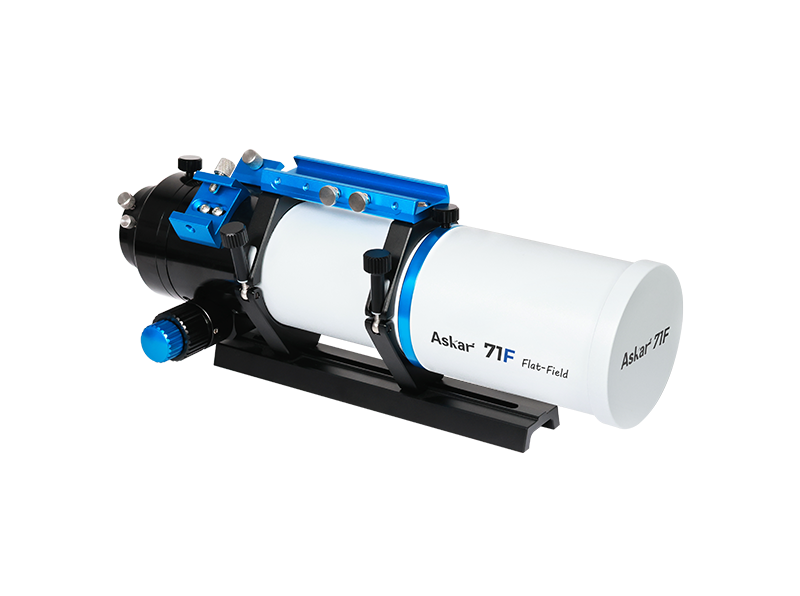
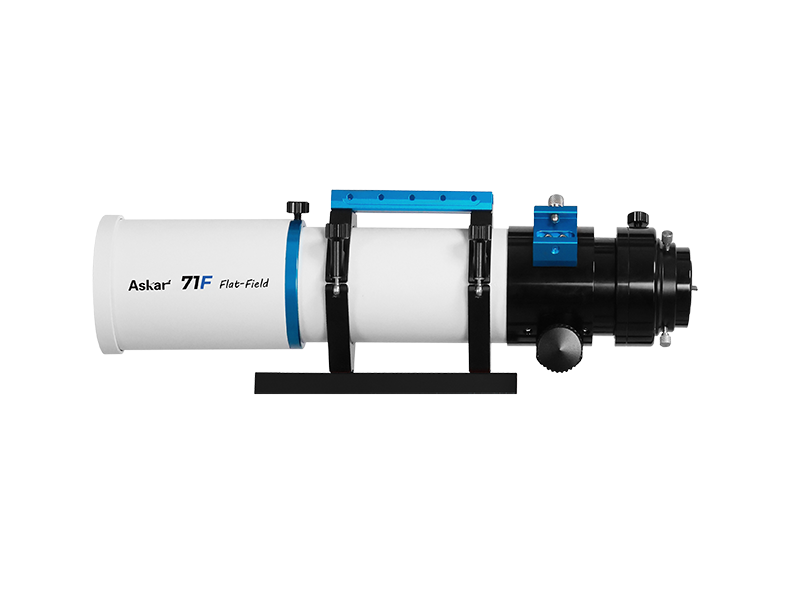
The Askar 71F Flat-Field APO Astrograph is a lightweight, compact 71mm quadruplet refractor designed for both astrophotography and visual observing. With a 490mm focal length and native f/6.9 focal ratio, it offers a practical balance of portability, reach, and corrected imaging performance.
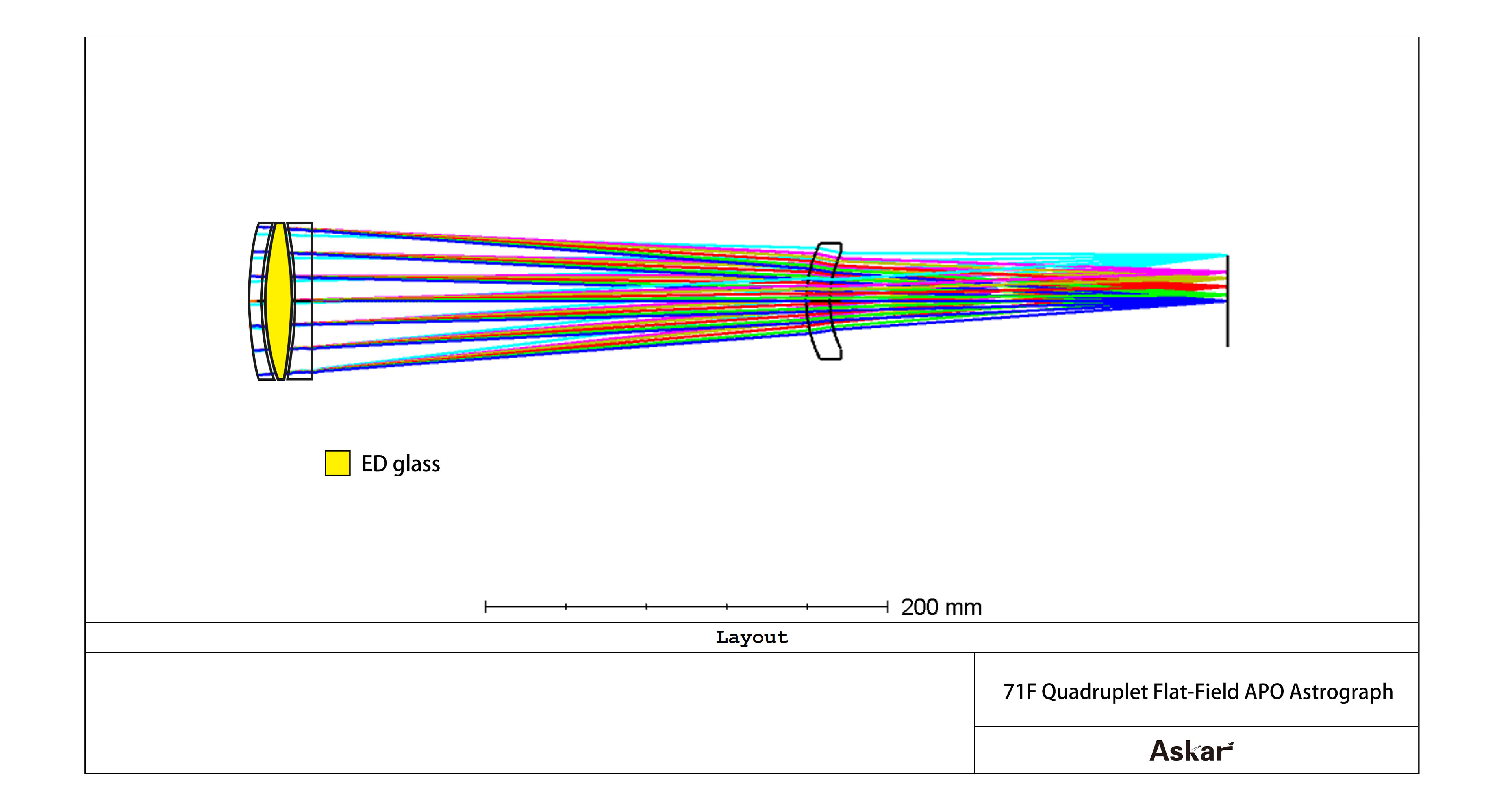
The 71F uses a quadruplet air-spaced APO optical design with one ED glass element. Its self-flattened design supports a 44mm full-frame image circle, allowing imagers to use the telescope without purchasing a separate field flattener or calculating traditional backfocus spacing before imaging.
Who Is This Product Best For?
This telescope is best for astrophotographers who want a portable, corrected refractor for wide-field deep-sky imaging, as well as visual observers who want a compact APO refractor that can also serve as an imaging OTA.
Why Choose This Product?
- Self-flattened optical design: The 71F does not require a separate field flattener for standard imaging use.
- Full-frame ready: The 44mm image circle supports full-frame imaging sensors.
- Quadruplet APO optics: The air-spaced quadruplet design includes one ED glass element to help control chromatic aberration.
- Portable build: The OTA weighs only 2.5kg, with a 3.0kg gross weight including the tube rings and dovetail plate.
- Imaging-friendly mechanics: Includes a 2.4" dual-speed rack-and-pinion focuser, 1:10 fine adjustment, and a 360° rear rotator.
- Flexible connection options: The photographic adapter system includes M48×0.75 and M54×0.75 connections with a built-in 2" filter thread.
Recommended Uses
- Wide-field deep-sky astrophotography
- Full-frame imaging setups
- Portable refractor imaging rigs
- Visual observing with compatible eyepieces and accessories
- Travel-friendly astronomy setups
Compatibility and Accessory Notes
The Askar 71F includes a set of photographic adapters, a pair of tube rings, a handle, and a 230mm Vixen-style dovetail plate. The dovetail plate includes slotted 1/4" and 3/8" screw holes for direct tripod attachment. The focuser provides M64×0.75, M54×0.75, and M48×0.75 rear-end connection options depending on the adapter configuration.
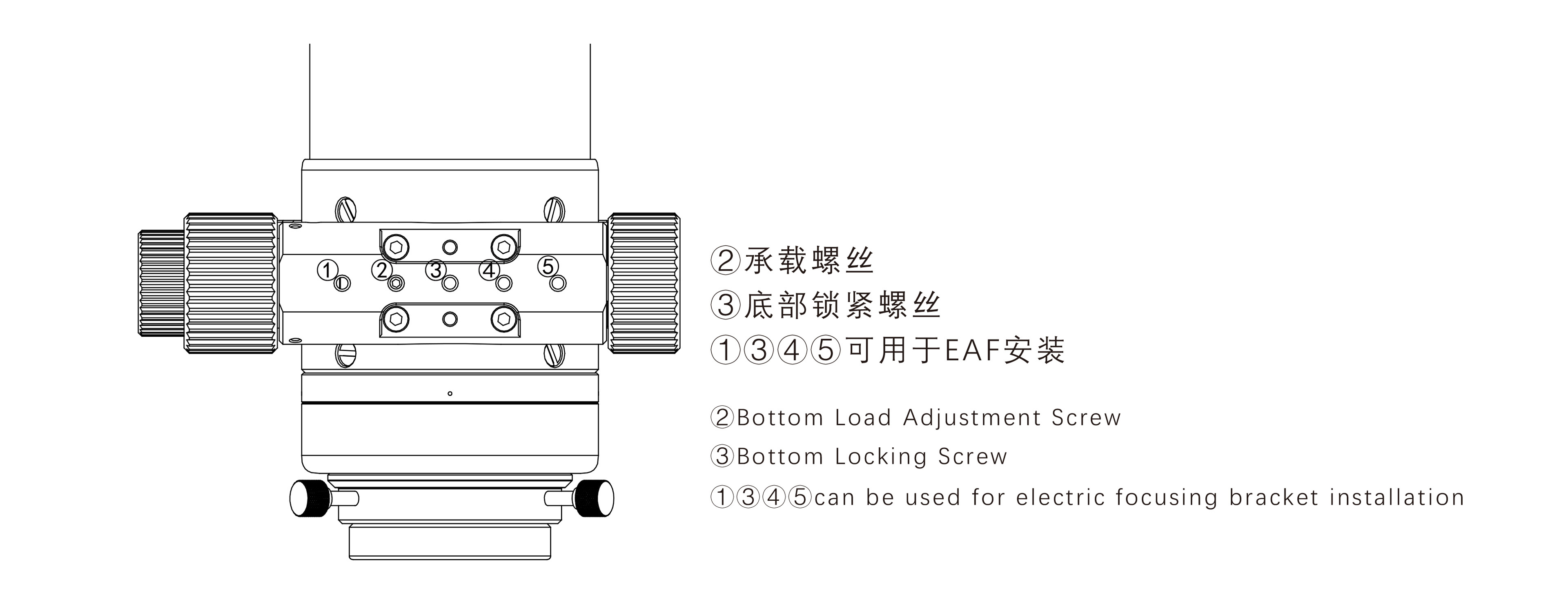
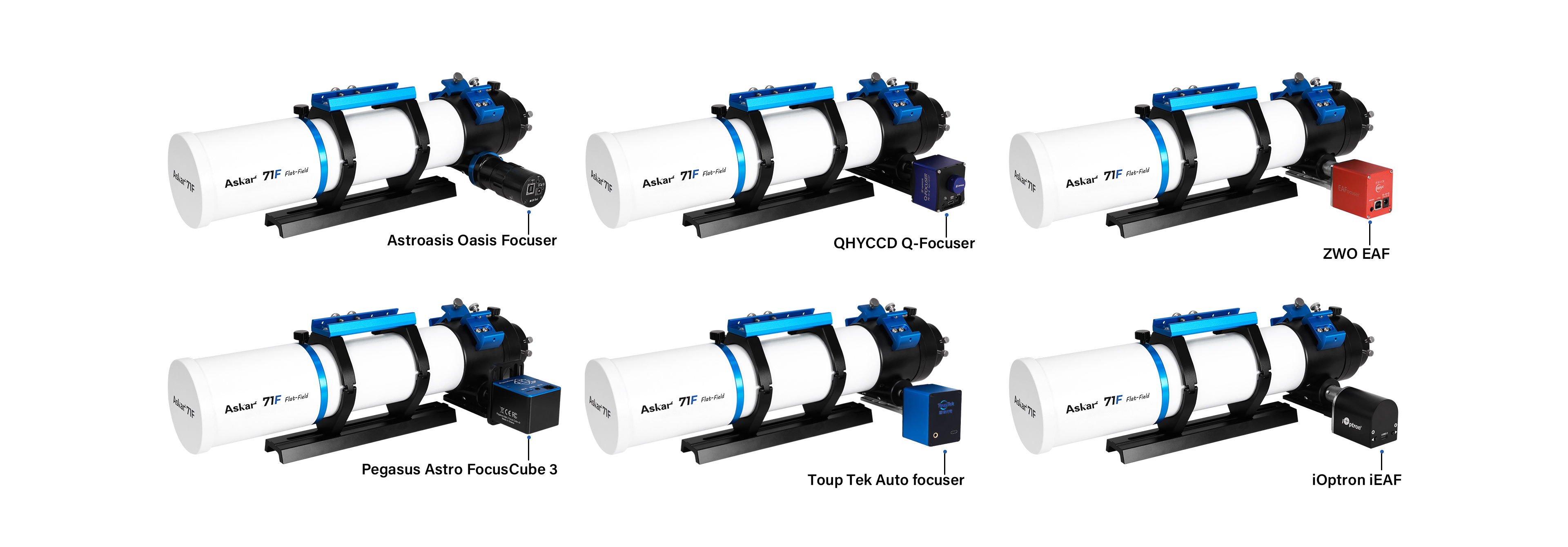
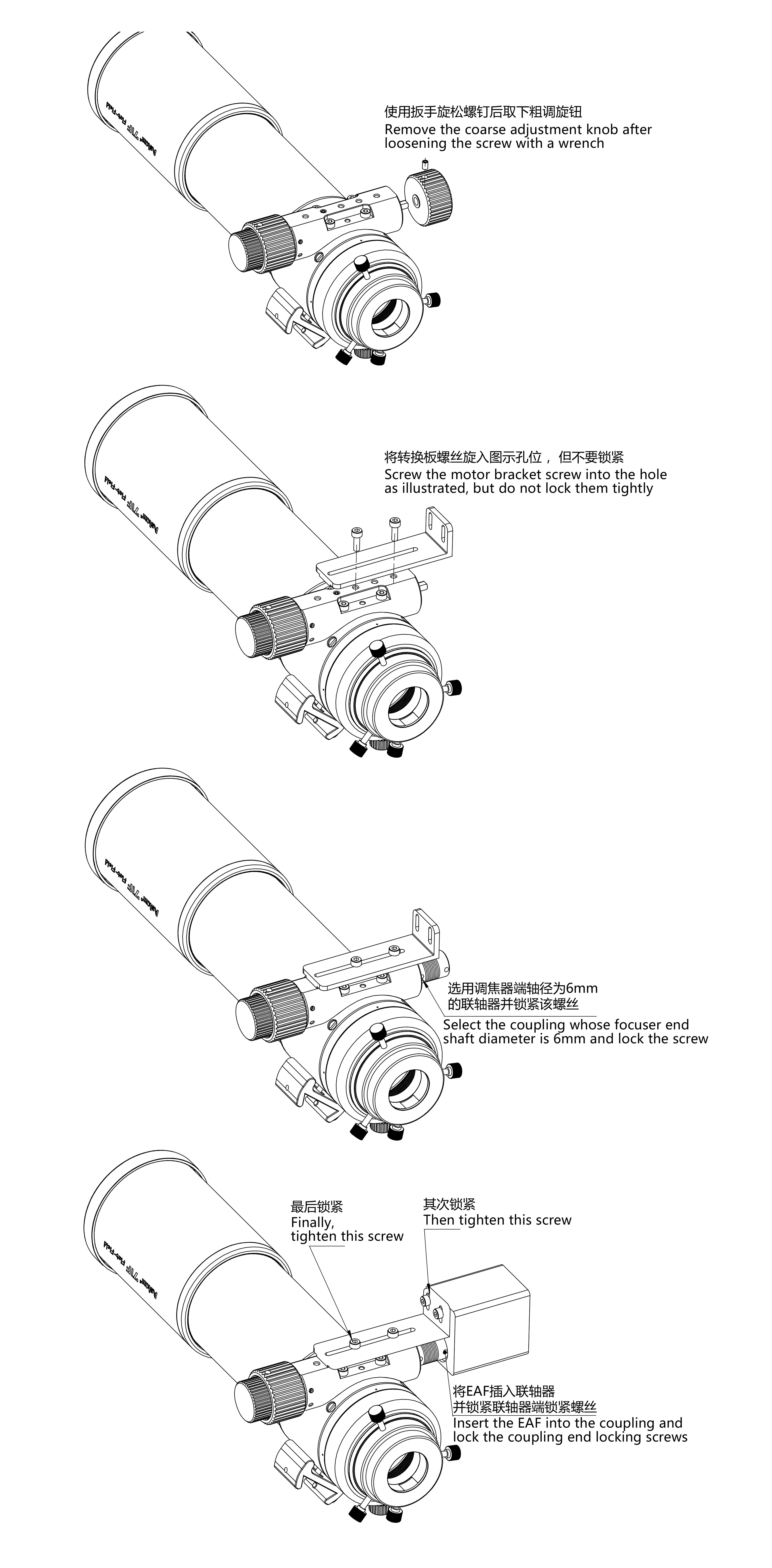
The telescope also includes multiple finder mounting options, with a finder slot on the handle and two finder bases on the focuser body. Sharpstar/Askar also shows optional EAF installation support on the product page.
Technical Diagrams
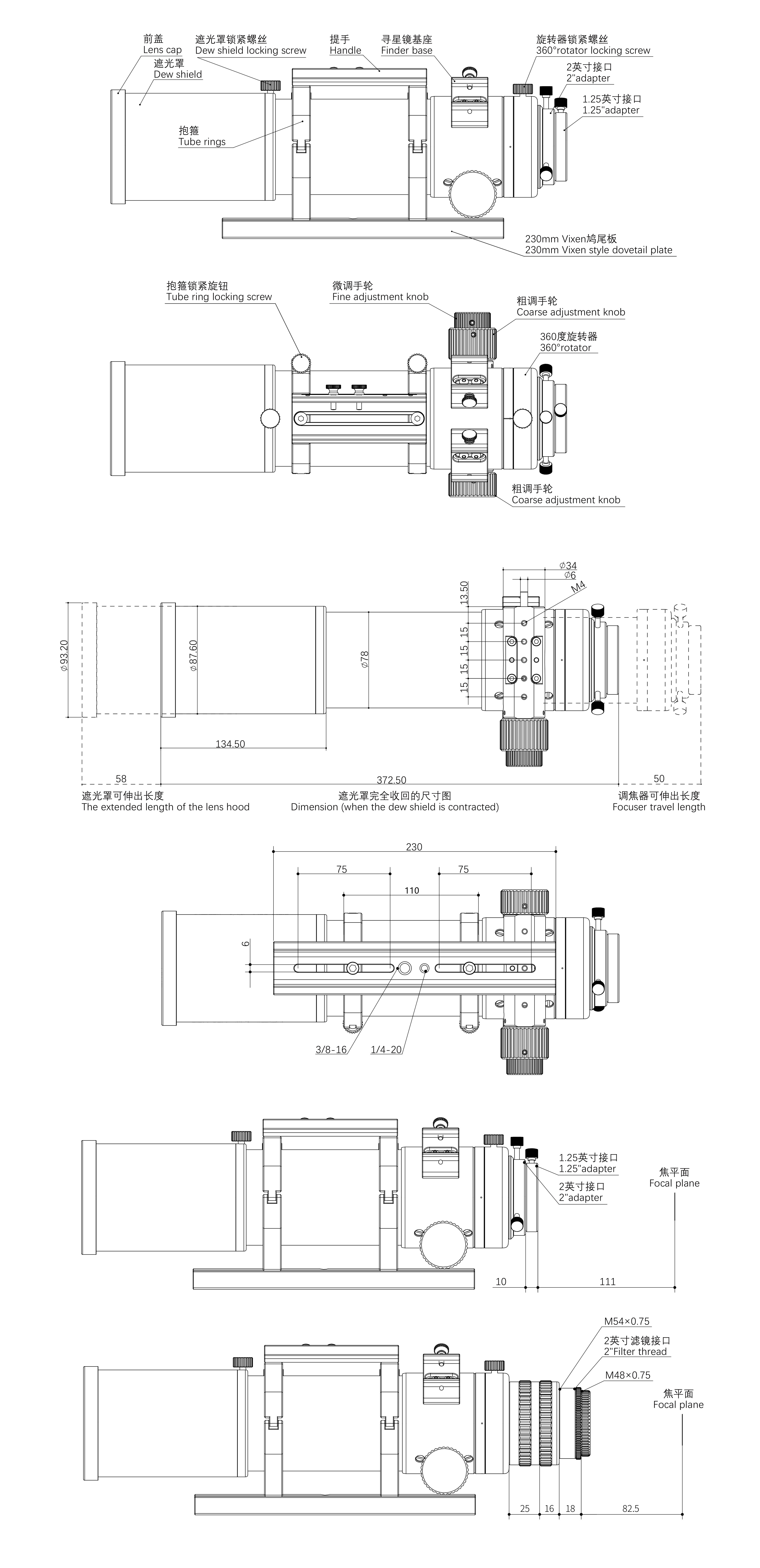
The following Sharpstar/Askar technical diagrams are included for setup planning, mechanical spacing, accessory connection, and imaging performance reference.
Product Size Diagram
71F Connection Diagram

Locking Screw Position Diagram
EAF Installation Diagram
Optical Path Diagram
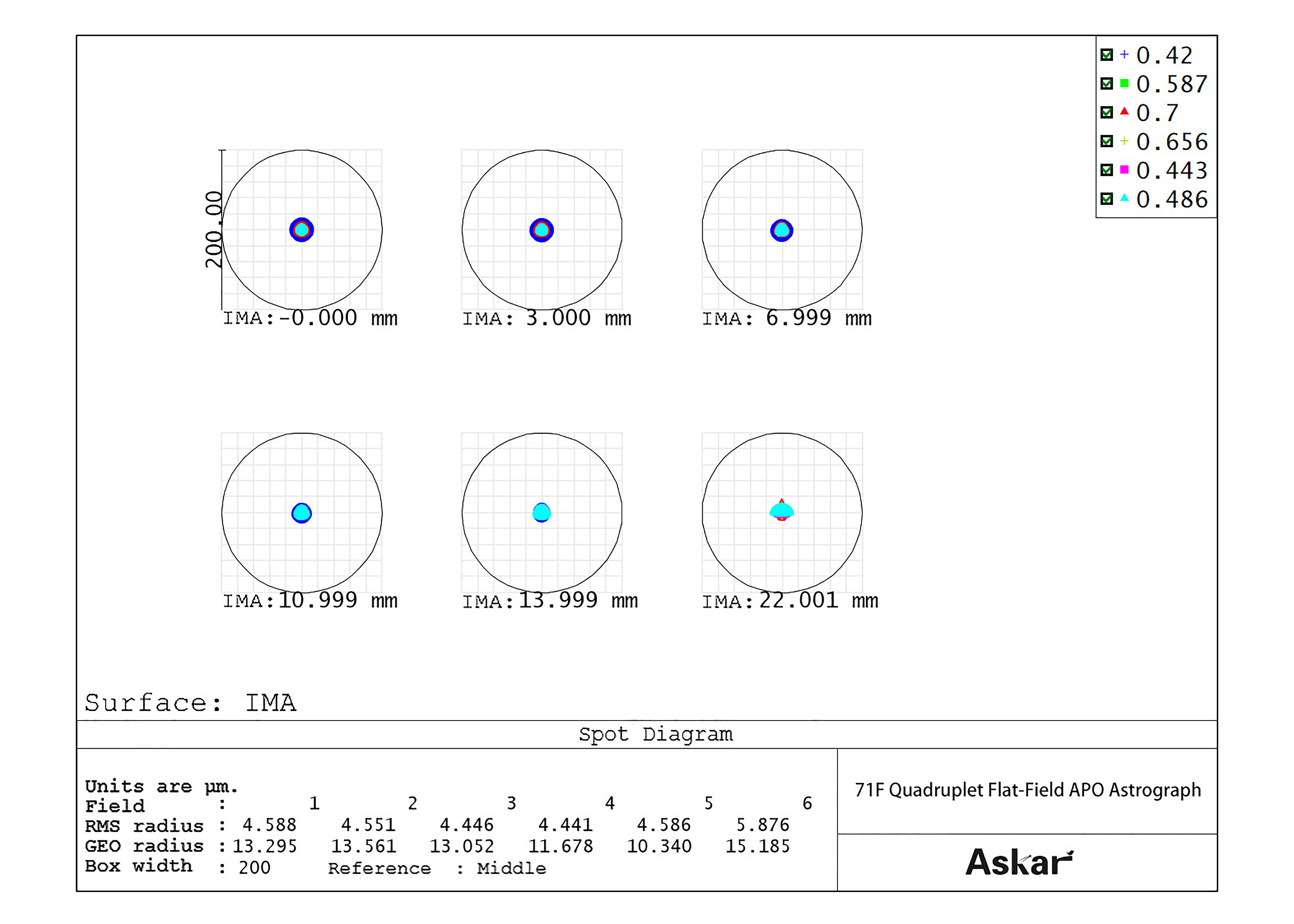
Spot Diagram
Important Limitations
- Not a fast reducer setup by default: The native focal ratio is f/6.9. A reducer, if desired, is a separate accessory.
- Imaging train planning still matters: The telescope is self-flattened, but users still need the correct mechanical adapters, camera spacing within the available focuser travel, and sufficient focus travel for their setup.
- Mount capacity matters: The OTA is compact, but total system weight increases with camera, guide scope, filter wheel, focuser motor, and other accessories.
Frequently Asked Questions
Does the Askar 71F need a separate field flattener?
No. The 71F is designed as a self-flattened astrograph, so a separate flattener is not required for standard imaging use.
Can the Askar 71F cover a full-frame camera?
Yes. Sharpstar/Askar lists a 44mm image circle, which is suitable for full-frame imaging.
What is the focal length?
The native focal length is 490mm.
What focuser does it use?
The 71F uses a 2.4" dual-speed rack-and-pinion focuser with 1:10 fine adjustment and a 360° rear rotator.
What is included in the standard package?
The listed standard package includes the 71F OTA, tube rings, handle, 230mm Vixen dovetail plate, and photographic adapters.
Our Recommendation
Ontario Telescope recommends the Askar 71F for imagers who want a compact, full-frame-capable refractor with built-in field correction and no separate flattener requirement. It is a strong choice for portable deep-sky imaging setups where simplicity, corrected optics, and manageable weight are priorities.
| Product Type | Flat-field APO astrograph refractor telescope |
|---|---|
| SKU | 71F |
| Aperture | 71 mm |
| Focal Length | 490 mm |
| Focal Ratio | f/6.9 |
| Objective Design | Quadruplet air-spaced APO including one ED glass element |
| Image Circle | 44 mm |
| Full-Frame Support | Yes |
| Field Correction | Self-flattened design; no separate flattener required for standard imaging use |
| Focuser | 2.4 in dual-speed rack-and-pinion focuser |
| Fine Focus | 1:10 fine adjustment |
| Rear Rotator | 360 degree scale field rotator |
| Focuser Travel | 50 mm |
| Rear-End Threads | M64×0.75-M54×0.75, M54×0.75-M54×0.75, and M54×0.75-M48×0.75 with M48×0.75 filter thread |
| Accessory Connection Range | Imaging: 32.5-82.5 mm from M48×0.75 base; 50.5-100.5 mm from M54×0.75 base |
| Visual Accessory Range | 61-111 mm from 1.25 in eyepiece holder; 71-121 mm from 2 in eyepiece holder |
| Total Length | 372.5-430.9 mm with 1.25 in adapter; 415-473.4 mm with photographic adapter depending on dew shield position |
| Net Weight | 2.5 kg |
| Gross Weight | 3.0 kg including tube rings and dovetail plate |
| Included Items | 71F OTA, pair of tube rings, handle, 230 mm Vixen dovetail plate, and photographic adapters |
You may also like
Recently viewed
Recent Blog Posts
View all
Your Guide Graph Is Lying to You
Read More

D-Size vs V-Size: A Complete Guide to Telescope Dovetail Systems
Read More

What Is Back Focus in Astrophotography? Telescope Reducers, Flatteners, and Spacing Explained
Read More