


- Description
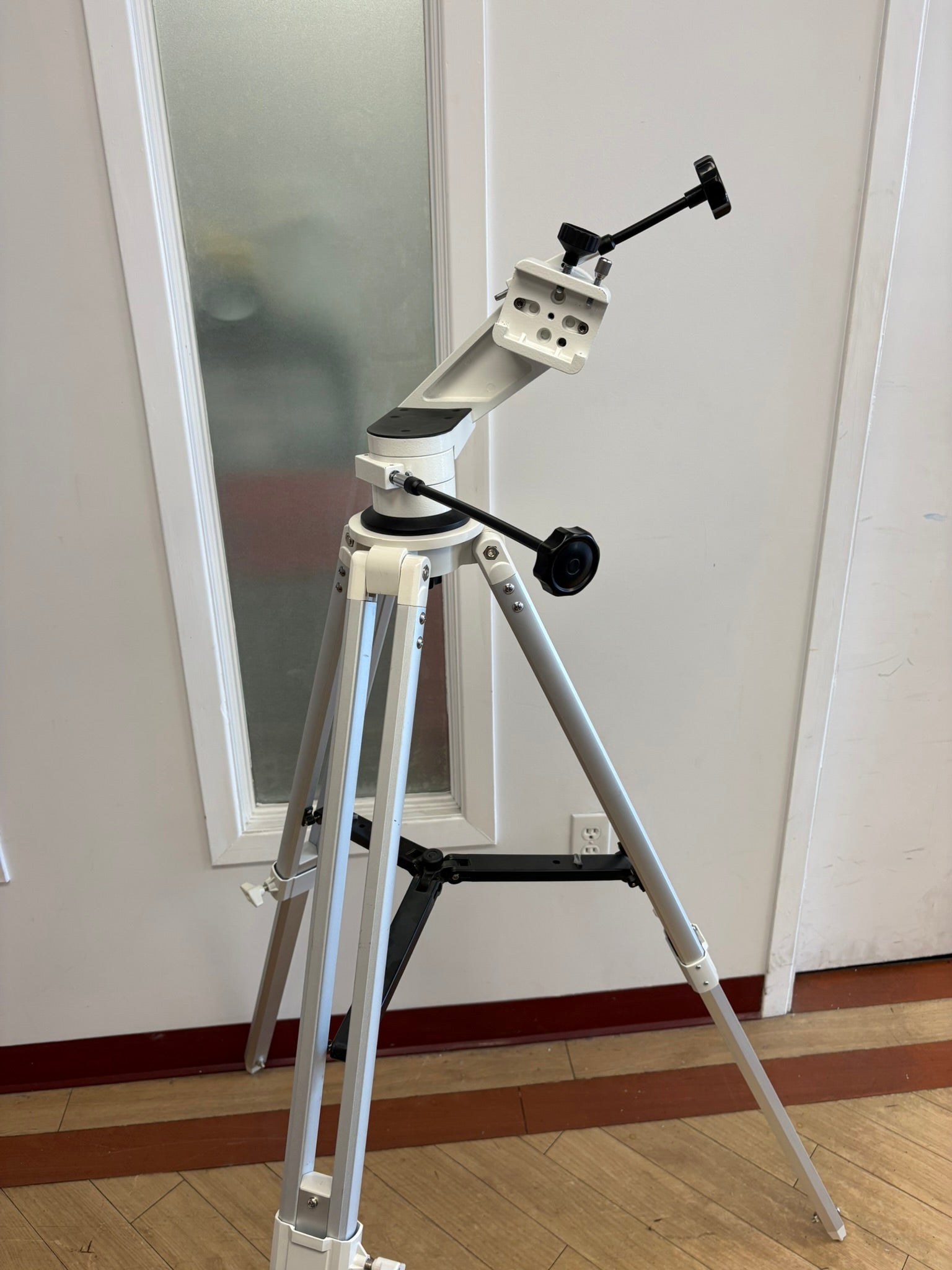
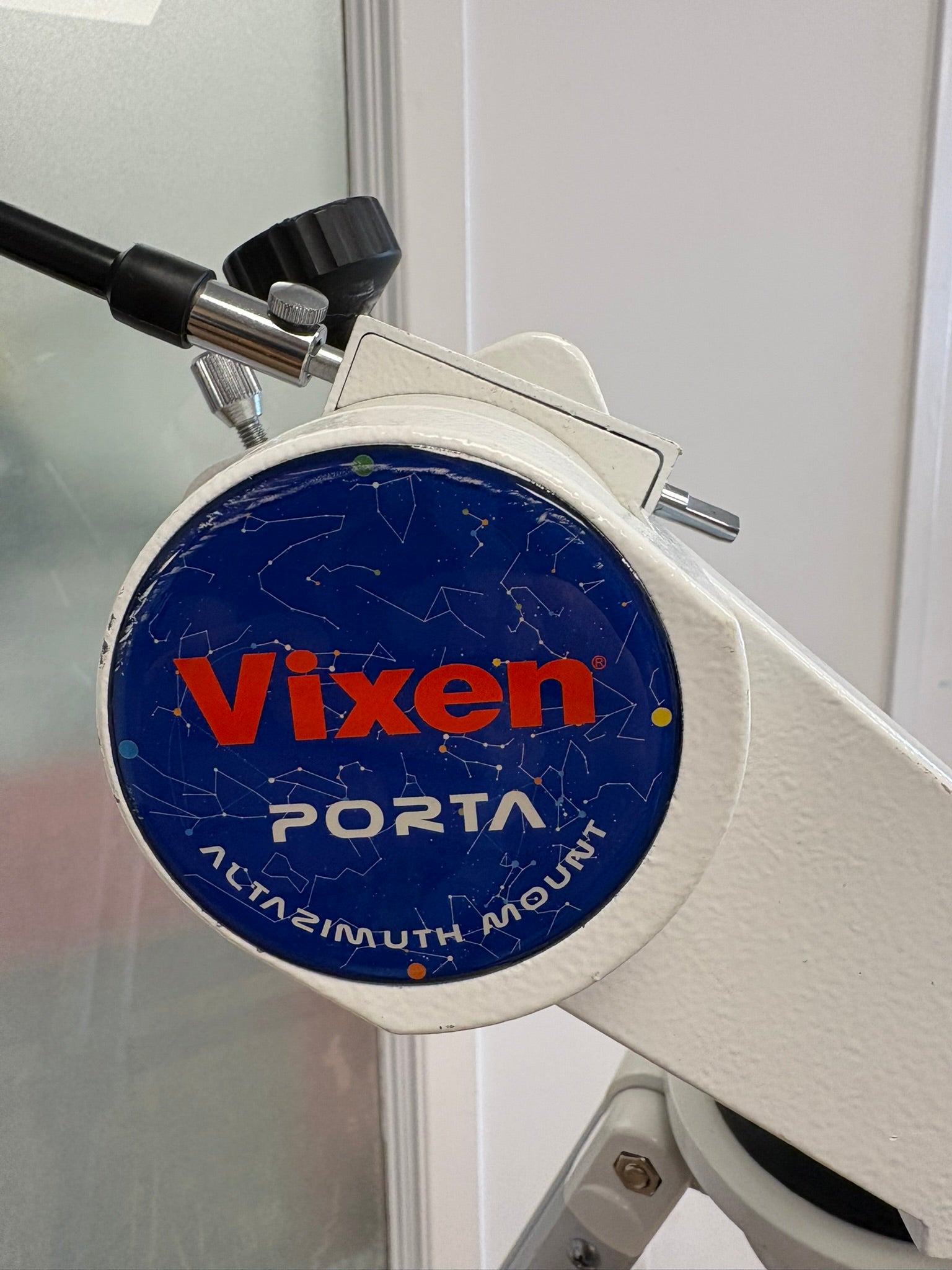
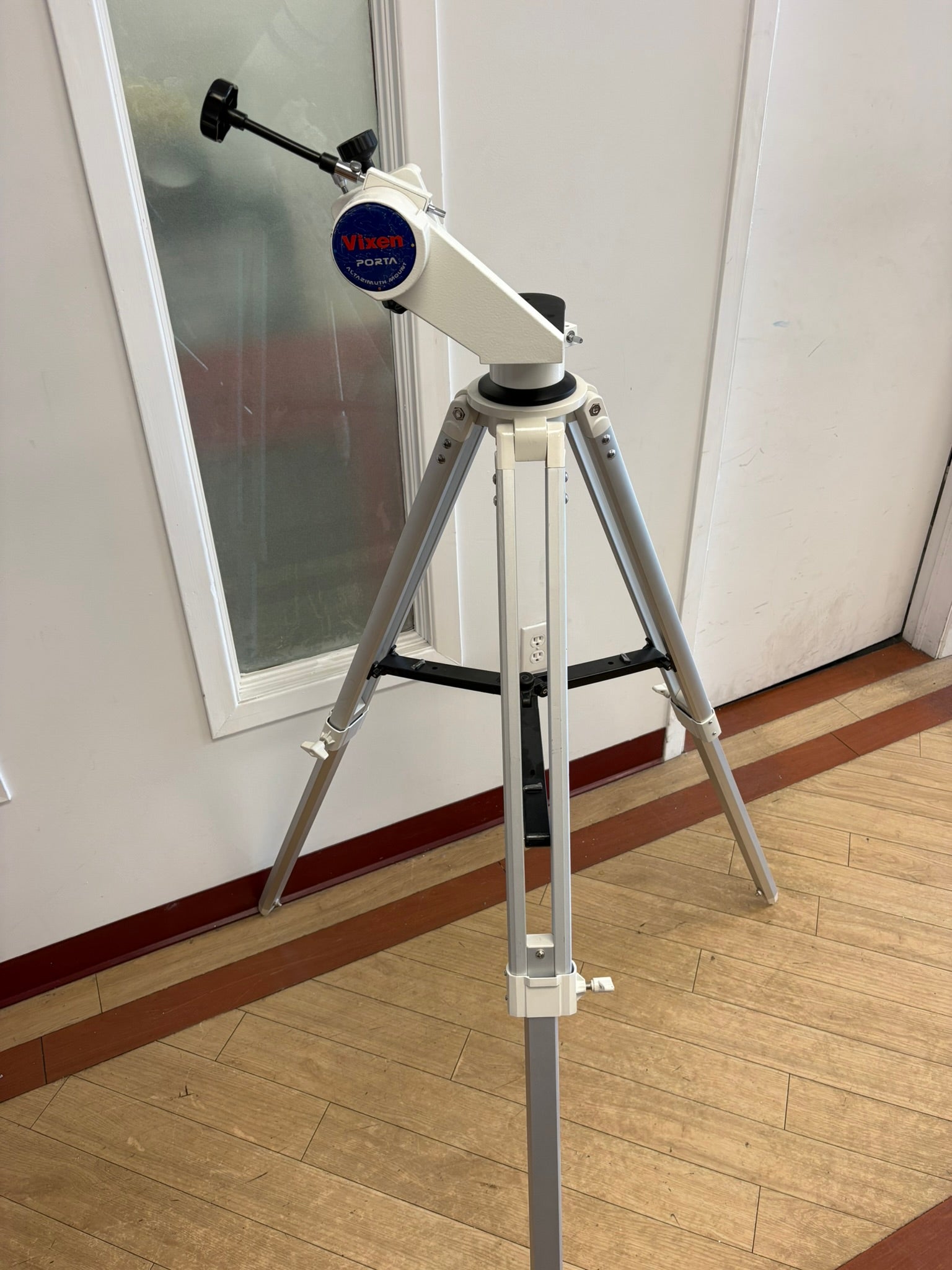
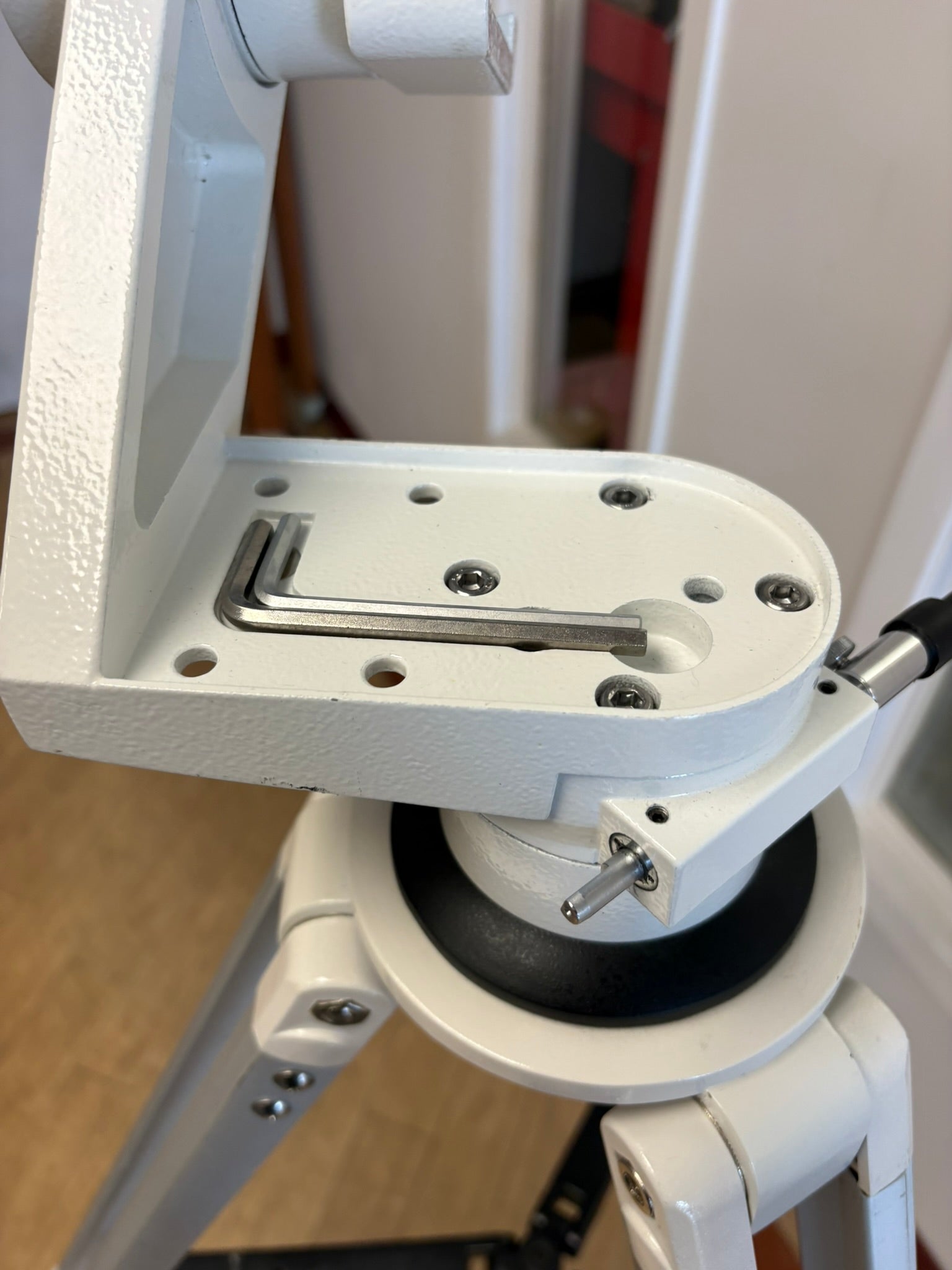
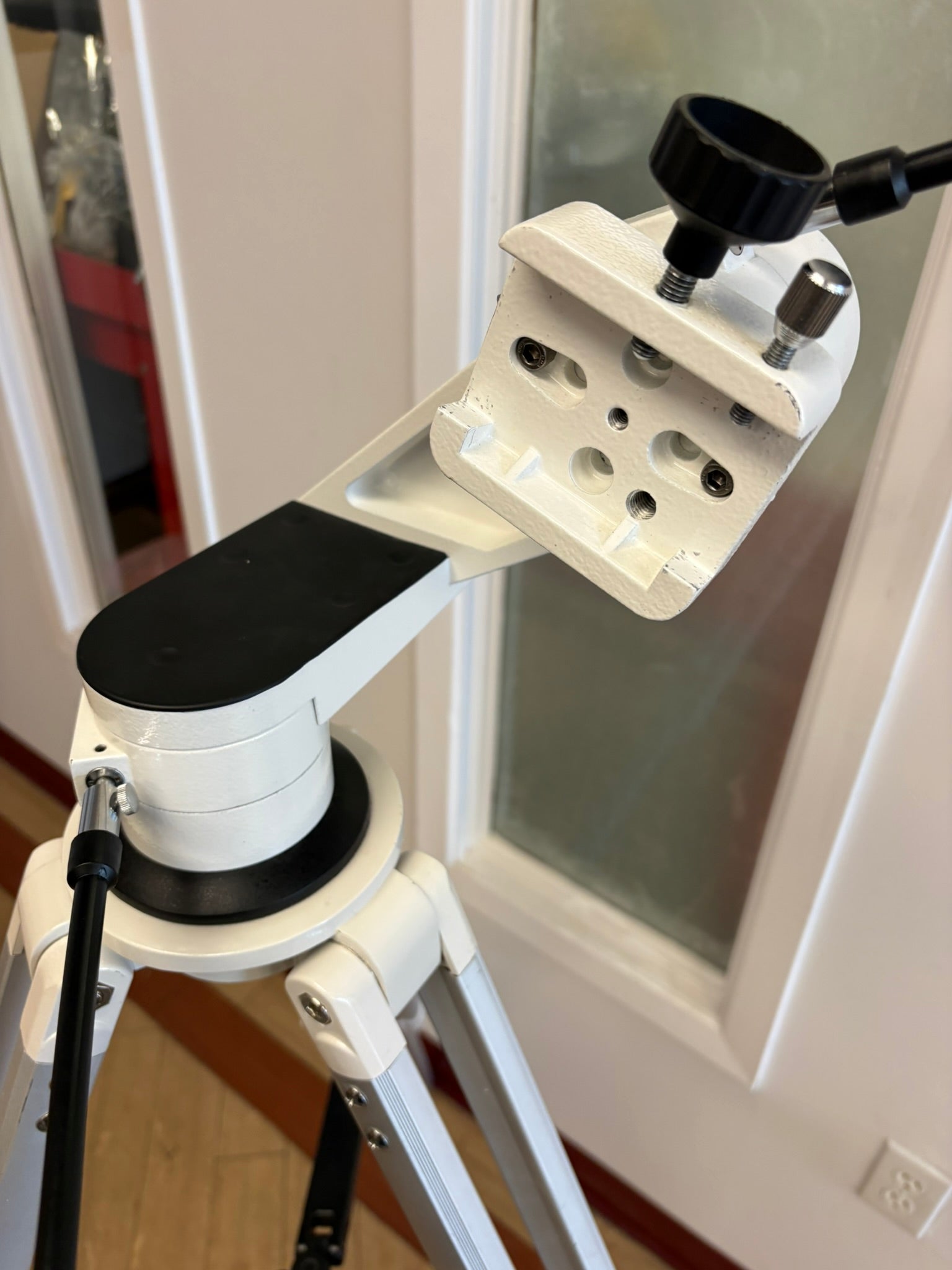
Used – Good Condition. A complete Vixen Porta II alt-azimuth mount and aluminum tripod, showing cosmetic wear consistent with normal use. Mechanically sound with both slow-motion controls working as intended.
What's Included
- Vixen Porta II alt-azimuth mount head
- Vixen aluminum tripod
- Accessory tray / spreader
- Both flexible slow-motion control cables
Condition Notes
- Cosmetic wear from normal use — scuffs and marks on the mount head, tripod legs and accessory tray.
- No functional defects noted. Clutches hold and both axes move smoothly through their range.
- Original box and printed manual are not included.
About the Vixen Porta II
The Porta II is the classic grab-and-go alt-azimuth mount, and one of the best manual mounts ever made for casual observing. Its friction-clutch design means there are no locks to fumble with in the dark — you simply push the scope where you want it and it stays put, then fine-tune with the dual-axis flexible slow-motion cables. The Vixen-style dovetail saddle accepts most small to mid-size refractors, Maks and short Newtonians up to roughly 11 lb (5 kg), and the whole rig sets up in seconds with no alignment, no batteries and no software.
It's an ideal second mount for quick sessions in the driveway, a travel mount for dark-sky trips, or a first-class upgrade for anyone still fighting a wobbly department-store tripod. The Porta II is also well supported by aftermarket upgrades — Ontario Telescope sells the Astro Devices Porta I/II Encoder Kit and a Nexus DSC shelf if you'd like to add push-to digital setting circles later.
Final Sale
This item is sold as a Final Sale. All used equipment sales are final, and the condition is described above in good faith. Please review our Used Equipment Sale Policy before purchasing.
You may also like
Recently viewed
Recent Blog Posts
View all
Your Guide Graph Is Lying to You
Read More

D-Size vs V-Size: A Complete Guide to Telescope Dovetail Systems
Read More

What Is Back Focus in Astrophotography? Telescope Reducers, Flatteners, and Spacing Explained
Read More