


- Description
- Specifications
Product Overview
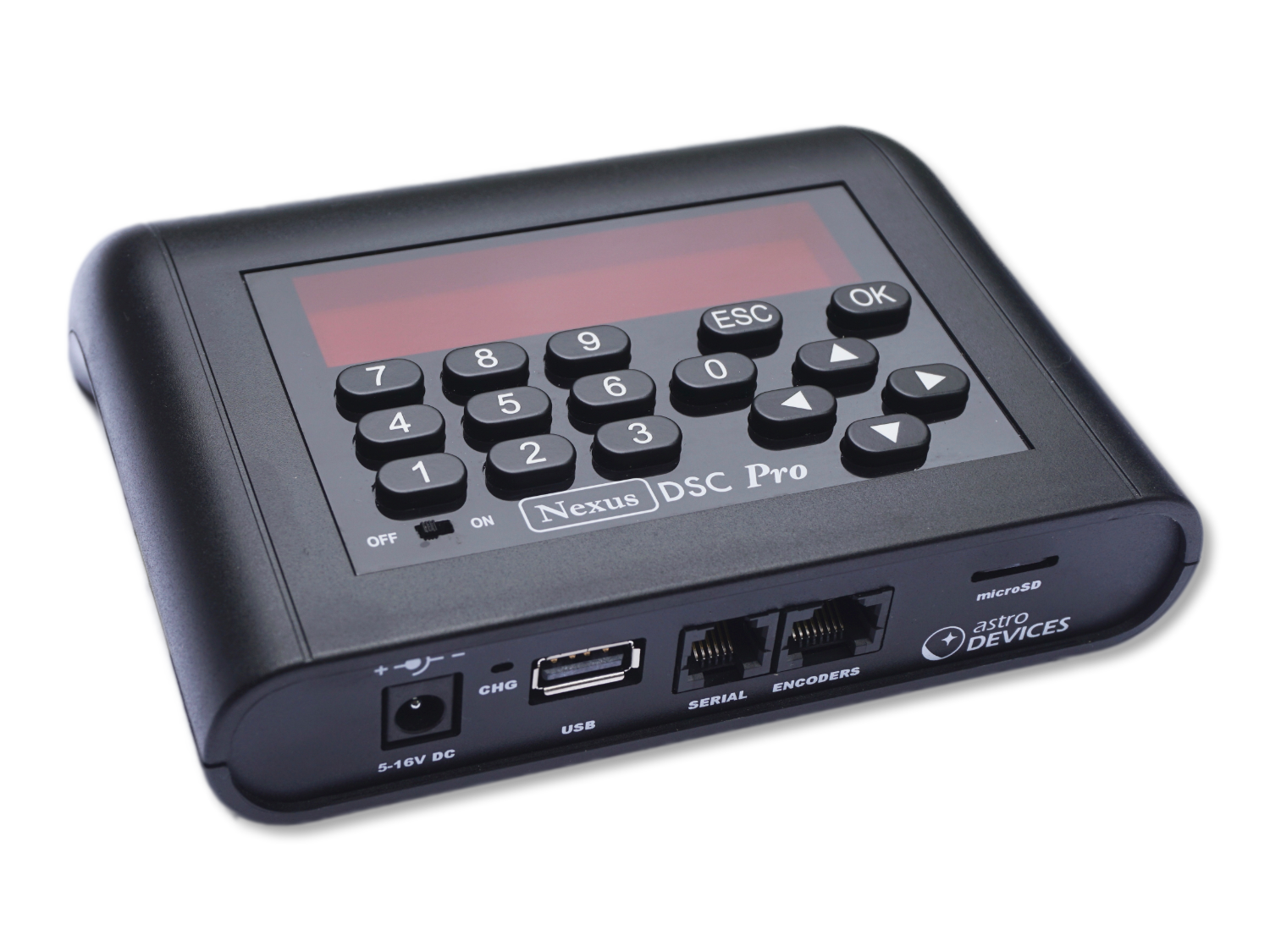
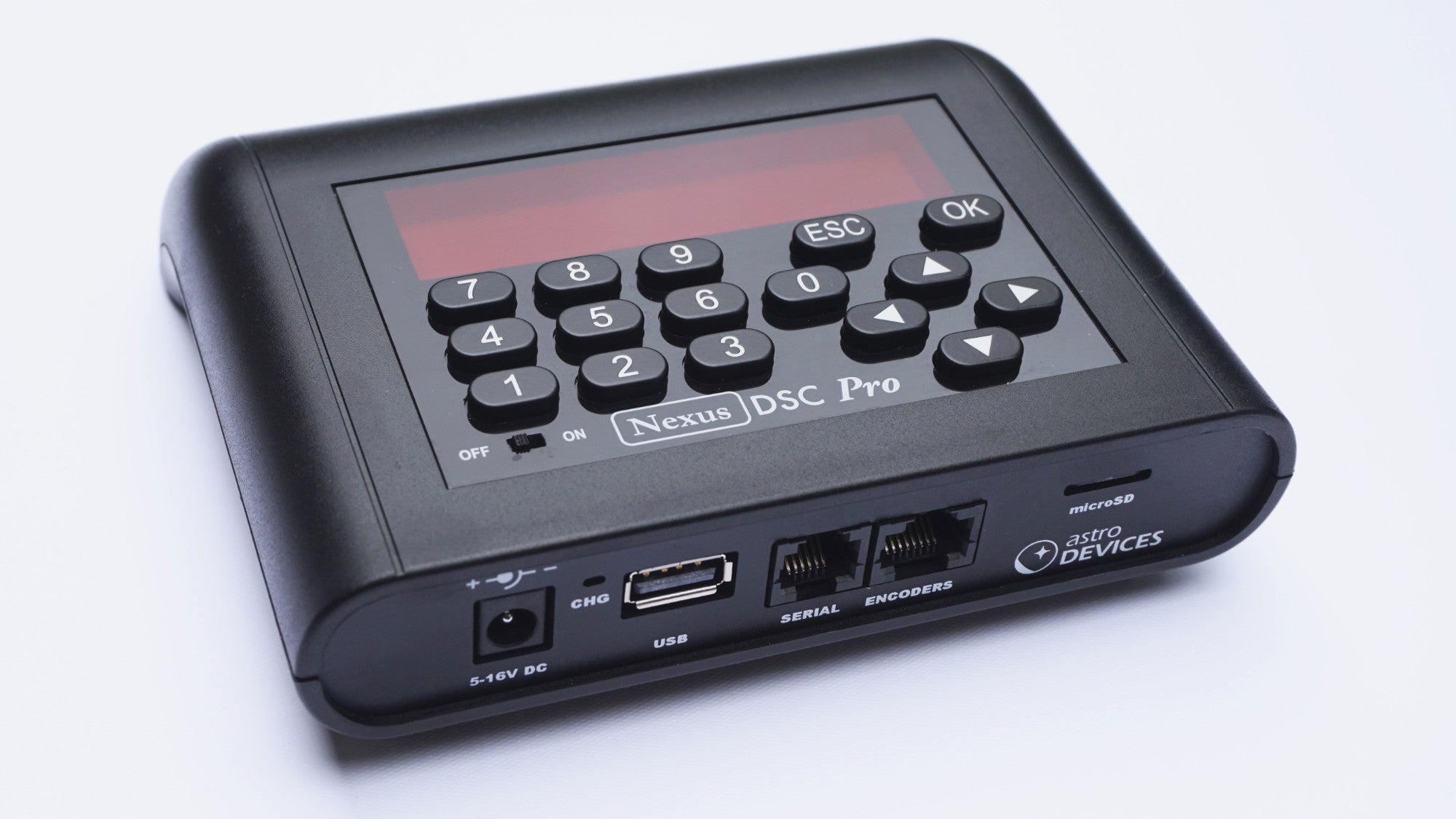
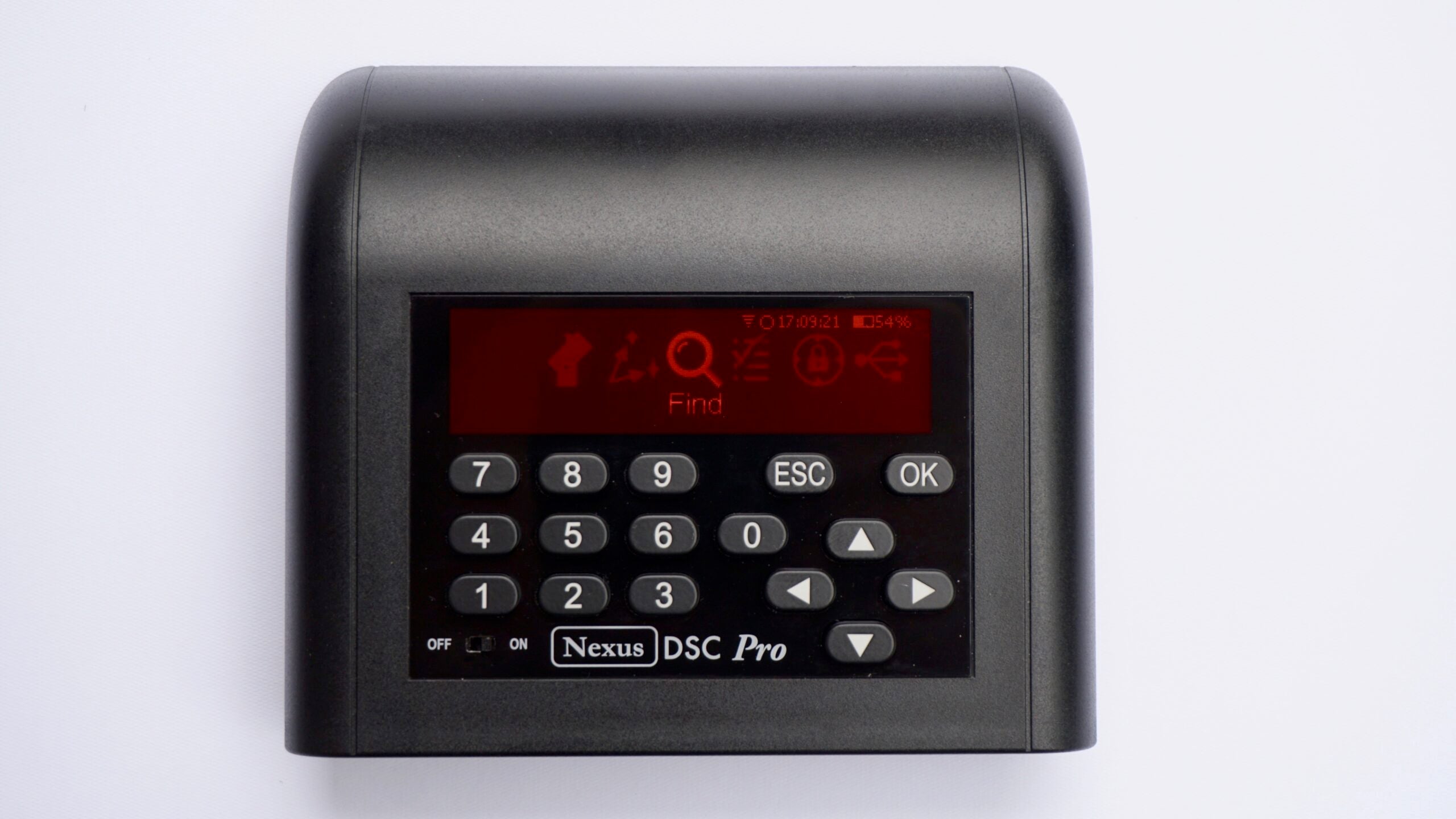
The Astro Devices Nexus DSC Pro is a self-contained digital setting circles (DSC) computer that turns a manual, non-motorized telescope into a push-to instrument. Fit an encoder on each of your mount's axes, align on a couple of stars, and the Nexus DSC Pro shows you exactly where to push the scope to land any object in its database. It reads out on a red OLED graphical display with a full numeric keypad, runs from an internal rechargeable lithium battery, and carries a built-in GPS receiver so it sets its own time and location in the field. A large catalogue lives in internal memory, and a microSD card (up to 512 GB) expands that to millions of objects.
Who It's For
This is a good match if you observe visually with a Dobsonian or any alt-az or equatorial mount that accepts encoders and you want fast, reliable object location without a motorized GoTo system. It suits working long observing lists at a dark site, outreach nights where you need target after target in the eyepiece, and observers who prefer to move the scope by hand but want the sky's coordinates on a screen. It also serves as the DSC hub for an encoder-based ServoCAT, SiTech, or SkyTracker motorized setup.
Key Features & Design
- Red OLED graphical display: high-contrast readout that preserves dark adaptation at the eyepiece.
- Full numeric keypad: direct entry of catalogue numbers and coordinates without menu-scrolling.
- Built-in GPS receiver: sets time and location automatically, so alignment starts without manual data entry.
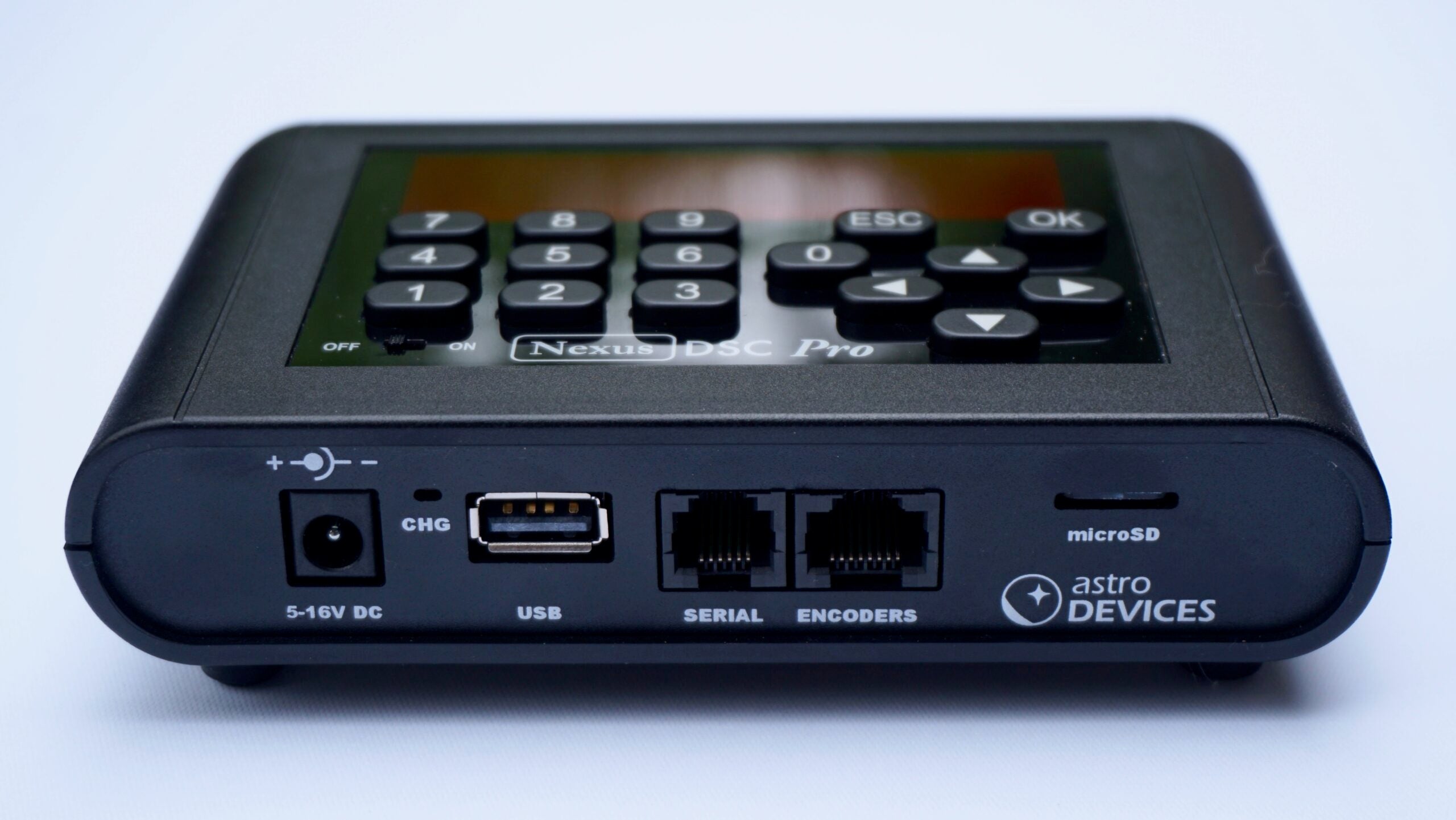
- Large, expandable database: carries a deep catalogue on board and reads additional catalogues from a microSD card up to 512 GB — millions of objects in total.
- Identify and Tour modes: identify whatever the scope is pointed at, or step through a curated list for the session.
- Onboard environmental sensors: barometric pressure, humidity, and temperature.
- Multi-point pointing analysis: builds a pointing model across several alignment stars to tighten accuracy across the whole sky.
- Internal rechargeable lithium battery: runs a session without an external pack and charges over USB.
- Optional Wi-Fi interface: streams position to SkySafari Plus/Pro, Starry Night, Cartes du Ciel, and TheSky on a phone, tablet, or laptop.
Hardware & Electronics
The Nexus DSC Pro reads two encoders — one per mount axis — and resolves their position at up to 100 million steps per second, so it keeps up with fast slews by hand without losing count. It powers from its internal lithium battery or any external 5–16 V DC source, which covers most field battery packs and powered mounts. Beyond the DSC function it passes position and commands to ServoCAT, SiTech, and SkyTracker controllers, so the same unit that runs a manual push-to scope can also drive an encoder-based motorized system. The GPS receiver and environmental sensors feed the pointing and refraction calculations directly rather than needing values typed in.
Recommended Uses
- Visual push-to observing on Dobsonians and encoder-equipped alt-az or equatorial mounts.
- Fast object location at star parties and public outreach.
- Working long observing lists by catalogue number or through a connected planetarium app.
- Serving as the DSC brain of an encoder-based ServoCAT, SiTech, or SkyTracker motorized setup.
Compatibility and Accessory Notes
- Encoders and a mount-specific kit are required: Astro Devices publishes encoder kits for SkyWatcher, Meade, Explore Scientific, GSO/Orion, Vixen, Losmandy, TeleVue, Stellarvue, DiscMounts, and more. The encoders and kit are sold separately from the computer.
- Wi-Fi for app control: the optional Wi-Fi interface is what enables planetarium-app control; without it the unit runs fully from its own keypad and display.
- Field power: the optional power adapter cable lets you run or charge from a 12 V supply.
- Mounting: a range of mount-specific shelves and stalks holds the unit at the eyepiece.
- Not sure which kit fits your mount? Send us your mount model and we will confirm the right encoder kit and shelf.
Good to Know Before You Order
- Encoders and encoder kit are separate: this listing is the computer itself. It reads encoders you fit to your mount, using the kit that matches your mount.
- Wi-Fi and power adapter are options: the two add-on choices on this page add the internal Wi-Fi card and the 12 V power cable. The base unit is complete and works without either.
- Push-to, not GoTo: the unit shows you where to move the scope; you move it by hand unless you pair it with a supported motor controller.
- Visual instrument: it locates objects for observing — it is not an imaging autoguider or camera controller.
Frequently Asked Questions
Is it difficult to set up?
No. The one-time job is fitting the encoders and kit for your mount; after that, each night you power on and align on two stars, and the built-in GPS handles time and location. Tell us your mount and we will point you to the matching kit.
What do I need besides the computer?
Two encoders and the encoder kit for your specific mount. The optional Wi-Fi interface adds planetarium-app control.
Can I control it from SkySafari?
Yes, with the optional Wi-Fi interface. It also works with Starry Night, Cartes du Ciel, and TheSky.
Does it move my telescope?
Not on its own — it is a push-to system. Pair it with a ServoCAT, SiTech, or SkyTracker controller for motorized slewing.
How is it powered?
An internal rechargeable lithium battery, chargeable over USB, or an external 5–16 V DC supply.
Bottom Line
In short: a self-contained push-to DSC computer with GPS, a deep expandable object database, and optional Wi-Fi for planetarium apps. Add the encoders and the kit for your mount, align on two stars, and it puts the whole catalogue within a nudge of the eyepiece.
| Type | Digital setting circles (DSC) computer — push-to |
|---|---|
| Display | Red OLED graphical display |
| Input | Full numeric tactile keypad |
| Object database | Large internal catalogue; expandable via microSD (up to 512 GB) to millions of objects |
| Positioning | Built-in GPS receiver |
| Onboard sensors | Barometric pressure, humidity, temperature |
| Encoder input | Up to 100 million steps per second |
| Motor controller support | ServoCAT, SiTech, SkyTracker |
| Wireless | Optional Wi-Fi interface (SkySafari Plus/Pro, Starry Night, Cartes du Ciel, TheSky) |
| Power | Internal rechargeable lithium battery; external 5–16 V DC |
| Weight | 700 g |
| Dimensions | 140 × 120 × 38 mm |
You may also like
Recently viewed
Recent Blog Posts
View all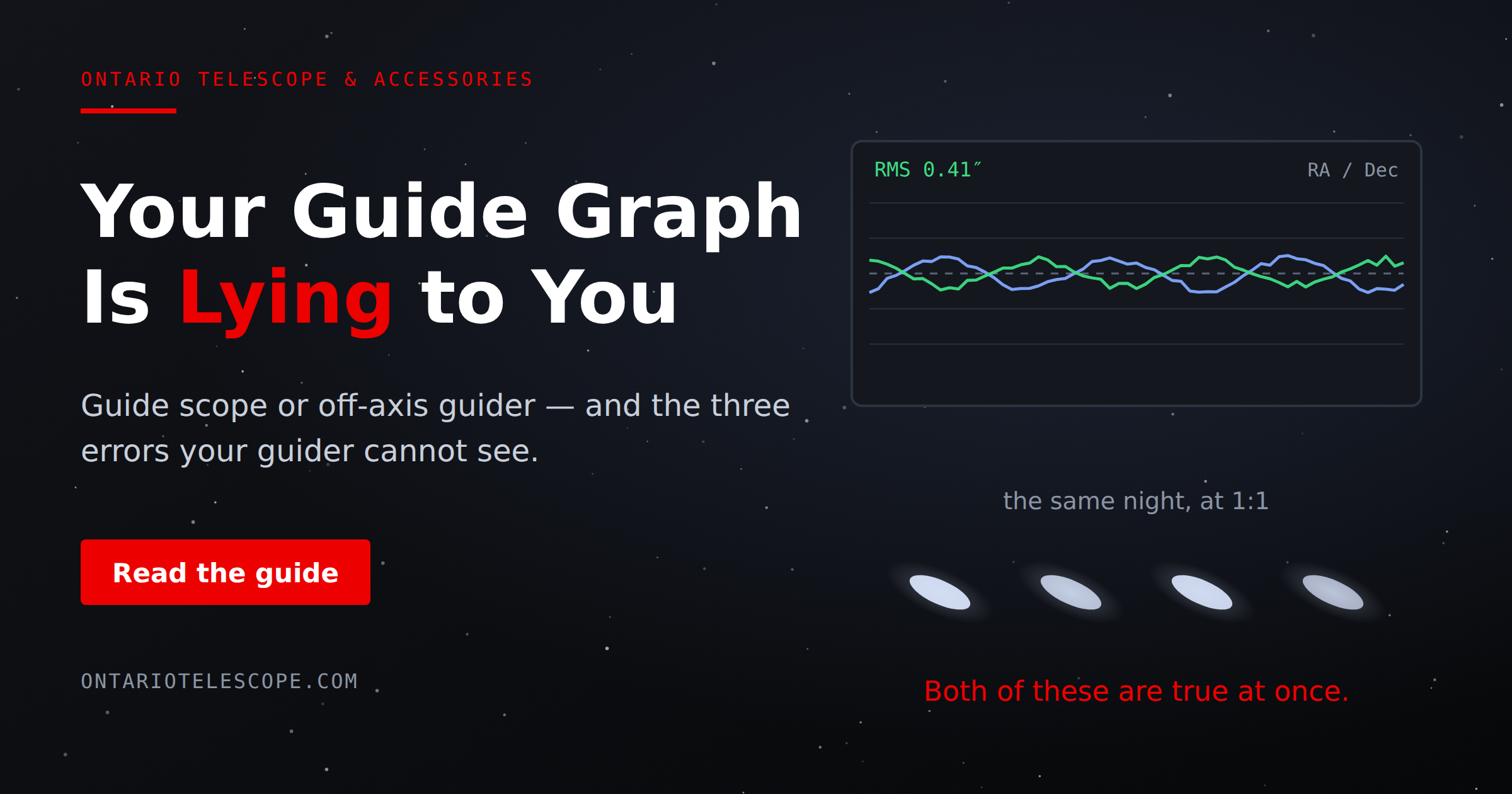
Your Guide Graph Is Lying to You
Read More
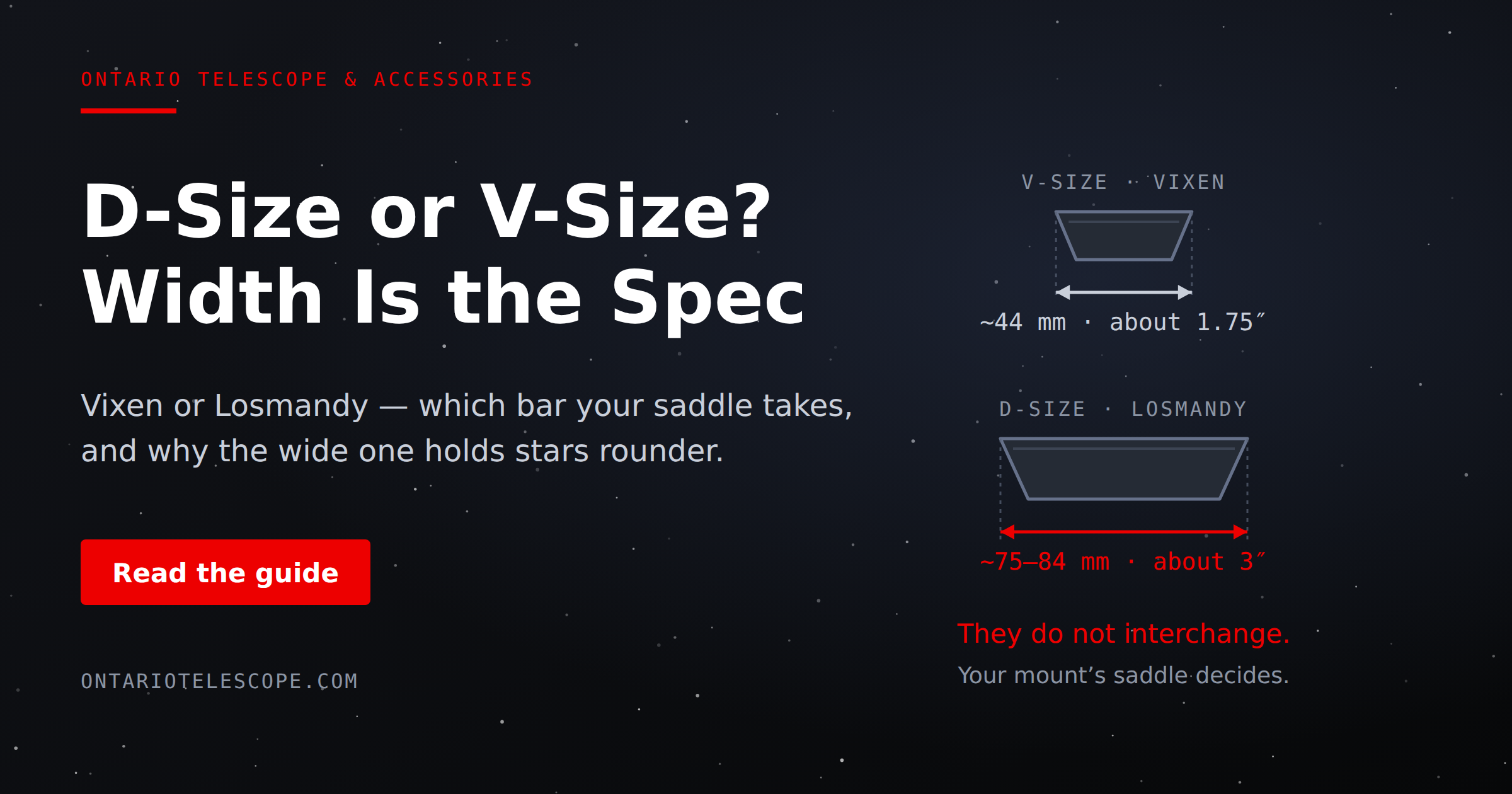
D-Size vs V-Size: A Complete Guide to Telescope Dovetail Systems
Read More
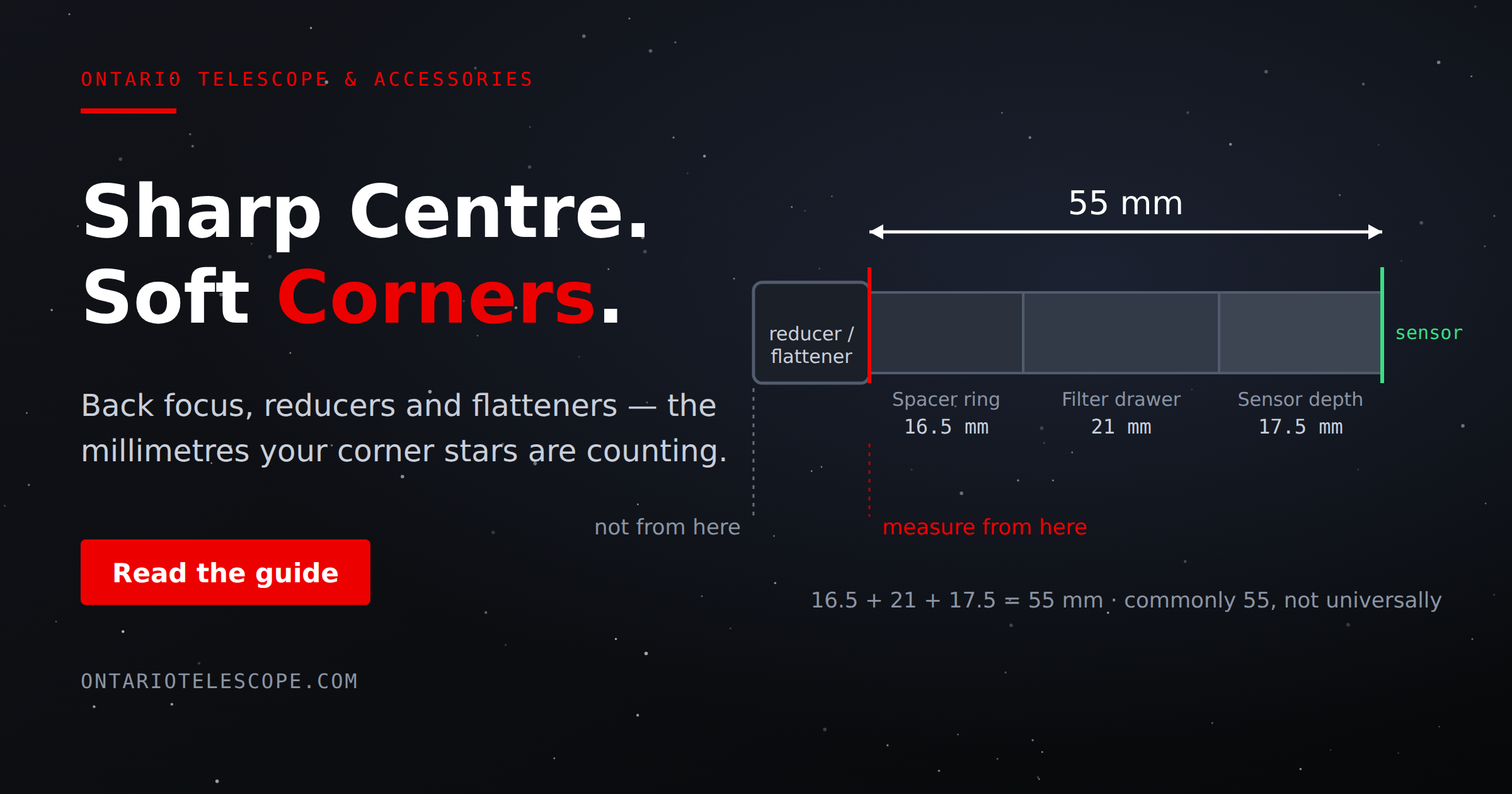
What Is Back Focus in Astrophotography? Telescope Reducers, Flatteners, and Spacing Explained
Read More